Central European Grand Tour: Budapest, Slovakia, Czech Republic, Austria
This comprehensive travel guide details a classic Central European circuit, connecting the historic and cultural capitals of the Visegrád Group and Austria. The route takes you from the Danube in Budapest through the charming towns and vibrant cities of Slovakia, the Czech Republic, and Austria, before returning to Budapest, offering a deep dive into the heart of Europe.
Route Overview
The itinerary follows a logical geographical loop:
Budapest (Hungary) → Szentendre (Hungary) → Bratislava (Slovakia) → Brno (Czech Republic) → Kutná Hora (Czech Republic) → Prague (Czech Republic) → Český Krumlov (Czech Republic) → Salzburg (Austria) → Bad Ischl (Austria) → Hallstatt (Austria) → Salzkammergut Lake District (Austria) → Wachau Valley (Austria) → Vienna (Austria) → Budapest (Hungary).
This journey is best undertaken over a period of
14 to 21 days to fully appreciate each destination without being rushed. The primary modes of transport will be train and bus, which are efficient and well-connected in this region.
Detailed Itinerary and Destinations
1. Budapest, Hungary
The journey begins in Budapest, Hungary’s stunning capital, often called the “Queen of the Danube.” The city is divided into two parts: hilly
Buda and flat Pest, connected by a series of elegant bridges.
Major Attractions:
Buda Castle & Castle Hill: A UNESCO World Heritage site, housing the Hungarian National Gallery and the Budapest History Museum. The area offers panoramic views of the city.
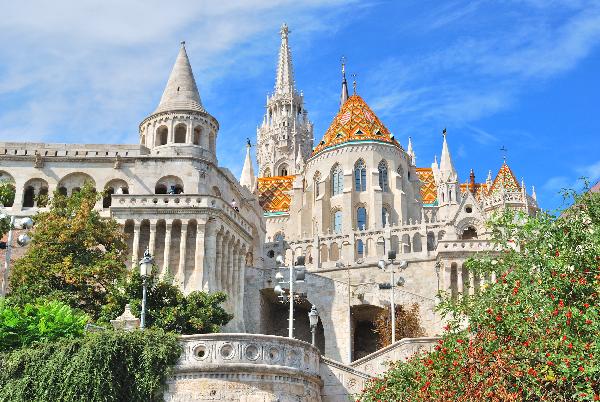
Matthias Church: A beautifully ornate church with a colorful tiled roof, located in the heart of Castle Hill.
Fisherman’s Bastion: A fairytale-like terrace with neo-Gothic and neo-Romanesque styles, providing the best photo opportunities of the Parliament building.
Hungarian Parliament Building: An iconic Gothic Revival masterpiece on the Pest side of the river. Guided tours are available.
St. Stephen’s Basilica: The largest church in Budapest, named after the first King of Hungary. You can ascend to the dome for a 360-degree view.
Széchenyi Thermal Baths: One of the largest spa complexes in Europe, located in City Park. A quintessential Budapest experience.
Dohány Street Synagogue: The largest synagogue in Europe, a beautiful and poignant site with a memorial garden.
Practical Information:
Currency: Hungarian Forint (HUF). Euros are sometimes accepted but at a poor rate.
Getting Around: Budapest has an excellent and affordable public transport system (metro, trams, buses). A multi-day travel card is recommended.
Food & Drink: Try Goulash soup, Lángos (fried dough), and Tokaji wine. The ruin bars in the Jewish Quarter are a unique nightlife experience.
Recommended Stay: 3-4 days.
2. Szentendre, Hungary
A short trip north of Budapest, Szentendre is a charming riverside town known for its Mediterranean atmosphere, Baroque architecture, and numerous art galleries and museums.
Major Attractions:
Main Square (Fő tér): The heart of the town, surrounded by colorful Baroque buildings and churches.
Blagoveštenska crkva (The Serbian Orthodox Church): Features a magnificent iconostasis.
Szentendre Open-Air Ethnographical Museum (Skanzen): A large museum showcasing traditional Hungarian village life.
Margit Kovács Ceramic Collection: A museum dedicated to the famous Hungarian ceramic artist.
Practical Information:
Getting There: A 40-minute commute by the HÉV suburban railway from Batthyány tér in Budapest.
Recommended Stay: Day trip from Budapest.
3. Bratislava, Slovakia
The compact capital of Slovakia, located on the Danube, is known for its relaxed atmosphere and beautifully restored old town.
Major Attractions:
Bratislava Castle: Overlooking the city, the castle offers history and spectacular views. The castle has been extensively reconstructed.
Old Town (Staré Mesto): Wander through the picturesque streets, visiting the Main Square, Old Town Hall, and Roland’s Fountain.
St. Martin’s Cathedral: The coronation church for Hungarian kings for nearly 300 years.
UFO Tower (Most SNP): The bridge’s observation deck provides a unique modern perspective of the city.
Devín Castle: The ruins of a strategic castle at the confluence of the Danube and Morava rivers, a short bus ride from the city center.
Practical Information:
Currency: Euro (EUR).
Getting There: From Budapest, take a train or bus (approx. 2.5-3 hours). From Szentendre, you can take a boat along the Danube in the summer season.
Food & Drink: Try Bryndzové halušky (potato dumplings with sheep cheese). Slovak wine is also excellent.
Recommended Stay: 1-2 days.
4. Brno, Czech Republic
The vibrant capital of Moravia offers a more laid-back and modern alternative to Prague, with a rich history and stunning functionalist architecture.
Major Attractions:
Špilberk Castle: A former royal castle and notorious prison, now a museum with great city views.
Cathedral of St. Peter and Paul: An iconic city landmark on Petrov hill, known for its Gothic and Baroque elements.
Capuchin Crypt: A fascinating and somewhat macabre site where the bodies of monks and benefactors were naturally mummified.
Villa Tugendhat: A UNESCO World Heritage site, this is a masterpiece of functionalist architecture by Mies van der Rohe. Book tickets far in advance.
Freedom Square (Náměstí Svobody): The main square and social hub of Brno.
Practical Information:
Currency: Czech Koruna (CZK).
Getting There: Direct trains from Bratislava take about 1.5 hours.
Food & Drink: Moravian wine is a highlight. Also, try traditional Czech pubs for hearty food.
Recommended Stay: 1-2 days.
5. Kutná Hora, Czech Republic
A historic silver-mining town whose wealth once rivaled Prague. It is a UNESCO World Heritage site.
Major Attractions:
Sedlec Ossuary (Bone Church): A small chapel located beneath the Cemetery Church of All Saints, decorated with the bones of 40,000-70,000 people.
St. Barbara’s Church: A stunning Gothic cathedral, a testament to the power and wealth of the medieval miners.
Italian Court (Vlašský dvůr): Former royal mint and residence now serving as a museum.
Czech Museum of Silver: Offers tours of a medieval silver mine.
Practical Information:
Getting There: An easy 1-hour train ride from Prague. It can be visited as a day trip from Prague or as a stop on the way from Brno to Prague.
Recommended Stay: Day trip or one night.
6. Prague, Czech Republic
The “City of a Hundred Spires,” Prague is a magical city with an incredibly preserved historic core that was largely untouched by WWII.
Major Attractions:
Prague Castle: The largest ancient castle complex in the world. Includes St. Vitus Cathedral, Old Royal Palace, and Golden Lane.
Charles Bridge: The iconic 14th-century stone bridge adorned with statues, best experienced at sunrise.
Old Town Square & Astronomical Clock:The heart of Prague. Watch the clock’s hourly show and admire the Týn Church.
Josefov (Jewish Quarter): Home to several synagogues and the Old Jewish Cemetery, one of the most remarkable of its kind in Europe.
Wenceslas Square:A bustling boulevard in the New Town, historically the center of modern Czech events.
Petřín Hill & Lookout Tower:A pleasant park offering walking paths and a miniature version of the Eiffel Tower with great views.
Practical Information: