A Spiritual and Cultural Loop: Belgrade, Žiča, and Studenica Monasteries
This travel guide outlines a profound journey through the heart of Serbia, combining the vibrant, modern energy of its capital with a pilgrimage to two of its most significant medieval spiritual centers. The route from Belgrade to the monasteries of Žiča and Studenica, nestled in the serene Serbian countryside, offers a complete picture of the nation’s soul—its turbulent history, deep-rooted faith, and resilient spirit. This itinerary is designed as a 3 to 4-day loop, perfect for a long weekend or a short, immersive trip.
Introduction to the Journey
Serbia’s identity is a complex tapestry woven from Slavic tradition, Orthodox Christianity, and a history marked by both empire and resistance. This tour is more than just sightseeing; it’s an exploration of the foundations of Serbian statehood and spirituality. Starting in dynamic Belgrade, the journey moves south into the Šumadija region, visiting Žiča Monastery, the coronation church of kings, before delving deeper into the Ibar Valley to witness the UNESCO-listed majesty of Studenica Monastery. It’s a trip that contrasts urban grit with monastic tranquility, providing a comprehensive and unforgettable Serbian experience.
Part 1: Belgrade – The White City on Two Rivers
Belgrade (Beograd), the capital of Serbia, is a city of stark contrasts. Situated at the confluence of the Danube and Sava rivers, it has been destroyed and rebuilt over 40 times throughout its long history. This has created a cityscape where Ottoman relics sit beside Austro-Hungarian architecture, and socialist blocks neighbor trendy splavovi (river barges). It’s a city that pulses with life, from its bustling cafes to its vibrant nightlife.
Key Attractions in Belgrade
Belgrade Fortress (Kalemegdan): The city’s historical core, this vast fortress park offers breathtaking views of the river confluence. Within its walls, you’ll find the Victor Monument, a Roman well, military museums, and the beautiful St. Petka’s Chapel.
Skadarlija: Belgrade’s bohemian quarter, a cobblestone street reminiscent of Paris’s Montmartre. Lined with traditional kafanas (taverns), it’s the perfect place for an evening meal accompanied by live music.
St. Sava Temple (Hram Svetog Save): One of the largest Orthodox churches in the world, this monumental building dominates the Belgrade skyline. Its dazzling, recently completed interior is entirely covered in glittering mosaics.
Nikola Tesla Museum: A must-visit for science enthusiasts, this museum houses the inventor’s personal artifacts and demonstrates his groundbreaking experiments with electricity.
The Church of St. Mark (Crkva Svetog Marka): Another massive church in the Tašmajdan park, known for its striking architecture and housing the shrine of Emperor Stefan Dušan.
Food & Drink in Belgrade
Serbian cuisine is hearty, meat-centric, and influenced by Turkish, Hungarian, and Austrian traditions.
Pljeskavica: A beloved Serbian burger, often a spiced mixture of beef, lamb, and pork, grilled and served in a somun (flatbread) with kajmak (creamy dairy spread) and onions.
Ćevapi: Small, grilled minced meat sausages, usually served in groups of 5-10 with lepinja (bread), chopped onions, and kajmak.
Sarma: Cabbage rolls stuffed with minced meat and rice, a staple during winter and festivities.
Karađorđeva Šnicla: A rolled veal or pork steak stuffed with kajmak, breaded, and fried, typically served with tartar sauce and potatoes.
Rakija: The national spirit, a potent fruit brandy. Šljivovica (plum rakija) is the most famous variety. It’s customary to drink it as an aperitif.
Where to Eat: For a traditional experience, dine at a kafana in Skadarlija like “Tri Šešira” (Three Hats). For a more modern take on Balkan cuisine, try “Manufaktura” or “Zavicaj”.
Transportation in Belgrade
Belgrade has an extensive public transport system of buses, trams, and trolleybuses. Purchasing a “BusPlus” card from kiosks is essential for using public transport. Taxis are relatively affordable; use reputable companies like Beogradski Taxi or Pink Taxi. The city center is very walkable.
Accommodation in Belgrade
Accommodation ranges from luxury hotels to charming hostels.
Luxury: Square Nine Hotel (facing the fortress), Hyatt Regency Belgrade (city center).
Mid-Range: Hotel Moskva (a historic landmark), Mama Shelter Belgrade (trendy and design-focused).
Budget/Boutique: Hostel Bongo, Art Hotel Belgrade.
Part 2: The Journey South – Žiča Monastery
The journey begins by heading south from Belgrade on the E75/E761 highway towards central Serbia. The drive to Žiča Monastery near Kraljevo takes approximately 2.5 to 3 hours. Renting a car provides the most flexibility for this trip, though buses to Kraljevo are also available from Belgrade’s main bus station.
Introduction to Žiča Monastery
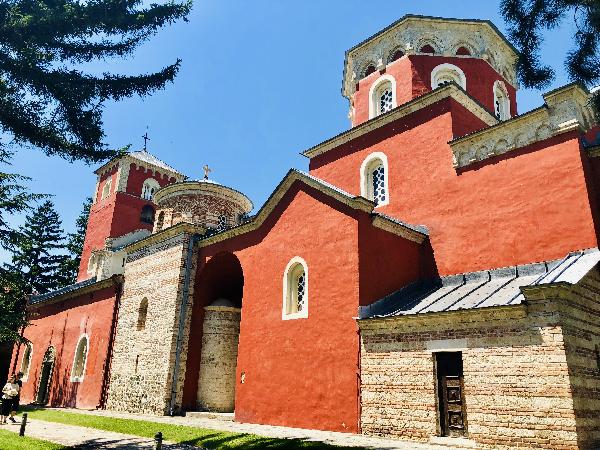
Located just outside the city of Kraljevo, Žiča Monastery holds a paramount place in Serbian history. Founded around 1208 by Saint Sava and his brother, the first King Stefan Nemanjić (The First-Crowned), it was the original seat of the Serbian Archbishopric. Its most distinctive feature is its striking red color, symbolizing the blood of Christian martyrs. For centuries, it was the coronation church for Serbian kings, earning the nickname “The Cathedral of Serbian Kings.”
What to See at Žiča
The Church of the Ascension: The main church, dedicated to Christ’s Ascension, is built in the Raška school style. While much of the original 13th-century frescoes were destroyed by the Ottomans, some precious fragments remain.
The Red Facade: The vibrant red ochre paint makes Žiča instantly recognizable and photogenic.
The Fortifications: The monastery is surrounded by sturdy walls with defensive towers, a testament to its strategic importance and the turbulent times it has endured.
The Relics: The monastery houses the relics of its founder, King Stefan the First-Crowned.
Cultural Insights & Practical Tips for Žiča
As with all active monasteries, visitors must dress modestly. Women should wear long skirts and cover their heads (scarves are often available at the entrance), and men should wear long trousers. Photography inside the church may be restricted; always ask for permission. The atmosphere is one of living faith and deep history. There are no formal eateries at the monastery itself, so plan to eat in Kraljevo.
Part 3: Into the Heart of Spirituality – Studenica Monastery
From Žiča, continue southwest for about an hour’s drive through the stunning Ibar River Valley. The road winds through picturesque landscapes, leading to one of Serbia’s most cherished sites.
Introduction to Studenica Monastery
A UNESCO World Heritage Site, Studenica Monastery is the mother of all Serbian Orthodox monasteries. Founded around 1186 by Stefan Nemanja, the progenitor of the Nemanjić dynasty, it is the largest and richest of Serbia’s Orthodox monasteries. It served as the model for later monastic foundations and is the final resting place of its founder, who is venerated as Saint Simeon the Myrrh-streaming. Studenica represents the pinnacle of Serbian medieval art and architecture.
What to See at Studenica
The Church of the Virgin (Bogorodina Crkva): The centerpiece of the complex, built in white marble. This Romanesque-Byzantine fusion is a masterpiece of the Raška school. Its two main portals are exquisite examples of Romanesque sculpture.
The Frescoes: The interior features some of the finest Byzantine frescoes of the period. The “Crucifixion” in the main nave is a powerful and emotive masterpiece. The frescoes in the smaller King’s Church are also exceptionally well-preserved.
The Church of St. Joachim and Anna (The King’s Church): A smaller church built within the monastery walls by King Milutin in the early 14th century, containing a complete and vibrant cycle of frescoes.
The Relics of St. Simeon (Stefan Nemanja): His relics are enshrined in the main church, and the monastery is a major pilgrimage site.
The Fortifications: Like Žiča, Studenica is a fortified complex, reflecting its need for defense over the centuries.
Accommodation & Food Near Studenica
For a truly immersive experience, consider staying in the monastery’s
konak (guesthouse). This is a simple but profound accommodation option where you can participate in the daily rhythm of monastic life (vespers and matins). Reservations are essential and should be made directly with the monastery well in advance. Meals are typically provided for guests.
Alternatively, there are guesthouses and small hotels in the nearby town of Ušće or in the popular ski resort of Kopaonik, which is about a 45-minute drive away and offers a wider range of hotels and restaurants.
Part 4: The Return to Belgrade & Final Reflections
The return journey from Studenica to Belgrade takes approximately 3 to 3.5 hours via the E761/E75 highway. This drive allows time to reflect on the stark contrast between the serene spiritual world of the monasteries and the lively capital.
Crafting Your Itinerary
Option 1 (3-Day Weekend):
Day 1: Explore Belgrade. Visit Kalemegdan Fortress, St. Sava Temple, and have dinner in Skadarlija. Overnight in Belgrade.
Day 2: Rent a car in the morning. Drive to Žiča Monastery (2.5 hrs). After visiting, continue to Studenica (1 hr). Spend the afternoon at Studenica and stay overnight at the monastery konak or a nearby guesthouse.
Day 3: Attend morning liturgy (optional), have a final peaceful walk around Studenica, then drive back to Belgrade for your departure.
Option 2 (4-Day Immersion):
Day 1: Arrive and explore Belgrade. Overnight in Belgrade.
Day 2: Deep dive into Belgrade: Nikola Tesla Museum, Church of St. Mark, Ada Ciganlija lake. Overnight in Belgrade.
Day 3: Drive to Žiča and then Studenica. Overnight at Studenica.
Day 4: A leisurely morning at Studenica. Perhaps take a short detour to see Maglič Fortress on the way back to Belgrade for a final evening or departure.
Essential Travel Tips
Currency: The Serbian Dinar (RSD). Credit cards are widely accepted in Belgrade but carry cash for smaller shops, monasteries, and rural areas.
Language: Serbian. English is commonly spoken by younger people in Belgrade but less so in rural areas. Learning a few basic phrases (Hvala – Thank you; Dobar dan – Good day) is appreciated.
Visa: Check visa requirements beforehand. Many nationalities, including EU and US citizens, do not need a visa for short stays.
Best Time to Visit: Late spring (May-June) and early autumn (September-October) offer pleasant weather and beautiful landscapes. Summer can be hot, while winter offers a magical, snowy atmosphere at the monasteries.
Respectful Conduct: Remember to dress and behave modestly at all religious sites. Silence is golden within the church walls.
This journey from Belgrade to Žiča and Studenica is more than a simple tour; it’s a passage through the layers of Serbian identity. It connects the vibrant present with a sacred past, leaving travelers with a deep appreciation for Serbia’s enduring cultural and spiritual heritage.