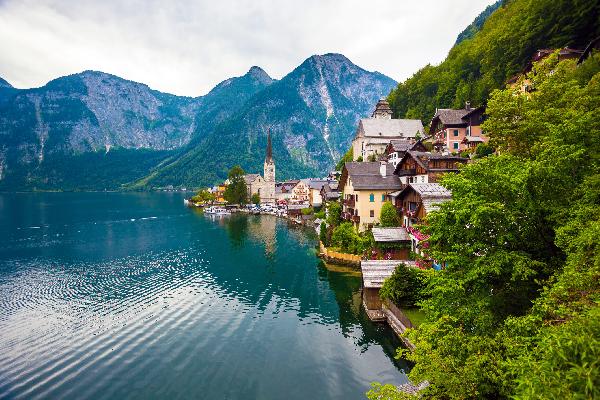
A Grand Alpine Journey: Munich, Bavaria, and Austria’s Lake District to Vienna
This travel guide details a classic Central European itinerary, weaving through the cultural heart of Bavaria in Germany and the breathtaking lake and mountain scenery of Austria’s Salzkammergut region, culminating in the imperial grandeur of Vienna. The route from Munich to Vienna is a journey through fairy-tale castles, pristine alpine lakes, historic cities, and some of the most stunning landscapes on the continent.
Route Overview and Logistics
The journey typically begins in Munich, Germany, and ends in Vienna, Austria. The most flexible and recommended way to undertake this trip is by rental car, as it allows for easy access to smaller villages and scenic stops along the way. However, an efficient and comprehensive train and bus network also makes this itinerary entirely feasible for those relying on public transport. The total distance covered is approximately 600-700 kilometers, and a comfortable pace to enjoy all destinations is 10-14 days.
Best Time to Visit: Late spring (May-June) and early autumn (September-October) offer pleasant weather, fewer crowds, and beautiful natural colors. Summer (July-August) is peak season with warm weather but larger crowds. Winter offers magical Christmas markets and skiing opportunities, though some lake activities are limited.
Currency: Germany uses the Euro (€). Austria also uses the Euro (€).
Languages: German is the official language in both countries. English is widely spoken in tourist areas.
Travel Documents: Both Germany and Austria are part of the Schengen Area. EU citizens can travel with an ID card; travelers from many other countries (e.g., USA, Canada, UK, Australia) can visit for up to 90 days without a visa.
Munich (München), Germany
Munich, the capital of Bavaria, serves as the perfect starting point. It’s a city that effortlessly blends traditional Bavarian culture with modern innovation.
Attractions & Experiences
Marienplatz: The central square and heart of the city, home to the Neues Rathaus (New Town Hall). Visitors should not miss the Glockenspiel performance, which reenacts stories from the 16th century daily at 11 am, 12 pm, and 5 pm (in summer).
English Garden (Englischer Garten): One of the world’s largest urban parks. It’s a place for relaxation, sunbathing, and watching surfers ride the standing wave in the Eisbach river.
Hofbräuhaus: The world’s most famous beer hall, offering an authentic (if touristy) Bavarian experience with hearty food, oompah music, and massive one-liter steins of beer.
Nymphenburg Palace: A magnificent Baroque palace and former summer residence of the Bavarian monarchs. The sprawling gardens are perfect for a stroll.
Deutsches Museum: One of the world’s oldest and largest science and technology museums, offering fascinating exhibits for all ages.
Food & Drink
Munich is the place to indulge in classic Bavarian cuisine. Must-try dishes include
Weißwurst (white sausage traditionally eaten before noon), Schweinshaxe (roasted pork knuckle), Brezn (pretzel), and Obatzda (a spiced cheese-butter spread). Of course, all this is best enjoyed with a Maß (one liter) of a local Helles or Weissbier.
Transportation & Accommodation
Munich has an excellent public transportation system (MVV) comprising U-Bahn (subway), S-Bahn (suburban train), trams, and buses. Accommodation ranges from luxury hotels to boutique design hotels and budget-friendly hostels. Staying near the Hauptbahnhof (main train station) or within the Altstadt (Old Town) provides easy access to major sights.
Oberammergau and Neuschwanstein Castle
Leaving Munich, the journey heads south into the Bavarian Alps, passing through charming villages and reaching for a storybook castle.
Oberammergau
Famous worldwide for its Passion Play, which takes place every ten years (next in 2030), Oberammergau is a picturesque village known for its
Lüftlmalerei—beautiful frescoes painted on the exteriors of houses depicting biblical scenes or fairy tales. It is also a center for woodcarving.
Attraction: Walk through the town to admire the painted houses and visit the woodcarving workshops.
Neuschwanstein Castle
The quintessential fairy-tale castle, Neuschwanstein was commissioned by the “Mad” King Ludwig II and was the inspiration for Disney’s Sleeping Beauty Castle. Perched on a rugged hill, it offers breathtaking views of the surrounding Alps and the Hohenschwangau valley.
Tickets: It is highly recommended to book tickets online well in advance, as they are for a specific timed entry. The ticket center is in the village of Hohenschwangau at the bottom of the hill.
Getting There: From the ticket center, you can walk ~30-40 minutes uphill, take a shuttle bus (which drops you at Marienbrücke bridge for the famous postcard view), or a horse-drawn carriage.
Marienbrücke (Mary’s Bridge): This bridge spans a gorge behind the castle and provides the iconic, unparalleled photo opportunity of Neuschwanstein.
Transportation Link
From Munich, take a train to Füssen. From Füssen, take bus RVA/OVG 73 or 78 to “Hohenschwangau, Neuschwanstein Castles”. Oberammergau can be visited en route by taking a train from Munich to Murnau, then a regional bus to Oberammergau.
Königssee (King’s Lake), Germany
Nestled in the Berchtesgaden National Park, Königssee is often considered Germany’s cleanest and most beautiful lake. Its emerald-green waters are surrounded by steep mountain walls, creating a fjord-like atmosphere.
Attractions & Experiences
Electric Boat Tour: The only powered boats allowed on the lake are electric, preserving its serene silence. The boat trip includes a stop at the pilgrimage chapel of St. Bartholomä, a picturesque onion-domed church. The boat continues to Salet at the far end of the lake.
Obersee: From Salet, a short walk reveals the Obersee, an even smaller and more pristine lake surrounded by towering cliffs. A walk along its shore leads to the Röthbachfall, Germany’s highest waterfall.
Echo Wall: During the boat ride, a crewmember will play a flugelhorn to demonstrate the famous echo that reverberates across the lake.
Food & Drink
At St. Bartholomä, try fresh trout from the lake at the historic fishing lodge. In the town of Schönau am Königssee, traditional Bavarian Gasthöfe offer hearty meals.
Transportation & Accommodation
The base town is usually Berchtesgaden or Schönau am Königssee. From Berchtesgaden, take bus 841 or 842 to the Königssee boat docks. Accommodation includes hotels, guesthouses, and vacation apartments in Berchtesgaden and Schönau.
Salzburg, Austria
Crossing the border into Austria, the next stop is Salzburg, the birthplace of Wolfgang Amadeus Mozart and the setting for “The Sound of Music.” This Baroque city is a UNESCO World Heritage site.
Attractions & Experiences
Hohensalzburg Fortress: One of Europe’s largest and best-preserved medieval castles, looming over the city. Take the funicular up for panoramic views and a tour of the fortress interiors.
Altstadt (Old Town): Get lost in the narrow streets of the Getreidegasse, famous for its ornate wrought-iron shop signs. Visit Mozart’s Geburtshaus (birthplace).
Mirabell Palace and Gardens: The beautifully manicured gardens are a highlight, featuring the steps and gnomes made famous in “The Sound of Music.”
Salzburg Cathedral & DomQuartier: A magnificent Baroque cathedral at the heart of the city. The DomQuartier ticket provides access to the cathedral museum, the state rooms, and the panoramic terrace.
Food & Drink
Salzburg’s culinary scene includes classics like
Salzburger Nockerl (a sweet soufflé dessert), Bosna (a curried sausage snack), and Mozartkugeln (chocolate marzipan balls). Enjoy a coffee and pastry at a traditional coffeehouse like Café Tomaselli or Café Bazar.
Transportation & Accommodation
Salzburg is very walkable. The city has a good bus network for longer distances. Stay in or near the Altstadt for a classic experience, or in neighborhoods like Elisabeth-Vorstadt for more budget-friendly options. It is easily reached from Berchtesgaden/Königssee by frequent buses (e.g., RVO bus 840).
Austrian Lake District (Salzkammergut)
The Salzkammergut is a region of spectacular natural beauty, characterized by shimmering lakes, dramatic mountains, and charming villages.
St. Gilgen & St. Wolfgang
The journey through the lakes often begins with these two towns on Lake Wolfgangsee. St. Gilgen is a peaceful town with a lovely lakeside promenade. St. Wolfgang is home to the famous White Horse Inn and the Schafbergbahn, a cog railway that climbs to the summit of Schafberg for incredible 360-degree views.
Bad Ischl (Bad Ischl)
A historic spa town that was the summer retreat of Emperor Franz Joseph I and Empress Elisabeth (“Sisi”). It was the center of Viennese society during the summer months.
Kaiservilla: The former imperial villa, which remains largely as it was during Franz Joseph’s time. The surrounding park is beautiful for a walk.
Café-Konditorei Zauner: A world-famous patisserie established in 1832, known for its exquisite cakes and pastries. A visit here is a cultural must.
Hallstatt (Hallstatt)
A UNESCO World Heritage site often dubbed the “Pearl of the Salzkammergut.” This village, perched on the shore of Lake Hallstättersee between a lake and a mountain, is breathtakingly beautiful but can be very crowded during the day.
Market Square: The charming central square with its colorful buildings.
Bone House (Beinhaus): Located next to the Catholic church, this small charnel house contains painted skulls of former villagers, a unique local tradition.
Salt Mines (Salzwelten Hallstatt): Take a funicular up the mountain to explore one of the world’s oldest salt mines, which gave Hallstatt its wealth and name.
Aussichtspunkt Hallstatt: The classic photo spot across the lake, accessible by a short walk from the town center or by car.
Transportation & Accommodation
The best way to explore the lakes is by car. Public transport relies on a network of buses and boats connecting towns like St. Gilgen, St. Wolfgang, and Bad Ischl. A train runs along Lake Hallstättersee. To avoid crowds in Hallstatt, consider staying in nearby Obertraun or Bad Goisern. Bad Ischl makes an excellent central base for exploring the region.
The Danube Valley: Melk to Vienna
The final leg of the journey follows the Danube River through the Wachau Valley, a UNESCO World Heritage landscape known for its vineyards, apricot orchards, and medieval towns, before arriving in Vienna.
Melk (Melk)
The journey enters the Wachau Valley at Melk, dominated by its magnificent Benedictine Abbey.
Melk Abbey (Stift Melk): A masterpiece of Baroque architecture perched high on a rock overlooking the Danube. The library and marble hall are particularly stunning, and the abbey church is an opulent spectacle of gold and frescoes.
Vienna (Wien), Austria
The grand finale of this journey is Vienna, the imperial capital of the Habsburg Empire, renowned for its art, music, and coffeehouse culture.
Attractions & Experiences
Schönbrunn Palace:The former summer residence of the Habsburgs. A tour of the opulent state rooms is essential, and the vast gardens are home to the Gloriette monument and the world’s oldest zoo, Tiergarten Schönbrunn.
The Hofburg:The immense former imperial palace in the city center. It now houses the Spanish Riding School (with its Lipizzaner stallions), the Sisi Museum (dedicated to Empress Elisabeth), and the Imperial Apartments.
St. Stephen’s Cathedral (Stephansdom):The magnificent Gothic cathedral that is Vienna’s symbol. Climb the South Tower for a superb view over the city.
The Belvedere Palace:A beautiful Baroque complex housing an art museum. Its Upper Belvedere holds the world’s largest collection of Gustav Klimt paintings, including “The Kiss.”
The Vienna State Opera (Wiener Staatsoper):A world-famous opera house. Attend a performance or take a guided tour.
The MuseumsQuartier:A vibrant cultural complex housing several major museums, including the Leopold Museum (excellent Austrian modern art) and the Kunsthistorisches Museum (Art History Museum), with its incredible Old Masters collection.
Food & Drink
Viennese cuisine is hearty and refined. Must-try dishes include Wiener Schnitzel (veal breaded cutlet), Tafelspitz (boiled beef), and Sachertorte (dense chocolate cake). The coffeehouse is a Viennese institution; spend an afternoon reading the newspaper over a Melange coffee and a slice of cake at historic cafes like Café Central or Café Sacher.
Transportation & Accommodation
Vienna has an outstanding public transportation network (U-Bahn, trams, buses). Accommodation options are plentiful; staying in districts like Innere Stadt (District 1) puts you in the heart of the historic center, while districts like Mariahilf or Neubau offer a more local vibe with excellent transport links.
Crucial Travel Tips for this Itinerary
Ticketing:The Bayern-Ticket (Bavaria Ticket) is excellent for regional travel within Bavaria (including to Salzburg), offering unlimited travel for one day for up to 5 people at a low cost. In Austria, consider various regional passes or point-to-point tickets. For extensive train travel across both countries within a few days, a Eurail or Interrail Pass could be cost-effective.
Crowd Management:Sights like Neuschwanstein Castle and Hallstatt are extremely popular. Book castle tickets online months in advance and visit popular villages early in the morning or later in the evening to avoid day-tripper crowds.
Cash vs Card:Austria has many small guesthouses and restaurants that only accept cash (Barzahlung). Always carry some Euros with you.
Sustainability:The alpine environment is fragile. Stick to marked trails when hiking, dispose of waste properly or take it with you, and consider using public transport where possible to reduce your carbon footprint.