A Grand Tour of Mainland Greece & Zakynthos: Athens, Delphi, Meteora, and the Peloponnese
This itinerary weaves through the very heart of ancient Greek civilization, from the birthplace of democracy to the abode of the gods, before venturing into the dramatic landscapes of monastic life and the stunning Ionian Sea. It’s a journey that balances profound history with breathtaking natural beauty, offering a deep and diverse experience of Greece beyond its famous islands.
Part 1: Athens – The Cradle of Western Civilization
Your journey begins in Athens, a sprawling modern city that cradles some of the world’s most significant ancient ruins. The contrast is striking, and the energy is palpable.
Attractions & Experiences
The Acropolis: Ascend the sacred rock to stand before the Parthenon, an enduring symbol of classical spirit. The scale and precision are humbling. Nearby, the elegant Temple of Athena Nike and the monumental gateway of the Propylaea complete the scene. Tip: Arrive at opening time (8 AM) to avoid the worst of the crowds and the midday heat. Wear sturdy shoes as the marble is slippery.
Acropolis Museum: A modern architectural marvel, this museum houses the treasures of the Acropolis. The glass floors revealing excavations below and the top-floor Parthenon Gallery, arranged exactly as the temple’s sculptures were, are unforgettable.
Ancient Agora: This was the commercial, political, and social heart of ancient Athens. Walk among the ruins and stand in the incredibly well-preserved Temple of Hephaestus. The Stoa of Attalos, a reconstructed ancient covered walkway, now serves as a museum.
Plaka & Anafiotika: Get lost in the labyrinthine streets of Plaka, the old historical neighborhood at the foot of the Acropolis. Whitewashed houses, neoclassical architecture, and countless shops and tavernas create a charming atmosphere. For a quieter moment, explore Anafiotika, a tiny, island-like neighborhood built by craftsmen from the island of Anafi, with narrow, winding paths and Cycladic-style houses.
Panathenaic Stadium: Made entirely of Pentelic marble, this stadium hosted the first modern Olympic Games in 1896. You can run on the same track as ancient and modern athletes.
Food & Drink
Athenian cuisine is a vibrant mix of traditional tavernas and modern gastronomy.
Must-Try Dishes: Souvlaki (grilled meat skewers) from a street-side vendor, creamy Fava (yellow split pea puree), crispy Spanakopita (spinach pie), and fresh Greek salad (Horiatiki) with feta cheese.
Local Insight: Avoid the overly touristy restaurants in Monastiraki Square with staff beckoning you in. Venture a street or two away to find more authentic spots where locals eat. A glass of Ouzo (an anise-flavored aperitif) or Tsipouro (a strong grape-based spirit) is a cultural experience in itself.
Transportation
Athens has an efficient metro system that connects the airport to the city center (Syntagma Square). The metro is also the best way to reach the Acropolis (Acropoli station). For exploring the city center, walking is ideal. Taxis and ride-sharing apps are also widely available.
Part 2: The Mainland Loop – Arachova, Delphi & Meteora
Leaving Athens, you head north into mainland Greece, where myth and mountain scenery intertwine.
Day 1: Athens to Delphi via Arachova
Transportation: The most flexible way is by rental car (approx. 2.5-3 hours). Buses are also available from Athens’ Liossion bus station.
En route, you will pass through
Arachova, a stylish mountain town clinging to the slopes of Mount Parnassus. Famous for its vibrant woolen carpets and blankets, it’s a popular winter destination for Greeks due to its proximity to the Parnassos ski resort. Stop for a coffee and enjoy the crisp mountain air and stunning views.
Continue to the nearby archaeological site of
Delphi. In antiquity, this was considered the center (or navel) of the world. The site is spectacularly located on the slopes of Mount Parnassus overlooking the Gulf of Corinth.
The Archaeological Site: Walk the Sacred Way past treasuries and monuments to reach the Temple of Apollo, where the legendary Oracle once prophesied. Further up lies the remarkably well-preserved ancient theater and the stadium.
The Delphi Archaeological Museum: Houses incredible finds from the site, including the famous Charioteer of Delphi, a masterpiece of bronze sculpture.
Overnight: Stay in Delphi or Arachova. Arachova offers a livelier evening scene with its tavernas and bars.
Day 2: Delphi to Kalambaka (Meteora)
Transportation: This is a longer drive (approx. 3.5-4 hours) through the plains of central Greece. The bus journey requires a change in Trikala.
Arrive in
Kalambaka, a small town situated at the foot of the Meteora rocks. This is your base for exploring one of Greece’s most awe-inspiring sites.
Day 3: Exploring Meteora
The word “Meteora” means “suspended in the air,” which perfectly describes these immense natural rock pillars topped by centuries-old monasteries.
The Monasteries: Of the original 24, six are still active and open to the public (Great Meteoron, Varlaam, Roussanou, St. Nicholas Anapausas, St. Stephen’s, Holy Trinity). Each requires a modest entrance fee and has a strict dress code (shoulders covered, skirts below the knee for women; long trousers for men).
The Experience: The sheer scale of the rocks and the feat of building these sanctuaries is staggering. The views from the top are simply breathtaking. The spiritual atmosphere is palpable.
Practical Tips: Wear very comfortable walking shoes. The monasteries have many steps. Check the opening days for each monastery as they rotate closure throughout the week. Consider a sunset tour – the light on the rocks is magical. For a unique perspective, look into the hiking trails that connect some of the monasteries.
Part 3: The Ionian Escape – Zakynthos Island
Transportation: From Kalambaka, drive back towards the coast. The most efficient route is to head to the port of Kyllini in the Peloponnese (approx. 3.5-hour drive). From Kyllini, frequent ferries make the 1-hour crossing to Zakynthos Town.
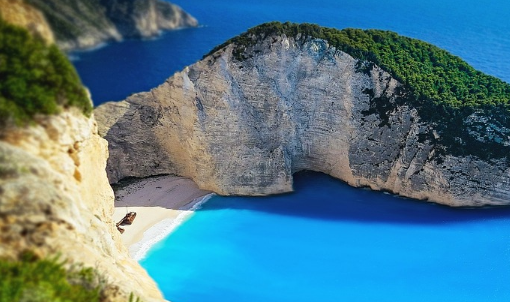
Zakynthos (Zante) offers a dramatic shift from the mainland’s rugged history to the lush, turquoise-blue beauty of the Ionian Sea.
Attractions & Experiences
Navagio (Shipwreck) Beach: The iconic image of Zakynthos—a rusting shipwreck on a pure white pebble beach enclosed by towering limestone cliffs. It’s only accessible by boat. Local Insight: Boat tours can get extremely crowded. Go on a smaller boat tour early in the morning or later in the afternoon to avoid the masses. The view from the cliff-top viewing platform is also a must.
The Blue Caves: Located on Cape Skinari at the northern tip of the island, these sea caves are famous for their dazzling blue water, caused by sunlight refraction. Boat tours often combine Navagio and the Blue Caves.
Caretta caretta (Loggerhead Sea Turtles): Laganas Bay is a major nesting ground for these protected turtles. Be respectful: avoid using lights on nesting beaches at night, do not disturb nests, and if you see a turtle in the water, keep your distance.
Venetian Influence: Explore Zakynthos Town with its St. Mark’s Square and Venetian castle ruins, a reminder of centuries of Venetian rule which gives the Ionian islands a distinct cultural flavor compared to the rest of Greece.
Part 4: The Historic Peloponnese Peninsula
Transportation: Take the ferry back from Zakynthos to Kyllini. You are now perfectly positioned to explore the northwestern part of the Peloponnese by car.
The Peloponnese is a large peninsula steeped in history, from Mycenaean palaces to Byzantine cities and Venetian fortresses.
Key Stops in the Peloponnese (from Kyllini)
Ancient Olympia: A short drive south from Kyllini lies Olympia, the birthplace of the Olympic Games. Walk through the ancient gymnasium, stadium, and temples. The Archaeological Museum of Olympia is one of the best in Greece, housing Hermes of Praxiteles and other stunning artifacts.
Mycenae: Further east, step into the world of Homer’s Agamemnon. Explore the Cyclopean walls, the Lion Gate, and the massive tholos tombs known as the “Treasury of Atreus.” The scale of these Bronze Age ruins is awe-inspiring.
Epidaurus: Famous for its ancient theater, renowned for its perfect acoustics. A whisper from the center of the stage can be heard clearly in all 14,000 seats. It’s still used for performances during the summer festival.
Nafplio: Often called Greece’s most beautiful city, Nafplio is an absolute gem. A former capital of Greece, it features elegant neoclassical mansions, charming cobblestone streets, and a vibrant waterfront dominated by the Palamidi Fortress (climb its 999+ steps for a phenomenal view) and the Bourtzi fortress on a small island.
Part 5: The Return – Peloponnese to Athens
The final leg of your journey is an easy drive from Nafplio (or any Peloponnesian point) back to Athens via the modern Corinth Canal bridge. Stop to peer down into this narrow, man-made canal slicing through the Isthmus of Corinth—a spectacular feat of 19th-century engineering.
The drive from Nafplio to Athens International Airport takes approximately 2-2.5 hours.
Comprehensive Travel Tips & Cultural Insights
Best Time to Travel
Shoulder Seasons (April-June & September-October) are ideal. The weather is pleasant for sightseeing, prices are lower, and crowds are thinner than in the peak summer months of July and August.
Transportation Summary
Rental Car: Highly recommended for this itinerary for maximum flexibility, especially for exploring Meteora and the Peloponnese at your own pace.
Public Transport: Feasible but requires careful planning. Buses connect major cities and towns (KTEL network), but schedules to smaller sites can be infrequent. Trains are limited in scope.
Domestic Flights: Useful for covering long distances quickly (e.g., Athens to Zakynthos), but you would miss the mainland journey.
Ferries: Book ferry tickets from Kyllini to Zakynthos in advance during high season.
Cuisine Deep Dive
Each region has its specialties:
Mainland (Arachova/Delphi): Hearty mountain food—grilled meats, cheeses, and pies.
Meteora (Kalambaka): Look for wild mushrooms and trout from local rivers.
Zakynthos: Ionian cuisine has strong Italian influences. Try Bourdeto (spicy fish stew) and Sofigado (a sweet and sour beef stew).
Peloponnese: Famous for its olive oil, citrus fruits, and regional dishes like “gogges” (handmade pasta) around Olympia.
Coffee Culture & “Sigá Sigá”
Coffee is a social ritual in Greece. Whether it’s a strong Greek coffee, a frappé (iced instant coffee), or a modern freddo cappuccino, expect to spend time enjoying it. This reflects the national philosophy of “
sigá sigá” (“slowly slowly”). Life is meant to be savored, not rushed. Embrace this pace; patience is a virtue, especially when dealing with services or travel schedules.
A Note on Ancient Sites
The sun at these exposed archaeological sites can be intense. Carry water, wear a hat and sunscreen, and plan your visits for early morning or late afternoon. A combination ticket for Athens’ archaeological sites can offer good value if you plan to see several.
This grand tour offers an unparalleled journey through layers of history and diverse landscapes. From contemplating philosophy at the Acropolis to feeling small beneath Meteora’s monasteries and swimming in Zakynthos’ cerulean waters, you will experience the many souls of Greece—a trip that will stay with you long after you’ve returned home.