A Traveler’s Guide to Kirkenes and the Arctic King Crab Adventure
Tucked away in the far northeastern corner of Norway, in the region of Finnmark, lies the small, resilient town of Kirkenes. More than just a dot on the map, it is a gateway to the Arctic, a testament to cross-border culture, and the self-proclaimed
King Crab Capital of the World. For many travelers, the journey here is driven by one iconic experience: venturing onto a frozen fjord to hunt, catch, and feast upon the mighty King Crab. But Kirkenes offers a depth of experience that extends far beyond this thrilling culinary adventure, presenting a unique blend of raw nature, poignant history, and Sami culture.
Introducing Kirkenes: The Arctic Frontier
Kirkenes, with a population of just over 3,000, is closer to St. Petersburg than it is to Oslo and lies only a few miles from the Russian border. This geographical quirk defines much of its character. You’ll see street signs in both Norwegian and Russian, and the town has a distinct, rugged frontier feel. It was severely bombed during World War II due to its strategic importance, earning it the unfortunate nickname “The Town that was Bombed to Pieces,” which has shaped its modern, rebuilt identity.
The Arctic climate dictates life here. Winters are long, dark, and cold, with the Polar Night from late November to mid-January offering the magical chance to see the Northern Lights dance in the sky. Summers, by contrast, are characterized by the Midnight Sun, where the sun never sets from mid-May to late July. The landscape is a dramatic canvas of rolling tundra, birch forests, and deep fjords that freeze into solid highways of ice in the winter.
The Crown Jewel Experience: King Crab Fishing
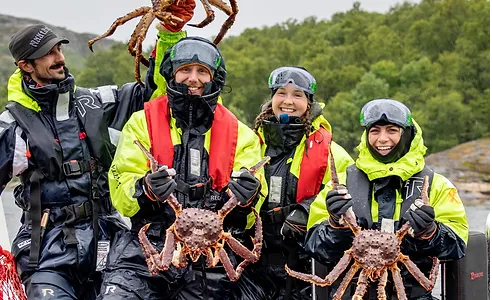
This is the primary draw for most visitors, and it is an experience that lives up to its legendary status. The King Crab, or *Jumbo King Crab*, found here is a colossal crustacean, a species originally from the Pacific that was introduced by Soviet scientists to the Barents Sea and has since thrived. These creatures can have a leg span of over two meters (almost 6 feet) and weigh up to 15 kilograms (33 lbs).
The Adventure Begins: Suiting Up and Heading Out
Your adventure typically starts at a base camp on the shore of the frozen fjord. The first order of business is gearing up. The Arctic cold is no joke, especially when you’re stationary on ice. Operators provide thick, insulated flotation suits (which also act as life jackets in the unlikely event of breaking through the ice) and boots. Once you’re bundled up like a polar explorer, you board a snowmobile-pulled sled or a specialized vehicle that transports you across the stunning, snow-covered landscape to the fishing spot.
On the Ice: The Hunt and The Catch
Out on the vast, white expanse of the fjord, your guide will locate pre-set crab pots. The process of hauling them up from the icy depths is a team effort filled with anticipation. The moment the pot breaks the surface and you see the spiky, alien-like legs of a King Crab is unforgettable. Guides are experts at handling these powerful animals, demonstrating how to safely lift them and sharing fascinating facts about their biology and the local ecosystem. They emphasize the principles of sustainable fishing—only keeping crabs of a certain size to ensure the population’s health.
The Culinary Celebration
After the catch, you return to a cozy, traditional wooden cabin (a *lavvu* or *gamme*) for the feast. The crabs are immediately prepared—boiled in large pots of salted seawater, which is said to be the secret to their perfect flavor. The result is spectacularly sweet, tender, and succulent meat, far superior to anything you might find frozen elsewhere. It is served in heaping platters, typically with just bread, mayonnaise, and lemon to let the crab’s natural taste shine. This is a hands-on, messy, and utterly joyful meal, often accompanied by warm drinks and stories shared among fellow travelers.
Beyond the Crab: Other Attractions and Activities
While the King Crab safari is a highlight, Kirkenes has much more to offer for a complete Arctic experience.
The Snow Hotel Kirkenes: A stunning architectural marvel built entirely from snow and ice each winter. Even if you don’t stay the night (they also offer warmer cabin accommodations), a day tour is highly recommended. You can wander through intricately carved ice sculptures and even have a drink at the ice bar.
Hunting the Northern Lights: Kirkenes is located squarely in the Aurora Borealis oval, making it one of the best places on Earth to witness this phenomenon. Numerous guided tours take you away from town lights for optimal viewing. Guides help you photograph the lights and share Sami legends associated with them.
Dog Sledding:
Experience the Arctic as it has been traversed for centuries. Let a team of enthusiastic huskies pull you through silent, snow-clad forests and across frozen lakes. This is an exhilarating and eco-friendly way to connect with the landscape.
The Border with Russia: Take a short trip to the Storskog border station, Norway’s only land border with Russia. While crossing is not possible for tourists without a special visa, it’s a poignant place that underscores Kirkenes’s unique geopolitical position.
The Andersgrotta Bomb Shelter: For a dose of powerful history, visit this underground shelter built to protect the citizens during WWII bombings. The guided tour provides a sobering look at the town’s wartime resilience.
Sami Culture: Visit a Sami reindeer camp to learn about the indigenous people of Northern Europe. You can feed reindeer, listen to traditional *joik* (song), and gain insight into their deep connection with the land and their herds.
Local Cuisine: More Than Just Crab
Arctic Norway’s cuisine is defined by its pristine environment. While King Crab is the star, be sure to try other local specialties.
Reindeer Meat: Often served as a steak, in stews (*Bidos*), or dried. It’s lean, tender, and has a rich, gamey flavor.
Arctic Char: A delicious freshwater fish similar to salmon, often smoked or pan-fried.
Cloudberries: A golden, tart Arctic berry highly prized by Norwegians. It’s typically served as a jam (*multekrem*) with desserts.
Brunost: The famous Norwegian brown cheese. It’s a sweet, caramelized whey cheese that is an acquired taste but a staple of Norwegian breakfasts.
For dining, restaurants like
Rica Hotel Kirkenes and Gabba Reindeer & Grill offer excellent menus featuring these local ingredients.
Getting There and Around
Arrival in Kirkenes
By Air: Kirkenes Airport, Høybuktmoen (KKN) has direct flights from Oslo with airlines like SAS and Norwegian. It’s the most practical way to reach the town.
By Sea: The iconic Hurtigruten coastal ferry calls at Kirkenes daily, making it either the starting point or the grand finale of this classic Norwegian voyage.
By Land: While possible by car via the E6 highway, it is an extremely long drive from southern Norway. The European route E105 leads to the Russian border.
Local Transportation
Kirkenes town center is compact and easily walkable. For activities like the crab fishing, dog sledding, or Snow Hotel visits, transportation from your hotel or a central meeting point is almost always included in the tour package. Taxis are available for getting to specific restaurants or sites outside the center.
Practical Travel Tips and Local Insights
Best Time to Visit for Crab: The classic ice-based King Crab fishing season runs from approximately October/November through April, when the fjords are safely frozen. In the summer months, operators run boat-based crab fishing tours instead.
What to Pack: Layers are essential. Thermal base layers, a warm mid-layer (fleece/wool), and a waterproof/windproof outer shell are crucial. Don’t forget warm socks, gloves, a hat, and a scarf. Tour operators provide extreme cold-weather suits for activities.
Budgeting: Norway is expensive, and Kirkenes is no exception. Be prepared for high costs for meals, accommodation, and especially tours. The King Crab safari is a premium activity but is generally considered worth the price.
Booking in Advance: Kirkenes is a remote destination with limited capacity for its popular tours. It is highly advisable to book your accommodation and all activities (especially the crab safari) well in advance.
The Light Factor: If visiting in winter, embrace the darkness. It’s perfect for Northern Lights viewing. If visiting in summer, bring a sleep mask—the constant sunlight can be disruptive to sleep.
A Cultural Note: Norwegians are generally reserved but very friendly and helpful. A respectful and quiet demeanor is appreciated. Tipping is not mandatory as service charges are included, but it is common to round up the bill for good service.
A Journey of Contrasts and Lasting Memories
A trip to Kirkenes is more than a holiday; it’s an expedition to the edge of Europe. It’s a place of stark contrasts—between endless winter darkness and the ethereal glow of the Aurora, between the fierce cold outside and the profound warmth inside a cabin sharing a crab feast. It challenges you with its climate and rewards you with experiences that are both thrilling and deeply serene. From pulling a prehistoric-looking creature from an ice hole to standing under a sky ablaze with green light, the memories forged in this Arctic frontier will stay with you long after you’ve returned home.