Comprehensive Travel Guide: Zurich to Frankfurt via the Swiss Heartland
This guide details a classic Central European journey, moving from the financial hub of Switzerland through its picturesque towns, legendary lakes, and mountainous interiors, before concluding in the German automotive capital of Stuttgart and the financial center of Frankfurt. The route offers a perfect blend of urban sophistication, breathtaking natural scenery, and historical charm.
Route Overview
The itinerary is as follows: Start in
Zurich, Switzerland → Swiss Village (e.g., Appenzell) → Bern → Lausanne → Montreux → Swiss Village (e.g., Gruyères) → Interlaken → Lucerne → Schaffhausen (for the Rhine Falls) → Stuttgart, Germany → Frankfurt, Germany.
Best Time to Travel
May to September: Ideal for warm weather, hiking, and lake activities. This is peak season.
December to March: Perfect for winter sports in the Jungfrau region around Interlaken. Christmas markets are a highlight.
April & October: Shoulder seasons with fewer crowds and pleasant, though cooler, weather.
Transportation
The Swiss Travel System is world-renowned for its efficiency and coverage. The Swiss Travel Pass offers excellent value, covering trains, buses, boats, and public transport in most cities, plus museum entries. For the German leg, high-speed ICE trains connect Stuttgart and Frankfurt efficiently.
Zurich (Zürich)

Zurich is Switzerland’s largest city, a global banking hub seamlessly integrated with a rich historical core and a vibrant cultural scene set on the shores of Lake Zurich.
Key Attractions
Old Town (Altstadt): Explore both sides of the Limmat River. Wander through narrow, cobblestone streets lined with medieval houses, guild halls, and charming boutiques.
Bahnhofstrasse: One of the world’s most exclusive shopping avenues, running from the main train station to Lake Zurich.
Lake Zurich (Zürichsee): Take a boat cruise, swim from one of the many public baths (badis), or simply stroll along the promenade.
Fraumünster: Famous for its stained-glass windows created by Marc Chagall.
Grossmünster: The iconic twin-towered cathedral, a landmark of Zurich’s skyline.
Uetliberg Mountain: A short train ride to the summit offers panoramic views over the city, lake, and, on a clear day, the Alps.
Practical Information
Accommodation: Range from luxury hotels like Baur au Lac to trendy design hotels and hostels in the Kreis 4 and 5 districts.
Food & Drink: Try traditional dishes like Zürcher Geschnetzeltes (veal in a creamy mushroom sauce) at a classic guild house. Don’t miss the confectionery Sprüngli for its Luxemburgerli macarons.
Transport: Zurich Airport (ZRH) is a major international hub. The city center is easily walkable, with an excellent tram and bus network.
Day Trip: Consider a trip to the Rhine Falls near Schaffhausen if not visiting later in the itinerary.
Swiss Village Experience: Appenzell

A journey to a traditional Swiss village is essential. Appenzell, in northeastern Switzerland, is a postcard-perfect example with its brightly painted houses, rural traditions, and rolling hills.
Key Attractions
Appenzell Village Center: Stroll through the car-free main street, admiring the ornately decorated buildings housing cheese shops, bakeries, and boutiques.
Appenzeller Cheese Dairy: Learn about and sample the distinct local cheese.
Säntis Mountain: Take a cable car to the summit for staggering 360-degree views of six countries.
Hiking: The region offers gentle walks through pristine alpine pastures.
Practical Information
Getting There: Approximately 1.5 hours by train from Zurich Hauptbahnhof.
Cuisine: Try Appenzeller cheese, Biber (a spiced gingerbread), and the herbal liqueur, Appenzeller Alpenbitter.
Bern

The federal capital of Switzerland, Bern boasts a beautifully preserved medieval old town that is a UNESCO World Heritage Site. It is set on a peninsula carved by the Aare River.
Key Attractions
Old Town (Altstadt): Characterized by 6 kilometers of arcades (Lauben), housing shops, cafes, and bars underground.
Zytglogge: The iconic medieval clock tower with an animated figurine show that performs just before the hour.
Federal Palace (Bundeshaus): The seat of the Swiss government and parliament. Free tours are available.
Bear Park (BärenPark): Home to Bern’s heraldic animals, located just across the Nydeggbrücke bridge.
Rose Garden (Rosengarten): A beautiful park offering one of the best photo opportunities of the Old Town.
Einstein Museum: Located in the Historical Museum, it details the life of Albert Einstein who developed the Theory of Relativity while living in Bern.
Practical Information
Accommodation: Options range from historic hotels in the Old Town to modern chains near the train station.
Cuisine: Bern is known for Berner Platte (a plate of various meats and sausages with sauerkraut and beans).
Transport:The compact Old Town is best explored on foot. Public transport is efficient for reaching outer districts.
Lausanne

A vibrant city built on three hills on the shores of Lake Geneva (Lac Léman), Lausanne is the Olympic Capital and home to a dynamic student population, giving it a youthful energy.
Key Attractions
Olympic Museum (Musée Olympique):A world-class museum celebrating the history of the Olympic Games, with interactive exhibits and beautiful gardens overlooking the lake.
Lausanne Cathedral:A magnificent Gothic masterpiece offering stunning views from its tower.
Old Town (Vieille Ville):A labyrinth of cobbled streets, charming squares, and historic buildings centered around the Cathedral.
Ouchy:The lakeside port district, perfect for a leisurely stroll, a drink at a lakeside cafe, or visiting the Château d’Ouchy.
Collection de l’Art Brut:A unique museum dedicated to “outsider art” created by non-professional artists.
Practical Information
Cuisine:Being in the French-speaking canton of Vaud, local specialties include Papet Vaudois (leeks and potatoes with sausage). The nearby Lavaux vineyards produce excellent white wines.
Day Trip:A short boat ride or train trip takes you to the breathtaking Lavaux Vineyard Terraces, another UNESCO site.
Montreux

Nestled in a sheltered Lake Geneva bay with a stunning backdrop of snow-covered Alps, Montreux is famous for its mild climate, beautiful lakeside promenade, and jazz festival.
Key Attractions
Château de Chillon:A stunning island castle that seems to float on the lake. It is one of Switzerland’s most visited historic monuments.
Montreux Lakeside Promenade:A flower-lined walk stretching for miles, dotted with sculptures, palm trees, and benches with incredible views.
Freddie Mercury Statue:A tribute to the Queen frontman who loved Montreux and recorded several albums here.
Rochers-de-Naye:A mountain peak accessible by cogwheel railway offering spectacular panoramic views of Lake Geneva and the Alps. It also features a marmot park and a small alpine garden.
Montreux Jazz Festival:(Early July) One of the most famous music festivals in the world.
Practical Information
Cuisine:The region is known for its freshwater fish from the lake, such as perch and fillets of fera.
Getting There:A quick 20-30 minute train ride from Lausanne.
Swiss Village Experience: Gruyères

A visit to this medieval hilltop town in the Pre-Alps is a journey into the heart of Swiss culinary tradition.
Key Attractions
Gruyères Village:The perfectly preserved main street leads up to the majestic Gruyères Castle, with its beautiful gardens and museum.
La Maison du Gruyère:A cheese dairy where you can watch the famous Gruyère cheese being made and sample it.
The HR Giger Museum & Bar:A surprising contrast, this museum is dedicated to the Swiss artist who designed the creature in “Alien.” The adjacent bar is a stunning biomechanical artwork.
Practical Information
Cuisine:The ultimate Fondue Moitié-Moitié (half Gruyère, half Vacherin) is a must. Also try meringues with double cream.
Getting There:Around 1 hour by train from Montreux, involving a change in Montbovon.
Interlaken

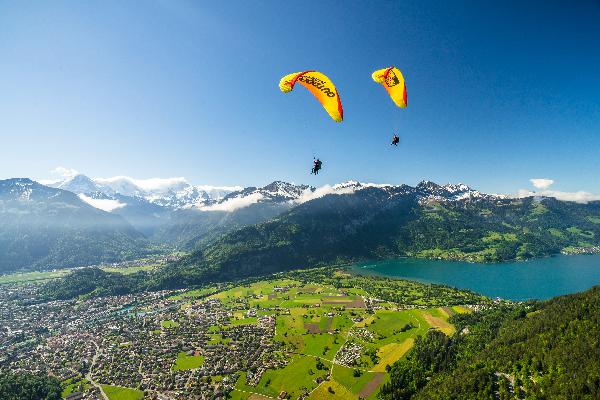
Situated between Lake Thun and Lake Brienz, Interlaken is the adventure capital and primary gateway to the majestic Jungfrau region, known as the “Top of Europe.”
Key Attractions
The Jungfraujoch:A once-in-a-lifetime trip to the highest railway station in Europe. Visit the Sphinx Observatory, Ice Palace, and stand on the Aletsch Glacier (a UNESCO site).
Harder Kulm:The local mountain of Interlaken, accessible by funicular. The “Two Lakes Bridge” viewing platform offers an iconic view of Interlaken between the two lakes.
Lake Thun & Lake Brienz:Taken scenic boat cruises on both emerald-green lakes, surrounded by mountains and dotted with castles.
Adventure Sports:The region is famous for skydiving, paragliding, canyon jumping, and hiking.
Towns of Grindelwald & Lauterbrunnen:Taken a train up into the valleys to visit these iconic villages. Lauterbrunnen is famous for its 72 waterfalls.
>