The Ultimate Peru Travel Guide: Lima, Cusco, Sacred Valley, Machu Picchu & Rainbow Mountain
This comprehensive guide details a classic Peruvian itinerary, taking travelers from the coastal capital through the heart of the ancient Inca Empire to the high-altitude wonders of the Andes. The journey encompasses rich history, breathtaking landscapes, vibrant culture, and culinary excellence.
Part 1: Arrival in Lima – The Gastronomic Capital
Most journeys to Peru begin in its capital, Lima. A sprawling metropolis perched on cliffs overlooking the Pacific Ocean, Lima is a city of contrasts, where colonial history meets modern innovation, famously recognized as the gastronomic capital of Latin America.
Key Attractions in Lima
Historic Centre of Lima: A UNESCO World Heritage site, the Plaza Mayor (Main Square) is surrounded by architectural gems like the Government Palace, Lima Cathedral, and the Archbishop’s Palace. A guided walking tour is highly recommended to appreciate the history.
Larco Museum (Museo Larco): Housed in an 18th-century viceroyalty mansion, this museum offers an unparalleled collection of pre-Columbian art, including its famous gallery of pre-Columbian erotic pottery. Its beautiful gardens and on-site restaurant make it a must-visit.
Parque del Amor (Love Park): Located in the trendy Miraflores district, this park offers stunning views of the Pacific Ocean. Inspired by Park Güell in Barcelona, it features a central sculpture “El Beso” (The Kiss) and colorful mosaic walls.
Magic Water Circuit (Parque de la Reserva): This park holds the world record for the largest fountain complex in a public park. At night, the fountains come alive with spectacular light, music, and laser shows.
Lima Food & Drink
Lima’s food scene is revolutionary. Must-try experiences include:
Ceviche: Peru’s national dish. Fresh raw fish cured in freshly squeezed key lime or bitter orange juice, with sliced onions, chili peppers, and salt. Always served with sweet potato and corn.
Pisco Sour: The country’s signature cocktail, made with Pisco (a grape brandy), lime juice, simple syrup, egg white, and bitters.
Gastronomic Restaurants: For a high-end experience, consider world-renowned restaurants like Central or Maido. For a more local but exceptional experience, visit a “cevichería” or a “pollería” (for rotisserie chicken).
Transportation & Accommodation in Lima
Getting Around: Jorge Chávez International Airport (LIM) is the main gateway. Official airport taxis are safe for transfers to the city. Within Lima, Uber and Cabify are reliable and safer than hailing random street taxis. The districts of Miraflores and Barranco are the most popular and safest areas for tourists to stay.
Staying: Accommodation ranges from luxury chains in Miraflores to boutique hotels in the bohemian district of Barranco. It is advisable to spend at least two nights in Lima to adjust and explore its culinary and cultural offerings.
Part 2: Flight to Cusco – The Navel of the World
A short, scenic one-hour flight from Lima takes you to Cusco (3,399m / 11,152ft), the ancient capital of the Inca Empire. The drastic change in altitude requires immediate attention to acclimatization.
Acclimatization Tips for Cusco
- Upon arrival, move slowly, avoid strenuous activity for the first 24-48 hours.
- Drink plenty of water and avoid heavy meals and alcohol initially.
- Drink coca tea (“mate de coca”), a traditional Andean remedy for altitude sickness.
- Consider consulting a doctor about medication like Acetazolamide (Diamox) before your trip.
Key Attractions in Cusco
Plaza de Armas: The heart of Cusco, surrounded by colonial arcades, the Cathedral, and the Church of the Society of Jesus. It’s a vibrant square perfect for people-watching.
Sacsayhuamán: The impressive fortress-temple overlooking Cusco. Its massive, perfectly interlocking stone walls are a testament to Inca architectural prowess. It is part of the Cusco Tourist Ticket (Boleto Turístico).
Qorikancha (Temple of the Sun): Once the richest temple in the Inca Empire, its perfectly curved masonry forms the foundation of the Santo Domingo Church and Convent, showcasing the clash of Inca and Spanish cultures.
San Pedro Market: A bustling local market where you can find everything from fresh produce and meats to souvenirs, juices, and local street food. It offers an authentic glimpse into daily life.
Cusco Food & Accommodation
Food to Try: Beyond ceviche, try Lomo Saltado (a stir-fry of beef, tomatoes, onions, and french fries served with rice) and Cuy (guinea pig), a traditional Andean delicacy. Many restaurants around Plaza de Armas offer international and local cuisine.
Staying: Accommodation in Cusco ranges from hostels to luxurious hotels. Staying within a few blocks of the Plaza de Armas is convenient but can be noisy. For quieter options, look at the neighborhoods of San Blas or areas slightly outside the immediate city center.
Part 3: Sacred Valley of the Incas – The Agricultural Heartland
The Sacred Valley, at a lower altitude than Cusco, is not only stunningly beautiful but also historically significant as the agricultural breadbasket of the Inca Empire. It’s an ideal place to continue acclimatizing.
Key Attractions in the Sacred Valley
Pisac: Famous for its vibrant market (especially on Sundays, Tuesdays, and Thursdays) and its extensive Inca ruins perched high on a hilltop, featuring terraces, temples, and an ancient cemetery.
Ollantaytambo: One of the best-preserved Inca towns, with narrow cobblestone streets and water channels still in use. The massive fortress-temple here was the site of a rare Inca victory over the Spanish conquistadors.
Moray: An intriguing archaeological site consisting of several enormous terraced circular depressions, believed to have been an Inca agricultural laboratory for experimenting with crops at different altitudes.
Maras Salt Mines: Thousands of pre-Inca salt pans cascading down a mountainside. Local families still harvest pink salt from these pools using methods dating back centuries.
Transportation & Accommodation in the Sacred Valley
Getting Around: The valley can be explored by hiring a private taxi for the day, joining a guided tour, or using colectivos (shared vans). Many travelers spend a night or two in towns like Urubamba or Ollantaytambo to break up the journey to Machu Picchu.
Staying:The Sacred Valley offers some of Peru’s most beautiful hotels, including secluded resorts and charming lodges with stunning mountain views. Staying here provides a more tranquil experience than Cusco.
Part 4: Aguas Calientes & Machu Picchu – The Lost City
The journey to Machu Picchu culminates in a visit to one of the New Seven Wonders of the World. The gateway town is Aguas Calientes, also known as Machu Picchu Pueblo.
Getting to Aguas Calientes and Machu Picchu
By Train: The most common and scenic way. Peru Rail and Inca Rail offer services from Ollantaytambo or Poroy (near Cusco) to Aguas Calientes. Booking train tickets months in advance is crucial.
By Foot (Inca Trail):The multi-day Inca Trail trek is a legendary hike that ends at the Sun Gate (Inti Punku) overlooking Machu Picchu. Permits are required and sell out months in advance.
Visiting Machu Picchu
Tickets & Rules: Entrance tickets to Machu Picchu must be purchased in advance online via the official government website. There are limited tickets per day and for specific entry times. As of recent regulations, visiting with a certified guide is mandatory. There are also circuit routes to manage visitor flow.
The Citadel:A guided tour (2-3 hours) is essential to understand the history and significance of key sites like the Temple of the Sun, the Room of the Three Windows, the Intihuatana (stone sundial), and the Central Plaza. Allow at least 4-6 hours to fully explore the site.
Additional Hikes: For an extra challenge and breathtaking views, you can purchase separate tickets to hike Huayna Picchu (the steep mountain behind the ruins) or Machu Picchu Mountain. These also have limited daily slots.
Aguas Calientes Town
This tourist-oriented town is built along the Vilcanota River. While it lacks historic charm, it has numerous restaurants, hotels, and a vibrant artisan market. The town’s namesake hot springs are a popular spot to relax after a long day of hiking.
Part 5: Return to Cusco & Day Trip to Rainbow Mountain or Alpaca Farm
After returning to Cusco by train (and potentially a car transfer), travelers often use the city as a base for further high-altitude adventures.
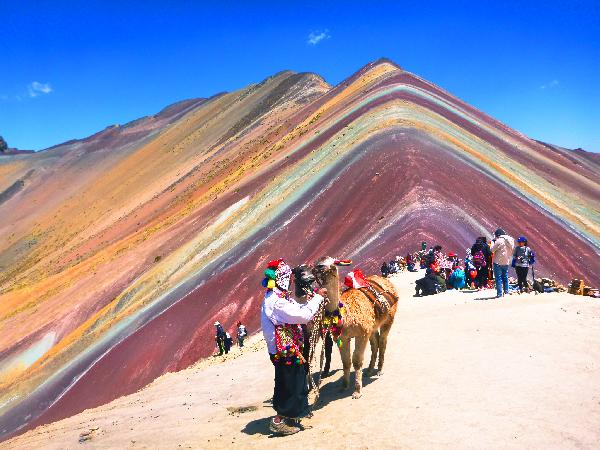
Rainbow Mountain (Vinicunca)
A full-day trip from Cusco (very early start around 4 AM), Vinicunca has gained fame for its striking mineral-striped colors. This is a challenging excursion due to the high altitude (5,200m / 17,060ft at the summit). The hike from the drop-off point takes about 1.5 hours each way. Horses are available for rent for part of the journey. Weather can be unpredictable, so layered clothing is essential.
Alpaca & Vicuña Experiences
For a less strenuous but culturally rich day trip, visitors can go to an alpaca or vicuña farm. The “
Awanacancha Textile Center” on the road to Pisac is an excellent stop to see all four South American camelids (llama, alpaca, vicuña, and guanaco) and learn about traditional weaving techniques from local communities.
Part 6: Journey to Puno & Lake Titicaca
The final leg of this itinerary involves traveling from Cusco to Puno (3,827m / 12,556ft), on the shores of Lake Titicaca, the highest navigable lake in the world.
Transportation from Cusco to Puno
By Bus (Andean Explorer or Tourist Bus):The most scenic option is the luxury Belmond Andean Explorer train, but it is expensive. More commonly, travelers take a tourist bus service (e.g., Cruz del Sur) which makes stops at interesting sites along the route, like the Raqchi archaeological site and La Raya pass, turning the journey into a tour.
By Flight:There are direct flights from Cusco to Juliaca (the nearest airport to Puno), followed by a one-hour car transfer.
Key Attractions in Puno & Lake Titicaca
The Uros Floating Islands:A visit to these man-made islands constructed entirely from totora reeds is a unique experience. The Uros people have lived on these islands for centuries, and visitors can learn about their way of life and take a ride on a reed boat.
Taquile Island:A larger, natural island known for its intricate textile art, which is declared a UNESCO Intangible Cultural Heritage. The community maintains a strong collective social system and offers homestay experiences.
Sillustani:A pre-Inca burial ground located on a peninsula near Lake Umayo. It is famous for its striking “chullpas,” which are large, cylindrical stone tombs built by the Colla people.
Cultural Insights & Final Tips
Shopping & Souvenirs:High-quality alpaca wool products (sweaters, scarves, blankets) are excellent purchases. Always bargain politely in markets. Be aware that “baby alpaca” wool is the finest and softest.
Sustainability:Be a responsible traveler. Use reusable water bottles (water refill stations are common). Do not pick up stones or artifacts at archaeological sites. Respect local customs and always ask for permission before taking photos of people.
Health & Safety:Drink only bottled or purified water. Be cautious with street food; ensure it is freshly cooked. Peru is generally a safe country for tourists, but standard precautions against petty theft in crowded areas should be taken.