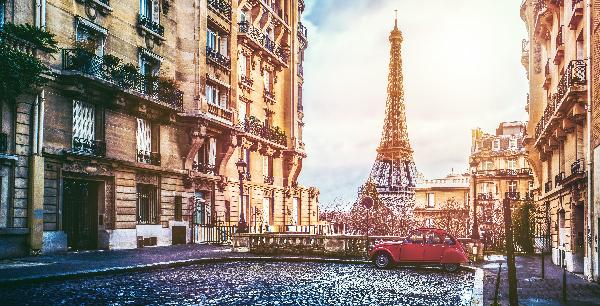
Paris Travel Guide: The City of Light
Paris, the capital of France, is a global epicenter of art, fashion, gastronomy, and culture. Known as the “City of Light” (La Ville Lumière), it beckons millions of visitors each year with its iconic landmarks, world-class museums, charming neighborhoods, and unparalleled ambiance. This comprehensive guide provides everything you need to plan an unforgettable trip.
Introduction to Paris
Paris is situated in the north-central part of France, on the banks of the Seine River. Its history spans over two millennia, from its beginnings as the Roman town of Lutetia to its current status as a modern metropolis that carefully preserves its past. The city is administratively divided into 20 arrondissements (districts) that spiral out clockwise from the center, each with its own unique character and charm.
Best Time to Visit
The ideal time to visit Paris depends on your preferences for weather and crowds.
Spring (April to June): Widely considered the best time. The weather is mild, gardens are in bloom, and the city is vibrant. However, this is also peak tourist season.
Summer (July to August): Warm weather and long days, with numerous festivals. This is the busiest and most expensive season. Some smaller shops and restaurants may close for holiday in August.
Autumn (September to October): Another excellent time. The weather is pleasant, the summer crowds have thinned, and the fall foliage is beautiful.
Winter (November to March): The low season. It’s cold and days are short, but you’ll find fewer crowds and lower prices. The city is magical during the Christmas season with festive decorations and markets.
Getting There & Visa Requirements
By Air
Paris is served by three main international airports:
Charles de Gaulle (CDG): The largest airport, located about 25km northeast of the city. It handles most international flights.
Orly (ORY): Located 13km south of Paris, it handles more domestic and European flights.
Beauvais (BVA): A smaller airport used mainly by budget airlines, located about 85km north of Paris.
Transport from Airports: The RER B train line connects both CDG and Orly to the city center. Roissybus and Orlybus are direct bus services. Taxis and ride-sharing services are also available.
Visa Requirements
France is part of the Schengen Area. Travelers from the EU, EEA, and Switzerland do not need a visa. Citizens of many other countries, including the United States, Canada, Australia, and Japan, can visit for up to 90 days without a visa for tourism. Always check the latest visa requirements with your local French embassy or consulate before traveling.
Getting Around Paris
Paris has one of the world’s best public transportation systems, making it easy to explore.
Metro (Métro): The fastest way to get around. It has 16 lines identified by number and color, covering the entire city. It runs from approximately 5:30 am to 1:15 am (until 2:15 am on Fridays and Saturdays).
RER: A regional train network that connects the suburbs to the city center. It’s faster than the Metro for covering longer distances (e.g., from CDG airport to central Paris).
Buses: Slower than the Metro but offer scenic views of the city. Useful for shorter distances or when the Metro station is not conveniently located.
Taxis & Ride-Sharing: Readily available but more expensive. Uber, Bolt, and local taxi apps like G7 are widely used.
Walking: Many of Paris’s central neighborhoods are best explored on foot.
Bicycles (Vélib’): A public bike-sharing system with thousands of stations across the city.
Tickets: Single tickets (t+) can be used on the Metro, buses, and trams within the central zones. For longer stays, consider a “carnet” (pack of 10 tickets) or a Navigo Découverte weekly/monthly pass for unlimited travel.
Where to Stay: Neighborhood Guide
Le Marais (3rd & 4th Arr.): Historic, trendy, and vibrant. Full of narrow streets, chic boutiques, art galleries, and museums. Great for nightlife and LGBTQ+ friendly.
Saint-Germain-des-Prés (6th Arr.): Intellectual and artistic heritage. Known for its literary cafes (Les Deux Magots, Café de Flore), luxury boutiques, and art galleries.
The Latin Quarter (5th Arr.): Bohemian and student-friendly area around the Sorbonne University. Lively, with affordable eateries and a bustling atmosphere.
Champs-Élysées & Western Paris (8th & 16th Arr.): Upscale and luxurious. Home to high-end shopping, prestigious museums, and grand avenues. Can be more expensive.
Montmartre (18th Arr.): A historic village-like neighborhood on a hill, crowned by the Sacré-Cœur Basilica. Artistic, charming, and touristy, with stunning city views.
The Islands (Île de la Cité & Île Saint-Louis) (1st & 4th Arr.): The historic heart of Paris. Home to Notre-Dame and Sainte-Chapelle. Quiet and picturesque.
Bastille & Eastern Paris (11th & 12th Arr.): Lively, local, and less touristy. Known for its nightlife, trendy bars, and the Coulée Verte René-Dumont elevated park.
Top Attractions & Landmarks
The Essentials
Eiffel Tower (La Tour Eiffel): The quintessential symbol of Paris. Consider booking tickets online well in advance to avoid long queues. You can dine in one of its restaurants or simply enjoy a picnic on the Champ de Mars below.
The Louvre (Musée du Louvre): The world’s largest art museum. Home to masterpieces like the Mona Lisa, Venus de Milo, and Winged Victory of Samothrace. Purchase tickets online to skip the line. It’s impossible to see everything in one visit, so plan your route beforehand.
Notre-Dame Cathedral: Although heavily damaged in a fire in 2019, this Gothic masterpiece remains a powerful symbol. The exterior can still be admired from a distance, and restoration work is ongoing with a planned reopening in 2024.
Arc de Triomphe: Stands at the western end of the Champs-Élysées. Climb to the top for one of the best panoramic views of Paris, looking down the 12 radiating avenues.
Champs-Élysées: One of the world’s most famous avenues, lined with cinemas, cafes, and luxury shops. It runs from the Place de la Concorde to the Arc de Triomphe.
Sacre-Coeur Basilica: A stunning white basilica perched atop Montmartre hill. The climb is worth it for the breathtaking view over Paris.
World-Class Museums
Musée d’Orsay: Housed in a magnificent former railway station, it boasts an unparalleled collection of Impressionist and Post-Impressionist art by masters like Monet, Manet, Renoir, Van Gogh, and Degas.
Centre Pompidou: A building of inside-out architecture dedicated to modern and contemporary art. Its escalators on the exterior provide another great city view.
Musée de l’Orangerie: Located in the Tuileries Garden, it houses Claude Monet’s magnificent Water Lilies series in two oval rooms designed specifically for them.
Musée Rodin: Displays the works of Auguste Rodin in a beautiful mansion and garden, including “The Thinker” and “The Gates of Hell.”
Historic & Cultural Sites
Sainte-Chapelle: A gem of Gothic architecture on Île de la Cité, renowned for its stunning stained-glass windows that depict biblical scenes.
The Panthéon: A neoclassical mausoleum containing the remains of distinguished French citizens like Voltaire, Rousseau, Victor Hugo, and Marie Curie.
Palais Garnier: The opulent 19th-century opera house that inspired “The Phantom of the Opera.” You can take a guided tour or attend a performance.
Les Invalides: A complex of buildings containing museums and monuments related to the military history of France, as well as the tomb of Napoleon Bonaparte.
Parks & Gardens
Luxembourg Gardens (Jardin du Luxembourg): A beautifully manicured garden popular with Parisians for strolling, picnicking, and sailing model boats on the pond.
Tuileries Garden (Jardin des Tuileries): Located between the Louvre and Place de la Concorde, it’s a classic French garden perfect for a walk.
Bois de Boulogne & Bois de Vincennes: Two large parks on the western and eastern edges of Paris, respectively. Ideal for boating, cycling, and escaping the city bustle.
Père Lachaise Cemetery: The world’s most visited cemetery, it is like an open-air museum with ornate tombs of famous figures like Jim Morrison, Oscar Wilde, and Édith Piaf.
Shopping Districts
Avenue Montaigne & Rue du Faubourg Saint-Honoré: For haute couture and luxury brands (Dior, Chanel, Hermès).
Le Marais: For independent designers, concept stores, and vintage shops.
Grands Boulevards & Galeries Lafayette/Printemps: For department stores and mainstream international brands.
Saint-Germain-des-Prés: For antiques, art galleries, and high-end fashion boutiques.
Food & Drink
Culinary Specialties
Baguette & Croissants: The staples of a French breakfast. Find a good local “boulangerie” for the freshest ones.
Café Culture: Sitting at a sidewalk café for a coffee (un café) is a quintessential Parisian experience.
Cheese (Fromage): France has hundreds of varieties. Try a cheese plate at a restaurant or buy from a “fromagerie.”
Pastries (Pâtisserie): Indulge in éclairs, macarons (Ladurée and Pierre Hermé are famous), tarts, and mille-feuille.
Savoury Dishes: Steak Frites (steak and fries), Coq au Vin (chicken in red wine), Croque Monsieur/Madame (grilled ham and cheese sandwich), Onion Soup, Duck Confit.
Sweets: Crème Brûlée, Profiteroles, Crêpes (both sweet and savory galettes).
Where to Eat & Drink
Cafés & Brasseries: Casual spots open all day for simple meals, drinks, and people-watching.
Bistros:: Traditional restaurants serving classic French cuisine in a cozy setting.