An In-Depth Travel Guide to Iceland’s Ring Road: Reykjavik, Golden Circle & South Coast
Iceland, the land of fire and ice, offers a landscape so dramatic and diverse it feels otherworldly. A journey from its vibrant capital, Reykjavik, through the legendary Golden Circle, and along the breathtaking South Coast to the edge of Europe’s largest glacier is a pilgrimage for nature lovers. This guide details a comprehensive itinerary covering the quintessential Icelandic experience.
Part 1: Reykjavik – The World’s Northernmost Capital
Your Icelandic adventure begins in Reykjavik, a small, colorful, and dynamic city that serves as the cultural and logistical heart of the country. Despite its small size, it is packed with charm, excellent cuisine, and a surprising artistic vibrancy.
Key Attractions in Reykjavik
Hallgrímskirkja Church: This iconic concrete church, inspired by Iceland’s basalt lava flows, dominates the Reykjavik skyline. Take the elevator to the top of the bell tower for a panoramic 360-degree view of the city’s colorful rooftops, the sea, and the distant mountains.
Harpa Concert Hall: A masterpiece of modern architecture, Harpa’s geometric glass facade reflects the sky and harbor, creating a mesmerizing play of light. Even if you don’t attend a concert, wandering through its interiors is a must.
Sun Voyager (Sólfar): This striking steel sculpture on the seaside promenade resembles a Viking longship but is officially an “ode to the sun.” It’s a beautiful spot for photos, especially during sunset.
Perlan (The Pearl): Located on Öskjuhlíð hill, this glass-domed building offers another superb viewing platform. Its “Wonders of Iceland” exhibition includes a real ice cave you can walk through.
The Old Harbour: A lively area where you can book whale watching tours, visit museums like the Vikin Maritime Museum, or simply enjoy the atmosphere.
Food & Culture in Reykjavik
Reykjavik’s food scene has exploded in recent years. While you can find traditional Icelandic fare, the city is now known for its innovative New Nordic cuisine.
Traditional Must-Try: Sample plokkfiskur (a hearty fish stew), or for the adventurous, try hákarl (fermented shark) at a place like Café Loki, opposite the church.
Hot Dog Stand (Bæjarins Beztu Pylsur): A legendary institution. Order one “with everything” (eina með öllu) – it includes crispy and raw onions, remoulade, ketchup, and mustard.
Fine Dining: Dill Restaurant, which holds a Michelin star, offers a sublime tasting menu based on local ingredients. For a more accessible yet exceptional experience, try Matarkjallarinn (The Food Cellar) or Grillmarkaðurinn (The Grill Market).
Coffee Culture: Icelanders are serious about their coffee. Spend a morning in a cozy café like Reykjavik Roasters or Kaffibrennslan, soaking in the local vibe.
Practical Tip: Reykjavik is very walkable. Purchase a “Reykjavik City Card” for free entry to many museums, pools, and unlimited bus travel if you plan on visiting multiple attractions.
Part 2: The Golden Circle – Iceland’s Classic Day Trip
The Golden Circle is a 300-kilometer loop from Reykjavik that covers three of Iceland’s most famous sites. It’s easily accessible and provides a concentrated dose of the country’s geological wonders.
Þingvellir National Park
This UNESCO World Heritage site is historically and geologically profound. It is where the North American and Eurasian tectonic plates are pulling apart at a rate of about 2 cm per year, creating a vast rift valley. You can literally walk between two continents. It was also the original site of the Alþingi, one of the world’s oldest parliamentary institutions, established in 930 AD. Don’t miss the beautiful Öxarárfoss waterfall within the park.
Geysir Geothermal Area
The name “geyser” originates here. The Great Geysir itself is mostly dormant, but its neighbor, Strokkur, erupts reliably every 5-10 minutes, shooting a column of boiling water 15-20 meters (50-65 feet) into the air. The entire area is a bubbling, steaming landscape of hot springs and fumaroles, filling the air with a distinct sulfur smell.
Gullfoss Waterfall
The “Golden Falls” is a massive, two-tiered waterfall that cascades 32 meters into a deep canyon. The sheer power and volume of the Hvítá river are awe-inspiring. On sunny days, rainbows dance in the mist created by the crashing water. Be prepared to get wet from the spray!
Transportation Tip: You can join a guided bus tour, but renting a car offers more flexibility. This allows you to start early to avoid crowds and add stops like the Friðheimar tomato farm for a lunch inside a greenhouse.
Part 3: The South Coast – Waterfalls, Black Sand Beaches, and Glaciers
Leaving the Golden Circle, you continue east along Iceland’s famous Ring Road (Route 1) onto the South Coast. This region is famed for its dramatic waterfalls, vast sand plains, and glacier tongues flowing from the mighty Vatnajökull ice cap.
Seljalandsfoss and Gljúfrabúi Waterfalls
Just before you reach the more famous Skógafoss, you’ll encounter Seljalandsfoss. This elegant 60-meter waterfall is unique because you can walk on a path that goes completely behind the curtain of water—a truly immersive experience. A waterproof jacket is non-negotiable here. A short walk to the left (east) is the hidden gem Gljúfrabúi, a waterfall partially concealed inside a canyon. You can wade through a shallow stream at the entrance to discover it.
Skógafoss Waterfall
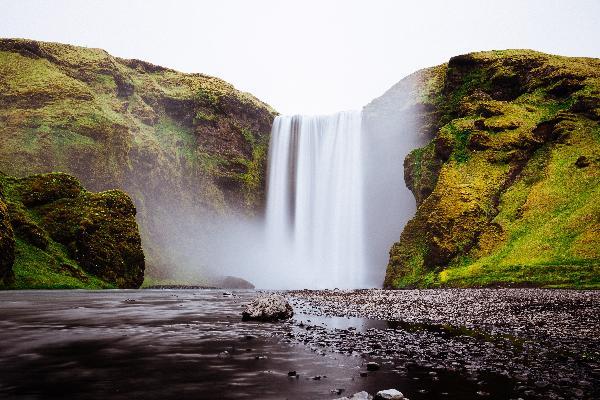
A short drive further east is the powerful and broad Skógafoss. One of Iceland’s biggest waterfalls, it produces a tremendous amount of spray, often creating single or even double rainbows on sunny days. A steep staircase leads to a viewing platform at the top, offering a spectacular view of the coastline. This waterfall is also the starting point for the famous Fimmvörðuháls hiking trail.
Sólheimajökull Glacier
Your first close encounter with a glacier is Sólheimajökull, an outlet glacier from the larger Mýrdalsjökull ice cap. You can walk from the parking lot to the glacier’s edge in about 15 minutes. The landscape is stark and dramatic, with the dirty ice streaked with volcanic ash.
Important: Do not walk on the glacier without a certified guide. Crevasses are hidden and extremely dangerous.
Reynisfjara Black Sand Beach
Near the village of Vík, this is arguably Iceland’s most famous beach—and its most dangerous. The stunning black sand, made of basalt, is framed by incredible basalt column cliffs and towering sea stacks called Reynisdrangar out in the ocean. The waves here are known as “sneaker waves”—they are unpredictable, powerful, and can drag people out to sea in an instant.
Always keep a safe distance from the water and never turn your back on the ocean.
Part 4: Vatnajökull National Park – The Crown Jewel of Ice
As you venture further east, you enter the realm of Vatnajökull National Park, home to Europe’s largest glacier by volume. The landscape becomes even more epic and primordial.
Skaftafell (Part of Vatnajökull National Park)
Formerly its own national park, Skaftafell is now a part of the greater Vatnajökull park. It’s a hiker’s paradise, offering trails for all levels through a diverse landscape of glacial tongues, lush valleys, and waterfalls. A popular and relatively easy hike leads to Svartifoss (Black Fall), a unique waterfall framed by dark basalt columns that inspired the architecture of Hallgrímskirkja.
Jökulsárlón Glacier Lagoon
This is a highlight of any trip to Iceland. Jökulsárlón is a vast glacial lagoon filled with icebergs that have calved from the Breiðamerkurjökull glacier. The icebergs float serenely in the deep blue water before making their way out to sea. The sight and sound of ice cracking and calving are unforgettable. Take an amphibious boat tour to get up close to the ice formations—the blue and black-striped icebergs are particularly stunning.
Diamond Beach
Directly across the road from Jökulsárlón, where the lagoon meets the ocean via a short channel, lies the Diamond Beach. Here, icebergs from the lagoon wash up on the black sand shore, glittering like diamonds against the dark canvas. The contrast is breathtakingly beautiful and provides endless photographic opportunities. The scene changes constantly as tides bring new ice onto the beach.
Practical Tip: The weather in this region can be highly variable, even in summer. Dress in layers with a waterproof and windproof outer shell. For the glacier lagoon boat tour, book in advance during peak season.
Part 5: The Return Journey to Reykjavik
The drive back to Reykjavik is long (approximately 4-5 hours from Jökulsárlón without stops), but it allows you to see the landscapes from a new perspective. You can break up the journey by revisiting a favorite spot or stopping at places you missed on the way out, such as the charming village of Vík for a coffee or the Skógasafn open-air museum near Skógafoss.
Essential Travel Information
Transportation
Car Rental: The most flexible way to do this itinerary. A 4×4 is recommended if you plan to travel outside of summer or venture onto F-roads (mountain roads), but for this specific route on the Ring Road in summer, a 2WD is sufficient.
Guided Tours: Multi-day tours cover this route if you prefer not to drive. This takes away the stress of navigation and driving in potentially difficult conditions.
Campervan: A popular option that combines transport and accommodation, offering ultimate freedom.
Accommodation
Book accommodation well in advance, especially for the South Coast villages like Vík and Höfn, and near Skaftafell/Jökulsárlón. Options range from hotels and guesthouses to farm stays and hostels.
When to Visit
Summer (June-August): Midnight sun, warmer temperatures (8-15°C / 46-59°F), all roads and services are open. This is the peak season with the most crowds.
Shoulder Seasons (May & September): Fewer crowds, decent weather, and a chance to see the Northern Lights in September.
Winter (October-April): Experience this landscape in snow and ice, with chances for ice caving and Northern Lights. However, daylight is limited (4-7 hours), and road conditions can be challenging, requiring a 4×4 and expert driving skills.
Cultural Insights & Etiquette
Tipping: Tipping is not customary or expected in Iceland. It’s already included in prices.
Shopping: Look for authentic Icelandic wool sweaters (lopapeysa) but be prepared for high prices as they are hand-knitted.
Sustainability: Icelanders are very environmentally conscious. Always stay on marked paths to protect fragile moss and vegetation, which can take decades to recover from damage.
Swimming Pools: Visiting a local geothermal swimming pool is a quintessential Icelandic social activity. Remember to shower thoroughly without your swimsuit before entering, as is the custom.
A journey through Iceland’s South Coast is more than a vacation; it’s an encounter with raw, elemental power. From the urban energy of Reykjavik to the thunderous silence of a glacial lagoon, this route captures the very soul of this incredible island.