A Journey Through Provence: Avignon, Valensole, Moustiers-Sainte-Marie, and Lac de Sainte-Croix
This travel guide details a classic and enchanting loop through the heart of Provence, starting and ending in the historic city of Avignon. This journey takes you from papal palaces to endless lavender fields, from a village suspended between heaven and earth to the turquoise waters of one of France’s most beautiful lakes. It is a route designed to capture the essence of the region—its history, its scents, its colors, and its laid-back pace of life.
Part 1: Avignon – The City of Popes
Avignon is more than just a starting point; it is a historical epicenter and a cultural hub. For much of the 14th century, it was the seat of the Catholic papacy, not Rome, and this legacy has left an indelible mark on the city’s architecture and atmosphere. Encircled by magnificent medieval ramparts, Avignon feels like a world unto itself.
Main Attractions
Palais des Papes (Palace of the Popes): This is the undeniable centerpiece of Avignon. A UNESCO World Heritage site, it is one of the largest and most important Gothic buildings in Europe. Walking through its vast, often austere halls, chapels, and courtyards, you get a sense of the immense power and wealth of the Avignon papacy. The audio guide is highly recommended to understand the history and function of the different rooms. Don’t miss the stunning frescoes in the St. John’s Chapel by the Italian artist Matteo Giovanetti.
Pont Saint-Bénézet (Pont d’Avignon): The legendary bridge that “sur le pont d’Avignon, on y danse, on y danse.” Originally spanning the Rhône River, only four of its original 22 arches remain. Walking onto the bridge offers lovely views of the river, the palace, and the smaller town of Villeneuve-lès-Avignon on the opposite bank. The attached chapel dedicated to St. Nicholas is where the bridge’s founder, Saint Bénézet, is buried.
Place de l’Horloge: The city’s main square, always buzzing with life. It is lined with cafés and restaurants and is home to the Hôtel de Ville (City Hall) and the 19th-century opera house. It’s a perfect spot for a coffee or a glass of pastis while people-watching.
Rocher des Doms: A beautiful landscaped garden perched on a rocky outcrop overlooking the palace and the river. It’s a peaceful escape from the city bustle and provides the best panoramic photographs of the Rhône, the bridge, and the surrounding countryside.
Les Halles d’Avignon: A covered market that is a feast for the senses. Open every day except Monday, it features dozens of stalls selling fresh produce, cheeses, olives, meats, fish, and local specialties. Even if you’re not buying, it’s worth a visit to see the “living wall” – a vertical garden covering its facade.
Food & Drink
Provençal cuisine shines in Avignon. Look for dishes like
Daube de Boeuf (a rich beef stew), Tapenade (a paste of olives, capers, and anchovies), and Ratatouille. Being close to the Rhône, river fish are also common. For dessert, try a Tarte Tropézienne or the local candy, Berlingots. The region’s wines, such as Châteauneuf-du-Pape (from a village just north), Côtes du Rhône, and Luberon, are excellent and affordable.
Transportation & Local Tips
Getting In: Avignon is well-connected by high-speed TGV train from Paris (about 3 hours) and other major cities. The TGV station is located just outside the city walls. The city centre is compact and best explored on foot.
Getting Around: The city center is a pedestrian-friendly zone. A small tourist train runs a circuit for those who prefer not to walk. For this road trip, you will need to pick up a rental car. It’s best to book this in advance, especially during peak season.
Local Insight: If you are visiting in July, be sure to check out the world-famous Festival d’Avignon, a massive theatre and performing arts festival that takes over the entire city. Book accommodation and tickets many months in advance.
Part 2: Valensole Plateau – A Sea of Lavender
Driving east from Avignon for about 1.5 hours, the landscape gradually transforms. The Rhône valley gives way to rolling hills, and then you crest a rise onto the vast, high-altitude plain of Valensole. From late June to mid-July, this area becomes one of the most iconic images of Provence: an endless, fragrant sea of blooming lavender.
Main Attractions
The Lavender Fields: The attraction is the landscape itself. There are no formal “entrances” to the fields. Simply drive along the D6 and D8 roads that crisscross the plateau and find a safe place to pull over. The sight of vibrant purple rows stretching to the horizon, often juxtaposed with golden fields of wheat or sunflowers, is breathtaking. The air is thick with the hum of bees and the unmistakable, calming scent of lavender.
The Town of Valensole: A charming Provençal village that serves as the hub for the plateau. It has several charming squares with fountains and cafés. It’s a good place to stock up on water and local products.
Lavender Distilleries: Scattered across the plateau are many farms (exploitations) that distill lavender into essential oil. Many offer tours and demonstrations during the harvest season (July), explaining the process from field to bottle. This is the best place to buy authentic lavender oil, soaps, and sachets.
Food & Drink
The plateau is known for its agricultural products. Look for lavender honey, which has a distinct floral flavor. Many bakeries sell lavender ice cream or lavender-infused scones. The local lamb (
Agneau de Sisteron) is renowned for its flavor, derived from grazing on the aromatic herbs of the region.
Transportation & Local Tips
Getting There: A car is absolutely essential for exploring the Valensole Plateau. Public transport is virtually non-existent here.
Timing is Everything: The lavender bloom is highly dependent on weather. The peak is typically from late June to mid-July. By early August, most fields have been harvested. Check online for bloom reports before you go.
Respect the Land: These are working farms. Always park carefully without blocking access for farm machinery. Do not walk into the fields without explicit permission from the farmer (some have signs). Walking between rows is usually tolerated if done carefully without damaging plants.
Local Insight: Visit early in the morning or late in the afternoon for the best light for photography and to avoid the midday heat and crowds. The light at sunset, casting long shadows across the fields, is particularly magical.
Part 3: Moustiers-Sainte-Marie – The Ceramics Village
From Valensole, a scenic 45-minute drive south takes you deep into the dramatic landscapes of the Verdon Regional Natural Park. Nestled at the base of towering limestone cliffs, Moustiers-Sainte-Marie appears almost too perfect to be real. Often called the “Ceramics Village” or “Étoile de Moustiers” (Star of Moustiers), it is built in a ravine with a waterfall running through its center.
Main Attractions
The Village Itself: The primary joy is wandering the steep, cobbled streets, crossing the small bridges over the streams, and admiring the ancient houses that seem to grow out of the rock. The village is famous for its faïence (tin-glazed pottery), and numerous workshops and shops display beautiful, hand-painted ceramics.
The Golden Star: Hanging high above the village, spanning the ravine, is a long chain with a gilded star. Its origins are shrouded in legend, one story claiming it was placed there by a returning Crusader knight in thanks for his safe deliverance from captivity. A steep but rewarding 30-45 minute hike from the village leads to the Chapelle Notre-Dame de Beauvoir, which offers spectacular views back down over Moustiers and the star.
The Waterfalls: A stream originating from the mountains above cascades through the village, creating a series of lovely waterfalls. The path alongside them leads up to more panoramic viewpoints.
Ceramics Workshops (Ateliers de Faïence): Visit workshops like those on Rue du Seigneur de la Clue to see artisans at work. You can learn about the traditional techniques that have made Moustiers famous since the 17th century.
Food & Drink
The mountain air inspires hearty cuisine. Look for dishes featuring trout from local streams, wild mushrooms, and game. Cheeses from the Alpine pastures are excellent. Given its tourist popularity, it’s wise to book a table at one of the restaurants with a terrace overlooking the stream for a memorable meal.
Transportation & Local Tips
Getting There: The drive from Valensole is beautiful but winding as you descend into the Verdon area. Parking can be very challenging in Moustiers, especially in summer. There are several large paid parking lots at the entrance to the village; use them and walk in.
Local Insight: To avoid the day-trip crowds, consider staying overnight in Moustiers. The village is much quieter and more atmospheric in the evening after the buses have left. This also allows for an early start to nearby attractions like the Gorges du Verdon.
Part 4: Lac de Sainte-Croix – The Turquoise Gem
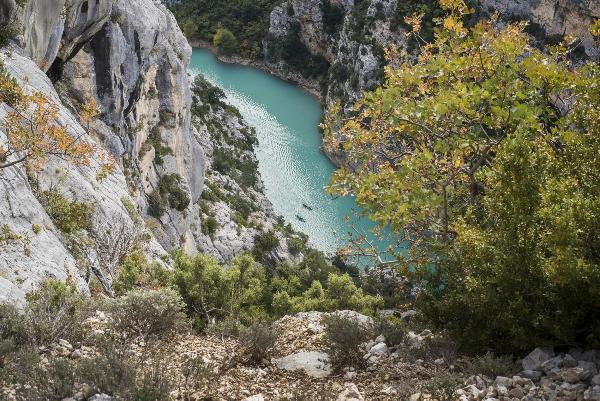
A mere 10-minute drive from Moustiers lies Lac de Sainte-Croix, a massive man-made reservoir whose stunning, brilliant turquoise water seems utterly out of place in inland France. Created in 1973 after the construction of a dam on the Verdon River, it has become a premier destination for water sports and relaxation.
Main Attractions
The Lake Itself: The primary activity is enjoying the water. The color is at its most vibrant on a sunny day. The southern shore is more developed with beaches and amenities, while the northern shore near Moustiers is wilder.
Water Activities: Renting a pedal boat, electric boat (no license required), canoe, or stand-up paddleboard is highly recommended. This allows you to explore the lake’s many coves and get a unique perspective from the water. Numerous rental outlets are found in villages like Sainte-Croix-du-Verdon and Les Salles-sur-Verdon.
The Entrance to the Gorges du Verdon: The most popular activity is to take a pedal boat or kayak from the landing near the Pont du Galetas bridge right into the mouth of the Gorges du Verdon, Europe’s deepest canyon. Paddling between the towering limestone cliffs is an unforgettable experience.
The Beaches: Plage de Bauduen and Plage des Galetas are two of the most popular sandy beaches, perfect for swimming and sunbathing.
Food & Drink
The lakeside villages have casual cafés and restaurants perfect for a post-swim lunch or ice cream. For a more unique experience, pack a picnic with local bread, cheese, charcuterie, and wine from Moustiers or Valensole and enjoy it on one of the quieter stretches of shore.
Transportation & Local Tips
Getting There: The lake is easily accessible by car from Moustiers. Parking at popular beach areas fills up quickly by mid-morning in summer, so arrive early or later in the afternoon.
Local Insight: Cars are prohibited on most rented boats, making it a peaceful experience. If you want to explore deep into the Gorges du Verdon by kayak, start early to avoid the wind that often picks up in the afternoon. Also note that motorboats with combustion engines are banned on the lake, preserving its tranquility and clean water.
The Return Journey: Lac de Sainte-Croix to Avignon
The drive back to Avignon from Lac de Sainte-Croix takes approximately 2 to 2.5 hours. You have two main options: retracing your route north past Valensole or taking a more westerly route through the Luberon Regional Natural Park. If time allows, driving through towns like Roussillon (known for its red ochre cliffs) or Gordes (a stunning hilltop village) in the Luberon makes for a fantastic finale before returning to Avignon.
A Practical Itinerary Summary
Recommended Duration: 3-4 days minimum.
Day 1: Explore Avignon. Arrive by train, pick up your rental car in the afternoon/evening, and spend the day visiting the Palais des Papes, Pont d’Avignon, and Rocher des Doms. Overnight in Avignon.
Day 2: Avignon to Valensole to Moustiers-Sainte-Marie. Drive to Valensole Plateau in the morning to see the lavender fields. Have lunch in Valensole village. Drive to Moustiers-Sainte-Marie in the afternoon, explore the village, and perhaps hike to see the star. Overnight in or near Moustiers.
Day 3: Lac de Sainte-Croix & Gorges du Verdon. Spend the day at Lac de Sainte-Croix. Rent a boat or kayak to explore the lake and paddle into the gorge. Enjoy a picnic or lakeside lunch. In the late afternoon/evening, you can either drive back to Avignon (if on a tight schedule) or stay another night in Moustiers.
Day 4: Return to Avignon (with optional Luberon detour). Drive back to Avignon, drop off your rental car, and depart by train.
A journey through this corner of Provence is a feast for all senses—a blend of profound history, breathtaking natural beauty, aromatic fields, and delicious cuisine that will leave you with memories as vivid as its famous lavender hue.