A Riviera Journey: A Travel Guide to the Nice-Cannes-Grasse-St. Paul de Vence Loop
Introduction to the French Riviera
The French Riviera, or Côte d’Azur, is a crescent of coastline in the southeast of France, famed for its stunning Mediterranean vistas, glamorous resorts, and profound artistic heritage. This guide details a classic loop journey beginning and ending in Nice, taking you through the cinematic hub of Cannes, the perfume capital of Grasse, and the medieval hilltop village of St. Paul de Vence. This itinerary offers a comprehensive experience of the region’s diverse attractions, from bustling coastal promenades to serene, perched villages overlooking the sea.
The climate is typically Mediterranean, with hot, dry summers and mild, sunny winters. The best times to visit are late spring (May-June) and early autumn (September-October) when the weather is pleasant and the summer crowds have thinned.
Nice: The Queen of the Riviera
As the unofficial capital of the French Riviera, Nice is a vibrant city that perfectly blends urban energy with coastal relaxation. Founded by the Greeks and later a favored retreat for European aristocracy, its history is etched into its architecture and culture.
Key Attractions
Promenade des Anglais: This iconic seafront walkway stretches for 7 kilometers along the Baie des Anges. It’s perfect for a stroll, a bike ride, or simply sitting on one of its famous blue chairs to admire the Mediterranean.
Vieux Nice (Old Town): A labyrinth of narrow, winding streets filled with baroque churches, bustling markets, and traditional shops. Key sites include the Palais Lascaris and the vibrant Cours Saleya Market, which sells flowers, produce, and local crafts daily.
Colline du Château (Castle Hill): While the castle is long gone, this park offers the most spectacular panoramic views of Nice’s red-roofed old town, the port, and the endless blue sea. A waterfall and a playground are also located here.
Musée Matisse: Housed in a beautiful 17th-century Genoese villa, this museum holds one of the world’s largest collections of Henri Matisse’s works, tracing his artistic evolution.
Musée Marc Chagall: Dedicated to the artist’s spiritual message, this museum features the most important collection of Chagall’s biblical-themed works.
Practical Information
Getting There: Nice Côte d’Azur Airport (NCE) is the main international airport for the region, with excellent connections worldwide. The city’s main train station, Gare de Nice-Ville, has frequent trains from other French cities and along the coast.
Getting Around: Nice’s city center is very walkable. An efficient tram system serves key routes, and buses cover the wider metropolitan area.
Cuisine: Don’t leave without trying Salade Niçoise, Socca (a chickpea flour pancake), Pissaladière (a type of onion tart), and Pan Bagnat.
Accommodation: Options range from luxury hotels on the Promenade des Anglais to charming boutique hotels in Old Town and budget-friendly hostels further inland.
Cannes: Glamour and Cinema
Synonymous with the international film festival, Cannes is a city of elegance, luxury shopping, and beautiful sandy beaches. While it exudes glamour, it also has a charming old town and a lively port.
Key Attractions
La Croisette: Cannes’ answer to the Promenade des Anglais, this famous boulevard is lined with palm trees, designer boutiques (Dior, Chanel, Louis Vuitton), and grand hotels like the Carlton and the Majestic.
Palais des Festivals et des Congrès: The home of the Cannes Film Festival. You can walk up the red-carpeted steps and see handprints of famous stars at the Allée des Étoiles du Cinéma outside.
Le Suquet: The historic old town of Cannes, perched on a hill. Climb its cobbled streets to the Musée de la Castre for Provençal art and artifacts and enjoy breathtaking views over the bay.
Îles de Lérins: A short boat ride from the harbor lies these two peaceful islands. Île Sainte-Marguerite is known for the Fort Royal, where the “Man in the Iron Mask” was imprisoned. Île Saint-Honorat is home to a community of Cistercian monks who produce their own wine.
Practical Information
Getting There: Cannes is easily reached from Nice by train (approx. 25-40 minutes) or by bus (approx. 1.5-2 hours). The coastal road offers stunning views but can be congested.
Getting Around: The city center is compact and best explored on foot. A local bus service operates throughout the city.
Cuisine: Seafood is a staple. Enjoy bouillabaisse (fish stew) or fruits de mer (seafood platter) at a port-side restaurant.
Accommodation: Cannes is known for its high-end hotels, but there are also many mid-range and budget options, especially away from La Croisette.
Grasse: The World’s Perfume Capital
Located inland in the hills above Cannes, Grasse has been the global center of perfume since the 16th century. The air in this town is subtly scented with jasmine, rose, and lavender from the surrounding fields.
Key Attractions
Perfumeries: Several major perfume houses offer guided tours explaining the history and complex process of perfume making.
Fragonard: One of the most famous, with an informative free tour and a large museum of historical objects related to perfume.
Galimard: Offers workshops where you can create your own signature scent.
Molinard: Features a beautiful museum and also offers perfume creation sessions.
International Perfume Museum (MIP): A modern museum dedicated to the 5,000-year history of perfume, exploring its cultural significance across different civilizations.
Vieille Ville (Old Town): Explore the medieval streets, visit the 12th-century Cathédrale Notre-Dame-du-Puy, which houses paintings by Rubens, and see the Hôtel de Ville (town hall).
Practical Information
Getting There: The most direct route from Cannes is by bus (line 600, approx. 1 hour). The winding road climbs into the hills, offering spectacular views. There is also a train station in Grasse with connections to Cannes and Nice.
Getting Around: The town center is hilly but walkable. The main perfumeries are located close to each other in the town center.
Cuisine: Try local Provençal dishes in a traditional restaurant. The region is also known for its violet-flavored sweets.
Shopping: This is the place to buy authentic French perfume, soaps, and scented candles directly from the source at factory prices.
St. Paul de Vence: The Medieval Jewel
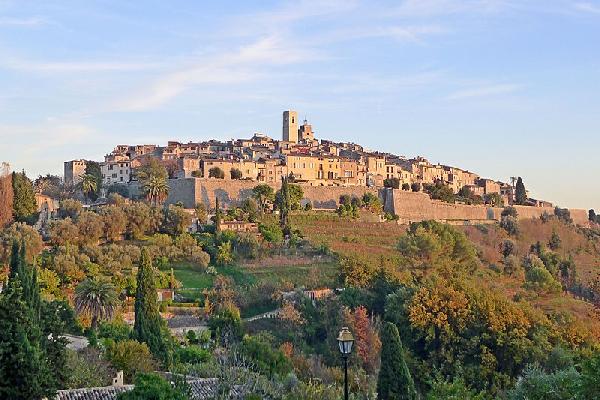
Perched on a hilltop overlooking the surrounding countryside, St. Paul de Vence is one of France’s most beautiful and best-preserved fortified villages. Its charming streets have long been a magnet for artists and celebrities.
Key Attractions
The Ramparts: Walk the complete circuit of the 16th-century fortifications for unparalleled views of the surrounding hills and valleys.
The Village Itself: The primary attraction is simply getting lost in its cobblestone lanes, discovering art galleries, craft shops, and quaint fountains around every corner.
Fondation Maeght: A world-renowned modern and contemporary art museum located just outside the village walls. Its collection includes works by Miró, Calder, Braque, and Chagall, beautifully integrated into a unique architectural setting.
La Colombe d’Or: A legendary inn and restaurant famous for its collection of modern art, which was often given in exchange for meals by struggling artists like Picasso and Matisse before they were famous.
Practical Information
Getting There: The most convenient way from Grasse or Nice is by car or taxi. From Nice, bus line 400 goes to St. Paul de Vence (approx. 1 hour).
Getting Around:The village is entirely pedestrianized. Parking is available at the base of the hill; it is a short but steep walk up to the main gate.
Cuisine: Enjoy a meal at one of the village’s terraced restaurants with stunning views. Be prepared for higher prices due to the tourist-centric location.
Shopping:The village is filled with high-quality art galleries and artisan shops selling pottery, jewelry, and Provençal fabrics.
Sustainable Itinerary & Practical Logistics
Sustainable Itinerary & Practical Logistics
A logical 5 to 7-day itinerary allows for a thorough exploration without being rushed.
Sustainable Itinerary & Practical Logistics
Days 1-3: Base in Nice. Explore Nice’s attractions at your leisure. Use one day for a day trip to Monaco and Èze via train.
Day 4: Day Trip to Cannes. Take an early train from Nice to Cannes. Spend the day walking La Croisette, exploring Le Suquet, and perhaps visiting an island. Return to Nice in the evening.
Day 5: Day Trip to Grasse & St. Paul de Vence.
Option 1 (By Public Transport): Take a bus from Nice to Grasse. Spend the morning on a perfume factory tour. In the afternoon, take a bus from Grasse to St. Paul de Vence (may require a connection). Explore the village before taking a bus back to Nice.
Option 2 (By Car): Rent a car for maximum flexibility. Drive from Nice to Grasse (approx. 45 mins), then to St. Paul de Vence (approx. 30 mins), before returning to Nice (approx. 30 mins). This allows you to visit both in one efficient day.
Day 6: Relax or explore another Riviera gem like Antibes or Villefranche-sur-Mer.
Day 7: Depart from Nice.
Sustainable Itinerary & Practical Logistics
Sustainable Itinerary & Practical Logistics:The regional TER trains are efficient and scenic for coastal travel (Nice-Cannes). Buses are necessary for reaching hilltop villages like St. Paul de Vence and are cheaper but slower than trains for coastal routes.
Sustainable Itinerary & Practical Logistics:A rental car offers ultimate freedom to explore off-the-beaten-path locations but can be a hassle with parking and traffic in towns like Nice and Cannes.
Sustainable Itinerary & Practical Logistics:The French Riviera uses the Euro (€). Credit cards are widely accepted, but it’s wise to carry some cash for small purchases in markets or villages.
Sustainable Itinerary & Practical Logistics:The primary language is French. While English is common in tourist areas, learning a few basic phrases (Bonjour, Merci, S’il vous plaît) is appreciated.
Sustainable Itinerary & Practical Logistics:Tipping is not obligatory as a service charge is included by law. However, it is customary to leave small change for good service in cafes and round up the bill or leave 5-10% in restaurants.
Sustainable Itinerary & Practical Logistics
The journey from Nice to Cannes, Grasse, and St. Paul de Vence encapsulates the very essence of the French Riviera. It is a voyage through contrasting yet complementary worlds: the urban buzz of coastal cities, the fragrant hills of artistic industry, and the timeless serenity of ancient stone villages clinging to hilltops. This loop provides not just a collection of destinations, but a rich tapestry of experiences—visual, olfactory, and historical—that will leave a lasting impression long after you have returned home.