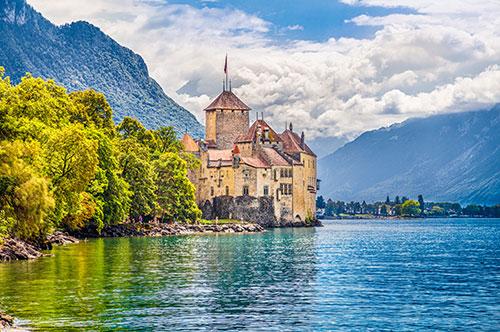
Central European Grand Tour: Germany, Netherlands, Belgium, France, Switzerland
This comprehensive travel guide details a classic Central European loop, starting and ending in Frankfurt, Germany. The journey traverses five countries, offering a rich tapestry of urban landscapes, historical landmarks, breathtaking natural scenery, and diverse culinary experiences. The itinerary covers the financial hub of Frankfurt, the Gothic cathedrals of Cologne, the canal-laced charm of Amsterdam, the grand boulevards of Paris, the serene beauty of Swiss lakes and mountains, and the romantic allure of Heidelberg.
Trip Overview and Logistics
This is a multi-destination tour best undertaken over a period of two to three weeks to fully appreciate each location. The primary mode of inter-city travel is Europe’s efficient and extensive rail network. Travelers are advised to consider rail passes like the Eurail Global Pass for flexibility. Accommodation ranges from luxury hotels in major cities to cozy bed-and-breakfasts in Swiss towns. The best time to travel is during the spring (April-June) or autumn (September-October) for pleasant weather and fewer crowds.
Germany: Frankfurt and Cologne
The journey begins in Frankfurt, Germany’s financial capital, before heading to the historic city of Cologne.
Frankfurt am Main
Often called “Mainhattan” for its impressive skyline, Frankfurt is a city of contrasts where modern skyscrapers stand alongside reconstructed historical buildings.
Attractions: The Römerberg is the city’s historic heart, featuring picturesque half-timbered houses. The Städel Museum houses a world-class art collection. For panoramic views, visit the viewing platform at the Main Tower. The Palmengarten is a beautiful botanical garden perfect for a relaxing stroll.
Food & Drink: Frankfurt is known for its Apfelwein (apple wine), traditionally drunk in a “geripptes” glass in the Sachsenhausen district. Must-try dishes include Grüne Soße (green sauce with herbs) served with boiled eggs and potatoes, and the hearty Frankfurter Würstchen.
Transportation: Frankfurt Airport (FRA) is a major international hub. The city has an excellent public transport system (U-Bahn, S-Bahn, trams). The main train station, Frankfurt Hauptbahnhof, is one of the busiest in Europe.
Accommodation Tips: Stay near the Hauptbahnhof for transit convenience or in the city center (Innenstadt) to be close to major sights.
Cologne (Köln)
A short train ride from Frankfurt, Cologne is dominated by its magnificent cathedral and boasts a vibrant cultural scene.
Attractions: The Cologne Cathedral (Kölner Dom), a UNESCO World Heritage site, is a stunning example of Gothic architecture. Climb the 533 steps to the south tower for a spectacular view. Cross the Hohenzollern Bridge, famous for its “love locks.” The Museum Ludwig features excellent modern art, including a significant Pop Art collection.
Food & Drink: Cologne is synonymous with Kölsch, a light, crisp beer served in tall, thin glasses by waiters called “Köbes.” Typical local food includes Himmel un Ääd (black pudding with mashed potatoes and apple sauce) and Rheinischer Sauerbraten (a pot roast, traditionally from horse meat but now often beef).
Transportation: Cologne is easily reached by high-speed train (ICE) from Frankfurt. The city center is very walkable, with a comprehensive tram and bus network.
Cultural Insight: Cologne has a famously liberal and festive atmosphere, culminating in its massive Karneval celebration each year.
Netherlands: Amsterdam
From Cologne, a train journey north leads to the vibrant and picturesque capital of the Netherlands.
Attractions: Explore the Canal Belt (Grachtengordel), a UNESCO site, by foot or boat. Visit the Anne Frank House (book tickets well in advance), the Rijksmuseum for Dutch Masters like Rembrandt, and the Van Gogh Museum. A stroll through the Jordaan district offers charming streets, boutiques, and cafes.
Food & Drink: Try traditional snacks like stroopwafels (thin waffles with caramel syrup), bitterballen (deep-fried meat-based balls), and raw herring with onions from a street stall. Dutch cheese, particularly Gouda and Edam, is a must.
Transportation: Amsterdam Centraal is the main train hub. The city is best explored on foot, by bicycle (the quintessential Dutch experience), or by tram.
Accommodation Tips: Look for hotels in the Canal Belt, Jordaan, or Museum Quarter. Be mindful that stairs in older buildings can be very steep.
Cultural Insight: Amsterdam is a city built on tolerance and trade. Its compact size and flat landscape make cycling an integral part of daily life.
Belgium: Brussels
A short train ride south from Amsterdam brings travelers to the capital of Belgium and the European Union.
Attractions: The Grand-Place (Grote Markt) is one of the most beautiful town squares in Europe. See the iconic Manneken Pis statue and explore the artistic COMICS ART MUSEUM. The Atomium, a remnant of the 1958 World’s Fair, offers unique architecture and city views.
Food & Drink: Belgium is a foodie paradise. Indulge in world-class beers, Belgian fries with a variety of sauces, decadent chocolates from renowned chocolatiers, and waffles (both the Brussels and Liege styles).
Transportation: Brussels Midi/Zuid station is a major international rail hub. The city has a good metro system.
Cultural Insight: Brussels is officially bilingual (French and Dutch) and serves as the de facto capital of the EU, giving it a truly international flair.
France: Paris
The high-speed Thalys train connects Brussels to Paris in under 1.5 hours, delivering travelers to the “City of Light.”
Attractions: The list is endless: the Eiffel Tower, the Louvre Museum (home to the Mona Lisa), the Arc de Triomphe, and the Notre-Dame Cathedral (exterior viewing post-fire). Stroll along the Champs-Élysées, explore the artistic neighborhood of Montmartre and the Sacré-Cœur Basilica, and lose yourself in the charming streets of the Latin Quarter.
Food & Drink: Enjoy fresh croissants and coffee at a sidewalk café, sample cheeses and wines at a fromagerie, and indulge in classic dishes like steak frites, coq au vin, and onion soup. A visit to a patisserie for macarons and eclairs is essential.
Transportation: The Paris Métro is extensive and efficient for navigating the city. The RER train network connects the city to airports and suburbs.
Accommodation Tips: Popular areas to stay include Saint-Germain-des-Prés, Le Marais, and the Latin Quarter. Consider arrondissements (districts) for their unique character.
Cultural Insight: Parisian culture revolves around food, art, and fashion. Taking time to sit at a café and people-watch is a cherished local pastime.
Switzerland: Geneva, Montreux, and the GoldenPass Line
A train from Paris transports travelers to the pristine landscapes and orderly cities of Switzerland, beginning in Geneva.
Geneva
A global city on the shores of Lake Geneva, known for its diplomacy and humanitarian institutions.
Attractions: See the iconic Jet d’Eau fountain, stroll through the Old Town (Vieille Ville) with St. Peter’s Cathedral, and visit the headquarters of the International Red Cross and Red Crescent Museum. The Flower Clock in the Jardin Anglais is a symbol of Geneva’s watchmaking heritage.
Food & Drink: Try Swiss specialties like cheese fondue, rösti (fried grated potatoes), and Lake Geneva perch. Swiss chocolate is, of course, unmissable.
Montreux
A picturesque resort town on Lake Geneva, famous for its jazz festival and mild climate.
Attractions: Walk along the beautiful lakeside promenade to the medieval Château de Chillon, a stunning castle on the water that inspired Lord Byron.
The GoldenPass Line: Montreux to Interlaken
This is one of Switzerland’s most scenic train journeys. It travels from Montreux to Zweisimmen (Zweisimmen), then continues to Interlaken, passing through stunning Alpine landscapes.
The Journey:The route climbs from the shores of Lake Geneva into the Bernese Oberland, offering panoramic views of mountains, pastures, and traditional Swiss chalets. The segment from Zweisimmen to Interlaken is particularly breathtaking.
Interlaken and Lake Brienz
Situated between Lake Thun and Lake Brienz, Interlaken is a popular base for exploring the Jungfrau region.
Attractions: Take a cruise on the stunning turquoise waters of Lake Brienz (Brienzersee). Visit the charming village of Brienz itself, known for woodcarving. From Interlaken, numerous cable cars and trains provide access to mountain peaks.
The Swiss “Swiss小镇” Experience:The itinerary’s mention of a “Swiss小镇” (Swiss small town) is perfectly embodied by staying in one of the many villages around Interlaken, such as Grindelwald or Lauterbrunnen. These towns offer an authentic Alpine experience with breathtaking views of the Eiger, Mönch, and Jungfrau mountains.
Titlis Mountain
A day trip from Interlaken to Mount Titlis offers a quintessential high-Alpine experience.
The Experience:The journey involves a series of cable cars, including the world’s first rotating cable car, the Titlis Rotair. At the summit (3,238m), visitors can walk on the Titlis Cliff Walk suspension bridge, explore the Glacier Cave, and enjoy year-round snow activities.
Lucerne (Luzern)
A postcard-perfect city on Lake Lucerne, surrounded by mountains.
Attractions:The Chapel Bridge (Kapellbrücke), a covered wooden bridge from the 14th century, is the city’s landmark. The nearby Water Tower and the poignant Lion Monument (Löwendenkmal) are also key sights. A boat trip on Lake Lucerne is highly recommended.
Transportation:The city is a major transport hub. The train from Lucerne to Zurich is quick and scenic.
Zurich
Switzerland’s largest city is a global financial center with a beautifully preserved Old Town.
Attractions:Explore the cobblestone streets of the Altstadt (Old Town) on both sides of the Limmat River. Visit the Grossmünster and Fraumünster churches, the latter famous for its stained-glass windows by Marc Chagall. Bahnhofstrasse is one of the world’s most exclusive shopping avenues.
Food & Drink:Zurich has a vibrant food scene. Try Zürcher Geschnetzeltes (veal in a creamy mushroom sauce with rösti).
The Return: Germany and Heidelberg
The journey concludes with a return to Germany, with a stop in the romantic city of Heidelberg before heading back to Frankfurt.
Heidelberg
A historic university town on the Neckar River, renowned for its romantic setting and ruined castle.
Attractions:The magnificent Heidelberg Castle (Schloss Heidelberg) ruins overlook the city. Take the funicular railway up to the castle and enjoy the stunning view. Walk across the Old Bridge (Alte Brücke) and stroll through the charming Baroque-style Old Town (Altstadt). The Philosophers’ Walk (Philosophenweg) on the opposite side of the river offers another superb vantage point.
Cultural Insight:
Trip Conclusion in Frankfurt
The tour concludes with a short final train journey from Heidelberg back to Frankfurt am Main for departure. This grand circuit provides an unforgettable immersion into the heart of Western Europe’s diverse cultures, histories, and landscapes.