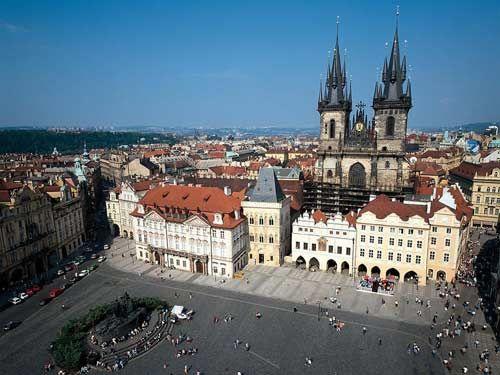
The Ultimate Central European Grand Tour: Frankfurt to Frankfurt
This comprehensive travel guide details a classic circuit through the heart of Europe, connecting the historic and cultural hubs of Germany, the Benelux region, France, Austria, Hungary, Slovakia, and the Czech Republic. This journey is a deep dive into a region marked by imperial history, artistic masterpieces, diverse cuisines, and breathtaking landscapes.
Trip Overview & Logistics
This extensive multi-country tour typically spans two to three weeks. The route is designed as a loop, starting and ending in Frankfurt, Germany, a major international flight hub. The most efficient and recommended mode of transport for this itinerary is a combination of rail and rental car. Europe’s extensive and reliable train network, including high-speed options like Germany’s ICE and France’s TGV, connects most major cities seamlessly. A rental car is particularly useful for exploring the German Romantic Road, the Black Forest, and for the convenience of shopping in Metzingen.
Best Time to Travel: Late spring (May-June) and early autumn (September-October) offer pleasant weather, fewer crowds, and beautiful scenery.
Currency: The Euro (€) is used in Germany, France, Belgium, Luxembourg, Netherlands, Austria, and Slovakia. The Czech Republic uses the Czech Koruna (CZK) and Hungary uses the Hungarian Forint (HUF).
Visa: All countries on this itinerary are part of the Schengen Area, allowing for border-free travel for many nationalities with a single visa.
Accommodation Tip: Book hotels and city-center apartments well in advance, especially during peak season. Consider staying in neighborhoods just outside the main tourist centers for better value and a more local experience.
Germany: The Starting Point
Frankfurt
Often the gateway to this tour, Frankfurt am Main is Germany’s financial capital. While modern skyscrapers dominate its skyline (earning it the nickname “Mainhattan”), it retains a charming, reconstructed old town.
Attractions: The Römerberg square with its picturesque medieval buildings, the Städel Museum for art lovers, and the Palmengarten botanical garden. The Museum Embankment offers a concentration of world-class museums.
Food & Drink: Try Apfelwein (hard apple cider) in a traditional apple wine tavern in the Sachsenhausen district. Pair it with Grüne Soße (green sauce) with boiled eggs and potatoes.
Transport: Frankfurt Airport (FRA) is one of Europe’s busiest. The city has an excellent public transport system (U-Bahn, S-Bahn, trams). It’s a major rail hub for connections across the continent.
Cologne (Köln)
A short train ride from Frankfurt, Cologne is famous for its colossal Gothic cathedral and its vibrant, liberal culture.
Attractions: The Cologne Cathedral (Kölner Dom), a UNESCO World Heritage site, is an absolute must-see. Climb the south tower for panoramic views. Cross the Hohenzollern Bridge, famous for its “love locks,” and explore the Old Town (Altstadt) with its traditional breweries.
Food & Drink: Cologne is known for its light beer, called Kölsch, which is served in tall, thin 0.2-liter glasses. Enjoy it with a plate of Himmel un Äd (black pudding with mashed potatoes and apple sauce).
Transport: Cologne’s main train station (Köln Hauptbahnhof) is located directly next to the cathedral. The city is very walkable.
The Benelux & France Loop
Amsterdam, Netherlands
A train journey from Cologne brings travelers to the charming canals of Amsterdam. The city is a masterpiece of 17th-century urban planning.
Attractions: Explore the Canal Belt, a UNESCO site, by boat or on foot. Visit the Anne Frank House (book tickets months in advance), the Rijksmuseum for Dutch masters like Rembrandt, and the Van Gogh Museum. A stroll through the Jordaan district offers a glimpse of local life.
Food & Drink: Sample stroopwafels (caramel-filled waffle cookies), Dutch cheese, and bitterballen (deep-fried meat-based croquettes). Try a raw herring with onions from a street stall.
Cultural Insight: Amsterdam is a city of tolerance and cycling. Respect the bike lanes, as cyclists have the right of way. The city’s coffeeshops (for cannabis) are a well-known part of its culture but are regulated.
Brussels, Belgium
A short train ride south from Amsterdam lies the capital of Belgium and the European Union.
Attractions: The magnificent Grand Place (Grote Markt) is one of Europe’s most beautiful squares. See the iconic Manneken Pis statue, and explore the artistic Royal Museums of Fine Arts. Don’t miss the Atomium, a remnant of the 1958 World’s Fair.
Food & Drink: Belgium is a foodie paradise. Indulge in crispy frites with mayonnaise, a vast array of beers (from Trappist ales to fruit lambics), decadent chocolates, and waffles (Brussels or Liège style).
Accommodation Tip: Stay near the Grand Place or the trendy Saint-Géry/Saint-Catherine area for easy access to sights and restaurants.
Paris, France
A high-speed Thalys train connects Brussels to the “City of Light.” Paris needs little introduction, offering an unparalleled concentration of art, fashion, and cuisine.
Attractions: The Eiffel Tower, Louvre Museum, Notre-Dame Cathedral (exterior viewing), Arc de Triomphe, and Montmartre district with the Sacré-Cœur Basilica are essential visits. A cruise on the Seine provides a unique perspective.
Food & Drink: Enjoy a croissant at a corner patisserie, a steak-frites at a classic bistro, escargots, and crème brûlée. Sip coffee at a sidewalk café and simply watch the world go by.
Transport: The Paris Métro is efficient and comprehensive. Purchase a carnet of tickets or a Navigo pass for multiple days. Walking is the best way to discover hidden gems.
Luxembourg City, Luxembourg
A train from Paris leads to the grand duchy of Luxembourg, a small country with a dramatic landscape.
Attractions: Explore the Old Town and the fortifications, a UNESCO site. Walk along the Chemin de la Corniche, dubbed “Europe’s most beautiful balcony,” for stunning views of the Alzette River valley below. Visit the Grand Ducal Palace.
Food & Drink: Luxembourgish cuisine has German and French influences. Try Judd mat Gaardebounen (smoked collar of pork with broad beans) and local wines from the Moselle region.
Cultural Insight: Luxembourg is a trilingual country where Luxembourgish, French, and German are widely spoken. It’s one of the world’s wealthiest nations and a major financial center.
The Heart of Germany & Austria
The Return to Frankfurt & Detour to Metzingen
The journey returns to Frankfurt, often as a transit point. From here, it’s highly recommended to pick up a rental car for the next leg of the trip towards Southern Germany.
Metzingen: A short drive south from Frankfurt lies Metzingen, a paradise for outlet shopping. It is the home of Hugo Boss and features numerous high-end and designer brand outlets.
Transport Tip: Having a car provides flexibility for this segment, especially for visiting Neuschwanstein Castle or driving along the Romantic Road. Alternatively, efficient train connections are available to Munich.
Munich (München)
The capital of Bavaria, Munich seamlessly blends traditional German culture with modern innovation.
Attractions: Spend time in the Marienplatz, watching the Glockenspiel show in the New Town Hall. Visit the sprawling English Garden, the art galleries at the Alte Pinakothek, and for car enthusiasts, the BMW Welt and Museum. A day trip to the fairytale Neuschwanstein Castle is highly recommended.
Food & Drink: No visit is complete without a visit to a traditional beer hall like the Hofbräuhaus. Enjoy a Mass (one-liter stein) of beer, Weisswurst (white sausage), pretzels, and Schweinshaxe (roasted pork knuckle).
Accommodation Tip: Look for lodging near the Hauptbahnhof (main station) for transport convenience, or in Schwabing for a more trendy, local vibe.
Salzburg, Austria
A scenic train or drive from Munich crosses the border into Austria, arriving in Salzburg, the birthplace of Mozart and the setting for “The Sound of Music.”
Attractions: Tour the imposing Hohensalzburg Fortress, which overlooks the city. Explore Mozart’s Birthplace and Residence. Stroll through the manicured Mirabell Gardens. Take a Sound of Music tour to see filming locations.
Food & Drink: Sample Austrian classics like Mozartkugeln (chocolate marzipan balls), Salzburger Nockerl (a sweet soufflé), and hearty dishes like< i >Wiener Schnitzel< /i>. Visit a traditional café for coffee and cake.
Cultural Insight:< /stronG > Salzburg is a city of music and baroque architecture. The annual Salzburg Festival is one of the world’s most prestigious classical music events.
< /h3 > The imperial capital of Austria < /p >Vienna (Wien)
Vienna is a city of refined elegance< /p > palaces< /p > and coffee house culture< /p >