A Royal Bavarian Journey: Munich, Linderhof, Oberammergau, and Neuschwanstein
This travel guide outlines a classic and enchanting route through the heart of Upper Bavaria, Germany. This itinerary takes travelers from the vibrant state capital into the picturesque Alpine foothills, visiting some of the most spectacular royal palaces and charming villages in Europe. The journey from Munich to Linderhof Palace, then to Oberammergau, and onward to Neuschwanstein Castle before returning to Munich, offers a perfect blend of urban energy, historical grandeur, artistic tradition, and breathtaking natural scenery.
Part 1: Munich (München) – The Cosmopolitan Capital
Munich, the capital of Bavaria, serves as the ideal starting and ending point for this journey. It is a city that effortlessly balances traditional Bavarian culture with a modern, international vibe. Known for its annual Oktoberfest, beautiful architecture, and world-class museums, Munich provides a rich urban experience.
Key Attractions in Munich
Marienplatz: The central square and heart of the city since 1158. Visitors gather here to watch the glockenspiel in the New Town Hall (Neues Rathaus) perform its daily dance at 11 am and 12 pm (and 5 pm in summer).
Frauenkirche (Cathedral of Our Blessed Lady): The iconic twin-domed church is a symbol of Munich. Its south tower offers a panoramic view of the city and, on a clear day, the distant Alps.
English Garden (Englischer Garten): One of the world’s largest urban public parks, larger than New York’s Central Park. It’s a place for cycling, walking, and even surfing on the standing wave in the Eisbach river.
Nymphenburg Palace: The magnificent summer residence of the Bavarian monarchs. The sprawling palace complex with its stunning gardens provides a prelude to the royal splendor encountered later on the route.
Deutsches Museum: One of the oldest and largest science and technology museums in the world, offering interactive exhibits on everything from astronomy to robotics.
Viktualienmarkt: A daily food market and a feast for the senses, offering fresh produce, cheeses, meats, spices, and traditional snacks.
Food & Drink in Munich
Bavarian cuisine is hearty and flavorful. Must-try dishes include:
Weißwurst: A traditional white sausage, typically eaten before noon with sweet mustard, a pretzel, and a wheat beer (Weißbier).
Schweinshaxe: A crispy roasted pork knuckle, often served with dumplings (Knödel) and sauerkraut.
Obatzda: A flavorful cheese spread made from camembert, butter, and paprika, perfect with a pretzel.
Apfelstrudel: A classic apple strudel, often served with vanilla sauce.
For a true Bavarian experience, visit a traditional beer hall like the
Hofbräuhaus or a beer garden like Chinesischer Turm in the English Garden.
Transportation in Munich
Munich has an excellent public transportation system (MVV), including U-Bahn (subway), S-Bahn (suburban train), trams, and buses. A single day pass (“Tageskarte”) is cost-effective for unlimited travel within selected zones. The city center is also very walkable.
Accommodation Tips for Munich
It is advisable to stay centrally to maximize time. Districts like Altstadt-Lehel (Old Town), Ludwigsvorstadt-Isarvorstadt (near the main train station), and Maxvorstadt (the museum quarter) offer excellent access to sights and public transport. Booking well in advance is crucial, especially during major events like Oktoberfest.
Part 2: Linderhof Palace (Schloss Linderhof) – The King’s Private Retreat
Nestled in the secluded Graswang valley, Linderhof Palace is the smallest but most intimate of King Ludwig II’s palaces and the only one he lived to see completed. Inspired by French absolutism and the Sun King, Louis XIV, it reflects Ludwig’s desire for a private world of fantasy and splendor.
Exploring Linderhof Palace
The Palace Interior: The tour reveals opulent rooms like the Bedchamber, the Mirror Hall, and the Peacock Blue Audience Chamber. The palace is a masterpiece of Rococo revival style.
The Gardens and Park: The formal gardens are a work of art in themselves, featuring terraces, water parterres, and a magnificent fountain that shoots a jet of water 30 meters into the air.
The Grotto: An artificial dripstone cave built for Wagnerian operas, equipped with a waterfall and a lake where the King was rowed in a shell-shaped boat. It was a technological marvel for its time, with electric lighting and a color-changing system.
Other Park Structures: Don’t miss the Moroccan House, the Hunting Lodge, and the Moorish Kiosk, which further illustrate Ludwig’s eclectic tastes.
Food & Drink near Linderhof
The palace has a restaurant offering traditional Bavarian food. Alternatively, the nearby village of Ettal or Oberammergau offer more options for a sit-down meal in a traditional Gasthof (inn).
Transportation to Linderhof Palace
Linderhof is best reached by car or tour bus. For independent travelers using public transport:
Take a train from Munich Hauptbahnhof to Oberammergau (often with a change in Murnau). From Oberammergau, bus 9622 (Linderhof-Express) runs to the palace. Note that this service can be infrequent, especially outside the summer season, so checking the timetable (DB app or BOB timetable) is essential.
Part 3: Oberammergau – The Village of Woodcarvers and Passion Plays
The picturesque village of Oberammergau is world-famous for two things: its once-a-decade Passion Play and its exquisite Lüftlmalerei (frescoes) that adorn the houses. It is also a centuries-old center for woodcarving.
Key Attractions in Oberammergau
Lüftlmalerei Frescoes: Stroll through the village to admire the beautifully painted facades depicting biblical scenes, fairy tales, and rural life. Notable examples include the “Pilate’s House” and the “Hansel and Gretel House.”
The Passion Play Theater (Passionsspielhaus): Even in non-play years, guided tours of the massive, open-air theater are available. The next Passion Play is scheduled for 2030.
Woodcarving Workshops and Shops: Visit local workshops to see artisans at work and browse for souvenirs, from intricate religious figures to whimsical Christmas ornaments.
Oberammergau Museum: Offers deep insights into the history of the Passion Play and the local tradition of woodcarving.
Pilatushaus: A historic house with a beautiful fresco, featuring a demonstration workshop for woodcarving and glass painting.
Cultural Insight: The Passion Play
The Oberammergau Passion Play has been performed every ten years since 1634, fulfilling a vow made by the townspeople after being spared from the bubonic plague. It involves over 2,000 local residents as actors, singers, and musicians. This event defines the cultural identity of the village and draws hundreds of thousands of visitors.
Food & Drink in Oberammergau
The village offers cozy Gasthöfe serving Bavarian classics. Try dishes like
Käsespätzle (cheesy egg noodles) or a hearty Wildgulasch (venison goulash) in season. Many restaurants have beautiful beer gardens.
Accommodation Tips for Oberammergau
Staying in Oberammergau provides a charming, authentic Alpine village experience. Options range from family-run guesthouses (Gästehäuser) to larger hotels. It serves as an excellent base for exploring both Linderhof and Neuschwanstein.
Part 4: Neuschwanstein Castle (Schloss Neuschwanstein) – The Fairytale Fortress
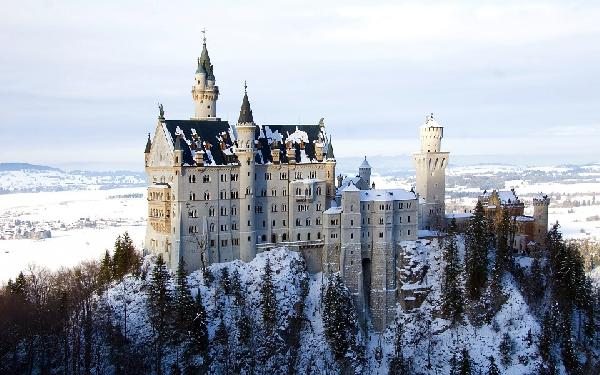
Perched on a rugged hill against a stunning Alpine backdrop, Neuschwanstein Castle is the quintessential fairytale castle. Commissioned by the reclusive King Ludwig II as a homage to the composer Richard Wagner and Germanic legends, it is one of the most famous castles in the world and inspired Walt Disney’s Sleeping Beauty Castle.
Exploring Neuschwanstein Castle
The Castle Interior: The guided tour leads through rooms that are lavishly decorated with scenes from Wagner’s operas. Highlights include the Throne Room (despite having no throne), the Singer’s Hall, and Ludwig’s extravagant grotto-sitting room.
Marienbrücke (Mary’s Bridge): This bridge spans a gorge behind the castle and offers the iconic, picture-perfect view of Neuschwanstein. It is an absolute must-do.
The Surrounding Area: The castle is located near the town of Füssen and the village of Hohenschwangau. Also in Hohenschwangau is Hohenschwangau Castle, the less dramatic but still beautiful childhood home of Ludwig II.
Ticketing and Visiting Practicalities
Tickets for Neuschwanstein must be purchased in advance online from the official ticket center in Hohenschwangau. Walk-up tickets are extremely rare. Reservations are crucial, especially during peak season. The ticket center is at the bottom of the hill; visitors must then walk (~40 minutes), take a shuttle bus (to Marienbrücke), or a horse-drawn carriage up to the castle entrance.
Food & Drink near Neuschwanstein
The village of Hohenschwangau has several restaurants and kiosks. For more variety, the nearby historic town of Füssen offers numerous dining options in its charming old town.
Transportation to Neuschwanstein Castle
From Oberammergau or Munich:
By Car: The most flexible option. Drive to Hohenschwangau and park in one of the large paid lots.
By Public Transport: Take a train from Oberammergau or Munich to Füssen. From Füssen train station, take bus 73 or 78 (RVA/OVG) directly to the “Hohenschwangau Neuschwanstein Castles” stop.
Organized tours from Munich are also a popular and hassle-free option.
The Complete Route: Logistics and Planning
Recommended Itinerary
Day 1: Arrive and explore Munich. Overnight in Munich.
Day 2: Morning in Munich (e.g., Nymphenburg Palace). In the afternoon, pick up a rental car or take a train to Oberammergau. Overnight in Oberammergau.
Day 3: Morning visit to Linderhof Palace (short drive/bus from Oberammergau). Afternoon exploring Oberammergau’s frescoes and woodcarving shops. Overnight in Oberammergau.
Day 4: Travel from Oberammergau to Hohenschwangau (~1 hour by car). Visit Neuschwanstein Castle (and Hohenschwangau Castle if time permits). In the late afternoon/evening, return to Munich by car or train from Füssen. Overnight in Munich.
Day 5: Final day exploring more of Munich before departure.
Transportation: Car vs. Public Transport
By Car: Offers maximum flexibility, especially for reaching Linderhof and moving between villages. The German Autobahn and country roads are well-maintained. Parking can be challenging and expensive at the castles.
By Public Transport: Entirely feasible with careful planning. The Bayern-Ticket (Bavaria Ticket) is an excellent value for regional trains and buses, offering unlimited travel for up to 5 people for one day at a low cost. It is valid after 9 am on weekdays and all day on weekends.
Cultural Insights & Etiquette
Punctuality: Germans value punctuality. Be on time for castle tours, train departures, and restaurant reservations.
Cash is King: While credit cards are becoming more common, many smaller restaurants, guesthouses, and shops still prefer or only accept cash (Euros).
Greetings: