Munich & The Surrounding Region: A Comprehensive Travel Guide
Munich (München), the capital of Bavaria, is a city that effortlessly blends timeless tradition with cutting-edge innovation. Known worldwide for its annual Oktoberfest celebration, it offers far more than just beer halls. It is a city of art and science, of sprawling English Garden parks and sleek BMW factories, of Baroque palaces and world-class museums. This guide provides an in-depth look at Munich itself and the breathtakingly beautiful region that surrounds it, offering practical information to help travelers plan an unforgettable journey.
Introducing Munich
Founded in 1158, Munich has grown from a monastery settlement to a global hub for business, technology, and culture. With a population of over 1.5 million, it is Germany’s third-largest city, yet it maintains a distinctly comfortable and manageable feel, often referred to as “Millionendorf” (the village of a million people). The city’s heart beats in its historic Altstadt (Old Town), where centuries-old churches and town squares are filled with a vibrant, modern energy.
Top Attractions in Munich
Marienplatz and the New Town Hall (Neues Rathaus)
The central square of Munich, Marienplatz, has been the city’s main square since 1158. The focal point is the magnificent Neues Rathaus (New Town Hall), a neo-Gothic masterpiece. Visitors gather daily to watch the famous Glockenspiel performance, where 32 life-sized figures reenact two stories from Munich’s history. For a panoramic view of the city and, on a clear day, a glimpse of the Alps, take the elevator to the top of the Town Hall tower.
Frauenkirche (Cathedral of Our Blessed Lady)
The two distinctive onion-domed towers of the Frauenkirche are the iconic symbol of Munich’s skyline. This late-Gothic cathedral is the seat of the Archbishop of Munich and Freising. Its interior is strikingly vast and simple. Visitors can ascend the south tower for an unparalleled view over the city center.
Hofbräuhaus
No visit to Munich is complete without experiencing this world-famous beer hall. Founded in 1589 as the royal brewery for the Wittelsbach family, the Hofbräuhaus is a living piece of Bavarian history. With its bustling Schwemme (main hall), traditional oompah band, and hearty food, it offers a quintessential—if touristy—Bavarian experience.
English Garden (Englischer Garten)
One of the world’s largest urban public parks, larger than New York’s Central Park, the English Garden is a paradise for relaxation and recreation. Visitors can stroll along its winding paths, watch surfers ride the standing wave at the Eisbach river, enjoy a beer at the Chinese Tower (Chinesischer Turm) beer garden, or simply sunbathe on the meadows.
Nymphenburg Palace (Schloss Nymphenburg)
The summer residence of the Wittelsbach rulers, this breathtaking Baroque palace is a must-see. The palace itself is opulent, but the real highlight is the vast park behind it, featuring canals, hidden pavilions like the Amalienburg hunting lodge, and the botanical garden.
Museums and Art
Munich is a city of art, with collections spanning centuries.
Alte Pinakothek: Houses a world-renowned collection of European Old Masters, including works by Dürer, Rembrandt, and Rubens.
Deutsches Museum: One of the world’s largest and oldest museums of science and technology. It’s a hands-on paradise for all ages.
Pinakothek der Moderne: A stunning building dedicated to modern art, design, and architecture.
BMW Welt and Museum: A futuristic complex showcasing the past, present, and future of the BMW brand, a must for car enthusiasts.
Viktualienmarkt
This daily open-air market is a feast for the senses. Over 140 stalls sell fresh produce, cheeses, meats, spices, flowers, and more. It’s the perfect place to grab a quick lunch, sample local delicacies, and soak up the authentic Munich atmosphere.
Bavarian Cuisine: Food and Drink
Bavarian food is hearty, flavorful, and designed to be enjoyed with a good beer.
Must-Try Dishes
Weißwurst: A traditional white sausage made from veal and parsley. It’s typically eaten before noon and served with sweet mustard, a pretzel, and a wheat beer.
Schweinshaxe: A massive, crispy roasted pork knuckle, often served with dumplings and sauerkraut.
Obatzda: A flavorful cheese spread made from camembert, butter, and paprika, perfect with a pretzel.
Knödel: Dumplings that come in many forms, such as Semmelknödel (bread dumplings) or Kartoffelknödel (potato dumplings).
Apfelstrudel: A classic dessert of thin pastry filled with apples, raisins, and cinnamon, often served with vanilla sauce.
Beer Culture
Beer is considered a food in Bavaria, governed by the Reinheitsgebot (Beer Purity Law) since 1516. The city’s six major breweries (Augustiner, Hofbräu, Löwenbräu, Paulaner, Hacker-Pschorr, and Spaten) serve their wares in legendary beer halls and serene beer gardens. Don’t miss trying a Maß (one-liter mug) of Helles (light lager) or a Hefeweizen (unfiltered wheat beer).
Getting Around Munich
Munich has an excellent and efficient public transportation system (MVV), which includes U-Bahn (subway), S-Bahn (suburban train), trams, and buses.
Tickets: The system operates on an honor system. You must purchase and validate your ticket before boarding. Tickets are available for single trips, strips (*Streifenkarte*), day passes (*Tageskarte*), or group day passes for up to 5 adults.
From the Airport: The S-Bahn S1 and S8 lines connect Munich Airport (MUC) to the city center in about 45 minutes.
Biking: Munich is an extremely bike-friendly city with an extensive network of bike paths. Rentals are widely available.
Walking: The city center is very compact and easily explored on foot.
Accommodation Tips
Munich offers a wide range of accommodation, but it is generally an expensive city. Booking well in advance is crucial, especially during major events like Oktoberfest.
Altstadt (Old Town): Ideal for first-time visitors who want to be in the heart of the action. Expect higher prices and more noise.
Ludwigsvorstadt-Isarvorstadt: The area around the Hauptbahnhof (main train station) and Oktoberfest grounds (Theresienwiese). Offers more budget-friendly options and good transport links.
Schwabing & Maxvorstadt: University districts north of the center, known for their bohemian vibe, cafes, and proximity to the English Garden and art museums.
Haidhausen: A trendy, quieter neighborhood east of the Isar River, home to the Gasteig cultural center and great restaurants.
Cultural Insights & Etiquette
Punctuality: Being on time (*pünktlich*) is highly valued.
Greetings: A firm handshake with direct eye contact is standard. In Bavaria, the common greeting is “Grüß Gott” (God greets you).
Beer Garden Rules: It is acceptable to bring your own food to a beer garden, but you must buy your drinks there. If you see a table without a tablecloth, it’s usually free to sit at. “Stammtisch” tables are reserved for regulars.
Cash is King: While credit cards are becoming more accepted, many smaller shops, restaurants, and market stalls still prefer cash.
Sundays: Most shops are closed on Sundays, so plan accordingly. Parks, museums, and restaurants will be your main options.
Exploring the Munich Region
The area surrounding Munich is dotted with castles, lakes, and picturesque towns that are easily accessible on day trips, offering a different perspective on Bavarian life and history.
The Romantic Road: Neuschwanstein & Hohenschwangau
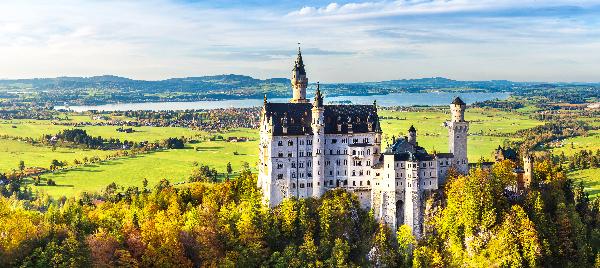
About a 2-hour train or car journey southwest of Munich lies one of Germany’s most famous sights: Neuschwanstein Castle. This fairytale castle, commissioned by the “fairy-tale king” Ludwig II, was the inspiration for Disney’s Sleeping Beauty Castle. Nearby is his childhood home, Hohenschwangau Castle. It is essential to book tickets online well in advance. The town of Füssen at the foot of the castles is also worth exploring.
The Bavarian Alps: Garmisch-Partenkirchen & Zugspitze
The Zugspitze, Germany’s highest mountain at 2,962 meters (9,718 ft), offers breathtaking alpine scenery. The town of Garmisch-Partenkirchen is a famous ski resort and the gateway to the peak. Visitors can take a cogwheel train and cable car to the summit for panoramic views spanning four countries. Hiking and exploring the nearby Partnach Gorge are also popular activities.
The Five Lakes Region & Dachau
Just west of Munich lies the Fünfseenland (Five Lakes Region), centered around Lake Starnberg. It’s a popular recreational area for swimming, sailing, and cycling. On the shores of the lake is the Berg Castle, where King Ludwig II was found dead under mysterious circumstances. A poignant cross in the lake marks the spot. Also in this direction is the town of Dachau. A visit to the Dachau Concentration Camp Memorial Site is a sobering and essential historical experience.
The Holy City: Andechs Monastery
A short S-Bahn ride and a pleasant walk through the countryside lead to the Benedictine monastery of Andechs. Known as Bavaria’s “Holy Mountain,” it is a major pilgrimage site. However, for many visitors, the main draw is the monastery brewery, where monks have been brewing beer since 1455. Enjoying a freshly brewed beer and traditional food in its massive beer garden is a fantastic local experience.
The Imperial City: Regensburg
A bit further afield (about 1.5 hours by train), Regensburg is a UNESCO World Heritage Site with a remarkably well-preserved medieval center. Its stone bridge across the Danube, built in the 12th century, is a masterpiece of medieval engineering. The city’s narrow alleys, tall patrician towers, and vibrant student life make it a captivating destination.
Salzburg, Austria
The birthplace of Mozart is just across the border in Austria and is easily reachable from Munich in under two hours by train. The city’s Baroque architecture, Hohensalzburg Fortress, and connections to *The Sound of Music* make it an incredibly popular day trip that combines German and Austrian culture seamlessly.
Practical Tips for Day Trips
Train Travel: The Bayern-Ticket (Bavaria Ticket) is an excellent value for regional travel. It offers unlimited travel on regional trains (RE, RB, S-Bahn) and public transport throughout Bavaria from 9 am on weekdays (all day on weekends) until 3 am the following day for one price for up to 5 people.
Driving: Renting a car offers flexibility to explore smaller villages but can be expensive with parking fees and fuel costs.
Tours: Numerous tour companies offer organized day trips from Munich to popular destinations like Neuschwanstein and Salzburg, which can simplify logistics.
Seasonal Considerations
Spring (Mar-May): Pleasant weather; gardens at palaces like Nymphenburg begin to bloom.
Summer (Jun-Aug): Peak tourist season; warm weather perfect for beer gardens and lake swimming; hosts film festivals and open-air events.
Autumn (Sep-Oct): The world-famous Oktoberfest (actually in September); beautiful fall foliage in the surrounding countryside.
Winter (Nov-Feb): Christmas markets create a magical atmosphere; potential for snow makes it a great base for skiing trips to the Alps.
Munich and its surrounding region offer a rich tapestry of experiences that cater to history buffs, nature lovers, foodies, and culture seekers alike. From raising a stein in a historic hall to standing atop Germany’s highest peak or wandering through a fairytale castle, a journey here leaves a lasting impression of Gemütlichkeit—that uniquely Bavarian feeling of coziness, comfort, and good cheer.