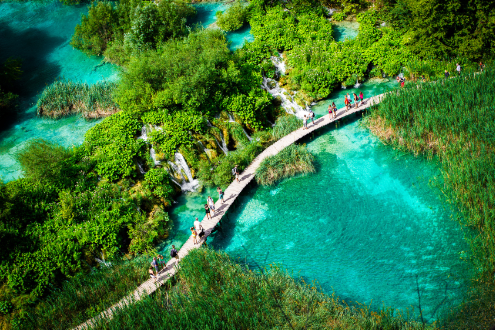
Grand Tour of Central Europe: From Paris to the Adriatic
An epic journey through the heart of Europe, blending iconic cities, fairytale landscapes, and stunning coastlines.
Introduction
This comprehensive travel guide details a multi-country road trip or train journey through the diverse and captivating regions of France, Germany, Austria, Slovenia, and Croatia. The itinerary is designed as a loop starting and ending in Paris, connecting major cultural hubs with breathtaking natural wonders and historic Adriatic coastlines. The route offers a profound exploration of European history, from Roman ruins to Habsburg grandeur, alongside culinary delights and architectural marvels.
Itinerary Overview
The proposed route is:
Paris (France) -> Strasbourg (France) -> Stuttgart (Germany) -> Munich (Germany) -> Ljubljana (Slovenia) -> Postojna (Slovenia) -> Split (Croatia) -> Dubrovnik (Croatia) -> Zadar (Croatia) -> Plitvice Lakes National Park (Croatia) -> Zagreb (Croatia) -> Salzburg (Austria) -> Hallstatt (Austria) -> Munich (Germany) -> Stuttgart (Germany) -> Heidelberg (Germany) -> Paris (France).
This journey is best undertaken over a period of three to four weeks to allow for a meaningful experience at each location. The primary modes of transport are train and rental car, offering flexibility and scenic travel.
Destinations
Paris, France
The journey begins and ends in the French capital, a global center for art, fashion, gastronomy, and culture.
Key Attractions:
Eiffel Tower: The iconic iron lattice tower offering panoramic views of the city.
Louvre Museum: The world’s largest art museum, home to the Mona Lisa and Venus de Milo.
Notre-Dame Cathedral: A masterpiece of French Gothic architecture (exterior viewing following the 2019 fire).
Champs-Élysées & Arc de Triomphe: A famous avenue and triumphal arch honoring those who fought for France.
Montmartre & Sacré-Cœur: A historic artistic neighborhood crowned by the stunning Basilica of the Sacred Heart.
Practical Information:
Getting There: Major international flights into Charles de Gaulle (CDG) or Orly (ORY) airports.
Getting Around: Extensive and efficient Metro system.
Accommodation: Wide range, from hostels in the 10th arrondissement to luxury hotels near the Champs-Élysées.
Strasbourg, France
The capital of the Alsace region and the official seat of the European Parliament, Strasbourg boasts a unique Franco-German culture.
Key Attractions:
Strasbourg Cathedral (Cathédrale Notre-Dame): A stunning example of Rayonnant Gothic architecture with a famous astronomical clock.
La Petite France: A picturesque historic quarter with half-timbered houses and canals.
Palais Rohan: A former princely residence housing three major museums.
European Parliament: Guided tours available of the modern EU institution building.
Practical Information:
Travel from Paris: Approx. 2 hours by TGV (high-speed train) from Gare de l’Est.
Getting Around: The city center is highly walkable; a tram system covers greater distances.
Stuttgart, Germany
The capital of Baden-Württemberg, Stuttgart is the birthplace of the automobile and a hub for high-tech industry.
Key Attractions:
Mercedes-Benz Museum: A futuristic museum chronicling over 130 years of automotive history.
Porsche Museum: A sleek museum dedicated to the famous sports car manufacturer.
Stuttgart State Gallery (Staatsgalerie): A renowned art museum with works from the classics to modern masters.
Palace Square (Schlossplatz): The city’s central square, perfect for people-watching.
Practical Information:
Travel from Strasbourg: Approx. 1 hour 15 minutes by train.
Cuisine: Known for local Swabian dishes like Maultaschen (filled pasta) and Spätzle (egg noodles).
Munich, Germany (First Visit)
The capital of Bavaria, Munich combines rich tradition with modern innovation, known for its annual Oktoberfest and beautiful architecture.
Key Attractions:
Marienplatz: The central square, home to the New Town Hall (Neues Rathaus) and its glockenspiel.
English Garden (Englischer Garten): One of the world’s largest urban public parks.
Nymphenburg Palace: A vast Baroque palace with stunning gardens.
Deutsches Museum: One of the world’s largest and oldest museums of science and technology.
Hofbräuhaus: The world’s most famous beer hall, offering a classic Bavarian experience.
Practical Information:
Travel from Stuttgart: Approx. 2 hours 20 minutes by train.
Getting Around: Excellent U-Bahn (subway) and S-Bahn (suburban train) network.
Ljubljana, Slovenia
The charming, green capital of Slovenia, presided over by a medieval castle and defined by its vibrant riverside cafes and Jože Plečnik’s unique architecture.
Key Attractions:
Ljubljana Castle (Ljubljanski grad): Offers historical exhibitions and panoramic views from its hilltop perch.
Tromostovje (Triple Bridge): The iconic triple bridge in the heart of the city, designed by Plečnik.
Prešeren Square (Prešernov trg): The central square dedicated to Slovenia’s greatest poet.
Dragon Bridge (Zmajski most): A famous Art Nouveau bridge guarded by four dragon statues, the symbol of Ljubljana.
Metelkova Mesto: An autonomous cultural center in a former military barracks, known for its alternative art scene.
Practical Information:
Travel from Munich: Approx. 5-6 hours by train or 4.5 hours by car/bus.
Currency: Euro (€).
Cuisine: Try potica (nut roll) and Ljubljana’s excellent coffee culture.