A Comprehensive Travel Guide: Mexico City & the Teotihuacan Hot Air Balloon Experience
This guide details a classic and unforgettable day trip from Mexico City: a journey to the ancient Mesoamerican city of Teotihuacan, experienced from the unparalleled vantage point of a hot air balloon, followed by an exploration of the majestic archaeological site on foot. We will cover the entire experience, from pre-dawn preparations in Mexico City to a post-exploration culinary feast, providing practical tips and cultural context along the way.
Part 1: The Heartbeat – Mexico City (CDMX)
Your adventure begins and ends in one of the world’s largest and most vibrant metropolises. Mexico City (Ciudad de México, or CDMX) is a sprawling, cultural powerhouse set at a high altitude of 2,240 meters (7,350 feet). It’s a city of contrasts, where Aztec ruins sit beside colonial cathedrals and sleek modern skyscrapers. While the focus of this itinerary is the day trip to Teotihuacan, understanding your base is crucial.
Where to Stay
For ease of travel to the northern bus stations and for a generally central location, consider these neighborhoods:
Centro Histórico: The historic heart of the city. You’ll be surrounded by iconic landmarks like the Zócalo and the Palacio de Bellas Artes. It offers a wide range of accommodations and is well-connected by metro and buses.
Roma Norte & Condesa: These adjacent neighborhoods are known for their tree-lined streets, beautiful Art Nouveau architecture, trendy cafes, boutique shops, and vibrant nightlife. They offer a more relaxed, bohemian atmosphere.
Polanco: An upscale district with luxury hotels, high-end shopping, and some of the city’s finest restaurants. It’s a quieter, more polished area.
Cultural Immersion & Cuisine in CDMX
Before or after your Teotihuacan excursion, immerse yourself in the city’s culture. Visit the
Museo Nacional de Antropología to gain essential context about Teotihuacan and other Mesoamerican civilizations. The artifacts and scale models here will make your visit to the ruins far more meaningful.
Mexican cuisine is UNESCO-listed intangible cultural heritage. Do not miss:
Tacos al Pastor: Thinly sliced pork marinated in chilies and achiote, cooked on a vertical spit, and served on small corn tortillas with pineapple, onion, and cilantro.
Chilaquiles: A classic breakfast dish of fried tortilla chips simmered in either green (salsa verde) or red (salsa roja) sauce, often topped with crema, cheese, onion, and a fried egg.
Pozole: A hearty hominy and meat (usually pork) soup, traditionally served on special occasions. It’s garnished with radish, lettuce, onion, lime, and chili.
Drink: Try pulque, a traditional fermented beverage made from the sap of the maguey plant, or a classic mezcal or margarita.
Part 2: The Ascent – The Hot Air Balloon Experience over Teotihuacan
Booking and Preparation
Booking: It is highly recommended to book your hot air balloon flight in advance, especially during peak season (December-April). Numerous reputable companies offer this experience, such as Volare, Globo Teotihuacan, and Flying Pictures. Most packages include round-trip transportation from central locations in Mexico City, the balloon flight itself, and a post-flight breakfast.
The Morning Departure: Your day will start exceptionally early. Pick-up times are typically between 5:00 AM and 6:00 AM. This is necessary to arrive at the launch site in time for the optimal flying conditions that occur just after sunrise. Dress in layers—it can be very cold in the early morning at high altitude but warms up significantly later. Wear comfortable, closed-toe shoes as you will be standing in a field and potentially landing in one.
The Launch Site
The hot air balloon launch area is located in the vicinity of the Teotihuacan archaeological zone, near the town of San Juan Teotihuacan. As you arrive in the pre-dawn darkness, the scene is surreal. Dozens of colorful balloons lie deflated on the ground while their pilots and crews prepare the burners. The air is crisp, filled with the sounds of roaring flames and the quiet excitement of fellow travelers. You’ll be offered coffee or tea while you wait. The process of inflating the balloons is a spectacle in itself—a coordinated dance of fire and fabric against the slowly lightening sky.
The Flight: A Bird’s-Eye View of the Avenue of the Dead
As your balloon lifts off gently, the world falls away. The first rays of sun begin to illuminate the landscape, casting long shadows and painting the sky in hues of orange, pink, and purple. This is the magic hour.
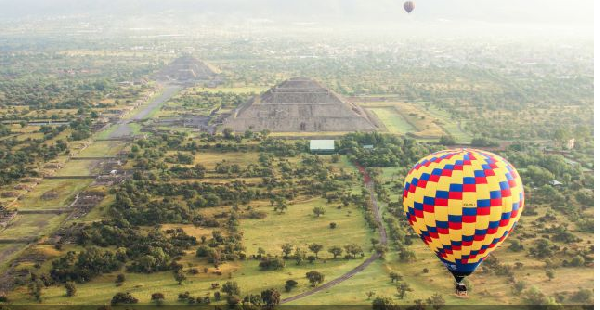
From this unique perspective, the grand urban plan of Teotihuacan becomes stunningly clear. You float directly over the
Avenue of the Dead (Calzada de los Muertos), the city’s main thoroughfare, which runs for nearly two miles through the center of the complex. To your north, you see the massive Pyramid of the Moon (Pirámide de la Luna), perfectly framing the sacred mountain, Cerro Gordo, behind it.
Further south along the avenue lies the colossal
Pyramid of the Sun (Pirámide del Sol). From above, you can truly appreciate its immense scale and perfect geometric form. It is one of the largest pyramids in the world by volume. The balloon drifts silently, offering 360-degree views of the entire archaeological site, including the Ciudadela (Citadel) and the Temple of the Feathered Serpent Quetzalcóatl. You can see the unexcavated mounds that hint at even more structures hidden beneath the earth.
The flight typically lasts about 45 minutes to an hour. The silence is broken only by the occasional blast of the burner, allowing for a peaceful, almost spiritual contemplation of this ancient wonder. It’s an experience that is both exhilarating and profoundly serene.
Post-Flight Celebration
After a smooth landing (often involving a traditional toast with sparkling wine), you are transported back to the operator’s base for a included breakfast. This is usually a hearty Mexican meal, which might include quesadillas, beans, and more coffee. You’ll also receive your flight certificate—a nice souvenir of your aerial adventure.
Part 3: The Exploration – Teotihuacan Archaeological Zone on Foot
With your balloon flight complete, it’s time to experience Teotihuacan at human scale. The archaeological zone opens at 9:00 AM. Your tour operator may drop you off at one of the entrances (Gates 1, 2, or 3), or you may need to take a short taxi ride from their base.
Practical Tips for Visiting the Ruins
Tickets: Purchase your entry ticket at the gate. There is usually a separate, small fee for video cameras.
Sun Protection: By late morning, the site is fully exposed to the sun. A hat, sunglasses, and high-SPF sunscreen are absolutely essential.
Hydration & Snacks: Carry plenty of water. While there are vendors inside selling drinks, it’s best to come prepared. There are limited food options within the complex itself.
Footwear: You will be doing a lot of walking, including steep climbs. Sturdy, comfortable shoes are non-negotiable.
Pacing: The altitude (around 2,300 meters / 7,500 feet) can be taxing. Take your time, especially when climbing the pyramids.
A Walking Tour of the Key Structures
1. The Ciudadela (Citadel) and Temple of Quetzalcóatl
If you enter from Gate 1 or 2, start at the Ciudadela, a vast sunken square that served as a grand public and ceremonial space. Its main attraction is the
Temple of the Feathered Serpent Quetzalcóatl. This pyramid is adorned with magnificent, fearsome stone carvings of the feathered serpent deity and another figure believed to be Tlaloc, the storm god. The precise, intricate carvings are some of the best-preserved artwork at Teotihuacan and offer a glimpse into its complex cosmology.
2. The Avenue of the Dead
From the Ciudadela, begin your walk north along the Avenue of the Dead. This wide causeway is flanked by the ruins of numerous residential compounds and smaller temples. Try to imagine it bustling with people, painted in bright colors (traces of which can still be seen on some structures), and filled with market activity.
3. The Pyramid of the Sun
The sheer size of this pyramid is overwhelming as you approach its base. It was constructed around 200 CE over a natural cave, which was considered a sacred entrance to the underworld. Climbing its 248 steps is a challenging but rewarding endeavor. Take it slow. The view from the top is breathtaking—you can see the entire layout of Teotihuacan along the Avenue of the Dead, all the way to the Pyramid of the Moon. Looking out from this vantage point, having seen it from above just hours before, creates a powerful sense of connection to the place.
4. The Pyramid of the Moon
Continuing north along the avenue, you’ll reach the Pyramid of the Moon. While slightly smaller than the Pyramid of the Sun, its summit is at nearly the same height due to the higher ground it’s built upon. Its design elegantly mirrors the shape of Cerro Gordo behind it. The plaza at its base is one of the most architecturally impressive spaces in Teotihuacan, surrounded by smaller platforms that create a sense of enclosed grandeur. The climb is less strenuous than the Pyramid of the Sun but offers a fantastic perspective looking back down the Avenue of the Dead.
5. The Palace of Quetzalpapálotl
Located just to the west of the Pyramid of Moon’s plaza, this complex is believed to have been the residence of Teotihuacan’s high priests. Its beautifully preserved courtyards feature intricate murals and striking stone columns carved with images of birds (quetzalpapálotl means “quetzal-butterfly”). It provides a more intimate look at the artistry and daily life of the city’s elite.
Part 4: Local Flavors – Lunch in Teotihuacan
After hours of exploration, you will have worked up an appetite. Just outside the gates of the archaeological zone (particularly Gates 2 and 5), you’ll find a series of restaurants specializing in traditional food of the region.
La Gruta: A unique dining experience inside a natural cave. The atmosphere is unforgettable, with live mariachi music often playing in the background. The food is traditional Mexican.
Restaurante Mayahuel: Offers a great buffet with a wide variety of classic dishes, allowing you to sample different flavors. It has a lovely open-air setting.
Must-Try Dish: This is your chance to try barbacoa (slow-cooked lamb or goat) or mixiote (meat cooked in a maguey leaf pouch). These are traditional dishes of the state of Mexico and are expertly prepared in this area. Pair it with a refreshing pulque, if you’re feeling adventurous.
Part 5: The Return – Getting Back to Mexico City
If your hot air balloon package did not include return transportation, getting back to Mexico City is straightforward.
By Bus: This is the most common and economical method. From outside any of the main gates (especially Gate 1), you can find taxis or local buses that will take you to the “Terminal de Autobuses de Teotihuacan” near San Juan Teotihuacan. From here, companies like Autobuses Teotihuacan offer frequent departures to Mexico City’s Terminal Central del Norte (North Bus Station). The journey takes about an hour. From Terminal del Norte, you can easily connect to the city’s metro system (Line 5) or hail a taxi or Uber.
By Taxi/Uber: You can negotiate a fixed price with a taxi driver outside the ruins for a direct ride back to your hotel in Mexico City. This is more expensive but offers door-to-door convenience. Uber also operates in the area.
A Final Note on Culture and History
The name “Teotihuacan” was given by the Aztecs centuries after the city’s mysterious collapse around 550-600 CE. It means “The Place Where Men Become Gods.” The original name of the city and the identity of its builders remain unknown. Walking through its silent streets and towering pyramids is a humbling experience. It was once one of the largest cities in the ancient world, a multicultural metropolis with influence stretching across Mesoamerica. Respecting this sacred space by staying on marked paths, not climbing on restricted areas, and not removing any stones or artifacts is paramount.
The combination of a serene hot air balloon flight and an immersive ground-level exploration creates a multi-dimensional understanding of Teotihuacan that is simply unforgettable. It’s a day that captures both the grandeur and the intimate details of one of humanity’s most magnificent achievements.