A Journey Through Time: Exploring Mexico City’s Historic Core and Teotihuacán
This travel guide details a profound journey through the layers of Mexican history, from the ancient pre-Hispanic civilizations to the colonial era and into the modern day. The route connecting the Plaza of the Three Cultures, the ancient obsidian workshops, the mighty pyramids of Teotihuacán, and the Basilica of Our Lady of Guadalupe offers an unparalleled immersion into the soul of Mexico. It is a trip that engages all the senses and leaves a lasting impression of the country’s complex and vibrant identity.
Part 1: The Plaza of the Three Cultures (Plaza de las Tres Culturas), Tlatelolco
Your historical journey begins not in the ancient past, but in the heart of modern Mexico City, in the plaza that perfectly encapsulates the nation’s layered history. The Plaza of the Three Cultures in the Tlatelolco neighborhood is a powerful, open-air museum where three pivotal epochs of Mexican history stand side-by-side.
The Three Cultures Represented:
Pre-Hispanic: The main feature is the excavated archaeological site of Tlatelolco. Originally a independent city-state on an island in Lake Texcoco, it was a major commercial hub of the Aztec Empire, renowned for its massive market. You can walk among the stone foundations of temples, palaces, and a unique circular altar. The most prominent structure is the Templo de Santiago, a pyramid that was expanded over seven stages.
Colonial: Towering over the ruins is the magnificent Church and Monastery of Santiago Tlatelolco, built by the Spanish colonists in the 16th century. They famously used stones from the destroyed Aztec temples to construct it, a stark physical symbol of conquest and transformation. Its simple, robust façade belies its historical significance as one of the first schools of higher learning in the Americas.
Modern: Surrounding the plaza are the stark, functionalist buildings of the Secretariat of Foreign Affairs (SRE) and the housing complexes from the mid-20th century. These represent the modern Mexican state.
The Travel Experience: Walking through the plaza is a somber and reflective experience. You are treading on ground that was once a thriving Aztec city, the site of its final, brutal defeat to Hernán Cortés in 1521, and later, the location of the 1968 Tlatelolco Massacre, a dark chapter in modern Mexican history. Informational plaques detail these events. The contrast of the ancient stones, the colonial church, and the humming city traffic creates a palpable sense of time’s passage.
Practical Tips & Local Insights:
Getting There: The plaza is easily accessible via the Mexico City Metro. Take Line 3 (the green line) to the Tlatelolco station; the exit leads directly into the plaza.
Best Time to Visit: Mornings on weekdays are best to avoid crowds. The light is also excellent for photography at this time.
What to Do: Spend at least an hour reading the plaques and contemplating the site. There is no entrance fee for the plaza itself. Look for the memorial stele commemorating the 1968 student movement.
Insight: This site is less frequented by international tourists than the Zócalo, offering a more contemplative and raw historical experience.
Part 2: The Obsidian Factory and Cave Experience
Before heading to the pyramids, a stop at a local obsidian workshop, often located on the road to Teotihuacán, provides fascinating context. Obsidian, a volcanic glass, was as valuable as gold to the ancient Mesoamericans. It was used for tools, weapons, mirrors, and ceremonial objects.
The Travel Experience: This is typically a guided visit to a family-run workshop. A local artisan will explain the volcanic origins of obsidian and demonstrate how it was worked by their ancestors. You’ll see the different types of obsidian: black, “rainbow” with iridescent sheens, “gold” with golden speckles, and the rare “red” obsidian. The guide will show you how to chip a blade using traditional techniques (a skill that looks deceptively simple). Many tours also include a visit to a small, dark cave used by ancient peoples to extract obsidian. Inside, with flashlights, you can often see raw veins of the glassy stone still embedded in the walls.
Practical Tips & Local Insights:
Getting There: These workshops are not usually reached by public transport. They are best visited as part of a guided tour to Teotihuacán or by hiring a taxi for the day from Mexico City.
Shopping: This is an excellent place to buy authentic, handcrafted obsidian souvenirs. Prices are generally better than at the sites themselves. Be aware that vendors might offer “magic” wands or “Jaguar” spirits; enjoy the folklore but buy based on the craftsmanship.
Insight: Support the local artisans by purchasing directly from them. It’s a more ethical and rewarding experience than buying from generic souvenir shops.
Part 3: The Archaeological Zone of Teotihuacán
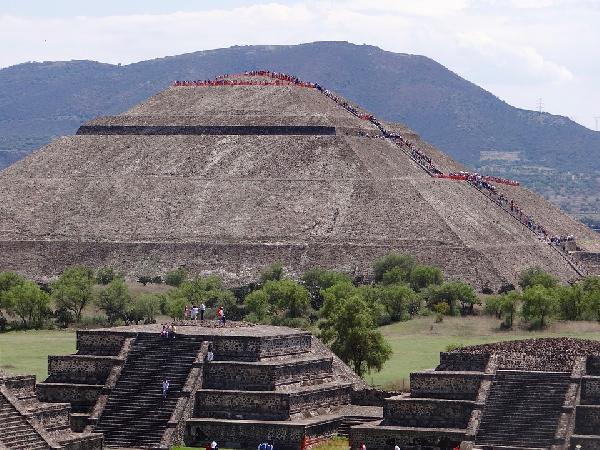
Approaching Teotihuacán, you see them on the horizon: the massive Pyramid of the Sun and the elegant Pyramid of the Moon, dominating the valley. This is not an Aztec site, though the Aztecs who found it centuries after its mysterious abandonment gave it its current name, meaning “The Place Where Men Become Gods.” Teotihuacán was one of the largest cities in the ancient world at its peak (around 450 CE), a powerful metropolis whose influence stretched across Mesoamerica.
The Avenue of the Dead (Calzada de los Muertos)
This is the main artery of the city, running for over two miles. Walking south from the Pyramid of the Moon, you pass numerous smaller temple platforms and complexes that once housed the city’s elite. The scale is staggering, and imagining it filled with color (the structures were once brightly painted) and bustling with people is a breathtaking exercise.
The Pyramid of the Sun (Pirámide del Sol)
The third-largest pyramid in the world, this colossal structure is the heart of Teotihuacán. Climbing its 248 steep steps is a rite of passage for visitors. The ascent is challenging, but the reward is a panoramic view of the entire archaeological site and the surrounding valley that is absolutely unparalleled. Feel the power of this ancient place from its summit.
The Pyramid of the Moon (Pirámide de la Luna)
While smaller than the Sun Pyramid, its summit is at the same height because it’s built on higher ground. It marks the northern end of the Avenue of the Dead and offers the most iconic photographic perspective of the avenue with the Sun Pyramid in the background. The climb is less strenuous, and the view is more curated and symmetrical.
The Temple of Quetzalcóatl (Templo de Quetzalcóatl)
Located in the Ciudadela (Citadel) complex at the southern end of the avenue, this temple is famous for its spectacular stone carvings of feathered serpents (Quetzalcóatl) and a deity believed to be Tlaloc, the god of rain. The intricate, almost baroque detail here contrasts with the sheer mass of the pyramids.
Practical Tips & Local Insights:
Getting There:
Public Bus: The most economical way. Take the Mexico City Metro to Autobuses del Norte station. Go to Terminal 8 inside the bus station and look for buses labeled “Pyramides.” They run frequently.
Organized Tour: A hassle-free option that often includes transport, guide, and sometimes lunch or other stops (like the obsidian factory).
Taxi or Car: Offers flexibility but requires dealing with traffic and parking.
Tickets & Hours: Purchase tickets at the gate. Arrive as early as possible (it opens at 9 AM) to avoid the intense midday sun and large crowds, especially on weekends.
What to Bring: This cannot be overstated: water, sunscreen, a hat, and comfortable walking shoes. The site is vast, exposed, and involves a lot of climbing.
Food: There is a restaurant near Gate 1, but for a more authentic experience, eat at one of the establishments in the nearby town of San Juan Teotihuacán.
Insight: Don’t rush. Plan for at least 4-5 hours to fully appreciate the site. Consider hiring a certified guide at the entrance for a deeper understanding of the city’s history and symbolism.
Part 4: Basilica of Our Lady of Guadalupe
After descending from the ancient world of Teotihuacán, your journey through Mexican identity culminates at its most important Catholic shrine. The Basilica of Our Lady of Guadalupe is not just a church; it is the spiritual center of Mexico and one of the most visited Catholic pilgrimage sites in the world. It commemorates the apparition of the Virgin Mary to an indigenous man, Juan Diego, on the hill of Tepeyac in 1531.
The Travel Experience: The complex is vast and consists of several buildings across a large plaza.
The New Basilica (1976): A modern, circular building designed by Pedro Ramírez Vázquez. Its main feature is the tilma (cloak) of Juan Diego, which bears the iconic image of the Virgin of Guadalupe and is displayed high above the altar. Moving walkways carry pilgrims past it, allowing for a continuous flow of visitors. The atmosphere inside is one of intense devotion.
The Old Basilica (1709): Located next to the new one, this beautiful Baroque building was sinking dangerously into the soft ground and was closed for many years. It has since been stabilized and restored and now serves as a museum.
The Chapel of Cerrito (Capilla del Cerrito): A small chapel atop Tepeyac Hill, marking the spot where the Virgin appeared. The climb up offers a great view of the entire complex and Mexico City.
The Chapel of the Well (Capilla del Pocito): A beautiful Baroque chapel built over a well said to have miraculous waters.
Practical Tips & Local Insights:
Getting There: Take the Mexico City Metro Line 6 (the red line) to the La Villa-Basílica station. The exit leads directly to the plaza.
Best Time to Visit: Any day is busy, but it’s especially crowded on Sundays and on December 12th, her feast day, when millions descend upon the site. For a quieter visit, try a weekday afternoon.
Etiquette: This is an active place of worship. Dress modestly (avoid shorts and sleeveless tops) and be respectful of pilgrims who are often in deep prayer. Silence your phone.
Insight: The story of Guadalupe is fundamental to understanding modern Mexico. It represents a fusion of indigenous and Spanish Catholic beliefs—the Virgin appeared as a mestiza (mixed-race) woman speaking Nahuatl—and was key to the evangelization of the continent.
Culinary Stops Along The Way
A journey like this demands proper sustenance. The flavors here are robust, traditional, and deeply satisfying.
Near Teotihuacán: In San Juan Teotihuacán, look for restaurants serving traditional Pre-Hispanic dishes.
Barbacoa: Lamb or goat slow-cooked in an underground pit. Tender, flavorful, and often served with consommé.
Mixiote: Lamb or rabbit marinated in chili sauce and cooked in a pouch made from the maguey plant’s membrane.
Pulque: A traditional fermented drink made from the sap of the maguey plant. It has a viscous texture and a slightly sour taste. Try a “curado” which is pulque mixed with fruit flavors.
Near La Villa/Basilica: The streets surrounding the basilica are filled with food stalls.
Tortas: Hearty Mexican sandwiches. Look for “Tortas de Barbacoa” for a thematic connection.
Tacos de Canasta: “Basket tacos,” soft tacos steamed in a basket, are a classic street food perfect for pilgrims on the go.
Atole and Tamales: A warm, thick corn-based drink (atole) paired with tamales (steamed corn dough filled with meat or cheese) is a typical Mexican breakfast or evening snack.
A Sample One-Day Itinerary
(This itinerary works best with a hired car/driver or a well-planned private tour)
7:30 AM: Start early to beat traffic. Head first to Teotihuacán.
8:30 AM – 1:30 PM: Explore Teotihuacán. Climb the pyramids while it’s still cool.
1:30 PM – 2:30 PM: Enjoy a late lunch at a traditional restaurant in San Juan Teotihuacán.
2:30 PM – 3:30 PM: Visit the Obsidian Factory on your way back towards the city.
4:00 PM – 5:00 PM: Visit the Plaza of Three Cultures in Tlatelolco.
5:15 PM – 6:30 PM: Conclude your day at the Basilica of Guadalupe (La Villa).
Final Thoughts
This journey is more than just sightseeing; it is a narrative experience told through stone, faith, and flavor. You traverse millennia in a single day, witnessing firsthand how each era—pre-Hispanic, colonial, modern—has been built upon and intertwined with the last to form Mexico’s unique national character. From becoming gods on ancient pyramids to walking among devoted pilgrims at one of Catholicism’s holiest sites, this trip offers an unforgettable insight into what makes Mexico so captivatingly complex.
A note on safety: As with any major city, be aware of your surroundings. Use official taxi services or ride-sharing apps like Uber/Didi. Keep valuables secure and out of sight. These specific sites are generally safe for tourists who exercise standard precautions.