A Comprehensive Travel Guide: Barcelona, Girona & Figueres Circuit
This travel guide details a classic circuit through the heart of Catalonia, starting and ending in the vibrant metropolis of Barcelona, with enriching detours to the medieval charm of Girona and the surrealist wonder of Figueres. This route offers a perfect blend of world-class art, profound history, stunning architecture, and exceptional cuisine.
Trip Overview and Itinerary
This itinerary is ideally structured as a 5 to 7-day trip. The proximity of Girona and Figueres to Barcelona (and to each other) makes this a highly efficient and rewarding journey. Travelers typically start by flying into Barcelona–El Prat Airport (BCN). The recommended route is to explore Barcelona first, then take a train north to Girona, use Girona as a base to visit Figueres, and finally return to Barcelona for the departure, or depart directly from Girona Airport (GRO).
Day 1-3: Barcelona. Immersion in Gaudí’s architecture, historic lanes, and bustling markets.
Day 4-5: Girona. Exploration of the medieval Jewish Quarter, city walls, and Catalan culinary scene. A day trip to Figueres is essential.
Day 6: Figueres. A deep dive into the Dalí Theatre-Museum.
Day 7: Return to Barcelona for departure or depart from Girona.
Part 1: Barcelona – The Cosmopolitan Capital
Barcelona, the capital of Catalonia, is a city that pulses with energy, creativity, and a unique cultural identity. It is a place where Roman ruins stand in the shadow of modernist masterpieces and where sun-drenched beaches are just a stroll from dense, atmospheric neighborhoods.
Key Attractions in Barcelona
La Sagrada Família: The magnum opus of Antoni Gaudí, this basilica is still under construction after more than a century. Its breathtaking facades (Nativity and Passion) and forest-like interior are an unparalleled architectural achievement. Tip: Book tickets online weeks in advance for a specific time slot to avoid long queues.
Park Güell: A whimsical public park designed by Gaudí, featuring colorful mosaics, organic shapes, and panoramic views of the city. The Monumental Zone requires a timed ticket.
Casa Batlló & La Pedrera (Casa Milà): Two of Gaudí’s most famous residential buildings on the prestigious Passeig de Gràcia. Casa Batlló is a fantastical marine-inspired creation, while La Pedrera is known for its undulating stone facade and surreal rooftop chimney sculptures.
Gothic Quarter (Barri Gòtic): The historic heart of Barcelona, a maze of narrow medieval streets filled with shops, bars, and historic sites like the Barcelona Cathedral and the remains of the Roman Temple of Augustus.
La Rambla & Mercat de la Boqueria: La Rambla is a famous, tree-lined pedestrian street always buzzing with activity. Branching off it is the Boqueria Market, a sensory explosion of fresh produce, juices, seafood, and local delicacies.
Montjuïc: A broad hill offering numerous attractions, including the Magic Fountain light show, the National Art Museum of Catalonia (MNAC), and the Poble Espanyol, an open-air architectural museum.
Barcelona Food & Drink
Catalan cuisine is robust and diverse. Must-try experiences include:
Tapas: Sample small plates like patatas bravas (spicy potatoes), jamón ibérico (cured ham), and pimientos de padrón (blistered peppers).
Paella: While originally from Valencia, it’s widely available. Seek out authentic restaurants for a proper paella de marisc (seafood paella).
Calçots: A seasonal winter delicacy; large spring onions grilled over an open fire and dipped in romesco sauce.
Crema Catalana: The local version of crème brûlée, with a citrus and cinnamon flavor.
Cava: Catalonia’s celebrated sparkling wine, perfect for any celebration.
Recommendation: Venture into the Gràcia or El Born neighborhoods for a more authentic and less touristy dining experience.
Transportation in Barcelona
Barcelona has an excellent public transport system. The T-mobilitat card offers unlimited travel on the metro, buses, and trams within chosen time zones. The metro is the most efficient way to cover long distances. For the city center, walking is often the best option.
Accommodation Tips for Barcelona
Staying in neighborhoods like Eixample offers central location and modernist architecture, while El Born and Gràcia provide more bohemian and local vibes. The Gothic Quarter is historic but can be noisy at night. Booking well in advance is crucial, especially during peak season.
Part 2: Girona – The Medieval Jewel
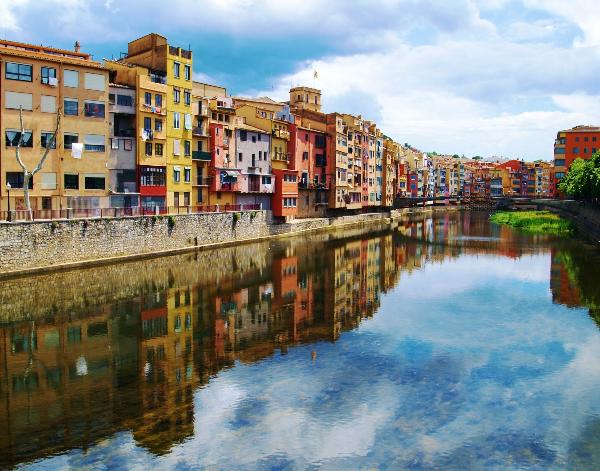
A short train ride north of Barcelona lies Girona, a beautifully preserved medieval city that captivates visitors with its golden stone buildings, ancient fortifications, and the serene Onyar River running through its center.
Key Attractions in Girona
The Cathedral of Girona: Dominating the city skyline, this cathedral boasts the widest Gothic nave in the world. Climb its 89 steps for a powerful first impression and explore its treasury, which includes the famous Tapestry of Creation.
The Jewish Quarter (El Call): One of the best-preserved Jewish quarters in Europe, a labyrinth of narrow, cobbled streets and hidden courtyards that evoke its profound history. The Museum of Jewish History provides essential context.
The City Walls (Passeig de la Muralla): Walk along the ancient Carolingian and medieval walls for stunning panoramic views over the city and surrounding landscapes.
The Houses on the Onyar: The iconic, brightly painted houses that line the Onyar River, with the Eiffel Bridge (designed by Gustave Eiffel’s company) in the foreground, form Girona’s most photographed scene.
Arab Baths (Banys Àrabs): A well-preserved 12th-century Romanesque building inspired by Islamic and Roman bathhouses, featuring an elegant central frigidarium.
Girona Food & Drink
Girona is a food lover’s paradise, home to El Celler de Can Roca, repeatedly voted the world’s best restaurant. While securing a table there is a challenge, the city’s culinary scene is accessible to all.
Xuixo: Girona’s signature pastry—a deep-fried, sugar-dusted cylinder filled with crema catalana.
Empordanesa Salad: A traditional salad from the region with lettuce, cod, olives, and onions.
Suquet: A rich Catalan fish and potato stew.
Local Wines: Explore wines from the Empordà DO region, known for both reds and whites.
Transportation to and in Girona
The high-speed AVE train from Barcelona-Sants station to Girona takes approximately 40 minutes. Regional trains are slower but cheaper. The train station is a 15-20 minute walk from the old town. Girona is a very walkable city; once in the historic center, all major sites are accessible on foot.
Accommodation Tips for Girona
For the most immersive experience, stay within or on the edge of the old town. This allows for easy early morning or evening access to the sites when day-trippers have left. Options range from boutique hotels in historic buildings to charming guesthouses.
Part 3: Figueres – The Surrealist Dream
The primary reason to visit Figueres is to experience the Dalí Theatre-Museum. This museum is not just a collection of art; it is a sprawling surrealist object designed by Salvador Dalí himself, built on the ruins of the former municipal theatre.
Key Attraction in Figueres: The Dalí Theatre-Museum
The museum is Dalí’s final masterpiece. From the giant eggs on the roof to the mesmerizing Mae West Room and the iconic Rainy Cadillac, every detail is part of the artwork. Key highlights include:
The Wind Palace Room: Home to many of Dalí’s major works, including “The Basket of Bread” and “Galatea of the Spheres.”
The Mae West Room: An anamorphic installation that transforms into the face of the actress when viewed from a specific spot.
The Jewellery Collection: A separate exhibition showcasing 39 jewels designed by Dalí, including the famous “Royal Heart,” a beating mechanical heart made of gold and rubies.
Tip: Book tickets online in advance. Allow at least 3 hours to fully absorb the museum’s details. The queue can be long, but pre-booked tickets grant faster entry.
Other Attractions in Figueres
Sant Ferran Castle: Located just outside the town center, this 18th-century fortress is one of the largest in Europe. Visitors can explore its vast moats and underground chambers.
Toy Museum of Catalonia: A charming collection of historical toys that provides a delightful contrast to Dalí’s surrealism.
Figueres Food & Drink
The culinary offerings in Figueres are heavily influenced by the Empordà region. Look for restaurants serving robust mountain cuisine and fresh seafood from the nearby Costa Brava.
Transportation to Figueres
The most convenient way to reach Figueres from Girona is by train. Regional trains run frequently from Girona station to Figueres-Vilafant (the high-speed station) and Figueres (the city center station). The journey takes about 30-40 minutes. The Dalí Museum is a short 10-15 minute walk from the Figueres city center station.
Practical Travel Information for the Circuit
Inter-City Transportation
Train (Recommended): Spain’s Renfe network is efficient and comfortable.
Barcelona to Girona: AVE (High-speed) ~40 min; Regional ~1h 20min.
Girona to Figueres: Regional ~30-40 min.
Figueres to Barcelona: AVE from Figueres-Vilafant ~55 min; Regional from Figueres (city) ~2h.
Book tickets in advance on the Renfe website or app for the best prices.
Car Rental: Offers maximum flexibility to explore smaller villages along the Costa Brava. However, parking in city centers like Barcelona and Girona can be difficult and expensive.
Bus: Companies like Sagalés operate bus routes between these cities, which can be a cheaper but slower alternative.
Cultural Insights & Etiquette
Language: The official languages are Catalan and Spanish (Castellano). While English is widely spoken in tourist areas, learning a few basic phrases in Catalan (“Bon dia” for Good morning, “Gràcies” for Thank you) or Spanish is appreciated.
Siesta & Meal Times: Life often pauses in the afternoon (roughly 2-5 pm). Dinner is typically late, starting after 9:00 pm. Restaurants may not open for dinner until 8:30 pm or later.
Catalan Identity: Catalonia has a strong distinct cultural identity. Be respectful and aware of local sentiments regarding politics and history.
Tipping: Tipping is not as customary as in some countries. Leaving small change or rounding up the bill is standard. For exceptional service, 5-10% is generous.
Budgeting and Money
The Euro (€) is the currency. Barcelona is generally more expensive than Girona and Figueres. Costs can be managed by using public transport, eating set lunch menus (
menú del día), and staying in accommodations slightly outside the main tourist hubs.
Best Time to Visit
The ideal times are during the shoulder seasons:
April-June and September-October. The weather is pleasant, and crowds are thinner than in the peak summer months of July and August, which can be very hot and crowded. Spring also offers the chance to see Girona’s famous Temps de Flors flower festival.