An Art and History Lover’s Journey: Paris, Barbizon, Fontainebleau, and Vaux-le-Vicomte
This travel guide outlines a captivating journey from the heart of Paris into the surrounding Île-de-France region, tracing a path through art history, royal grandeur, and architectural genius. This itinerary is perfect for travelers seeking to move beyond the standard Parisian landmarks to discover the landscapes that inspired revolutionary artists and the châteaux that defined French elegance. The route connects the vibrant capital with the rustic charm of the Barbizon painter’s village, the immense royal palace of Fontainebleau, and the stunning private masterpiece of Vaux-le-Vicomte.
Part 1: Paris – The Grand Starting Point
Paris, the ‘City of Light,’ serves as the natural beginning and end for this exploration. Its world-class museums provide the perfect artistic context for the sights to come.
Key Attractions & Cultural Insights
The Louvre: Before heading to Barbizon, visitors should seek out the works of the Old Masters, such as Nicolas Poussin and Claude Lorrain, whose classical landscapes prefigured the love of nature that the Barbizon artists would later embrace in a more naturalistic style.
Musée d’Orsay: This museum is crucial for understanding the artistic evolution. It houses a significant collection of works by Jean-François Millet and Théodore Rousseau, key figures of the Barbizon School, whose paintings can be appreciated before seeing the environment that inspired them.
Île de la Cité & Île Saint-Louis: A stroll through these historic islands offers a sense of Paris’s medieval origins, with the grandeur of Notre-Dame Cathedral serving as a reminder of the city’s long-standing role as a center of art and power.
Food Recommendations
Classic Bistros: For a traditional Parisian meal, seek out a bistro for dishes like Steak Frites (steak and fries) or Confit de Canard (duck confit).
Patisseries & Boulangeries: No day in Paris is complete without a buttery croissant, a perfect éclair, or a fresh baguette sandwich.
Neighborhood Markets: Visit a local market, such as Marché d’Aligre, to experience the vibrant food culture and sample cheeses, charcuterie, and fresh produce.
Transportation Information
Paris is the central hub. Charles de Gaulle (CDG) and Orly (ORY) are the main international airports. The city’s public transportation system, the RATP, which includes the Metro, RER trains, and buses, is efficient and comprehensive. For the onward journey, renting a car from Paris provides the most flexibility for exploring the countryside. Alternatively, regional trains (Transilien) from Gare de Lyon can connect to Fontainebleau.
Accommodation Tips
Staying in central arrondissements like the Marais, Saint-Germain-des-Prés, or the Latin Quarter offers easy access to museums, restaurants, and major train stations. For a quieter stay, consider neighborhoods near Buttes-Chaumont or along the Canal Saint-Martin.
Part 2: Barbizon – The Village of the Painters
Located on the edge of the Forest of Fontainebleau, approximately 55 kilometers south-east of Paris, Barbizon is a quaint village that became the cradle of the 19th-century plein air painting movement. Artists like Jean-François Millet, Théodore Rousseau, and Camille Corot fled the studio to paint nature directly from life, laying the groundwork for Impressionism.
Key Attractions & Cultural Insights
Auberge Ganne: Now the Musée de l’École de Barbizon, this former inn was the epicenter of artistic life. Artists rented rooms for a pittance and often paid with paintings. The museum preserves their rooms, complete with drawings and paintings directly on the walls, offering an intimate look into their lives.
Millet’s Studio: A short walk away is the studio and home of Jean-François Millet, where he painted his iconic works like “The Angelus.” The house provides context for his life and his profound connection to the peasant subjects and landscapes he depicted.
The Forest of Fontainebleau: This is the true attraction. Follow marked trails to find specific rocks and groves immortalized in paintings, such as the Gorges d’Apremont or the Grotte aux Idoles. The light filtering through the trees and the dramatic sandstone boulders explain the artists’ fascination.
Food Recommendations
Country Inn Dining: Barbizon’s restaurants maintain a rustic charm. Look for menus featuring game, forest mushrooms (in season), and classic French dishes in a cozy setting.
Regional Specialties: Try dishes from the Île-de-France region, such as various pâtés, Brie de Meaux cheese, and for dessert, a tarte Tatin.
Transportation Information
From Paris, take a Transilien Line R train from Gare de Lyon direction Montargis Sens or Montereau to the “Melun” station. From Melun, a connecting bus (line 22) goes to Barbizon. However, the bus service can be infrequent. A car is highly recommended for this entire itinerary as it provides direct access to Barbizon, the forest sites, Fontainebleau, and Vaux-le-Vicomte with maximum flexibility.
Accommodation Tips
Barbizon itself offers several charming, small hotels and B&Bs (chambres d’hôtes), allowing for an immersive experience in the village. For more options, the town of Fontainebleau has a wider range of hotels.
Part 3: Château de Fontainebleau – The Home of Kings
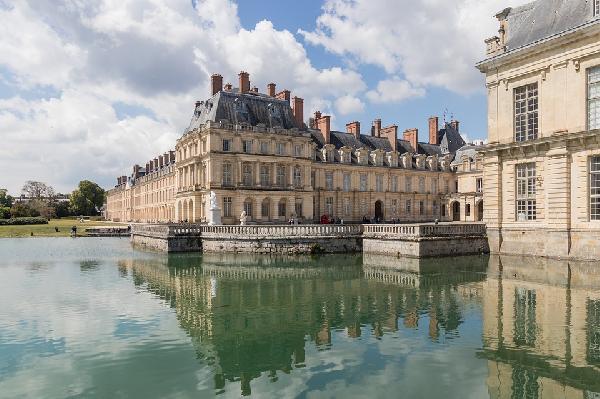
A mere 10-minute drive from Barbizon lies the Château de Fontainebleau. Unlike Versailles, which was built as a statement of absolute power, Fontainebleau is often called the “house of centuries, the true home of kings.” It is a sprawling palace that has been continuously inhabited and renovated by French sovereigns from Louis VII to Napoleon III.
Key Attractions & Cultural Insights
The Renaissance Grandeur: François I imported Italian artists, including Rosso Fiorentino and Primaticcio, to decorate the palace, creating the First School of Fontainebleau. The breathtaking Gallery of François I is a masterpiece of Mannerist art and stucco work.
Napoleonic Apartments: The château is deeply connected to Napoleon Bonaparte. Visitors can see his throne room, his personal apartments, and the abdication table where he signed his first renouncement of power. The Musée Napoléon I houses his personal effects, uniforms, and gifts.
The Gardens and Park: The grounds are vast and diverse. The formal Garden of Diane, the expansive Carp Pond, and the English-style garden designed by Le Nôtre offer peaceful spaces for a stroll and reflect different eras of landscape design.
The Horseshoe Staircase: This iconic exterior staircase is a symbol of Fontainebleau. It was from these steps that Napoleon gave his famous farewell speech to his Old Guard before his exile to Elba.
Food Recommendations
Château Cafés: There are several cafés and a restaurant within the château’s domain, perfect for a lunch break without leaving the grounds.
Town of Fontainebleau: The adjacent town has a wide variety of restaurants, from casual brasseries to finer dining establishments, catering to both tourists and the local student population from INSEAD business school.
Transportation Information
If not driving, take a Transilien Line R train from Gare de Lyon directly to the “Fontainebleau-Avon” station. From there, a local bus (line 1) named ‘Château’ takes you directly to the palace gates. The journey from Paris takes about 40-60 minutes.
Accommodation Tips
The town of Fontainebleau offers numerous accommodation options, from international chain hotels to charming independent establishments. Staying here allows for an easy visit to the château and serves as a good base for exploring Barbizon and Vaux-le-Vicomte.
Part 4: Château de Vaux-le-Vicomte – The Tragic Masterpiece
Located north of Fontainebleau near Melun, Vaux-le-Vicomte is a story of sublime beauty and devastating consequence. Built between 1658 and 1661 for Nicolas Fouquet, Superintendent of Finances for Louis XIV, it was the collaborative masterpiece of architect Louis Le Vau, landscape architect André Le Nôtre, and painter-decorator Charles Le Brun.
Key Attractions & Cultural Insights
The Architectural Harmony: Vaux-le-Vicomte is considered the first complete example of the “Louis XIV style,” where architecture and landscape are in perfect harmony. The château’s scale is human yet majestic, and its interior decoration by Le Brun is sumptuous.
Le Nôtre’s Gardens: This is where Le Nôtre perfected his ideas before creating Versailles. The gardens use optical illusions, perspective, and water features to create a stunning visual spectacle that unfolds as visitors walk through it. The view from the rear of the château is one of the most famous in garden history.
The Fouquet Drama: The château’s history is a classic tale of hubris. To celebrate its completion in 1661, Fouquet threw an extravagant fête for the king, featuring a new play by Molière and an incredible fireworks display. Three weeks later, jealous of its splendor, Louis XIV had Fouquet arrested for embezzlement. The king then confiscated the artistic team to build his own palace: Versailles.
Candlelit Evenings: From May to October, the château offers special “Candlelit Evenings” where the entire domain is illuminated by thousands of candles, creating a magical and historically evocative atmosphere.
Food Recommendations
The Château’s Restaurants: Vaux-le-Vicomte houses “L’Écureuil” (The Squirrel, Fouquet’s emblem), a self-service restaurant, and “Les Charmilles” , a more formal table-service restaurant located in the old stables. Picnics are not allowed in the gardens.
Nearby Melun: The town of Melun has a variety of dining options for a meal before or after your visit.
Transportation Information
The most convenient way to reach Vaux-le-Vicomte is by car. There is ample parking. By public transport, take a train from Paris Gare de Lyon to “Melun” station. From there, from April to early November, a special shuttle bus (Châteaubus) runs between Melun station and the château on visiting days. Taxis are also available at Melun station but should be booked in advance for the return journey.
Accommodation Tips
While there is no accommodation at the château itself, visitors can stay in Melun or return to Fontainebleau or Paris for the night. Given its proximity to Paris (about an hour’s drive), it is easily visited as a day trip from the capital.
Part 5: Return to Paris & Itinerary Planning
The journey concludes with a return to Paris. The contrast between the intimate Barbizon, the lived-in royal splendor of Fontainebleau, and the perfectly conceived Vaux-le-Vicomte provides a deep and nuanced understanding of French art and history beyond the capital’s borders.
Suggested Itineraries
The Two-Day Deep Dive:
Day 1: Rent a car in Paris in the morning. Drive to Barbizon, explore the village museums and have lunch. Spend the afternoon hiking in the Forest of Fontainebleau. Check into accommodation in Fontainebleau. Enjoy dinner in town.
Day 2: Spend the morning exploring the Château de Fontainebleau and its gardens. Have lunch in Fontainebleau. Drive to Vaux-le-Vicomte for a comprehensive afternoon visit (consider staying for a Candlelit Evening if available). Drive back to Paris in the evening to return the car.
The One-Day Art & Château Blitz (with a car): This is a packed day. Leave Paris early. Drive to Barbizon for a brief walk through the village. Proceed to Fontainebleau for a focused visit to the château’s highlights (2-3 hours). Have a quick lunch. Drive to Vaux-le-Vicomte for an afternoon exploration before returning to Paris.
Final Cultural Insights
This tour illustrates a pivotal narrative in French culture: the transition from artistic patronage by wealthy individuals like Fouquet to its centralization under the absolute monarch. It shows how art moved from idealized classical themes to authentic nature (Barbizon), and how architecture was used not just for living but as a powerful political statement (Vaux-le-Vicomte and Fontainebleau). Understanding these connections enriches any visit to Paris’s own monuments and museums, completing a profound cultural circuit.