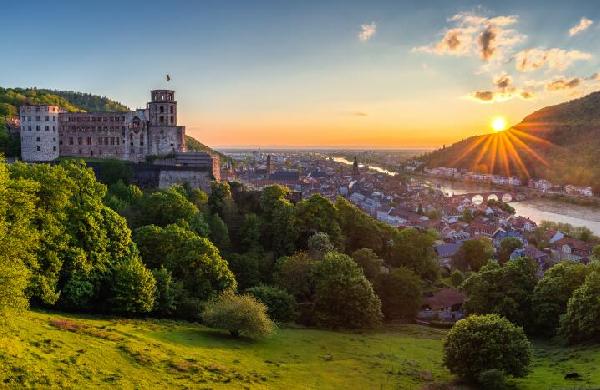
A Scenic German Journey: Frankfurt, Heidelberg, Rüdesheim, the Rhine, and Assmannshausen
This travel guide outlines a classic and enchanting circuit through the heart of western Germany, combining vibrant urban centers, romantic castles, and the legendary landscapes of the Rhine Valley. The journey begins and ends in Frankfurt, making it an ideal route for travelers flying internationally. It seamlessly blends history, culture, wine, and breathtaking natural beauty into an unforgettable itinerary.
Trip Overview and Logistics
This circular route is designed for a comfortable duration of 4 to 7 days, allowing for a deep exploration of each location. The primary modes of transportation are Germany’s efficient rail system (Deutsche Bahn) and the scenic river cruises along the Rhine.
Best Time to Visit: Late spring (May-June) and early autumn (September-October) offer pleasant weather, fewer crowds, and the chance to experience vineyard harvests. The Christmas markets in December are also magical.
Getting Around: The German Rail Pass (Deutschland-Ticket) or regional day passes (like the Quer-durchs-Land-Ticket or Rheinland-Pfalz-Ticket) can offer significant savings for group travel. River cruises are operated by companies like KD Rhine and Bingen-Rüdesheimer.
Currency: Euro (€). Credit cards are widely accepted, but it is always prudent to carry some cash, especially in smaller towns and wine taverns.
Frankfurt: The Gateway and Modern Metropolis
Frankfurt am Main, often simply called Frankfurt, is Germany’s financial hub and a city of striking contrasts, where sleek skyscrapers stand alongside reconstructed historical buildings.
Key Attractions
Römerberg: This is the historic heart of Frankfurt, a picturesque square lined with beautifully reconstructed half-timbered houses. The Römer itself is Frankfurt’s city hall and has been for over 600 years.
St. Bartholomew’s Cathedral (Kaiserdom): A grand Gothic cathedral that was the election and coronation site for Holy Roman Emperors. Climbing the tower rewards visitors with a spectacular panoramic view of the city.
Museumsufer (Museum Embankment): A unique concentration of museums on both banks of the River Main. Highlights include the Städel Museum (European art), the German Film Museum, and the Communications Museum.
Main Tower: For the best view of the city’s iconic skyline, visitors can go to the observation platform of this 56-story skyscraper.
Food and Drink
Frankfurt offers a blend of international cuisine and hearty local specialties.
Grüne Soße (Green Sauce): A cold herb sauce made with seven fresh herbs, sour cream, and yogurt, traditionally served with boiled potatoes and eggs.
Frankfurter Würstchen: Long, thin, smoked sausages, typically served with bread, mustard, and potato salad.
Apfelwein (Ebbelwoi): Frankfurt’s signature tart apple cider. The best places to try it are in the traditional apple wine taverns in the Sachsenhausen district.
Transportation from Frankfurt
Frankfurt’s Hauptbahnhof (main train station) is one of Europe’s largest. Direct trains to Heidelberg run frequently, with a journey time of approximately 55-70 minutes on high-speed ICE trains or slightly longer on regional trains.
Heidelberg: Romance and Philosophy
Nestled in the Neckar river valley, Heidelberg is the epitome of German Romanticism. It is home to Germany’s oldest university and a world-famous castle ruin that has inspired poets and artists for centuries.
Key Attractions
Heidelberg Castle: This magnificent red sandstone ruin towers over the city. A visit includes the castle courtyards, the Grosses Fass (the world’s largest wine barrel), and the German Pharmacy Museum. The view of the old town from the castle is unparalleled.
Altstadt (Old Town): A baroque marvel stretching along the Neckar River, featuring the Heiliggeistkirche (Church of the Holy Spirit), the Old Bridge (Karl-Theodor-Brücke), and the charming Hauptstrasse, a mile-long pedestrian shopping street.
Philosophers’ Walk (Philosophenweg): A path on the sunny side of the Neckar river opposite the old town, offering breathtaking views of the castle and city. It was a favorite walking spot for university philosophers and professors.
Studentenkarzer (Student Jail): A unique historical site where misbehaving university students were imprisoned from 1778 to 1914. The walls are covered in their graffiti and drawings.
Food and Drink
Heidelberger Studentenkuss: A local chocolate praline, the “Heidelberg Student’s Kiss,” originally created as a discreet way for students to send messages to young ladies.
Regional Wines: The surrounding region is known for its excellent Riesling and Pinot Noir (Spätburgunder).
Heidelberg Breweries: Traditional breweries and beer gardens offer local brews and hearty German fare like Schnitzel and Bratwurst.
Transportation to the Rhine
From Heidelberg, travelers take a train back towards Mainz or Wiesbaden, transferring to a local train to reach the town of Rüdesheim am Rhein. The total journey typically takes around 1.5 to 2 hours.
Rüdesheim am Rhein: Wine, Music, and Cobblestones
Located at the southern edge of the UNESCO World Heritage Upper Middle Rhine Valley, Rüdesheim is a charming wine town famous for its lively atmosphere and scenic location.
Key Attractions
Drosselgasse: This narrow, cobblestone lane is just 144 meters long but world-famous. Lined with wine taverns, restaurants, and music, it is a vibrant hub of activity day and night.
Siegfried’s Mechanical Music Cabinet (Siegfrieds Mechanisches Musikkabinett): A fascinating museum housing a collection of self-playing musical instruments from the 18th to 20th centuries.
Niederwalddenkmal: A monumental statue representing the unification of Germany in 1871. It can be reached via a scenic cable car (Seilbahn) ride from Rüdesheim, offering stunning views of the Rhine Valley.
Rhine River Promenade: A pleasant walk along the riverfront, perfect for watching ships pass and enjoying an ice cream or a glass of wine.
Food and Drink
Rüdesheimer Kaffee: A famous local cocktail made with Asbach Uralt brandy, sugar, and freshly brewed coffee, topped with whipped cream and chocolate flakes.
Riesling Wine: Rüdesheim is at the heart of the Rheingau wine region, renowned for its high-quality Riesling wines. Visiting a local Weinstube (wine tavern) for a tasting is essential.
Spundekäs: A creamy regional cheese spread served with onions and pretzels or bread.
The Legendary Rhine River Cruise
A cruise along the Rhine River between Rüdesheim/Bingen and Koblenz is the highlight of any trip to this region. This stretch is densely packed with over 40 castles, steep vineyards, and legendary rock formations.
Cruise Experience
Route: Most travelers take a cruise from Rüdesheim heading north to St. Goar or Boppard. The most concentrated and dramatic section is between Bingen and St. Goar.
Key Sights from the Boat:
The Loreley Rock: A steep slate rock rising 132 meters above the water’s surface. It is the subject of a famous legend about a siren whose song lured sailors to their doom.
Castles: Look for Pfalzgrafenstein Castle (a white toll castle on an island in the river), Rheinstein Castle, Reichenstein Castle, and the twin castles of Sterrenberg and Liebenstein, known as the “Hostile Brothers.”
Towns: Pass by picturesque villages like Bacharach, Oberwesel, and Kaub.
Ticketing: Boats run frequently. Point-to-point tickets are available, allowing travelers to disembark at any stop and continue on a later boat with the same ticket.
Assmannshausen: A Quiet Retreat
Just a short distance from Rüdesheim (accessible by train, ferry, or a beautiful hiking trail along the Rhine), Assmannshausen feels like a world away. It is a quieter, more traditional village famous for its exceptional red wine.
Key Attractions
Pinot Noir (Spätburgunder): Assmannshausen is one of Germany’s northernmost regions for producing quality red wine. A visit to a local winery, such as the Staatsweingut Assmannshausen, for a tasting is highly recommended.
Hiking Trails: The village is a starting point for numerous scenic hikes through the vineyards and forests of the Niederwald.
Assmannshausen Chairlift: A smaller, quieter alternative to Rüdesheim’s cable car, this lift takes visitors up to the Niederwalddenkmal through beautiful vineyards.
The Riverside: A peaceful place to relax, watch the river traffic, and enjoy the serene atmosphere.
A Unique Crossing
A delightful way to travel between Rüdesheim and Assmannshausen is by taking the auto ferry across the Rhine. It’s a short but scenic trip that offers a different perspective of both towns.
The Return Journey to Frankfurt
The final leg of the trip involves returning from the Rhine Valley to Frankfurt am Main. This is easily accomplished by train.
Transportation Back
From Assmannshausen/Rüdesheim: Travelers take a local train from Rüdesheim or Assmannshausen to Mainz Hauptbahnhof. From Mainz, there are frequent direct S-Bahn (commuter train) connections to Frankfurt Hauptbahnhof and Frankfurt Airport. The total journey time is approximately 1 hour and 15 minutes.
Alternative Route: For those who ended their cruise further north in St. Goar or Boppard, direct trains run from these towns back to Frankfurt, often with one change in Koblenz. The journey is slightly longer but equally scenic as it follows the Rhine and then the Main rivers.
Accommodation Tips for the Journey
The type of accommodation can greatly influence the travel experience on this route.
Frankfurt: For convenience, staying near the Hauptbahnhof or in the city center/innenstadt is recommended. The Sachsenhausen district offers a more traditional and lively atmosphere.
Heidelberg: To fully immerse in the romantic ambiance, choose a hotel or guesthouse in the Altstadt (Old Town). For quieter stays with beautiful views, consider neighborhoods on the opposite side of the Neckar River, like Neuenheim.
Rüdesheim/Assmannshausen: In Rüdesheim, options range from modern hotels to traditional guesthouses; staying near the Drosselgasse is central but can be noisy at night. For a more peaceful and authentic experience, a stay in Assmannshausen is highly recommended. Many guesthouses here are family-run and offer direct views of the river and vineyards.
Cultural Insights and Practical Advice
Understanding local customs enhances the travel experience.
Cash Culture: While cards are accepted in many places, Germany still has a strong preference for cash, especially in smaller towns, markets, and family-owned restaurants (Gasthäuser).
Sundays and Holidays: Most shops are closed on Sundays and public holidays. Plan accordingly by visiting attractions, going for walks, or dining in restaurants which remain open.
The Pfand System: When purchasing bottled drinks in supermarkets, a deposit (Pfand) is included in the price. Bottles can be returned to any store with a reverse vending machine to get the deposit back.
Tipping: Service is usually included in the bill. It is customary to round up the total or leave a tip of 5-10% for good service by stating the total amount you wish to pay when handing over your cash or card.
Punctuality: Public transportation in Germany is renowned for its punctuality. It is advisable to be on time for trains, buses, and scheduled tours.
This journey through Frankfurt, Heidelberg, Rüdesheim, Assmannshausen, and along the Rhine River encapsulates the diverse spirit of Germany—its economic power, romantic history, viticultural traditions, and timeless natural beauty. It is a trip that leaves visitors with memories of castle-dotted horizons, the taste of fine wine, and the echo of history around every corner.