A Grand Tour: From Frankfurt to the Swiss Alps and Back
This travel guide outlines a comprehensive journey starting and ending in Frankfurt, Germany, weaving through the economic powerhouse of Stuttgart, into the pristine landscapes and cities of Switzerland, and culminating in a breathtaking Alpine adventure before the return. The itinerary is designed to offer a rich blend of urban sophistication, historical depth, and unparalleled natural beauty.
Part 1: The German Prelude – Frankfurt and Stuttgart
Frankfurt am Main: The Gateway
Often called “Mainhattan” for its striking skyline, Frankfurt is a city of fascinating contrasts, where historic charm coexists with a dynamic financial center.
Attractions: Begin at the Römerberg, the city’s historic heart with its beautifully reconstructed medieval buildings. Visit the Kaiserdom (Frankfurt Cathedral), a Gothic masterpiece. For panoramic views, ascend the Main Tower observatory. Art enthusiasts should not miss the Städel Museum, housing a world-class collection of European art.
Food & Drink: Indulge in traditional Apfelwein (hard cider) in the Sachsenhausen district, paired with hearty fare like Handkäse mit Musik (a pungent cheese with onions) or Frankfurter Grüne Soße (green sauce with herbs) with boiled eggs and potatoes.
Transportation: Frankfurt Airport (FRA) is a major international hub. The city center is easily navigable on foot and via its excellent U-Bahn and S-Bahn network.
Cultural Insight: Frankfurt is not just about finance; it’s the birthplace of Goethe. His house offers a glimpse into the life of Germany’s literary giant.
Stuttgart: Cradle of the Automobile
A short train ride south leads to Stuttgart, a city nestled in rolling hills, renowned for its automotive heritage and vibrant wine culture.
Attractions: Car lovers will be in heaven at the Mercedes-Benz Museum and the Porsche Museum, both architectural marvels tracing the history of these iconic brands. The sprawling Wilhelma Zoo and Botanical Garden is a fantastic day out. For city views, climb the TV Tower (Fernsehturm), the world’s first such structure.
Food & Drink: Sample local Swabian specialties like Maultaschen (large meat-filled pasta pockets) and Spätzle (soft egg noodles). Stuttgart is surrounded by vineyards; visit a Besenwirtschaft, a temporary wine tavern run by local vintners, for a truly authentic experience.
Transportation: Stuttgart has an efficient public transport system (VVS). The main train station (Hauptbahnhof) is a central hub for regional and international trains.
Practical Tip: Consider purchasing a “Stuttgart Card” for free public transport and discounts on major attractions.
Part 2: Into the Heart of Switzerland
Zurich: Efficiency and Elegance
The train from Stuttgart will take you directly to Zurich, Switzerland’s largest city, a global financial center set on the shimmering waters of Lake Zurich.
Attractions: Stroll through the charming cobblestone streets of the Old Town (Altstadt) on both sides of the Limmat River. Visit the Fraumünster church to see its stunning stained-glass windows by Marc Chagall. Climb to the Lindenhof hill for a peaceful view over the city. A boat trip on Lake Zurich is highly recommended.
Food & Drink: Try Zürcher Geschnetzeltes (sliced veal in a creamy mushroom and white wine sauce) served with Rösti. Don’t miss the luxury confectionery at Sprüngli, especially their Luxemburgerli macarons.
Transportation: Zurich’s airport (ZRH) and main station (Zürich HB) are major transport hubs. The city’s tram network is incredibly efficient.
Cultural Insight: Despite its business-like reputation, Zurich has a vibrant arts scene and a famously relaxed lifestyle, with swimming in the river and lake being a popular summer pastime.
The Swiss Village Experience: A Night in the Alps
From Zurich, venture deeper into the pre-Alps to a typical Swiss village, such as
Grindelwald or Mürren. This is where the iconic Swiss landscape truly unfolds.
Attractions: The attraction is the village itself. Breathe in the fresh mountain air, listen to the cowbells, and admire the towering peaks. Take a short local hike or a cable car for even more spectacular views.
Food & Drink: Enjoy a rustic dinner at a traditional chalet restaurant. Order cheese fondue or raclette, both quintessential Swiss mountain meals.
Transportation: Reaching these villages involves connecting from Interlaken via train, bus, or cable car. The Swiss Travel System is seamless.
Local Insight: Staying in a village allows you to experience the quiet, authentic side of Switzerland after the day-trippers have left. Wake up to stunning, undisturbed mountain vistas.
Bern: The Federal Capital
Travel to Bern, the de facto capital of Switzerland, a UNESCO World Heritage site built around a bend in the Aare River.
Attractions: Explore the six kilometers of arcaded streets in the Old Town. Visit the Zytglogge, a medieval clock tower with an animated show every hour. See the bears (the city’s heraldic symbol) in the Barengraben (Bear Pit), now part of a larger bear park along the river. The Federal Palace (Bundeshaus) offers free tours when parliament is not in session.
Food & Drink: Bern is known for its Berner Platte, a hearty dish of various meats and sausages with sauerkraut and beans. Try it at a traditional restaurant like Kornhauskeller.
Transportation: Bern’s Old Town is best explored on foot. The main station is well-connected.
Cultural Aspect: Bern feels more like a large town than a capital city. Its relaxed atmosphere and well-preserved history make it incredibly charming.
Lausanne & Montreux: The Swiss Riviera
Heading southwest, you’ll reach French-speaking Switzerland and the shores of Lake Geneva.
Lausanne: A vibrant city built on three hills. Visit the majestic Gothic Cathedral and the Olympic Museum, a fascinating tribute to the history of the Games. The Ouchy waterfront is perfect for a lakeside stroll.
Montreux: Famous for its incredibly mild climate and the Montreux Jazz Festival. Walk along the flower-lined promenade to the stunning Château de Chillon, a medieval castle on a small island. It’s one of Switzerland’s most visited historic monuments.
Food & Drink:The region is known for its wines, particularly Chasselas. Food takes on a French flair here, with excellent freshwater fish from the lake.
Transportation:A scenic train line runs along Lake Geneva connecting Lausanne and Montreux. Boats also ply the lake, offering magnificent views of the terraced vineyards and the Alps beyond.
Part 3: The Alpine Grandeur – Jungfrau Region
The Ascent to Jungfraujoch – Top of Europe
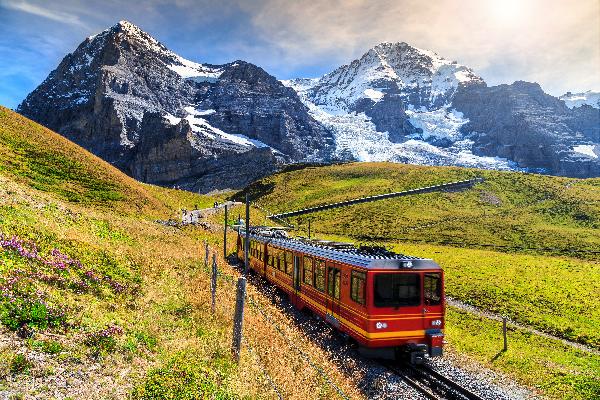
The journey from your Swiss village (e.g., Grindelwald or Wengen) to the Jungfraujoch is an unforgettable highlight. It’s a two-part train journey culminating at the highest railway station in Europe.
The Experience:The train ride itself is spectacular, passing through tunnels carved inside the Eiger and Mönch mountains. At the top (3,454 meters), you are surrounded by a perpetual winter landscape. Visit the Ice Palace, walk on the plateau overlooking the Aletsch Glacier (a UNESCO site), and visit the Sphinx Observatory terrace for 360-degree views.
Practical Tips:
Book in Advance: Tickets are expensive and can sell out. Book online to secure your spot.
Weather is Key: Check the live webcam before you go. A clear day is essential for the views.
Altitude: Take it easy to avoid altitude sickness. Stay hydrated.
The Swiss Travel Pass offers a discount, but does not cover the full fare.
Interlaken: The Adventure Hub
Situated between Lake Thun and Lake Brienz, Interlaken is the gateway to the Jungfrau Region.
Attractions: While many use it as a base, Interlaken itself has a charming Höheweg (main promenade) with views of the mountains. For adrenaline seekers, it’s the center for paragliding, skydiving, and canyon jumping.
Food & Drink:The town is touristy but has a wide range of restaurants. Consider taking a boat trip on one of the lakes for a more tranquil experience.
Lucerne: The Picture-Perfect City
A train ride from Interlaken brings you to Lucerne, arguably Switzerland’s most beautiful city, located on Lake Lucerne with a stunning mountain panorama.
Attractions:The iconic Chapel Bridge (Kapellbrücke) and Water Tower are must-sees. The poignant Lion Monument (Löwendenkmal), carved into a rock face, commemorates Swiss Guards who died during the French Revolution. Walk or take a funicular up the Museggmauer, part of the city’s intact medieval fortification walls. A cruise on Lake Lucerne is essential.
Food & Drink:Taste Luzerner Chügelipastete, a vol-au-vent filled with diced meat and mushrooms in a cream sauce. Sample local lake fish.
Cultral Insight:The Richard Wagner Museum and the Swiss Museum of Transport are excellent cultural stops if you have time.
A Detour to Schaffhausen and the Rhine Falls
A short trip north from Zurich leads to Schaffhausen, known for its well-preserved Old Town with oriel windows and Europe’s most powerful waterfall.