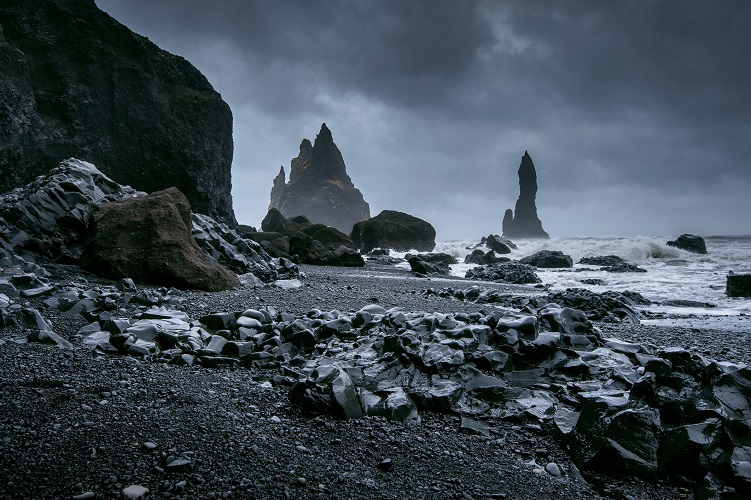
Black Sand Beach, located in Iceland, is a beach formed by volcanic rock.
It is adjacent to the picturesque and peaceful town of Vík, nestled against the Organ Rock cliffs. The black sand is formed from fine lava particles, formed when high-temperature magma rapidly cools upon contact with seawater following a volcanic eruption. From Black Sand Beach, one can overlook the boundless North Atlantic Ocean. The black sand and white waves create a striking contrast under the sunlight, complemented by the “Beacon Hill” reef across the sea, creating a world-renowned coastal beauty.
The formation of Black Sand Beach is related to volcanic activity. An ancient submarine volcanic eruption brought up layers of mud from the seabed, where it blended with the seaside soil, rendering it indistinguishable from the original. Over the years, the forces of seawater and wind forced the lava and mud together, ultimately creating the endless black sand beach we see today.
The sand on Black Sand Beach is indeed pure black, a bit rough, but very fine near the shore. The black sea and sand, coupled with the overcast sky, make it an undeniable place to call it the devil’s domain. Visitors arriving here might be struck by the pitch-blackness of the surrounding landscape, even the water itself appearing black at first glance. This isn’t the case; the beach itself is black, and the water against the black sand is also black. A closer look reveals the water’s vibrant blue, while the coconut trees and greenery on the sand create a striking contrast. Sea turtles often crawl onto the beach, and the sight of these white turtles wriggling against the inky black sand is truly captivating.