A Journey Through Southern Germany: From Munich to Frankfurt
This travel guide outlines a classic route through the heart of Southern Germany, a region renowned for its stunning landscapes, fairy-tale castles, medieval towns, and rich cultural heritage. The journey begins in the vibrant capital of Bavaria and concludes in the financial hub of Frankfurt, winding through picturesque villages, historic cities, and some of the most iconic palaces in the world.
Munich (München)
Munich, the capital of the Free State of Bavaria, is a city that effortlessly blends traditional German culture with modern innovation. It is the perfect starting point for this adventure.
Attractions
Marienplatz: The central square and heart of the city, home to the magnificent Neues Rathaus (New Town Hall). Visitors should not miss the Glockenspiel performance, which chimes and reenacts stories from the 16th century daily.
Frauenkirche (Cathedral of Our Blessed Lady): The iconic twin-domed cathedral is a symbol of Munich. Its south tower offers a panoramic view of the city and, on a clear day, the Alps.
English Garden (Englischer Garten): One of the world’s largest urban parks, it’s a place for relaxation, sunbathing, and even surfing on the Eisbach river’s standing wave.
Nymphenburg Palace: A breathtaking Baroque palace with expansive gardens. The palace’s Marstallmuseum, showcasing royal carriages, is a particular highlight.
Deutsches Museum: One of the world’s oldest and largest science and technology museums, offering fascinating exhibits for all ages.
Food & Drink
Weißwurst: A traditional Bavarian veal sausage, typically eaten before noon with sweet mustard, a pretzel, and a wheat beer.
Schweinshaxe: A crispy roasted pork knuckle, a hearty and classic Bavarian dish.
Beer Halls: Visit legendary beer halls like the Hofbräuhaus or Augustiner-Keller to experience Munich’s famous beer culture firsthand.
Transportation & Accommodation
Munich has an excellent public transportation system (MVV), including U-Bahn (subway), S-Bahn (suburban train), trams, and buses. The city center is very walkable. For accommodation, areas around the Hauptbahnhof (main train station) offer convenience, while neighborhoods like Schwabing or Maxvorstadt provide a more local vibe.
Oberammergau & Linderhof Palace
Traveling south from Munich into the Bavarian Alps leads to the charming village of Oberammergau and the opulent Linderhof Palace.
Attractions
Oberammergau: World-famous for its Passion Play, held every ten years (next in 2030). The village is also known for its Lüftlmalerei, beautiful frescoes painted on the exteriors of houses depicting biblical scenes or fairy tales.
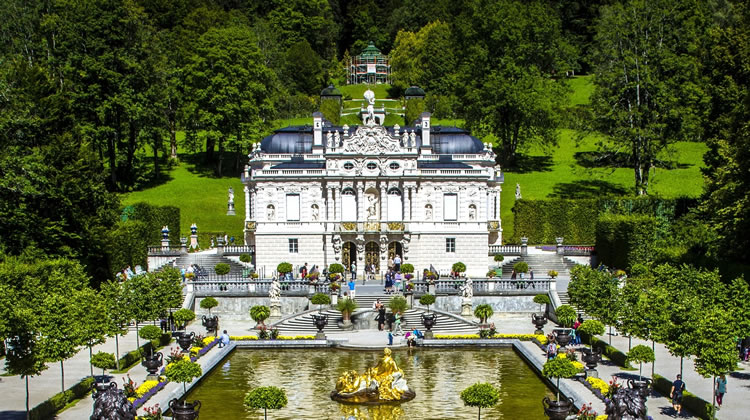
Linderhof Palace: King Ludwig II’s smallest but most ornate palace, inspired by French absolutism and the Sun King, Louis XIV. The palace’s interior is incredibly lavish, and the surrounding gardens with their grottoes and fountains are equally impressive.
Food & Cultural Insights
In this region, expect hearty Alpine cuisine. Try
Käsespätzle (German cheese noodles) or a slice of Apfelstrudel. The cultural identity here is strongly tied to wood carving and religious traditions.
Transportation
The best way to reach this area is by renting a car for flexibility. Alternatively, a combination of trains and regional buses (like the RVO bus 9622 from Oberammergau to Linderhof) is possible but requires careful planning.
Neuschwanstein Castle & Füssen
The journey continues to the most famous castle in the world and the charming town at the end of the Romantic Road.
Attractions
Neuschwanstein Castle: The fairy-tale castle built by the “Fairytale King,” Ludwig II. It was the inspiration for Disney’s Sleeping Beauty castle. A hike up to Marienbrücke (Mary’s Bridge) offers the classic, breathtaking photo opportunity.
Hohenschwangau Castle: The less-famous but equally beautiful childhood residence of King Ludwig II, located just below Neuschwanstein.
Füssen: A picturesque town with a well-preserved medieval old town (Altstadt) and the impressive Hohes Schloss (High Castle), a former palace of the Prince-Bishops of Augsburg.
Practical Tips
Tickets for Neuschwanstein must be booked online well in advance. They are not sold at the castle itself, only at the Ticket Center in Hohenschwangau. It is a steep 30-40 minute walk up to the castle; horse-drawn carriages and buses are available for a fee.
Accommodation
Staying in Füssen is highly recommended over the busy village of Hohenschwangau. Füssen offers more dining and accommodation options and has a charming atmosphere.
Rothenburg ob der Tauber
A drive north leads to Rothenburg ob der Tauber, arguably Germany’s best-preserved medieval town and a highlight of the Romantic Road.
Attractions
The Town Walls: Walk the entire circumference of the old town on the covered sentry walkway for fantastic views.
Market Square (Marktplatz): Home to the Town Hall and the Councillors’ Tavern, with its famous glockenspiel.
Plönlein: The most photographed spot in Rothenburg—a picturesque fork in the road with a half-timbered house.
Criminal Museum (Mittelalterliches Kriminalmuseum): A fascinating and sometimes gruesome look at medieval law and order.
Night Watchman’s Tour: An entertaining and informative evening walking tour that brings the town’s history to life.
Food & Souvenirs
Schneeballen (Snowballs): A local pastry made from strips of dough, fried and dusted with powdered sugar or coated in chocolate.
Franconian Wine: Sample the local wines, which are distinct from those of the Mosel or Rhine regions.
Christmas Decorations: Visit Käthe Wohlfahrt’s Christmas Village, a year-round Christmas store.
Nuremberg (Nürnberg)
A city with a deep and complex history, Nuremberg is known for its medieval architecture, its significance during the Nazi era, and its post-war rebirth.
Attractions
Imperial Castle (Kaiserburg): This towering castle was one of the most important imperial palaces of the Holy Roman Empire.
Hauptmarkt (Main Market Square): Home to the beautiful Frauenkirche and the Schöner Brunnen (Beautiful Fountain). It hosts Germany’s most famous Christmas market.
Albrecht Dürer’s House: The former home of Germany’s most famous Renaissance artist.
Nazi Party Rally Grounds Documentation Center: A sobering but essential museum located in the unfinished Congress Hall of the Nazi party, providing deep insight into this dark chapter of history.
Germanisches Nationalmuseum: Germany’s largest museum of cultural history.
Food & Drink
Nuremberg Rostbratwurst: Small, thin grilled sausages, traditionally served three-in-a-bun or six-or-more with sauerkraut or potato salad.
Nuremberg Lebkuchen: A deliciously spiced gingerbread, especially popular during the Christmas season.
Franconian Beer: Nuremberg has a proud beer tradition, with numerous breweries and beer cellars (Bierkeller) carved into the surrounding hillsides.
Bamberg
A UNESCO World Heritage site, Bamberg is famous for its unique architecture and its distinctive smoked beer. The entire old town is an architectural gem, built on seven hills.
Attractions
Bamberg Cathedral (Bamberger Dom): A magnificent 13th-century cathedral housing the tomb of Emperor Henry II and Pope Clement II, as well as the famous “Bamberg Rider” statue.
Altes Rathaus (Old Town Hall): Built on an artificial island in the middle of the Regnitz river, it is one of Germany’s most photographed buildings.
Little Venice (Klein Venedig): A picturesque row of old fishermen’s houses along the riverbank.
New Residence (Neue Residenz): A magnificent Baroque palace with a stunning Rose Garden offering superb views of the city.
Food & Drink
Rauchbier (Smoked Beer): Bamberg’s signature beer, with a distinctive smoky flavor. Schlenkerla is the most famous brewery to try it.
Franconian Cuisine: Enjoy hearty dishes like baked carp or blue onion (Zwiebeln blau) in one of the many traditional breweries.
Würzburg
Situated at the northern end of Bavaria’s Romantic Road, Würzburg is a baroque city known for its wine, architecture, and as the gateway to the Franconian wine country.
Attractions
Würzburg Residence (Würzburger Residenz): A UNESCO World Heritage site, this is one of Europe’s most magnificent Baroque palaces. The grand staircase under the world’s largest fresco by Giovanni Battista Tiepolo is breathtaking.
Marienberg Fortress (Festung Marienberg): The former home of the prince-bishops, perched high above the Main River. It offers spectacular views of the city and vineyards.
Old Main Bridge (Alte Mainbrücke): A charming bridge lined with statues of saints, reminiscent of Prague’s Charles Bridge. It’s a popular spot to enjoy a glass of local wine (Brückenschoppen) in the evening.
Food & Drink
Würzburg is at the heart of the Franconian wine region. Sample local Silvaner and Riesling wines. The city also has a vibrant culinary scene blending traditional Franconian dishes with modern influences.
Frankfurt am Main
The journey concludes in Frankfurt, Germany’s financial capital and a city of striking contrasts, where sleek skyscrapers stand alongside reconstructed historical buildings.
Attractions
Römerberg:The historic heart of Frankfurt with its beautifully reconstructed half-timbered houses and the Römer city hall.
St. Bartholomew’s Cathedral (Kaiserdom):The red sandstone church where Holy Roman Emperors were elected.
Main Tower:The only skyscraper with a public viewing platform, offering an unparalleled 360-degree view of the city.
Museumsufer (Museum Embankment):A unique concentration of museums on both sides of the Main River, covering art, film, architecture, and more.
Palmengarten:A beautiful botanical garden providing a peaceful escape from the urban bustle.
Food & Drink
Apfelwein (Ebbelwoi):The traditional Frankfurt drink—a tart, fermented apple cider. Enjoy it in a traditional apple wine tavern in the Sachsenhausen district.
Grüne Soße (Green Sauce):A cold herb sauce made with seven fresh herbs, typically served with boiled potatoes and eggs or meat.
Frankfurter Würstchen:The original Frankfurter sausage.
Crucial Travel Tips for Southern Germany
The Romantic Road (Romantische Straße):The route from Füssen/Füssen area to Würzburg follows this famous tourist trail. Consider purchasing a Romantic Road bus pass if not driving.
The Bavaria Ticket:A fantastic value for regional train travel within Bavaria for up to five people. It is valid on regional trains (RE, RB, S-Bahn) after 9 am on weekdays and all day on weekends.
Cash Culture:Germany still has a strong preference for cash (Bargeld) over credit cards, especially in smaller towns, restaurants, and shops. Always carry some euros.
Sundays and Holidays:Most shops are closed on Sundays and public holidays. Plan accordingly for meals and shopping. Museums and restaurants generally remain open.
Tipping:Tipping is customary. A common practice is to round up the bill or leave 5-10% of the total. Simply tell the server the total amount you wish to pay (e.g., if the bill is €18, say “€20” when paying).