A Grand Promenade: A Travel Guide to Paris’s Iconic Axis from Place de la Concorde to the Champs-Élysées
This guide details a journey through the heart of Paris, following one of the most magnificent urban axes in the world. This route, stretching from the historic Place de la Concorde to the summit of the Champs-Élysées, is a walk through French history, art, architecture, and luxury. It encapsulates the essence of Paris, from its royal past and revolutionary fervor to its modern status as a global capital of culture and fashion. The itinerary is designed to be explored on foot, allowing travelers to fully absorb the grandeur and vibrancy of the city.
1. Place de la Concorde: The Grand Square of History
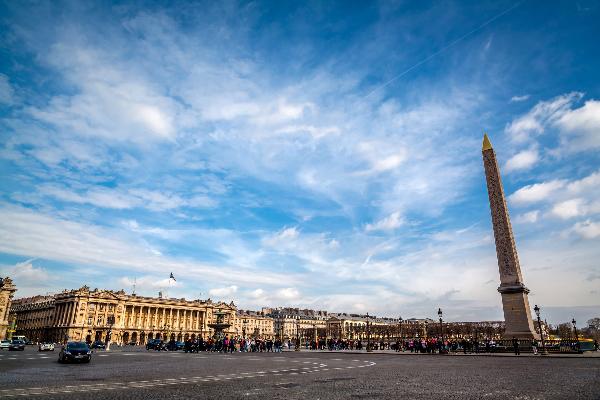
Place de la Concorde is not just a square; it is a vast historical stage. Designed by Ange-Jacques Gabriel in 1755 for King Louis XV, it was originally known as Place Louis XV. Its history is dark and profound, as it became the site of the guillotine during the French Revolution, where King Louis XVI, Queen Marie Antoinette, and thousands of others were executed. Renamed “Place de la Concorde” (Square of Harmony) in the post-revolutionary period, it now stands as a symbol of reconciliation.
The square’s most prominent feature is the
Luxor Obelisk, a 3,300-year-old Egyptian monument gifted to France in the 19th century. Flanking the obelisk are two magnificent fountains, the Fontaine des Mers and the Fontaine des Fleuves, representing France’s maritime and riverine spirits. The square is framed by elegant statues representing eight French cities. At its northern end stand two majestic buildings: the Hôtel de la Marine, which now houses a public museum and a restaurant with a stunning terrace, and the Hôtel de Crillon, a legendary palace hotel.
Transportation & Practical Tips
Metro: Concorde (Lines 1, 8, 12). This is the most direct access point.
Best Time to Visit: Early morning to avoid crowds and capture beautiful photos with soft light, or at dusk when the fountains and obelisk are illuminated.
Insider Tip: Be extremely cautious when crossing the square, as it is a massive roundabout with heavy traffic. Use the designated crosswalks.
2. Jardin des Tuileries: The Regal Gardens
Adjacent to Place de la Concorde lies the Jardin des Tuileries, a classic French formal garden designed by André Le Nôtre, the landscape architect of Versailles. The garden stretches all the way to the Louvre Museum, creating a green link between the ancient and modern hearts of Paris. The name “Tuileries” comes from the tile factories (
tuileries) that once stood on the site before Catherine de’ Medici built the Palais des Tuileries, which was burned down during the Paris Commune of 1871.
Today, the gardens are a public park filled with sculptures, fountains, and manicured lawns. It’s a perfect place for a leisurely stroll. Key attractions within the garden include the
Musée de l’Orangerie, home to Claude Monet’s breathtaking Water Lilies panoramas, and the Jeu de Paume, a national gallery for modern and postmodern photography and media art.
Food & Relaxation
Food Recommendation: Scattered throughout the gardens are several charming cafés and kiosks. For a classic Parisian garden experience, stop at a green metal chair by the Grand Bassin Octogonal pond or enjoy a coffee and pastry at one of the sit-down cafés.
Cultural Insight: The Tuileries Garden is a quintessential Parisian social space. On sunny days, Parisians and tourists alike flock here to relax, read, and people-watch, embodying the city’s café culture in an outdoor setting.
3. Pont de la Concorde & Pont Alexandre III: Bridges of Grandeur
From the southwestern corner of Place de la Concorde, you can access the
Pont de la Concorde. Built in the late 18th century, its stone was purportedly sourced from the rubble of the Bastille prison after its storming. It offers a fantastic view of the National Assembly (Palais Bourbon) on the left bank and the beginning of the grand perspective towards La Défense.
While Pont de la Concorde is impressive, a short walk east along the Seine leads to its even more opulent neighbor, the
Pont Alexandre III. Universally regarded as the most ornate bridge in Paris, it is a Beaux-Arts masterpiece. Inaugurated for the 1900 World’s Fair, it connects the Champs-Élysées quarter with the Les Invalides and Eiffel Tower area. The bridge is adorned with exuberant Art Nouveau lamps, cherubs, nymphs, and winged horses at either end. Its single-span steel arch was an engineering marvel of its time.
Cultural Insight & Photography
Photography Tip: Pont Alexandre III is a photographer’s dream, especially during the “golden hour” before sunset. The view from the bridge towards the Eiffel Tower is one of Paris’s most iconic vistas.
Cultural Insight: The bridge is named after Tsar Alexander III of Russia, symbolizing the Franco-Russian Alliance. Its extravagant design was intended to showcase French artistic and technical prowess to the world during the Exposition Universelle.
4. Grand Palais & Petit Palais: Temples of Art and Science
At the right-bank end of Pont Alexandre III stand two magnificent palaces built for the 1900 World’s Fair, facing each other across Avenue Winston Churchill.
The
Petit Palais (Small Palace) now houses the City of Paris Museum of Fine Arts (Musée des Beaux-Arts de la Ville de Paris). Its collections span from antiquity to the early 20th century, including works by Rembrandt, Courbet, and Delacroix. The building itself is stunning, with a beautiful interior garden courtyard and café that is free to enter.
The
Grand Palais (Grand Palace) is recognizable by its grand glass roof, classical stone facades, and iconic bronze quadriga (four-horse chariot) statues. It hosts major temporary exhibitions on art, fashion, and culture. It is also home to the Palais de la Découverte, a science museum, and is the venue for prestigious events like the Chanel fashion shows. Please note that parts of the Grand Palais may be under renovation until 2024 for the Paris Olympics.
Practical Information
Admission: The Petit Palais’ permanent collection is free to the public. The Grand Palais has varying ticket prices for its exhibitions.
Visiting Tip: Check the official websites in advance for exhibition schedules and booking, as popular shows can sell out.
5. The Élysée Palace: The Seat of Power
A short walk north from the Grand and Petit Palais, on Rue du Faubourg Saint-Honoré, lies the
Élysée Palace (Palais de l’Élysée). This is the official residence of the President of the French Republic and the seat of the French presidency. While it is not open to the public for general tours (except on rare occasions like European Heritage Days), its imposing facade and heavily guarded gates are a sight to behold.
The palace was built in the early 18th century and has been the president’s residence since 1848. Simply standing outside offers a sense of France’s political gravity. The surrounding neighborhood, known as the “Golden Triangle,” is one of the most exclusive in Paris, home to high-end art galleries, luxury boutiques, and embassies.
Cultural Insight
- The strict security and closed nature of the palace reflect its crucial role in French governance. It serves as a reminder of France’s centralized political system and the power vested in its executive branch.
6. Avenue des Champs-Élysées: The World’s Most Beautiful Avenue
From Place de la Concorde begins the legendary
Avenue des Champs-Élysées. Nearly two kilometers long and 70 meters wide, it runs straight up to the Arc de Triomphe. The name translates to “Elysian Fields,” from Greek mythology meaning “heavenly paradise.” Its character changes along its length; the lower part is bordered by gardens (the Jardins des Champs-Élysées), while the upper part is a global center for commerce, entertainment, and flagship stores.
The avenue is lined with cinemas, cafés, luxury specialty shops, and automobile showrooms. It is a venue for major public celebrations, such as the Bastille Day military parade and the finish line of the Tour de France cycling race.
Shopping & Food Recommendations
Shopping: Flagship stores include Louis Vuitton (the world’s largest), Cartier, Montblanc, and Sephora. There are also more accessible brands like Zara, H&M, and Adidas.
Food Recommendation:
Ladurée: Famous for its double-decker macarons; a perfect place for a luxurious sweet treat.
Fouquet’s: A historic brasserie and a symbol of Parisian café society since 1899. Ideal for a classic French meal or a coffee while people-watching.
Publicis Drugstore: A modern complex with a brasserie, a sushi bar, a newsstand, and even a private cinema.
7. Galeries Lafayette Champs-Élysées: A New Temple of Fashion
While the original Galeries Lafayette on Boulevard Haussmann is more famous, its newer sibling on the Champs-Élysées offers a curated and contemporary shopping experience. Located at number 60, this store deviates from the traditional department store model. It focuses on a highly selective mix of established luxury brands and emerging designers across fashion, beauty, design, and food.
The interior design is modern and artistic, with unique installations and a vibrant atmosphere. It features a dedicated beauty area, a concept store for men, and several dining options, including a rooftop restaurant with panoramic views.
Shopping & Experience Tips
Target Audience: This store targets a fashion-forward, younger clientele compared to the flagship store.
Experience: Even if you are not buying, it’s worth visiting for its architectural design and creative merchandising. The rooftop offers one of the best free views of Paris, looking towards the Eiffel Tower and Grand Palais.
Tax Refund: Like other major stores, Galeries Lafayette offers tax-free shopping for non-EU residents. Ask for forms at checkout.
Accommodation Tips Along the Route
Staying near this prestigious axis offers unparalleled convenience but comes at a premium price. Here are options for different budgets:
Luxury/Splurge:
Hôtel de Crillon: A Rosewood Hotel. An iconic palace hotel on Place de la Concorde offering ultimate luxury.
Hôtel Le Bristol: Located near the Élysée Palace, another member of the prestigious “Palace” hotels.
Four Seasons Hotel George V: Just off the Champs-Élysées, famous for its breathtaking floral arrangements and exceptional service.
Mid-Range/Boutique:
- The area around Avenue George V and Rue de Bassano offers numerous elegant four-star boutique hotels that provide excellent service and location without the palace price tag.
Budget-Friendly:
- Consider hotels in adjacent but slightly less expensive neighborhoods like Saint-Germain-des-Prés (across the river) or the 9th arrondissement behind Opéra Garnier. They are still within walking distance or a short metro ride away.
A Sample One-Day Walking Itinerary
Morning (9:00 AM): Start at Place de la Concorde. Admire the obelisk and fountains.
Late Morning (10:00 AM): Enter the Jardin des Tuileries. Stroll through the gardens and visit the Musée de l’Orangerie to see Monet’s Water Lilies (book tickets in advance).
Lunch (12:30 PM): Have lunch at a café within the Tuileries or walk towards Rue de Rivoli for more options.
Afternoon (2:00 PM): Walk to Pont Alexandre III for photos. Then, cross over to visit either the Petit Palais (free) or a temporary exhibition at the Grand Palais (check openings).
Mid-Afternoon (4:00 PM): Begin your walk up the Avenue des Champs-Élysées. Window-shop, stop at Ladurée for macarons, and soak in the atmosphere.
Late Afternoon (5:30 PM): Visit Galeries Lafayette Champs-Élysées for contemporary shopping and head to its rooftop for a stunning view.
Evening (7:30 PM): Enjoy an aperitif or dinner at a brasserie on or just off the Champs-Élysées, like Fouquet’s or a smaller local find.
Night (9:00 PM): Walk to the Arc de Triomphe (you can climb it for a night view) to see the Champs-Élysées and Paris illuminated.
Final Cultural Insights
The route from Place de la Concorde to the top of the Champs-Élysées is more than a collection of sights; it is a narrative of France itself. It speaks of royal ambition (Tuileries), revolutionary turmoil (Concorde), artistic and industrial triumph (the bridges and palaces), political power (Élysée), and commercial glamour (Champs-Élysées). To walk this path is to understand the layers of Parisian identity—a city that honors its profound history while constantly evolving as a beacon of art, fashion, and culture for the world.
The best way to experience this promenade is not to rush but to amble, to sit on a garden chair, to linger on a bridge, to watch Parisians go about their day. It is in these moments of observation that one truly connects with the timeless spirit of Paris.