A Comprehensive Travel Guide to the Heart of Historic Paris: The Marais District
Nestled in the 3rd and 4th arrondissements of Paris, the Marais is a captivating labyrinth of cobblestone streets, majestic mansions, trendy boutiques, and profound history. This guide focuses on a rich cultural circuit within this district, connecting world-class museums, historic squares, and architectural gems. From the cutting-edge art of the Centre Pompidou to the intimate home of Victor Hugo, a journey through these sites offers a deep dive into the artistic and historical soul of Paris.
Introduction to the Marais District
The name “Marais” translates to “marsh,” a reference to the area’s condition before it was drained in the 12th century. It became the aristocratic district of Paris in the 17th century, leading to the construction of the many private mansions, or
hôtels particuliers, that define its character today. After falling into disrepair, it was saved from demolition and revitalized in the 1960s. Today, it is one of Paris’s most vibrant and visited neighborhoods, known for its Jewish community, thriving LGBTQ+ scene, and its unique blend of the ancient and the avant-garde.
Detailed Attraction Guide
Centre Pompidou (Pompidou Center)
Often called “Beaubourg” by locals after its neighborhood, the Centre Pompidou is a radical high-tech architectural statement designed by Renzo Piano and Richard Rogers. Inaugurated in 1977, its revolutionary design placed all functional structural and mechanical systems—escalators, ventilation ducts, water pipes—on the exterior of the building, painted in bright colors, freeing up vast, flexible interior spaces for art.
What to See: The center houses the National Museum of Modern Art, boasting one of the world’s most important collections of modern and contemporary art, including works by Kandinsky, Picasso, Matisse, and Warhol. Don’t miss the panoramic view of Paris from the top floor. The nearby Stravinsky Fountain, with its whimsical, moving sculptures by Niki de Saint Phalle and Jean Tinguely, is also a must-see.
Location: Place Georges-Pompidou, 75004 Paris.
Transportation: Métro: Rambuteau (Line 11), Hôtel de Ville (Lines 1 & 11), Châtelet–Les Halles (Lines 1, 4, 7, 11, 14, RER A, B, D).
Tickets & Tips: Book tickets online in advance to skip long queues. The museum is closed on Tuesdays. Consider the “Paris Museum Pass” if planning to visit multiple paid attractions.
Musée des Archives Nationales (National Archives Museum)
Housed within the magnificent Hôtel de Soubise and Hôtel de Rohan, this museum offers a journey through French history through its most precious documents. The architecture of the mansions themselves, with their ornate rococo interiors and grand courtyards, is a primary reason to visit.
What to See: View original historical treasures like the Edict of Nantes, the last letter of Marie-Antoinette, and the French Constitution. The Oval Room and the Princess’s Apartment in the Hôtel de Soubise are stunning examples of 18th-century aristocratic decor.
Location: 60 Rue des Francs-Bourgeois, 75003 Paris.
Transportation: Métro: Rambuteau (Line 11), Hôtel de Ville (Lines 1 & 11).
Tickets & Tips: The museum gardens are a peaceful retreat. Check their website for temporary exhibitions which are often exceptional.
Musée National Picasso-Paris (Picasso Museum)
Located in the beautifully restored Hôtel Salé, this museum holds the world’s largest public collection of works by Pablo Picasso. The collection, donated by the artist’s heirs in lieu of taxes, includes paintings, sculptures, drawings, and ceramics that trace his entire artistic evolution.
What to See: Masterpieces from his Blue and Rose periods, pioneering Cubist works like Man with a Guitar, and later experimental pieces. The museum also contains Picasso’s personal art collection, featuring works by Cézanne, Degas, and Matisse.
Location: 5 Rue de Thorigny, 75003 Paris.
Transportation: Métro: Saint-Sébastien–Froissart (Line 8), Chemin Vert (Line 8).
Tickets & Tips: Advance online booking is highly recommended. The courtyard café is a lovely spot.
Musée Carnavalet – Histoire de Paris (Carnavalet Museum)
Dedicated to the history of Paris itself, the Musée Carnavalet is housed in two neighboring mansions: Hôtel Carnavalet and Hôtel Le Peletier de Saint-Fargeau. Its vast collection includes archaeological finds, paintings, sculptures, signs, and historical objects that narrate the city’s story from prehistoric times to the present.
What to See: The reconstructed period rooms, including Marcel Proust’s cork-lined bedroom, the ballroom of the Hôtel de Wendel, and artifacts from the French Revolution. The beautiful interior gardens are free to enter.
Location: 23 Rue de Sévigné, 75003 Paris.
Transportation: Métro: Saint-Paul (Line 1), Chemin Vert (Line 8).
Tickets & Tips: Admission to the permanent collection is free. It’s a massive museum; pick up a map and prioritize the eras that interest you most.
Place des Vosges
This is the oldest planned square in Paris and a masterpiece of Renaissance architecture. Commissioned by King Henry IV, it was inaugurated in 1612. The square is a perfect symmetrical square surrounded by 36 identical houses of red brick and stone arcades, creating a harmonious and serene atmosphere.
What to See: Stroll under the arcades, browse the art galleries and chic boutiques, and relax on the central lawn. It’s a perfect spot for a picnic.
Location: Place des Vosges, 75004 Paris.
Transportation: Métro: Saint-Paul (Line 1), Bastille (Lines 1, 5, 8).
Tickets & Tips: Free and always open. The northern side houses the Maison de Victor Hugo. The southern pavilions are the King’s Pavilion and Queen’s Pavilion.
Maison de Victor Hugo (Victor Hugo’s House)
Located on the second floor of the Hôtel de Rohan-Guéménée on Place des Vosges, this is where the celebrated author of
Les Misérables and The Hunchback of Notre-Dame lived from 1832 to 1848.
What to See: The apartment is furnished with pieces from Hugo’s various homes and contains a fascinating collection of his drawings, manuscripts, and personal belongings. It offers deep insight into his life and creative process.
Location: 6 Place des Vosges, 75004 Paris.
Transportation: Métro: Saint-Paul (Line 1), Bastille (Lines 1, 5, 8).
Tickets & Tips: Free admission to the permanent collection. A small, charming museum that can be visited in about an hour.
Hôtel de Sully (Sully Mansion)
This exquisite early-17th-century mansion is a prime example of Louis XIII architecture. It serves as the headquarters for the Centre des Monuments Nationaux (National Monuments Center) and acts as a grand entrance to the Place des Vosges through its ornate gateway.
What to See: Admire the finely sculpted facade depicting the four elements and seasons. The formal French garden at the rear is a hidden oasis of tranquility. The bookshop inside is excellent for books on French heritage.
Location: 62 Rue Saint-Antoine, 75004 Paris.
Transportation: Métro: Saint-Paul (Line 1), Bastille (Lines 1, 5, 8).
Tickets & Tips: The courtyard and garden are free to access. Check for temporary photography or architectural exhibitions inside.
Église Saint-Paul-Saint-Louis (Church of Saint-Paul-Saint-Louis)
This Jesuit church, completed in 1641, was one of the first in Paris to break with the Gothic tradition and embrace the Baroque style. Its impressive dome was inspired by that of the Basilica of San Carlo ai Catinari in Rome.
What to See: The vast interior with its soaring dome and grand proportions. Look for Delacroix’s painting Christ in the Garden of Olives and the holy water stoup held by a shell said to have been given by Victor Hugo.
Location: 99 Rue Saint-Antoine, 75004 Paris.
Transportation: Métro: Saint-Paul (Line 1).
Tickets & Tips: Free admission. It’s a working church, so be respectful during services. The acoustics are magnificent; try to attend a choir performance.
Rue des Rosiers (Street of the Rosebushes)
The historic heart of the Jewish community in Paris since the Middle Ages, this narrow street is bustling with life, culture, and most famously, food. It retains a unique village-like atmosphere despite its popularity.
What to See: Explore the numerous Jewish delicatessens, bakeries, and restaurants. Look for street art and plaques commemorating the neighborhood’s history, including the roundup of Jews during World War II.
Location: Rue des Rosiers, 75004 Paris.
Transportation: Métro: Saint-Paul (Line 1).
Tickets & Tips: Come hungry! This is the best place in Paris for falafel, pastrami sandwiches, and traditional pastries like rugelach. It’s often crowded, especially on weekends.
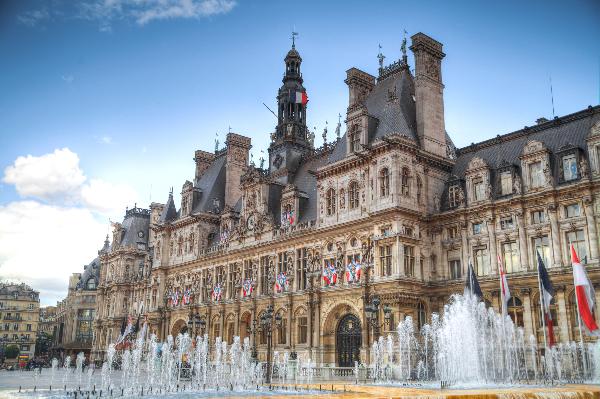
Hôtel de Ville (Paris City Hall)
The seat of Paris’s city administration since 1357, the current building is a reconstruction of the Renaissance-style building burned down during the Paris Commune in 1871. Its lavish facade is adorned with statues of famous Parisians.
What to See: While access to the interior is generally limited to guided tours (which must be booked well in advance), the exterior is spectacular. The square in front hosts seasonal events like a winter ice-skating rink and summer beach (“Paris Plages”).
Location: Place de l’Hôtel-de-Ville, 75004 Paris.
Transportation: Métro: Hôtel de Ville (Lines 1 & 11).
Tickets & Tips: Check the official website for information on temporary exhibitions held inside or rare tour opportunities. The building is beautifully illuminated at night.
Culinary Delights: Food & Drink Recommendations
The Marais offers an incredible diversity of dining options, from historic Jewish eateries to modern fusion bistros.
Falafel on Rue des Rosiers: A visit is incomplete without trying a falafel pita. L’As du Fallafel is the most famous, but other stands are also excellent.
Traditional French Bistros: For classic French cuisine in a charming setting, try places on quieter side streets like Rue de Poitou or Rue de Saintonge.
Jewish Patisseries: Stop at Florence Kahn for its stunning blue-tiled facade and delicious pastries, or Sacha Finkelsztajn for strudel and cheesecake.
Trendy Cafés & Brasseries:The area around Place du Marché Sainte-Catherine is filled with cafés perfect for people-watching.
Gluten-Free & Vegan Options:The Marais is at the forefront of food trends, with numerous dedicated bakeries and restaurants like Copains and Wild & The Moon.
Wine Bars:Unwind at a cozy wine bar such as Le Mary Céleste or La Belle Hortense, which is also a bookstore.
Shopping in the Marais
The district is a shopper’s paradise. Rue des Francs-Bourgeois is lined with international fashion brands. For unique finds, explore the concept stores and independent designers on Rue de Poitou, Rue de Saintonge, and Rue Vieille du Temple. The Village Saint-Paul, a hidden network of courtyards, is known for its antique dealers and art galleries.
Cultural Insights & Etiquette
A Tale of Two Villages:The Marais feels like several villages in one. The northern part (3rd arr.) is quieter and more residential, while the southern part (4th arr.) is bustling with shops and tourists.
A Center of Community:The area remains a vital center for both the Jewish and LGBTQ+ communities. Be respectful of these cultural identities.
Shopping Hours:Unlike much of Paris, many shops in the Marais are open on Sundays, making it a popular weekend destination.
Saying “Bonjour”:A simple “Bonjour” (or “Bonsoir” in the evening) when entering a shop or café is considered essential polite etiquette in France.
A Sample Walking Itinerary
A Full-Day Cultural Immersion:
Morning (10 AM): Start at the Centre Pompidou for modern art (book tickets).
Late Morning (12:30 PM): Walk to Rue des Rosiers for a famous falafel lunch.
Afternoon (2 PM): Visit either the Picasso Museum OR the Carnavalet Museum (both require time; choose based on interest).
Mid-Afternoon (4 PM): Stroll to Place des Vosges. Relax on the lawn or under the arcades before visiting Victor Hugo’s House.
Late Afternoon (5 PM): Walk through Hôtel de Sully’s garden and then to Saint-Paul-Saint-Louis church.
Evening (7 PM): Find a traditional bistro or trendy wine bar for dinner before admiring the illuminated Hôtel de Ville.
A Note on Accommodation
The Marais offers everything from luxury hotels set in historic mansions to charming boutique hotels and budget-friendly hostels. Staying here means you are in the center of everything but be prepared for higher prices and potential street noise, especially on weekends. Look for hotels on quieter side streets for a better night’s sleep.