A Comprehensive Swiss Grand Tour: Zurich, Bern, Montreux, Zermatt, Jungfrau, and Beyond
This travel guide outlines a classic and breathtaking circuit through Switzerland, connecting its major cities with the very heart of the Alps. This itinerary, often traversed by the world-renowned Swiss Travel System, offers a perfect blend of urban sophistication, medieval history, serene lake vistas, and unparalleled mountain grandeur. The route—Zurich, Bern, Zweisimmen, Montreux, Geneva, Lausanne, Zermatt, Jungfrau, Interlaken, Lungern, Lucerne, and back to Zurich—is designed to showcase the diverse beauty and efficiency of Switzerland.
Route Overview and Logistics
This journey is best experienced over a period of 10 to 14 days to allow for a comfortable pace. The cornerstone of Swiss travel is the Swiss Travel Pass, which offers unlimited travel on trains, buses, and boats across the country, along with free entry to many museums and up to 50% discounts on most mountain excursions. For maximum flexibility and scenic enjoyment, traveling by train is highly recommended. The entire route is a visual feast, with several segments, like the GoldenPass Line and the Glacier Express, being iconic journeys in their own right.
Best Time to Visit: May to October for warm weather and clear mountain views; December to March for winter sports.
Currency: Swiss Franc (CHF). Credit cards are widely accepted.
Languages: German (Zurich, Lucerne), French (Montreux, Geneva, Lausanne), with English commonly spoken in tourist areas.
Key Pass: Swiss Travel Pass (Flexi or Continuous).
Zurich: The Global Gateway
Zurich, Switzerland’s largest city, is often the starting point for international travelers. It is a global banking hub that seamlessly blends a modern, cosmopolitan atmosphere with a beautifully preserved Old Town.
Attractions
Old Town (Altstadt): Stroll through the narrow, winding lanes on both sides of the Limmat River. Explore historical guild houses, the birthplace of Dadaism at Cabaret Voltaire, and boutique shops.
Bahnhofstrasse: One of the world’s most exclusive shopping avenues, running from Zurich Main Station to Lake Zurich.
Lake Zurich (Zürichsee): Take a boat cruise to enjoy stunning views of the city skyline and the distant Alps. The lakeside promenades are perfect for a leisurely walk.
Uetliberg Mountain: A short train ride from the city center to the summit offers a panoramic view of the city, lake, and, on a clear day, the Alps.
Food & Drink
Zurich’s culinary scene is diverse. Don’t miss the traditional
Zürcher Geschnetzeltes (sliced veal in a creamy mushroom and white wine sauce) served with Rösti. For a unique experience, visit the Kornhauskeller, a magnificent baroque hall restaurant.
Transportation & Accommodation
Zurich Airport (ZRH) is efficiently connected to the main station (Zürich HB) by a 10-minute train ride. The city’s public transport network (trams, buses, S-Bahn) is excellent. Stay in the Old Town for charm or near the main station for convenience.
Bern: The Federal Capital
A short train ride from Zurich brings you to Bern, the de facto capital of Switzerland and a UNESCO World Heritage site. Its well-preserved medieval old town, set on a peninsula surrounded by the Aare River, is a delight to explore.
Attractions
Old Town: Characterized by over six kilometers of arcades (Lauben), housing shops, bars, and cafes. The Zytglogge (Clock Tower) with its animated figures is a focal point.
Federal Palace (Bundeshaus): The seat of the Swiss government and parliament. Guided tours are available when parliament is not in session.
Bear Park: Home to Bern’s heraldic animals, the bears, located in a spacious enclosure along the river.
Rose Garden (Rosengarten): A beautiful park offering one of the best postcard views of the Old Town.
Food & Drink
Bern is known for its hearty cuisine. Try
Berner Platte, a hearty dish with various meats and sausages served with sauerkraut and beans. The city’s confectionery star is the Berner Mandelbärli, a marzipan bear.
Transportation
Bern’s compact Old Town is best explored on foot. The main station (Bern HB) is a major rail hub, making it easy to connect to the next leg of the journey.
The GoldenPass Line: Bernese Oberland to Lake Geneva
The journey from Bern to Montreux via Zweisimmen is part of the scenic GoldenPass Line. This route takes you from the rolling hills of the Bernese Oberland into the pristine alpine landscape around Gstaad and down to the palm-fringed shores of Lake Geneva (Lac Léman).
Zweisimmen
Zweisimmen is primarily a transit point where you change from a standard train to the panoramic GoldenPass train. It’s a charming alpine village in its own right, a gateway to the ski resorts of Gstaad.
The Journey
The train features large windows that offer unobstructed views of picture-perfect chalets, deep valleys, and towering peaks. As you descend towards Montreux, the landscape and architecture transform dramatically from Germanic to French.
Montreux: The Swiss Riviera
Nestled on the shores of Lake Geneva under the shadow of snowy Alps, Montreux enjoys a remarkably mild climate. It is famous for its jazz festival, beautiful lakeside promenade, and majestic Chillon Castle.
Attractions
Château de Chillon: A stunning island castle located on a rock just off the shoreline. Explore its dungeons, great halls, and defensive walls that inspired Lord Byron’s “The Prisoner of Chillon.”
Freddie Mercury Statue: A tribute to the Queen frontman who loved Montreux and recorded several albums here.
Lakeside Promenade: Lined with flowers, palm trees, and sculptures, it’s perfect for a stroll from Montreux to Chillon Castle.
Rochers-de-Naye: A mountain overlooking Montreux accessible by cogwheel railway, offering spectacular views of Lake Geneva and hosting a marmot park and alpine garden.
Food & Drink
The French influence is strong here. Enjoy fresh fish from the lake, such as perch fillets (
filets de perche). The region is also part of the Lavaux wine region, so sampling a local Chasselas wine is a must.
Accommodation
Montreux offers a range of accommodations, from luxury palaces like the Fairmont Le Montreux Palace to charming lakeside hotels.
Geneva: The International City
A short train ride from Montreux, Geneva is a global city known for its diplomacy, finance, and stunning location on Lake Geneva. It is home to the European headquarters of the United Nations and the Red Cross.
Attractions
Jet d’Eau: The iconic water fountain shooting 140 meters into the air at the point where Lake Geneva empties into the Rhône River.
The Flower Clock (L’Horloge Fleurie): A symbol of Geneva’s watchmaking expertise and its love for gardens, located in the Jardin Anglais.
St. Pierre Cathedral: Climb the north tower for a fantastic view of the city and lake. It was John Calvin’s church during the Reformation.
International District: Take a guided tour of the Palais des Nations, the European UN headquarters.
Food & Drink
Geneva’s cuisine is international. A local specialty is
Longeole, a pork sausage flavored with cumin. Fondue is also widely available. Swiss chocolate must be sampled, perhaps from a master chocolatier like Philippe Pascoët.
Lausanne: The Olympic Capital
Situated on the northern shore of Lake Geneva, Lausanne is a vibrant university town built on three hills. It is the headquarters of the International Olympic Committee (IOC) and has a dynamic cultural scene.
Attractions
The Olympic Museum: A world-class museum tracing the history of the Olympic Games through interactive exhibits and an extensive collection of artifacts.
Old Town (Cité): Dominated by the impressive Gothic Lausanne Cathedral. The climb to the top is rewarded with superb views.
Ouchy: The city’s lakeside port area with lovely parks, promenades, and views across the lake to the French Alps.
Lavaux Vineyard Terraces: A UNESCO World Heritage site just east of Lausanne. Take a train or boat to explore these stunning terraced vineyards and sample wine at a local cave.
Transportation
The city’s metro system is one of only two in Switzerland (the other being in Lausanne). The m2 line conveniently connects the main station (Gare) with the lakeside (Ouchy).
Zermatt: Home of the Matterhorn
The journey to Zermatt from Lake Geneva involves traveling along the Rhône valley and then up into the mountains. Zermatt itself is a car-free village, preserving its tranquil alpine charm. Its raison d’être is the majestic Matterhorn, one of the most photographed mountains in the world.
Attractions
The Matterhorn: Whether viewed from the village or up close, it is an unforgettable sight. Sunrise and sunset are particularly magical.
Gornergrat: Reachable by Europe’s highest open-air cogwheel railway, this viewpoint offers a spectacular 360-degree panorama of 29 peaks over 4,000 meters, including the Matterhorn.
Matterhorn Glacier Paradise: The highest cable car station in Europe, offering access to skiing year-round and breathtaking views from a panoramic platform.
Sunnegga Funicular & Leisee Lake: A quick ride up to a family-friendly area with a beautiful alpine lake perfect for a picnic with a view.
Food & Drink
A stay in Zermatt calls for classic alpine fare. Enjoy cheese fondue or raclette in a traditional wood-paneled restaurant. Many mountain restaurants also offer excellent cuisine with stunning vistas.
Accommodation & Transport
Accommodation ranges from luxurious 5-star hotels to cozy guesthouses. Visitors must park their cars in Täsch and take the 12-minute shuttle train into Zermatt.
The Jungfrau Region: Top of Europe
The next major destination is the heart of the Bernese Oberland. From Zermatt, travelers typically take a series of trains via Visp and Spiez to reach Interlaken, the gateway to the Jungfrau region. This area is home to some of Switzerland’s most famous peaks: the Eiger, Mönch, and Jungfrau.
The Jungfraujoch Excursion
A journey to the Jungfraujoch – Top of Europe is a highlight of any Swiss trip. A cogwheel train takes you from Interlaken via Kleine Scheidegg through a tunnel inside the Eiger mountain up to the highest railway station in Europe at 3,454 meters.
Sphinx Observatory: Offers panoramic views over the Aletsch Glacier (a UNESCO site), and surrounding peaks.
Ice Palace: A magical world carved into the heart of a glacier.
Alpine Sensation: An exhibition celebrating the construction of the Jungfrau Railway.
Town Bases: Interlaken & Grindelwald
Interlaken, situated between Lake Thun and Lake Brienz, is a bustling hub with plenty of accommodation and adventure sports options. For a more alpine atmosphere, many prefer to stay in Grindelwald, a village directly at the foot of the Eiger North Face. From Grindelwald, you can take cable cars up to Männlichen or First for incredible hiking and viewing platforms like the First Cliff Walk.
The Scenic Heart: Lungern and Lucerne
The journey from Interlaken to Lucerne via the Brünig Pass is one of Switzerland’s most beautiful train rides. The route passes through breathtaking landscapes, with Lungern serving as an idyllic stopover.
Lungern (Lungernsee)
A picture-perfect village nestled next to an emerald-green lake of the same name. It’s an ideal spot for a short break to soak in pristine alpine scenery without large crowds. Walk down from the train station to the lakefront for stunning photographs.
Lucerne: The City of Lights
Situated on Lake Lucerne amidst impressive mountain scenery, Lucerne is renowned for its well-preserved medieval architecture and stunning location.
Attractions
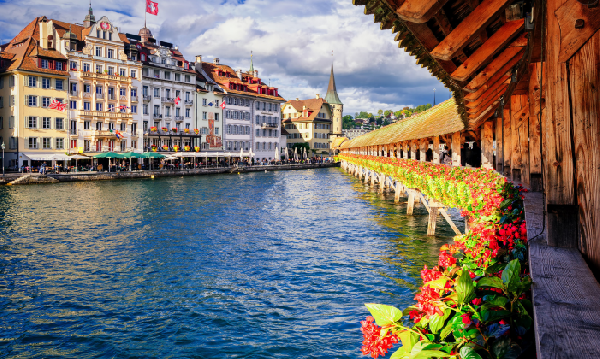
Chapel Bridge (Kapellbrücke): A 14th-century wooden footbridge adorned with interior paintings, it is Europe’s oldest covered bridge and the city’s symbol.
Lion Monument (Löwendenkmal): A poignant rock relief commemorating the Swiss Guards who died during the French Revolution.
The Old Town: Explore the colorful squares and buildings with painted facades along the Reuss River.
Lake Lucerne (Vierwaldstättersee): A boat cruise on this fjord-like lake with its many arms and towering mountains is essential.
Mount Pilatus or Mount Rigi: Take a cogwheel railway or cable car up one of these iconic mountains for unparalleled views over the lake and Alps.
Food & Drink
Try
Luzerner Chügelipastete, a vol-au-vent filled with diced meat and mushrooms in a creamy sauce. Enjoy it at a traditional restaurant in the Old Town like Zunfthausrestaurant Pfistern.
The Return to Zurich and Final Tips
The final leg from Lucerne to Zurich is a short and frequent train ride (about 45-60 minutes), bringing this grand tour full circle. From Zurich Airport, travelers can depart with memories of an unforgettable Swiss adventure.
Cultural Insight – Punctuality: Swiss public transport is famously punctual. Be at your platform a few minutes early.
Cultural Insight – Quietness: Respect quiet hours in accommodations and keep noise levels down on public transport.
Shopping Tip: Consider purchasing a quality Swiss watch or army knife as a lasting souvenir.
Sustainability: Switzerland is a leader in sustainable tourism. Use public transport, stay on marked trails while hiking, and respect nature.
A journey through this Swiss circuit is more than just a vacation; it is an immersion into a country where natural beauty, precision engineering, and rich cultural traditions exist in perfect harmony. From urban exploration to alpine awe, this route delivers an unparalleled travel experience.