A Comprehensive Travel Guide: Ushuaia to the Antarctic Peninsula
This guide details one of the most epic maritime journeys on Earth: an expedition cruise from the southernmost city in the world, through the legendary Drake Passage, to the pristine wilderness of the Antarctic Peninsula. This route offers an unparalleled adventure into a land of towering icebergs, immense glaciers, and prolific wildlife.
Ushuaia: The Gateway to the White Continent
Nestled at the southern tip of Argentina in the Tierra del Fuego archipelago, Ushuaia proudly bears the title “El Fin del Mundo” (The End of the World). This bustling port city is the primary departure point for over 90% of all Antarctic voyages. Set against the dramatic backdrop of the Martial Mountains and situated on the shores of the Beagle Channel, Ushuaia is an adventure hub in its own right.
Key Attractions in Ushuaia
Tierra del Fuego National Park: Argentina’s only coastal national park offers stunning landscapes of mountains, forests, lakes, and peat bogs. Visitors can hike various trails, take the “End of the World Train,” and get their passport stamped at the southernmost post office.
Beagle Channel: Boat tours navigate this historic channel, named after Charles Darwin’s ship. Highlights include observing colonies of sea lions and cormorants on rocky islets, and visiting the iconic Les Eclaireurs Lighthouse.
End of the World Museum (Museo del Fin del Mundo): This museum provides excellent context on the region’s natural history and the indigenous Yámana people.
Martial Glacier: A short ride from the city center, a chairlift and hike lead to panoramic views of Ushuaia, the Beagle Channel, and the surrounding mountains.
Food & Drink in Ushuaia
Ushuaia’s culinary scene is dominated by the bounty of the South Atlantic.
Centolla: The star of Patagonian cuisine, this king crab is typically served cold with lemon and mayonnaise. It is a must-try delicacy.
Cordero Patagónico: Slow-roasted Patagonian lamb, often cooked over an open fire, is a rich and flavorful dish.
Black Hake (Merluza Negra) and other local fish are commonly found on menus.
Craft Beer: Ushuaia has a thriving craft beer scene, with several local breweries creating beers suited to the cold climate.
Accommodation Tips
Accommodation ranges from hostels for backpackers to luxury hotels. It is highly advisable to book at least one night before and after your cruise to account for potential flight delays. Many hotels offer shuttle services to the port.
Cultural Insight
Ushuaia has a rugged, frontier-town feel, shaped by its history as a penal colony and its remote location. The culture is a blend of Argentine passion and a resilient “end-of-the-world” spirit. The city thrives on tourism and adventure, creating a welcoming atmosphere for international travelers.
The Journey Begins: Beagle Channel & The Drake Passage
As the expedition ship departs Ushuaia, it first sails through the scenic and relatively calm Beagle Channel. This offers a gentle introduction to the voyage, with last views of forested mountains before heading into open ocean.
The Drake Passage
The Drake Passage is the legendary body of water between Cape Horn (South America) and the South Shetland Islands (Antarctica). It is where the Atlantic, Pacific, and Southern Oceans converge, making it one of the most formidable maritime crossings in the world.
“The Drake Shake” or “The Drake Lake”: The passage is infamous for its rough seas, often referred to as the “Drake Shake.” However, it can also be surprisingly calm, a state known as the “Drake Lake.” Travelers should be prepared for either possibility.
Onboard Life: During the 2-day crossing, the expedition team delivers lectures on Antarctic history, geology, wildlife, and photography. This is also a prime time for birdwatching, with Wandering Albatrosses, Giant Petrels, and Cape Petrels often following the ship.
Seasickness Preparedness: It is highly recommended to bring seasickness medication, patches, or bands. The ship’s doctors are also equipped to assist passengers.
The Antarctic Frontier: South Shetland Islands & Antarctic Peninsula
The first sight of land is often the South Shetland Islands. This archipelago is dotted with research stations and teeming with wildlife. Potential landing sites include:
Deception Island: A volcanic caldera that ships can sail into through a narrow passage called Neptune’s Bellows. Visitors can walk on black volcanic sand, see the ruins of an old whaling station, and even take a polar plunge in the thermally heated waters.
Half Moon Island: Home to a large colony of chinstrap penguins and various seabirds, with a scenic backdrop of mountainous terrain.
King George Island: The largest of the South Shetlands, hosting numerous international research stations from countries like Chile, Russia, China, and Uruguay.
The journey then continues south to the mainland of the
Antarctic Peninsula. This is the most accessible and visually stunning part of the continent. The experience is characterized by “expedition cruising,” meaning the itinerary is flexible and dependent on weather, ice conditions, and wildlife sightings. Days are spent on Zodiac cruises and shore landings.
Wildlife Encounters
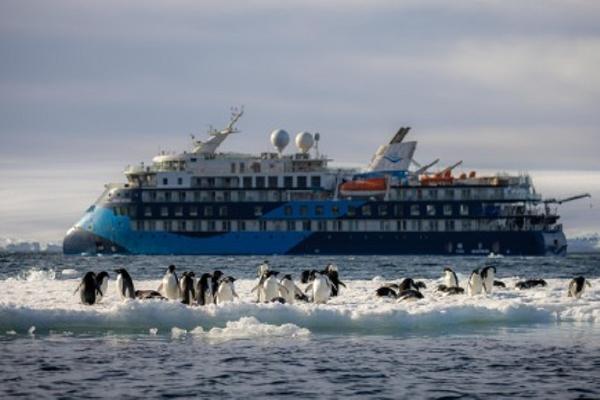
Penguins: The stars of Antarctica. Common species include Gentoo, Adélie, and Chinstrap penguins. Observing their bustling colonies, known as “rookeries,” is a highlight.
Seals: Weddell, Crabeater, and Leopard seals are often seen lounging on ice floes. The powerful Elephant seal can be found on more northern beaches.
Whales: Humpback, Minke, and Orca (Killer) whales are frequently spotted in the nutrient-rich waters, especially in the later part of the season (February/March).
Seabirds: A plethora of birds, from Skua to Snowy Sheathbills, can be seen throughout the journey.
Jewels of the Peninsula: Paradise Bay & Wilhelmina Bay
Paradise Bay
Often called the “most aptly named place in Antarctica,” Paradise Bay is a stunningly beautiful haven. Surrounded by towering cliffs and glaciers, its protected waters are often mirror-calm, reflecting the magnificent scenery.
Activities: Zodiac cruises here are unforgettable, weaving through brash ice and past icebergs of surreal blue. A landing at the Argentine Brown Station or the Chilean González Videla Base allows for a continental landing—stepping onto the actual Antarctic mainland.
Scenery: The panoramic view from the water, encompassing glaciers and mountains, is one of Antarctica’s most iconic.
Wilhelmina Bay
Known as “Whale-mina Bay” for its high concentration of Humpback whales, this deep-water fjord is a wildlife hotspot. The bay is surrounded by steep slopes and cascading glaciers, which calve icebergs into the water, providing a rich feeding ground for whales.
Activities: A Zodiac cruise or even a quiet moment on the ship’s deck in Wilhelmina Bay can offer incredible whale-watching opportunities. It is not uncommon to see multiple whales lunge-feeding or breaching simultaneously.
Atmosphere: The bay has a serene and majestic atmosphere, with the sounds of whale blows and calving glaciers echoing off the mountains.
The Return Journey: Drake Passage & Arrival in Ushuaia
After several days of immersive exploration, the ship begins its northward journey back to Ushuaia. This involves another 2-day crossing of the Drake Passage. This time is used for final lectures, sharing photos among passengers, and reflecting on the profound experience. The expedition team often holds a final recap and farewell dinner. Upon arrival back in the Beagle Channel, the ship docks in Ushuaia early in the morning, where passengers disembark after breakfast, concluding their epic Antarctic expedition.
Practical Travel Information
Transportation: Getting There & The Cruise
Flights to Ushuaia: Most international travelers fly into Buenos Aires (EZE or AEP) and then take a domestic flight (approx. 3.5 hours) to Ushuaia’s Malvinas Argentinas International Airport (USH).
The Expedition Ship: This is your primary transportation and accommodation for the duration of the Antarctic portion. Ships range from smaller “expedition-style” vessels (carrying 50-150 passengers) to larger ice-strengthened ships. Smaller ships offer a more intimate experience and more landings due to Antarctic regulations.
Booking: Antarctic cruises should be booked many months, sometimes over a year, in advance due to high demand and limited capacity.
Accommodation Onboard
Cabins on expedition ships vary widely, from basic shared quarters to luxurious suites with balconies. While time spent in the cabin is minimal due to a busy schedule of activities, it is an important personal space for rest.
Food Onboard
Meals are included in the cruise fare. Most ships offer buffet-style breakfasts and lunches and seated table-service dinners. The quality is generally very high, with chefs preparing international cuisine. Most dietary restrictions can be accommodated with advance notice.
Cultural & Environmental Insights
The Antarctic Treaty: Antarctica is not owned by any country; it is a continent dedicated to peace and scientific research. All human activity is governed by the Antarctic Treaty System.
IAATO Guidelines: The International Association of Antarctica Tour Operators (IAATO) sets strict guidelines to minimize human impact. This includes rules like maintaining a safe distance from wildlife (typically 5 meters from penguins), not walking on fragile vegetation, and biosecurity procedures to prevent introducing non-native species.
Leave No Trace: The principle of leaving nothing behind is paramount. Nothing is taken from Antarctica except photographs and memories.
What to Pack
Outer Layer:A high-quality, waterproof and windproof jacket and pants are essential.
Mid-Layer: Fleece or insulated jacket for warmth.
Base Layer: Merino wool or synthetic thermal underwear.
Footwear: Insulated, waterproof boots are almost always provided by the expedition company for landings.
Accessories: Warm hat, gloves (waterproof and thin liners), neck gaiter or buff, sunglasses, and high-SPF sunscreen.
Equipment: Binoculars, cameras with extra batteries (they drain faster in the cold), and a sturdy backpack for shore excursions.
A journey from Ushuaia to the Antarctic Peninsula is more than a vacation; it is a profound expedition to one of the last great wildernesses on the planet. It is an experience that changes perspectives and creates memories that last a lifetime.