A Comprehensive Travel Guide: Munich, Bavaria & Salzburg Lake District
This itinerary details a classic and enchanting loop through the heart of European culture, history, and breathtaking natural beauty. Starting and ending in the vibrant metropolis of Munich, it journeys through the fairy-tale landscapes of Bavaria, including the world-famous Neuschwanstein Castle, and crosses into Austria to explore the musical city of Salzburg and the serene Wolfgangsee. This guide provides a detailed day-by-day breakdown, including practical transportation advice, accommodation tips, culinary must-tries, and deep cultural insights to enrich your journey.
Day 1-2: Munich – The Cosmopolitan Capital of Bavaria
Munich is a city of contrasts, seamlessly blending its royal history with a modern, innovative spirit. It serves as the perfect gateway to Southern Germany.
Top Attractions
Marienplatz: The central square and the city’s vibrant heart. Visitors should time their visit to see the Glockenspiel in the Neues Rathaus (New Town Hall) perform its charming dance at 11 am and 12 pm (also 5 pm in summer).
Frauenkirche: The Cathedral of Our Blessed Lady, with its two distinctive domed towers, is the city’s landmark. Its simple, imposing interior offers a moment of tranquility.
English Garden: One of the world’s largest urban parks. It’s a place for cycling, strolling, and witnessing surfers ride the standing wave at the Eisbach river.
Nymphenburg Palace: The spectacular summer residence of the Wittelsbach monarchs. The palace park, with its hidden pavilions like the Amalienburg, is a masterpiece of landscape design.
Deutsches Museum: A world-renowned museum of science and technology, offering interactive exhibits that captivate visitors of all ages.
Food & Drink
Weißwurst: A traditional veal sausage, typically eaten before noon. Remember to remove the skin!
Schweinshaxe: A colossal, crispy roasted pork knuckle, a Bavarian staple.
Pretzels (Brezn): Freshly baked, giant soft pretzels, best enjoyed with a dollop of Obatzda (a spiced cheese-butter spread).
Beer Halls: Experience the communal spirit at historic institutions like Hofbräuhaus, Augustiner-Keller, or Löwenbräukeller.
Transportation & Accommodation
Munich has an excellent public transport system (MVV) comprising U-Bahn (subway), S-Bahn (suburban train), trams, and buses. A day pass (“Tageskarte”) is cost-effective for extensive exploration. For accommodation, areas around the Hauptbahnhof (central station) offer convenience, while Schwabing or Maxvorstadt provide a more local, trendy vibe.
Day 3: Oberammergau & Linderhof Palace – Craftsmanship and Royal Fantasy
A short trip south from Munich leads into the Alpine foothills and the picturesque Ammergau Alps.
Oberammergau
Famous worldwide for its
Passion Play, held every ten years (next in 2030). Even between plays, the town is captivating for its Lüftlmalerei—beautiful frescoes painted on house façades depicting biblical scenes or fairy tales. It is also a renowned center for woodcarving; visit local workshops to see artisans at work.
Linderhof Palace
This is the only palace King Ludwig II lived to see completed. While smaller than Neuschwanstein, Linderhof is opulent and deeply reflects the king’s eccentric tastes, heavily inspired by French absolutism and the world of opera. The palace grounds are equally impressive, featuring the Venus Grotto (an artificial cave with a lake and lighting) and the Moroccan House.
Transportation & Tips
The best way to reach this area is by car, offering flexibility. Alternatively, take a train from Munich to Oberammergau (often requiring a change in Murnau). From Oberammergau, Bus 9622 runs to Linderhof. It is feasible to combine Oberammergau and Linderhof in a single day trip from Munich, though an overnight stay in the region allows for a more relaxed pace.
Day 4: Neuschwanstein Castle & Füssen – The Fairy-Tale Dream
Neuschwanstein Castle
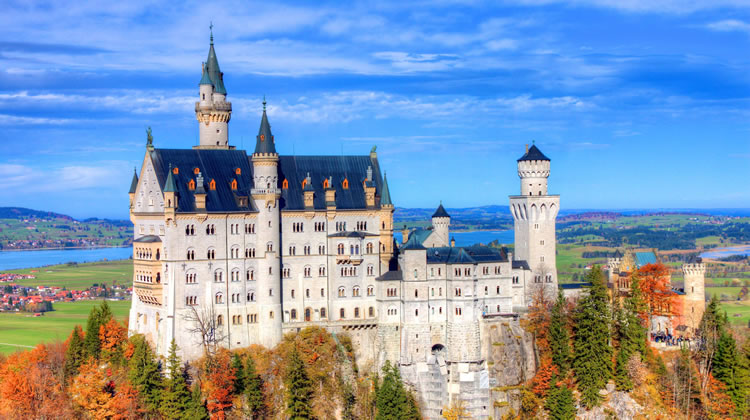
The quintessential fairy-tale castle that inspired Walt Disney. Commissioned by the “Fairytale King” Ludwig II, it is a dramatic homage to the music of Richard Wagner and the romantic ideal of the Middle Ages. The interior is a showcase of stunning murals depicting Germanic legends. The view of the castle from
Marienbrücke (Mary’s Bridge), spanning a gorge behind the castle, is iconic and not to be missed.
Hohenschwangau Castle
Located just below Neuschwanstein, this yellow castle was the childhood residence of King Ludwig II and is well worth a visit for a more complete picture of his life.
Füssen
A charming old town nestled at the foot of the Alps, Füssen serves as the perfect base for exploring the castles. Its colorful streets, the Hohes Schloss (High Castle), and its location on the Forggensee lake make it a delightful place to stay.
Tickets & Transportation
Crucial: Reserve tickets for Neuschwanstein online weeks or even months in advance. Tickets must be collected at the Ticket Center in Hohenschwangau, not at the castle itself. To reach the castle, it’s a steep 30-40 minute walk, a shuttle bus (to Marienbrücke), or a horse-drawn carriage. The nearest train station is in Füssen; from there, take Bus 73 or 78 to the castles.
Day 5: Zugspitze – The Top of Germany
At 2,962 meters (9,718 ft), the Zugspitze is Germany’s highest peak. The journey to the summit is an experience in itself.
The Ascent
From Garmisch-Partenkirchen, take the cogwheel train (Zahnradbahn) through the dramatic tunnels of the mountain, then transfer to the Gletscherbahn cable car for the final ascent. Alternatively, for a more direct and thrilling ride, take the Eibsee-Seilbahn cable car from Lake Eibsee, which offers stunning aerial views of the turquoise lake below.
At the Summit
The 360-degree panoramic view from the top spans four countries: Germany, Austria, Italy, and Switzerland. Walk across the summit plateau, visit the golden cross at the peak, and enjoy a meal at the restaurant with what might be the most spectacular view in Germany.
Practical Information
The base town is Garmisch-Partenkirchen, easily reachable by train from Munich or Füssen. Check the weather forecast meticulously before your visit, as clear skies are essential for the views. Dress in warm layers, as it can be cold and windy even in summer.
Day 6-7: Austrian Interlude – Salzburg & Wolfgangsee
Crossing the border into Austria opens up a world of Baroque splendor and serene lake landscapes.
Salzburg
The birthplace of Mozart and the setting for “The Sound of Music,” Salzburg is a UNESCO World Heritage site.
Hohensalzburg Fortress: One of Europe’s largest medieval castles, overlooking the city. The funicular ride up and the views are unforgettable.
Mirabell Palace & Gardens: The beautifully manicured gardens are famous from “The Sound of Music” and offer a perfect photo opportunity with the fortress in the background.
Getreidegasse: The historic, narrow shopping street known for its ornate wrought-iron shop signs.
Mozart’s Birthplace: A pilgrimage site for classical music lovers.
St. Wolfgang & Wolfgangsee
A short bus or car ride from Salzburg leads to the stunning Lake Wolfgang. The town of St. Wolfgang is postcard-perfect, with its charming white church and lakeside promenade. A highlight is a ride on the historic
Schafbergbahn, a cog railway that climbs to the summit of the Schafberg mountain for breathtaking views of the lake and surrounding Alps.
Culinary Delights
Mozartkugeln: The famous chocolate and marzipan confection.
Salzburger Nockerl: A sweet soufflé dessert, a culinary symbol of the city.
Austrian Coffee Culture: Indulge in a slice of cake and a melange coffee at a traditional café like Café Tomaselli.
Transportation & Border Crossing
Trains from Munich to Salzburg are frequent and take about 1.5-2 hours. There are no permanent border controls between Germany and Austria due to the Schengen Agreement. From Salzburg to St. Wolfgang, take Bus 150. Consider using regional passes like the “Salzburg Card” for city attractions and public transport.
Day 8: Return to Munich & Departure
The final day involves returning to Munich from Salzburg via a direct train. Depending on your flight or train schedule, you may have time for some last-minute souvenir shopping at Viktualienmarkt or a final beer in an old-town beer garden before concluding your memorable journey through Southern Germany and Austria.
Cultural Insights & Practical Tips
The Bavarian “Grüß Gott”: The standard greeting is “Grüß Gott” (literally “Greet God”). Using this instead of “Hallo” is appreciated and shows cultural respect.
Cash is King: While credit cards are becoming more common, many smaller restaurants, guesthouses, and shops, especially in rural areas, still prefer or only accept cash (Euros in Germany and Austria).
Punctuality: Public transport is notoriously punctual. Arrive on time for trains and buses.
Sundays & Holidays: In Germany and Austria, most shops are closed on Sundays and public holidays. Plan accordingly by visiting attractions or enjoying nature on these days.
Sustainability: This region values environmental consciousness. Use reusable water bottles (tap water is safe to drink), respect nature trails, and leverage the excellent public transportation systems.
Best Time to Visit: Late spring (May-June) and early autumn (September-October) offer pleasant weather and fewer crowds. Summer is peak season, while winter provides magical Christmas markets and skiing opportunities.