A Comprehensive Travel Guide to Le Marais: Paris’s Historic Heart of Art and Culture
This guide explores a curated route through the 4th arrondissement of Paris, an area known as Le Marais. Once a swamp (“marais” in French), it was transformed into the city’s most fashionable district in the 17th and 18th centuries. Today, it is a vibrant neighborhood where pre-revolutionary mansions house world-class museums, trendy boutiques, and a dynamic cultural scene. This itinerary connects ten key sites, offering a deep dive into art, history, and Parisian life.
Introduction to the Marais District
Le Marais is one of Paris’s oldest and most charming districts, characterized by its narrow, winding medieval streets, stunning architecture, and a unique blend of history and modernity. It is a center for the LGBTQ+ community, the historic Jewish quarter (Pletzl), and a hub for contemporary art galleries. Unlike other parts of Paris, many shops in the Marais are open on Sundays, making it a lively weekend destination. The area is compact and highly walkable, allowing visitors to explore its treasures comfortably on foot.
Detailed Attraction Guide
1. Centre Pompidou (Pompidou Art Center)
The journey begins with the Centre Pompidou, officially known as the National Museum of Modern Art. An architectural icon, the building, designed by Renzo Piano and Richard Rogers, is famous for its “inside-out” design, with its structural system, mechanical systems, and circulation networks all color-coded and exposed on the exterior. It houses one of the world’s most important collections of modern and contemporary art, including works by Kandinsky, Picasso, Matisse, and Duchamp.
Highlights: The vast collection of 20th and 21st-century art; the panoramic view of Paris from the top floor; the free public library (BPI); and the quirky Stravinsky Fountain nearby.
Practical Info: Purchase tickets online to skip long queues. The museum is closed on Tuesdays. Allow at least 3-4 hours for a thorough visit.
Location: Place Georges-Pompidou, 75004 Paris.
2. Musée des Archives Nationales (National Archives Museum)
A short walk south leads to the Hôtel de Soubise, part of the National Archives Museum. This magnificent mansion offers a stark contrast to the modernity of the Pompidou. Visitors can admire the exquisite Rococo apartments and explore exhibitions drawn from France’s vast national archives, which include legendary documents like the Edict of Nantes and the French Constitution.
Highlights: The opulent Prince and Princess’s apartments; temporary historical exhibitions; the peaceful courtyard.
Practical Info: The museum is quieter than its neighbors, offering a more contemplative experience. Check the website for current exhibitions.
Location: 60 Rue des Francs-Bourgeois, 75003 Paris.
3. Musée National Picasso-Paris (Picasso Museum)
Housed in the beautifully restored Hôtel Salé, the Picasso Museum holds the largest public collection of Pablo Picasso’s work in the world. The collection includes paintings, sculptures, drawings, and ceramics donated by the artist’s heirs, providing a comprehensive overview of his entire career. The building itself, a 17th-century private mansion, is a work of art.
Highlights: Masterpieces from every period of Picasso’s life; the artist’s personal collection of works by Cézanne, Degas, and Rousseau; the elegant architecture of the Hôtel Salé.
Practical Info: Advance booking is highly recommended. Audio guides are excellent for context. Closed on Mondays.
Location: 5 Rue de Thorigny, 75003 Paris.
4. Musée Carnavalet (Carnavalet Museum – History of Paris)
Dedicated to the history of Paris from its origins to the present day, the Musée Carnavalet is the city’s oldest museum. It is located across two neighboring mansions, Hôtel Carnavalet and Hôtel Le Peletier de Saint-Fargeau. The museum’s collection includes paintings, sculptures, signs, furniture, and historical artifacts arranged in evocative period rooms.
Highlights: The reconstructed rooms from different eras, including Marcel Proust’s bedroom; the French Revolution section; the beautiful interior gardens.
Practical Info: Admission to the permanent collection is free. It’s a vast museum, so prioritize the periods that interest you most.
Location: 23 Rue de Sévigné, 75003 Paris.
5. Place des Vosges
Often considered Paris’s oldest planned square, the Place des Vosges is a masterpiece of symmetry and elegance. Completed in 1612, it features identical red brick and stone houses with steep slate roofs and arcades on the ground floor. It is a perfect spot to relax, people-watch, and appreciate Parisian grandeur.
Highlights: The central park with fountains and lawns (perfect for a picnic); the arcades with art galleries and cafes; Victor Hugo’s apartment at number 6.
Practical Info: A wonderful place for a break. Pick up some pastries or sandwiches from a nearby bakery and enjoy them on the lawn.
Location: Place des Vosges, 75004 Paris.
6. Maison de Victor Hugo (Victor Hugo’s House)
Located on the Place des Vosges, this museum is housed in the apartment where Victor Hugo lived for 16 years and wrote much of his masterpiece,
Les Misérables. The museum displays his drawings, manuscripts, and furniture, including pieces he designed himself while in exile on Guernsey.
Highlights: Hugo’s Chinese-style dining room from his Guernsey home; original manuscripts and editions of his works; portraits and personal memorabilia.
Practical Info: A relatively quick but fascinating visit. Free admission to the permanent collection.
Location: 6 Place des Vosges, 75004 Paris.
7. Hôtel de Sully (Sully Mansion)
This early 17th-century mansion is a prime example of Louis XIII architecture. Now serving as the headquarters for the Centre des Monuments Nationaux, it offers access to a beautiful formal French garden and serves as a gateway to the Place des Vosges. Temporary photography and architecture exhibitions are often held here.
Highlights:The ornate facade; the perfectly manicured jardin à la française; the orangerie.
Practical Info:The bookstore inside is excellent for books on French heritage and architecture. The courtyard and garden are free to enter.
Location:62 Rue Saint-Antoine, 75004 Paris.
8. Église Saint-Paul Saint-Louis (Church of Saint-Paul Saint-Louis)
This Jesuit church, completed in 1641, represents the transition between the Gothic and Baroque styles in French religious architecture. Its impressive dome was one of the first of its kind in Paris. The interior is grand and luminous, housing several notable works of art.
Highlights:The high altar; Delacroix’s painting “Christ in the Garden of Olives”; the magnificent dome.
Practical Info:A active parish church; remember to be respectful during services. Entry is free, but donations are appreciated.
Location:99 Rue Saint-Antoine, 75004 Paris.
9. Rue des Rosiers (Street of the Rosebushes)
The historic heart of Paris’s Jewish community, Rue des Rosiers is a narrow, bustling street filled with synagogues, bookshops, and most famously, falafel shops and Jewish delicatessens. It is a vibrant area that tells a story of migration and cultural resilience.
Highlights:The legendary falafel stands (L’As du Fallafel is the most famous); traditional bakeries selling challah and strudel; unique boutiques.
Practical Info:The best time to visit is for lunch. Be prepared for lines at popular eateries. The street is particularly lively on weekends.
Location:Rue des Rosiers, 75004 Paris.
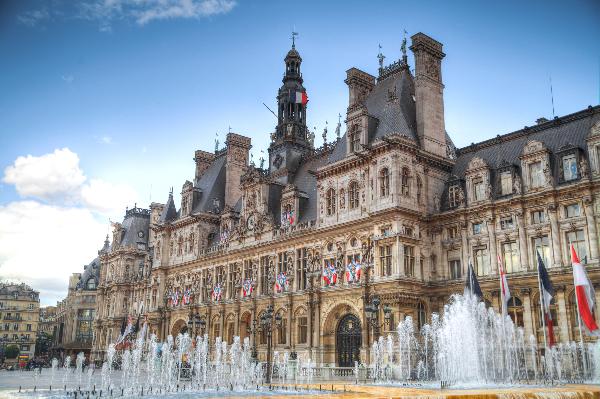
10. Hôtel de Ville (Paris City Hall)
The tour concludes at the magnificent Hôtel de Ville. This Neo-Renaissance building is the seat of Paris’s city government. While the interior is generally closed to the public except for temporary exhibitions, its exterior facade is spectacularly ornate, adorned with 108 statues of famous Parisians.
Highlights:The elaborate facade; the large square in front which often hosts public events and seasonal attractions like a winter ice-skating rink.
Practical Info:The square is a major transport hub and a great place for photos, especially when illuminated at night. Check the city’s website for information on public tours or exhibitions.
Location:Place de l’Hôtel-de-Ville, 75004 Paris.
Culinary Delights: Food Recommendations
The Marais offers an incredible diversity of dining options, from traditional French bistros to international cuisine.
Falafel on Rue des Rosiers: A must-try experience. L’As du Fallafel and Mi-Va-Mi are local institutions. Opt for the falafel pita with all the trimmings—eggplant, cabbage, tahini, and hot sauce.
Traditional French Bistros: For classic French fare like steak-frites or onion soup, seek out bistros on quieter side streets. Chez Janou offers Provençal cuisine and a vast selection of pastis.
Jewish Patisseries: Stop at Florence Kahn for a beautiful blue-tiled facade and delicious pastries like apple strudel or babka. Sacha Finkelsztajn is another beloved spot for Eastern European Jewish treats.
Trendy Cafes and Brasseries:The area around Place du Marché Sainte-Catherine is dotted with charming cafes perfect for a coffee or glass of wine while watching the world go by.
Fine Dining:For a special occasion, consider L’Ambroisie on the Place des Vosges, a three-Michelin-star restaurant housed in a historic building.
Transportation and Navigation
The Marais is exceptionally well-connected by Paris’s public transport system.
Metro:The most convenient stations for this route are:
Rambuteau (Line 11): For the Centre Pompidou.
Saint-Paul (Line 1): For the heart of the Marais, Place des Vosges, Picasso Museum, and Rue des Rosiers.
Hôtel de Ville (Lines 1 & 11): For the City Hall and the northern part of the district.
Bus:Lines 69, 76, and 96 serve key routes through the area.
Vélib’:Paris’s bike-sharing system is an excellent way to explore the neighborhood and its surrounding areas.
On Foot:The best way to experience the Marais is undoubtedly by walking. Wear comfortable shoes and allow yourself to get lost in its charming alleyways.
Accommodation Tips
Staying in or near the Marais provides an immersive Parisian experience.
Luxury & Boutique Hotels:The Marais is known for its stylish boutique hotels housed in historic buildings. Look for options like Hôtel Pavillon de la Reine on the Place des Vosges or Hôtel du Petit Moulin.
Mid-Range Options:A plethora of charming mid-range hotels offer good value. Consider areas just north of Rue de Bretagne for slightly quieter options that are still within easy walking distance.
Budget & Alternative Stays:The Marais has several hostels and budget hotels, but they book up quickly. Alternatively, look at accommodations in the neighboring 11th arrondissement for more affordable options that are just a short walk away.
Aparthotels & Vacation Rentals:A good choice for families or longer stays, providing more space and kitchen facilities.
Cultural Insights and Practical Tips
Shopping:The Marais is a premier shopping destination. Rue des Francs-Bourgeois is lined with international brands and French designers, while the side streets hide independent boutiques, concept stores, and vintage shops.
A Sample One-Day Itinerary
- Morning (9:00 AM – 1:00 PM):Start at the Centre Pompidou (book tickets in advance). Spend 2-3 hours exploring modern art before heading to Rue des Rosiers for a classic falafel lunch.
- Afternoon (1:00 PM – 6:00 PM):Walk off lunch by visiting Place des Vosges and Victor Hugo’s house. Then choose between an in-depth visit to either the Picasso Museum or Musée Carnavalet based on your interests. Enjoy coffee and a pastry at a cafe on Place du Marché Sainte-Catherine.
- Evening (6:00 PM onwards):T stroll through the picturesque streets as shops close and lights come on. Have an aperitif at a wine bar before dinner at a traditional bistro. End your day with a walk past the illuminated Hôtel de Ville.