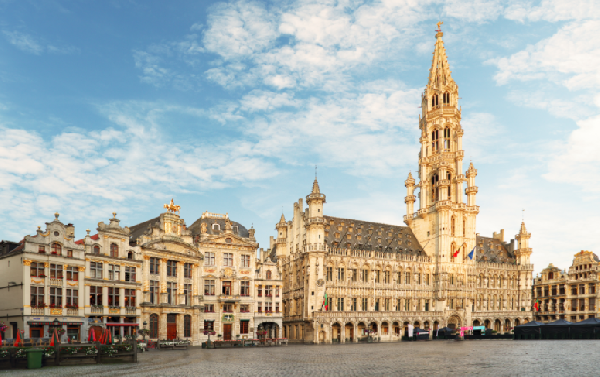
Grand Tour of Western Europe: Paris, Luxembourg, Germany, Netherlands, Belgium
This comprehensive travel guide details a classic circuit through the heart of Western Europe, connecting the romantic capital of France with the historic Grand Duchy of Luxembourg, the scenic river valleys and castle-dotted towns of Germany, the vibrant, canal-laced cities of the Netherlands, and the medieval gems and political hub of Belgium. This itinerary is designed to offer a rich tapestry of cultures, histories, cuisines, and landscapes.
Itinerary Overview
The journey is a circular route starting and ending in Paris, efficiently connecting major highlights by train and car. The suggested route is:
Paris -> Luxembourg City -> Trier -> Heidelberg -> Frankfurt -> Cologne -> Amsterdam -> Zaanse Schans (Windmill Village) -> The Hague -> Rotterdam -> Antwerp -> Bruges -> Brussels -> Paris. This guide will cover each destination in the order of this proposed itinerary.
Paris, France: The City of Light
Paris needs little introduction. As the starting point, it offers world-class art, architecture, and gastronomy. Visitors typically spend several days here, but for this itinerary, it serves as the gateway.
Key Attractions
Eiffel Tower: The iconic symbol of Paris. Booking tickets online well in advance is essential to avoid long queues. The view from the Trocadéro Gardens across the Seine is classic.
The Louvre Museum: Home to the Mona Lisa, Venus de Milo, and countless other masterpieces. Allocate at least half a day and consider a guided tour to navigate the vast collections.
Notre-Dame Cathedral: Although still under restoration after the 2019 fire, the exterior remains a breathtaking example of French Gothic architecture. The surrounding Île de la Cité is historically significant.
Montmartre & Sacré-Cœur: This historic artistic neighborhood offers charming streets, the stunning white basilica of Sacré-Cœur, and a panoramic view of Paris.
Champs-Élysées & Arc de Triomphe: A stroll down the famous avenue culminating at the Arc de Triomphe, which offers another superb city view.
Food & Drink
Croissants & Café au Lait: A perfect Parisian breakfast from a local boulangerie.
Steak Frites: A simple yet classic bistro dish.
Macarons: Delicate almond meringue cookies from renowned patisseries like Ladurée or Pierre Hermé.
Wine & Cheese: Visit a fromagerie for a selection of French cheeses to enjoy with a baguette and a bottle of Bordeaux or Burgundy.
Transportation & Accommodation
Paris is served by two major international airports: Charles de Gaulle (CDG) and Orly (ORY). The city’s Metro system is extensive and efficient. The best areas to stay include the Marais for its trendy vibe, Saint-Germain-des-Prés for its literary history, or the Latin Quarter for a more bohemian and budget-friendly atmosphere.
Luxembourg City, Luxembourg: The Gibraltar of the North
A short train ride from Paris brings you to the capital of one of the world’s smallest sovereign states. Luxembourg City is known for its dramatic topography, with a historic old town perched on cliffs above deep gorges.
Key Attractions
The Bock Casemates: A UNESCO-listed network of underground tunnels and fortifications carved into the cliff face. They offer a fascinating glimpse into the city’s military history and great views.
Chemin de la Corniche: Often called “Europe’s most beautiful balcony,” this wall-side walkway provides stunning vistas over the Grund district and the Alzette River valley below.
Grand Ducal Palace: The official residence of the Grand Duke of Luxembourg. Guided tours are available in the summer months.
The Grund: A picturesque neighborhood at the bottom of the gorge, perfect for a quiet stroll along the river.
Food & Drink
Judd mat Gaardebounen: The national dish—smoked collar of pork with broad beans.
Gromperekichelcher: Savory potato fritters often sold at street markets.
Luxembourgish Wine: Sample crisp white wines from the Moselle Valley, such as Riesling or Auxerrois.
Transportation & Accommodation
Luxembourg City is easily reached by high-speed train from Paris (approx. 2 hours). A remarkable feature for travelers is that all public transport within the country—buses, trams, and trains—is completely free. Stay in or near the Old Town (Ville Haute) for the best access to sights.
Trier, Germany: Rome North of the Alps
A brief train ride from Luxembourg City lies Trier, Germany’s oldest city. Founded by the Romans in 16 BC, it is packed with well-preserved Roman monuments, earning it UNESCO World Heritage status.
Key Attractions
Porta Nigra: The massive, dark sandstone northern gate of the Roman city is the largest Roman gate north of the Alps and Trier’s defining landmark.
Trier Cathedral (Dom): A monumental church built over Roman ruins, it houses the Holy Tunic, a revered relic said to be the robe of Christ.
Imperial Baths (Kaiserthermen): The vast ruins of a Roman public bath complex, with an extensive network of underground tunnels to explore.
Roman Amphitheatre: Once the scene of gladiatorial battles, it could seat 20,000 spectators.
Karl Marx House: The birthplace of the famous philosopher and revolutionary thinker, now a museum.
Food & Drink
Vintner’s Feast (Winzerfest): If visiting in summer, try local dishes at a wine tavern.
Mosel Wine: Trier is in the heart of the Mosel wine region. Don’t miss tasting a Riesling from a local winery (Weingut).
Himmel un Ääd:A traditional Rhineland dish of black pudding with mashed potatoes and applesauce.
Heidelberg, Germany: Romanticism and Ruins
Heidelberg is the epitome of German Romanticism, with its famous castle ruins overlooking the Neckar River and the picturesque Old Town below.
Key Attractions
Heidelberg Castle: Take the funicular railway or walk up to these magnificent red sandstone ruins. The view over the city and the river is unparalleled. Don’t miss the Great Vat, a gigantic wine barrel.
Old Bridge (Alte Brücke): A beautiful stone bridge gate with superb views of the castle and Old Town.
Philosophers’ Walk (Philosophenweg): A path on the sunny side of the Neckar River offering the best panoramic views of the castle and city.
Old Town (Altstadt): A charming area with a large market square (Marktplatz), the Church of the Holy Spirit, and Europe’s longest pedestrian street, Hauptstraße.
Food & Drink
Heidelberger Studentenkuss: A local chocolate praline “Heidelberg Student’s Kiss.”
Regional Wines: Sample wines from the Baden region.
German Classics: Enjoy hearty fare like Schnitzel or Sauerbraten in a traditional beer hall or restaurant.
Frankfurt, Germany: The Mainhattan Gateway
Frankfurt is Germany’s financial hub, known for its impressive skyline of skyscrapers (earning it the nickname “Mainhattan”). However, it also boasts a charming, reconstructed Old Town.
Key Attractions
Römerberg: The historic heart of Frankfurt, featuring beautifully reconstructed medieval buildings, including the Römer city hall.
Städel Museum: One of Germany’s most important art museums, with a collection spanning 700 years of European art.
Main Tower: The only skyscraper with a public viewing platform, offering a breathtaking 360-degree view of the city.
Palmengarten:A beautiful botanical garden offering a peaceful escape from the urban bustle.
Food & Drink
Green Sauce (Grüne Soße):A Frankfurt specialty made with seven fresh herbs and served with boiled potatoes and eggs.
Apfelwein:The region’s tart apple wine, traditionally drunk in a “geripptes” glass in Sachsenhausen’s apple wine taverns (Apfelweinwirtschaft).
Handkäse mit Musik:A regional dish of sour milk cheese with onions (“mit Musik” referring to the after-effects).
Cologne (Köln), Germany: Cathedral City on the Rhine
Cologne is dominated by its sublime Gothic cathedral and is known for its vibrant cultural scene and its signature Kölsch beer.
Key Attractions
Cologne Cathedral (Kölner Dom):A UNESCO World Heritage site and Germany’s most visited landmark. Climb the 533 steps to the south tower for a spectacular view. Entry to the cathedral itself is free.
Hohenzollern Bridge:The railway and pedestrian bridge famous for the thousands of “love locks” attached by couples.
Old Town (Altstadt):The reconstructed area around the Alter Markt and Heumarkt squares, full of traditional breweries (Brauhäuser) and shops.
Museum Ludwig:Houses an excellent collection of modern art, including one of the largest Picasso collections in Europe.
Chocolate Museum (Schokoladenmuseum):A popular museum detailing the history of chocolate, with a functioning production line and a chocolate fountain.
Food & Drink
Kölsch:The clear, top-fermented beer native to Cologne. It is served in small 0.2-liter glasses called “Stangen” by waiters known as “Köbes.”
Rheinischer Sauerbraten:A pot roast, traditionally made with horse meat but often with beef today, marinated in vinegar and spices.
Halve Hahn:A misleading name; it’s actually a rye roll with a thick slice of aged Gouda cheese, mustard, and onions.
Amsterdam, Netherlands: Venice of the North
A high-speed train from Cologne delivers you to Amsterdam, a city of picturesque canals, cycling culture, world-class museums, and a unique, tolerant atmosphere.
Key Attractions
Canal Belt (Grachtengordel):A UNESCO World Heritage site. The best way to experience it is by taking a canal cruise.
Rijksmuseum:The Dutch national museum dedicated to arts and history, home to Rembrandt’s “The Night Watch.”
Van Gogh Museum:The largest collection of Vincent van Gogh’s artworks in the world.
Anne Frank House:The hiding place where Anne Frank wrote her famous diary. Tickets must be booked online well in advance.
Jordaan District:A charming neighborhood with narrow streets, small bridges, indie boutiques, and cozy cafes.
Food & Drink
Stroopwafel:Two thin waffles with a caramel syrup filling. Best enjoyed warm from a market stall.
Bitterballen:A popular deep-fried snack filled with a thick, beef-based ragout.
Raw Herring (Haring):A Dutch specialty, typically eaten by holding the fish by the tail and dipping it in chopped onions.
Dutch Cheese:Visit a cheese shop to sample Gouda, Edam, and other varieties.
Zaanse Schans (Windmill Village), Netherlands
A short train or bus ride from Amsterdam, Zaanse Schans is an open-air museum that vividly recreates a traditional 18th/19th-century Dutch village.
Key Attractions
The Windmills:The village features several fully functioning historic windmills used for tasks like sawing wood, grinding mustard seeds, and producing paint and oil. Visitors can enter some of them.
The Weavers’ House & Cheese Farm:See demonstrations of traditional crafts like wooden clog-making and Dutch cheese production.
The Zaan River:The setting offers classic photo opportunities with windmills lining the riverbank.
The Hague (Den Haag), Netherlands: International City of Peace and Justice
The Hague is the seat of the Dutch government and home to numerous international courts and institutions. It offers a more stately and relaxed atmosphere compared to Amsterdam.
Key Attractions
Binnenhof & Ridderzaal:The inner court of the Dutch Parliament complex, centered around the 13th-century Knights’ Hall (Ridderzaal).
Mauritshuis:A world-class art museum housing Dutch Golden Age masterpieces, including Vermeer’s “Girl with a Pearl Earring” and Rembrandt’s “The Anatomy Lesson of Dr. Nicolaes Tulp.”