A Comprehensive Travel Guide to Greece: Athens, Mainland Treasures, and Iconic Islands
This guide details a classic Greek itinerary that combines the ancient wonders of the capital with the mystical landscapes of the mainland and the breathtaking beauty of its most famous islands. The journey from Athens through Delphi and Meteora to Zakynthos, the Peloponnese, and finally Santorini offers a profound and diverse experience of Greek history, nature, and culture.
Part 1: Athens – The Cradle of Western Civilization
Athens, the historical capital of Europe, is a vibrant metropolis where ancient monuments coexist with modern urban energy. It is the essential starting point for any Greek adventure.
Main Attractions
The Acropolis and Parthenon: The iconic citadel perched high above the city. The Parthenon, a temple dedicated to the goddess Athena, is the supreme symbol of classical Greek architecture. It is recommended to visit early in the morning or late in the afternoon to avoid the worst of the crowds and heat.
Acropolis Museum: A state-of-the-art museum housing thousands of artifacts found on the Acropolis slope. Its glass floors reveal ruins beneath, and the top-floor Parthenon Gallery offers a stunning view of the temple itself.
Ancient Agora: The heart of ancient Athenian public life, where Socrates philosophized and St. Paul preached. The beautifully preserved Temple of Hephaestus and the reconstructed Stoa of Attalos are highlights.
Plaka and Anafiotika: Wandering through the labyrinthine, neoclassical streets of Plaka, nestled at the foot of the Acropolis, feels like stepping back in time. The tiny, whitewashed Anafiotika neighborhood within Plaka offers a Cycladic island vibe.
Panathenaic Stadium (Kallimarmaro): The world’s only stadium built entirely of marble, hosted the first modern Olympic Games in 1896.
Food & Drink
Athens is a culinary paradise. Seek out traditional tavernas in Psiri or Petralona neighborhoods.
Souvlaki & Gyros: The quintessential Greek street food. A must-try from a local joint like “Kostas” in Plaka.
Moussaka: A rich, baked casserole of eggplant, minced meat, and béchamel sauce.
Fresh Seafood: Enjoy grilled octopus, fried squid, and fresh fish in the Mikrolimano or Piraeus port areas.
Greek Salad (Horiatiki): A simple, refreshing mix of tomato, cucumber, onion, feta cheese, and olives.
Ouzo: The classic anise-flavored aperitif, best enjoyed with meze (small plates).
Transportation & Accommodation
Athens International Airport (ATH) is well-connected globally. The city’s metro system is efficient and links the airport to the city center. The Acropolis and Syntagma Square areas are ideal for first-time visitors, offering walkable access to major sites. Kolonaki is upscale, while Gazi and Psiri are trendier with vibrant nightlife.
Part 2: The Mainland Loop – A Journey to the Gods and Monasteries in the Sky
This part of the trip is best done by renting a car from Athens, offering flexibility to explore at your own pace.
Day 1: Athens to Arachova & Delphi
The drive from Athens to Delphi takes about 2.5 hours. A scenic stop is made in
Arachova, a charming mountain town famous for its hand-woven carpets, cheese, and ski resort. It’s a popular winter destination for Athenians.
Delphi Archaeological Site & Museum: In ancient times, Delphi was considered the center of the world. The site includes the Temple of Apollo, where the Oracle delivered her prophecies, an ancient theater, and a stadium. The museum houses incredible artifacts like the Charioteer of Delphi bronze statue. The setting on the slopes of Mount Parnassus is dramatically beautiful.
Accommodation Tip: Overnight in Arachova for a cozy mountain atmosphere or in the modern town of Delphi for unparalleled views of the Gulf of Corinth.
Day 2: Delphi to Kalambaka (Meteora)
The drive north to Kalambaka takes approximately 3 hours. The landscape shifts from coastal mountains to the vast Thessalian plain.
Kalambaka is the gateway town to Meteora. It’s a functional town with hotels and restaurants, nestled right beneath the astounding rock formations.
Day 3: Exploring Meteora – The “Suspended in the Air” Monasteries
Meteora is one of Greece’s most extraordinary sights. Giant rock pillars rise abruptly from the ground, and atop them, Byzantine monasteries were built from the 14th century onwards, accessible only by ropes and ladders.
Monastery Visits: Of the original 24, six are still active and open to the public. The Great Meteoron is the largest and highest. Varlaam, Roussanou, and Agios Stefanos are also stunning. Dress modestly (shoulders and knees covered for both men and women).
Sunset/Sunrise: The view of the monasteries during golden hour is a truly magical, almost spiritual experience. Several viewpoints along the main road offer spectacular photo opportunities.
Cultural Insight: The monasteries were places of solitude and prayer, preserving Greek Orthodox traditions and priceless religious art through centuries of turmoil.
Part 3: Zakynthos – Turquoise Waters and a Famous Shipwreck
From Meteora, drive west to the port of Kyllini (approx. 3 hours) and take a 1-hour ferry to Zakynthos (Zante). This Ionian island is known for its stunning beaches and vibrant blue waters.
Main Attractions
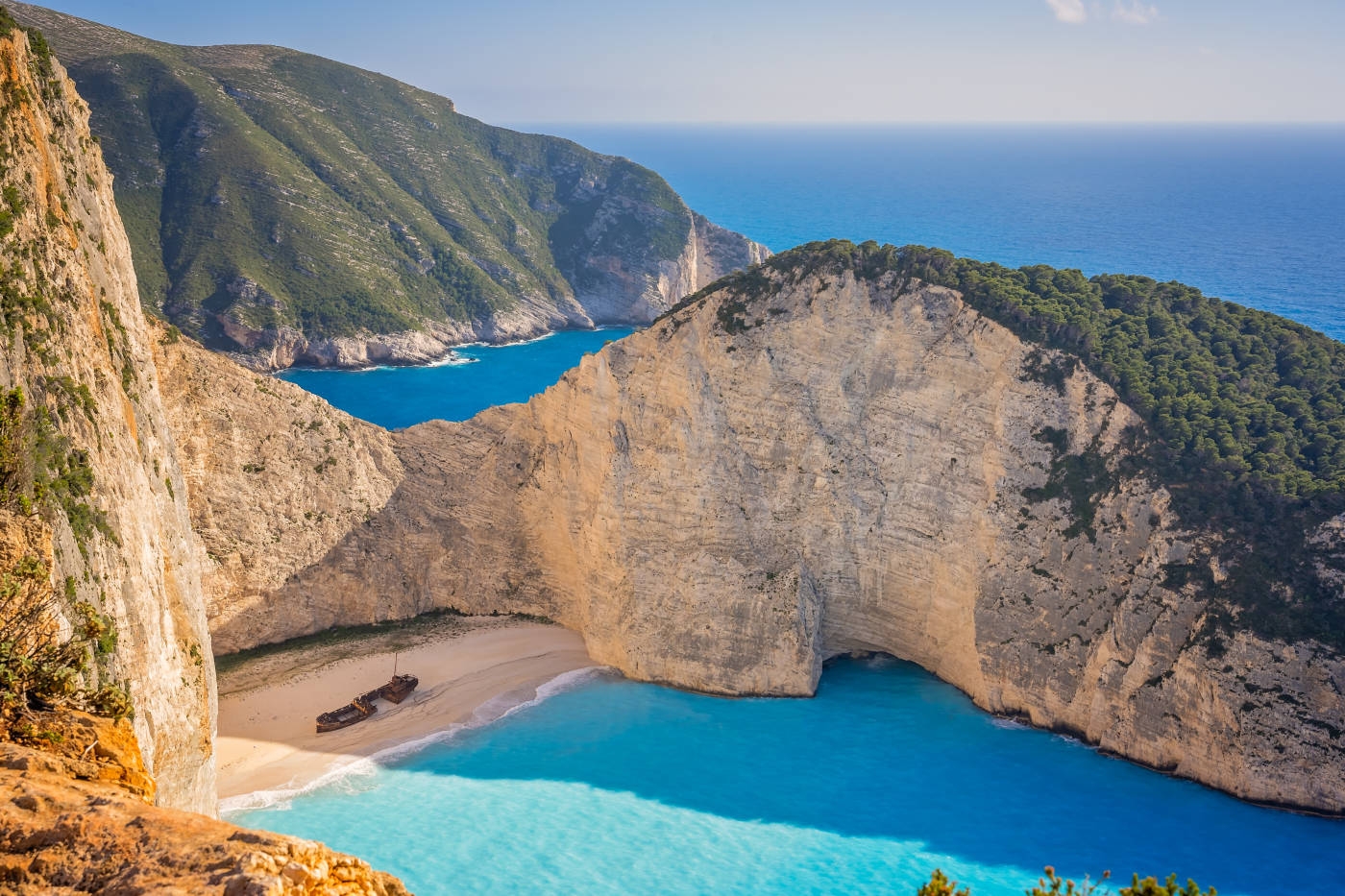
Navagio (Shipwreck) Beach: The iconic cove accessible only by boat, featuring the wreck of a smuggler’s ship on pure white pebbles, surrounded by towering cliffs. Boat tours depart from various ports on the island.
Blue Caves: At the northern tip of the island, these sea caves are renowned for the dazzling blue color of the water, best seen in the morning light.
Caretta-Caretta Turtles: Laganas Bay is a major nesting ground for the loggerhead sea turtle. Take an organized turtle-spotting boat tour that respects their habitat.
Bohali Venetian Castle: Offers panoramic views over Zakynthos Town and the sea.
Food & Accommodation
Ionian cuisine has Italian influences. Try
Bourdeto (a spicy fish stew) and Sartsa (a meat dish). Stay in Zakynthos Town for nightlife and amenities, or in resorts like Tsilivi or Alykes for beach access.
Part 4: Peloponnese Peninsula – Mythical Landscapes and Ancient Kingdoms
Take the ferry back to Kyllini and drive into the Peloponnese. This region is a treasure trove of ancient history and diverse landscapes.
Key Stops (2-3 days recommended)
Ancient Olympia: The birthplace of the Olympic Games. Walk through the ancient stadium, gymnasium, and temples. The on-site museum is exceptional.
Mycenae: The fortified city of the legendary King Agamemnon. See the massive Lion Gate, the royal tombs, and the Treasury of Atreus.
Epidaurus: Famous for its incredibly well-preserved ancient theater with perfect acoustics. A performance here during the summer festival is unforgettable.
Nafplio: Often called Greece’s most beautiful city, this charming seaside town with its Venetian fortresses (Palamidi and Bourtzi), neoclassical mansions, and cobblestone streets is a perfect base for exploring the Argolis region.
Part 5: Santorini – The Jewel of the Cyclades
The final leg involves driving back to Athens (from Nafplio, approx. 2 hours) and taking a flight or ferry to Santorini. Ferries take 4-8 hours, while flights are under an hour.
Santorini (Thira) is a volcanic island known for its dramatic caldera views, whitewashed villages, and spectacular sunsets.
Main Attractions
Oia: The famous village of blue-domed churches and cave houses built into the cliffside. It is the prime location for watching the sunset, which draws massive crowds.
Fira: The bustling capital, perched on the edge of the caldera. It’s filled with shops, restaurants, cafes, and museums. The cable car ride down to the old port is a highlight.
Akrotiri Archaeological Site: A Minoan Bronze Age settlement buried by a volcanic eruption around 1600 BC, often compared to Pompeii.
Red Beach & Kamari Beach: Unique beaches with red and black volcanic sand respectively.
Winery Tours: Santorini is famous for its distinctive Assyrtiko wine. Visit a cliffside winery for a tasting with a view.
Food & Drink
Santorini’s volcanic soil produces unique ingredients.
Fava:A creamy yellow split pea puree, typically served with onions and olive oil.
Tomatokeftedes: Delicious fried tomato fritters made from local cherry tomatoes.
Fresh Seafood: Enjoy grilled fish and seafood pasta at a caldera-view restaurant in Ammoudi Bay (below Oia) or Fira.
Vinsanto:A sweet dessert wine made from sun-dried Assyrtiko grapes.
Accommodation & Transportation
Santorini offers a wide range of accommodation, from budget hostels to ultra-luxurious cave suites with private pools carved into the cliffside in Oia, Imerovigli, and Firostefani. Renting an ATV or a car is highly recommended to explore the island freely. Local buses connect major towns but can be crowded.
Crucial Practical Information
Best Time to Visit
The ideal periods are
late spring (May-June) and early autumn (September-October). The weather is pleasant, crowds are thinner, and prices are more reasonable than in the peak summer months of July and August, which can be very hot and crowded.
Transportation Summary
Car Rental: Essential for exploring the mainland loop (Athens-Delphi-Meteora-Peloponnese). Book in advance, especially for manual transmission if required.
Ferries:The primary mode of transport to the islands. Book ferry tickets online in advance during high season. Companies like Blue Star Ferries and SeaJets operate these routes.
Domestic Flights:Aegean Airlines and Olympic Air connect Athens to Zakynthos and Santorini quickly. This can save significant time compared to ferries.
Local Buses (KTEL):A reliable and affordable way to travel between cities on the mainland if you prefer not to drive.
Cultural Etiquette & Tips
Dress Modestly for Religious Sites: Always carry a scarf or shawl to cover shoulders and a skirt or long pants when visiting monasteries and churches.
The Greek Pace: Meals are social affairs meant to be lingered over. Service can be more relaxed than in other countries; embrace it.
“Kalimera” & “Efharisto”:A simple “Good morning” (Kalimera) and “Thank you” (Efharisto) in Greek go a long way and are appreciated by locals.
Tipping:Around 5-10% at restaurants is customary for good service if a service charge is not already included.
Siesta Time: Many smaller shops close in the afternoon (roughly 2 pm to 5 pm), especially in smaller towns and islands.
A journey through this route offers an unparalleled immersion into Greece’s profound historical legacy, its awe-inspiring natural beauty, and its warm, welcoming culture—a trip that truly has something for every traveler.