Grand Tour of Central Europe: Geneva to the Mediterranean and Back
This comprehensive travel guide details a spectacular circular route through the heart of Western Europe, connecting the alpine splendour of Switzerland, the historic and culinary riches of France, the vibrant culture of Spain’s Catalonia region, and the scenic routes of Germany’s Rhine Valley. The journey begins and ends in Geneva, Switzerland, offering a diverse experience of landscapes, languages, and cultures.
Route Overview
The itinerary is a grand loop:
Geneva (Switzerland) → Annecy → Valence → Avignon → Barcelona (Spain) → Girona → Figueres → Nîmes → Besançon → Lyon → Colmar → Frankfurt (Germany) → Zurich → Lucerne → Geneva (Switzerland). This route is ideally undertaken over a period of two to three weeks, preferably by car or train, allowing for flexibility and deep exploration.
Detailed Itinerary and Destinations
Geneva, Switzerland
Geneva is a global city, home to numerous international organizations, including the Red Cross and the European headquarters of the United Nations. It sits at the southwestern tip of Lake Geneva (Lac Léman) and is surrounded by the Alps and Jura mountains.
Key Attractions: Jet d’Eau (the iconic water fountain in the lake), St. Pierre Cathedral, the Flower Clock in the Jardin Anglais, the International Red Cross and Red Crescent Museum, and the Palais des Nations.
Practical Information: The official currency is the Swiss Franc (CHF). Geneva Airport (GVA) is well-connected globally. The city has an excellent public transportation system, including trams and buses. A free public transport card is provided by most hotels for the duration of your stay.
Travel Tip: Take a boat cruise on Lake Geneva for stunning views of the city and the surrounding mountains.
Annecy, France
Driving from Geneva, Annecy is just an hour away. Known as the “Venice of the Alps,” this charming town is famous for its crystal-clear lake and a picturesque old town crisscrossed with canals.
Key Attractions: Annecy Old Town (Vieille Ville), Palais de l’Isle (a 12th-century prison on a canal), Annecy Castle, and Lake Annecy for swimming, cycling, or boating.
Practical Information: Currency is the Euro (€). The town is very walkable. Parking can be difficult in the old town; it’s best to use a designated parking garage on the outskirts.
Travel Tip: Rent a bicycle and cycle the path that circles the lake for some of the most beautiful scenery in France.
Valence, France
Located in the Rhône Valley, Valence is often considered the gateway to Provence. It boasts a pleasant climate and a historic center with a strong Italian influence.
Key Attractions: The Parc Jouvet for panoramic views, the Valence Cathedral, and the Maison des Têtes, a beautifully decorated Renaissance building.
Practical Information: Valence is a major stop on the TGV line from Paris to the south. It’s a great place to sample Côtes du Rhône wines from the nearby vineyards.
Travel Tip: Use Valence as a base for a day trip to the Ardèche region and its famous natural gorge.
Avignon, France
A historic city in the Provence region, Avignon is famed as the city of the Popes in the 14th century when the papacy was located here instead of Rome.
Key Attractions: The monumental Palais des Papes (Popes’ Palace), the Pont d’Avignon (Pont Saint-Bénézet), and the Rocher des Doms gardens overlooking the Rhône River.
Practical Information: The city is surrounded by medieval ramparts. The Avignon Festival in July is a world-renowned theater event. Book accommodations and palace tickets well in advance during this period.
Travel Tip: Purchase the “Avignon Passion” pass from the first monument you visit for discounted entry to other major sites.
Barcelona, Spain
A long but rewarding drive from Avignon brings you to the vibrant capital of Catalonia. Barcelona is a masterpiece of modernist architecture, home to Gaudí’s iconic works, a dynamic food scene, and beautiful Mediterranean beaches.
Key Attractions: The Sagrada Família basilica, Park Güell, Casa Batlló, La Pedrera, the Gothic Quarter (Barri Gòtic), Las Ramblas promenade, and the Magic Fountain of Montjuïc.
Practical Information: Currency is the Euro (€). The primary language is Catalan, though Spanish is widely spoken. The city has an extensive metro system. Be vigilant for pickpockets in crowded tourist areas.
Travel Tip: Book tickets for Sagrada Família and other popular Gaudí sites online weeks in advance to avoid extremely long queues.
Girona, Spain
A short trip north from Barcelona, Girona is a medieval gem with a beautifully preserved Jewish Quarter, a towering cathedral, and colorful houses lining the Onyar River.
Key Attractions: Girona Cathedral (with its massive Gothic nave), the Arab Baths, the medieval city walls (Passeig de la Muralla) for a scenic walk, and the El Call Jewish Quarter.
Practical Information: Girona is easily accessible by train from Barcelona. It’s a more relaxed alternative to the bustling capital.
Travel Tip: For “Game of Thrones” fans, many scenes from Braavos were filmed in Girona; you can join a themed walking tour.
Figueres, Spain
Famous primarily for one reason: it is the birthplace of Salvador Dalí and home to the Teatre-Museu Dalí, a museum designed by the artist himself.
Key Attractions: The Dalí Theatre-Museum is the undisputed highlight, a surrealist journey through his life and work. The Castell de Sant Ferran is also worth a visit.
Practical Information: Book museum tickets online to guarantee entry. Figueres is located in Catalonia’s Empordà region, known for its excellent cuisine.
Travel Tip: Combine a visit to Figueres with a trip to the nearby Costa Brava for beautiful coastal scenery.
Nîmes, France
Returning to France, Nîmes is a city with a profound Roman heritage, often called the “French Rome.” It boasts some of the best-preserved Roman ruins in Europe.
Key Attractions: The incredibly well-preserved Roman Amphitheatre (Les Arènes), the Maison Carrée (a pristine Roman temple), and the Jardins de la Fontaine with the Temple of Diana.
Practical Information: Nîmes is located in the Occitanie region. The denim fabric “de Nîmes” originated here.
Travel Tip: Purchase a combined ticket (“Billet Global”) for access to the Arena, Maison Carrée, and other Roman sites at a reduced price.
Besançon, France
A scenic drive north takes you to Besançon, the capital of the Franche-Comté region. This historic city is nestled in a horseshoe bend of the Doubs River and is known for its watchmaking heritage.
Key Attractions: The Vauban-designed Citadel, which houses a zoo, an aquarium, and several museums; the Cathédrale Saint-Jean; and the beautiful old town with its 17th-century houses.
Practical Information: Besançon is a UNESCO World Heritage site for its Vauban fortifications. The Museum of Time is a must-visit for horology enthusiasts.
Travel Tip: The climb to the Citadel is steep; consider taking the tourist train (“Petit Train de Besançon”) from the city center.
Lyon, France
Lyon is France’s gastronomic capital. Situated at the confluence of the Rhône and Saône rivers, it boasts a rich history as a Roman capital and a center for silk production.
Key Attractions: The traboules (hidden passageways) in Vieux Lyon (Old Town), the Basilica of Notre-Dame de Fourvière with its stunning city views, the Roman Theatres of Fourvière, and the Presqu’île district for shopping and dining.
Practical Information: Lyon has two main train stations: Part-Dieu (modern) and Perrache (historic). The city’s public transport system is excellent. To experience true Lyonnaise cuisine, visit a “bouchon” (a traditional restaurant).
Travel Tip: Take the funicular up to Fourvière Hill to save yourself a strenuous climb.
Colmar, France
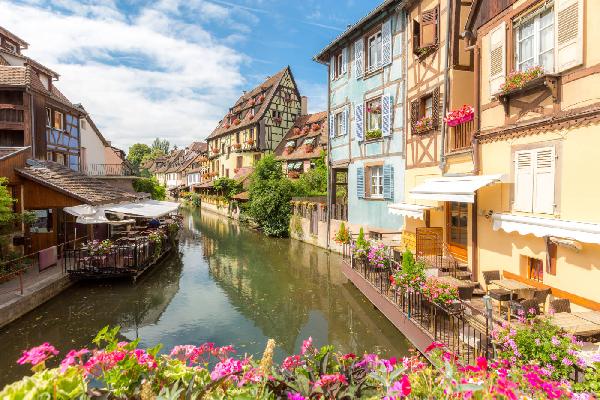
A journey into Alsace brings you to Colmar, a storybook town straight out of a fairy tale. Its well-preserved old town features half-timbered houses and canals in the area known as “Little Venice.”
Key Attractions: The “Petite Venise” district, the Maison Pfister, Koifhus (Old Custom House), and the Unterlinden Museum which houses the Issenheim Altarpiece.
Practical Information: Colmar is on the Alsace Wine Route. The region is famous for its Riesling and Gewürztraminer wines. The Christmas market in December is one of the most famous in France.
Travel Tip: Rent a car or bicycle to explore the picturesque villages along the Alsace Wine Route, such as Riquewihr and Eguisheim.
Frankfurt, Germany
A longer drive from Colmar leads to Frankfurt am Main. While known as Germany’s financial hub with its impressive skyline, it also has a charming historic old town that was meticulously reconstructed after WWII.
Key Attractions: The Römerberg square with its reconstructed medieval buildings, St. Bartholomew’s Cathedral (Kaiserdom), the Main Tower for panoramic city views, and the Museumsufer (Museum Embankment).
Practical Information: Currency is the Euro (€). Frankfurt Airport (FRA) is one of Europe’s busiest hubs. The city has an efficient U-Bahn and S-Bahn system. Try Frankfurt’s specialty, “Apfelwein” (apple wine).
Travel Tip: For a relaxing break, spend an afternoon strolling through the Palmengarten, one of Germany’s largest botanical gardens.
Zurich, Switzerland
The journey back into Switzerland begins in Zurich, the country’s largest city. It is a global center for banking and finance, set on the serene Lake Zurich and with a charming old town.
Key Attractions: Bahnhofstrasse (one of the world’s most exclusive shopping avenues), the Old Town (Altstadt) on both sides of the Limmat River, Grossmünster and Fraumünster churches, and Lindenhof park for views.
Practical Information: Currency is back to Swiss Franc (CHF). Zurich Hauptbahnhof is one of Europe’s busiest railway stations. The city is very walkable, but trams are convenient for longer distances.
Travel Tip: Take a boat trip on Lake Zurich to see the city from the water and visit lakeside towns like Rapperswil.
Lucerne, Switzerland
A short train or car ride from Zurich brings you to Lucerne, a postcard-perfect city nestled amid stunning mountain scenery on Lake Lucerne.
Key Attractions:The Chapel Bridge (Kapellbrücke) and Water Tower, the Lion Monument (Löwendenkmal), the Musegg Wall with its preserved towers, and a cruise on Lake Lucerne.
Practical Information:The city is a gateway to central Switzerland. Excursions to nearby Mount Pilatus or Mount Rigi are highly recommended for breathtaking alpine views.
>
>
>
>
>
>
>
>
>
>
>
>
>
>
>
>
>
>
>
>
>
>
>
>
>
>
>
>
>
>
>
>
>
>
>
>
>
>
>
>
>
>
>
>
>
>
>
>
>
>
>
>