A Grand Tour: From Spanish Shores to Swiss Peaks via the Heart of France
This comprehensive travel guide outlines an epic journey through some of Europe’s most captivating landscapes and cities. The itinerary spans from the vibrant energy of Spain, through the sun-drenched Provence and sophisticated urban centers of France, and culminates in the breathtaking alpine scenery of Switzerland. It is designed for travelers seeking a rich blend of history, culture, gastronomy, and natural beauty.
Introduction to the Itinerary
This multi-destination tour is best undertaken over a period of two to three weeks to fully appreciate each location. The route is circular, beginning and ending in Paris, making it ideal for a fly-in, fly-out adventure. The journey involves a mix of high-speed trains, regional trains, and car travel, offering both efficiency and the freedom to explore off-the-beaten-path destinations. Key themes include Roman history in Arles, Provençal charm in the Luberon, Renaissance art in Lyon, and unparalleled natural wonders in the Swiss Alps.
Stage 1: The French Capitals – Paris, Dijon, and Lyon
Paris, France
The journey typically begins in the City of Light. Paris needs little introduction, serving as the gateway for this grand tour.
Attractions: Beyond the iconic Eiffel Tower and Louvre Museum, visitors are encouraged to explore the artistic hill of Montmartre, the literary haven of Saint-Germain-des-Prés, and the trendy Marais district. A cruise on the Seine River provides a unique perspective of the city’s monuments.
Food & Drink: Indulge in classic Parisian experiences: a buttery croissant from a local boulangerie, a rich hot chocolate at Angelina, steak frites at a traditional brasserie, and a selection of fine cheeses from a fromagerie.
Transportation: Paris is served by two major international airports (CDG and ORY). Within the city, the extensive Metro and RER train systems are the most efficient ways to navigate.
Accommodation: Options range from luxury hotels near the Champs-Élysées to charming boutique hotels in the Latin Quarter or budget-friendly hostels in the 10th arrondissement.
Dijon, France
A short TGV ride southeast of Paris lies Dijon, the historic capital of Burgundy, renowned for its wine and mustard.
Attractions: The city center is a UNESCO World Heritage site. Follow the “Parcours de la Chouette” (Owl’s Trail) to discover key sites like the Palace of the Dukes of Burgundy, the Musée des Beaux-Arts, and the magnificent Notre-Dame de Dijon church.
Food & Drink: This is the heart of Burgundian cuisine. Must-tries include Boeuf Bourguignon, Escargots de Bourgogne, and of course, local wines like Pinot Noir and Chardonnay. Visit the Les Halles market for a true taste of local produce.
Transportation: Dijon is a major stop on the TGV line from Paris Gare de Lyon, with journeys taking around 1.5 hours. The city center is compact and easily walkable.
Lyon, France
Continuing south, Lyon is France’s gastronomic capital, a city built at the confluence of the Rhône and Saône rivers.
Attractions: Explore the hidden traboules (passageways) in Vieux Lyon (Old Town), a UNESCO site. Ride the funicular to Fourvière Hill for stunning city views from the basilica and to see the ancient Roman theaters. The Presqu’île district is known for its shopping and vibrant squares.
Food & Drink: Dine at a bouchon, a traditional Lyonnaise restaurant, for dishes like quenelle, saladier lyonnais, and praline tart. Lyon is also the home of famed chef Paul Bocuse.
Transportation: Lyon is well-connected by TGV from both Paris and Dijon. The city has an excellent public transport system of metros, trams, and buses.
Cultural Insight: Lyon’s history as a major silk production center is evident in its architecture and the Musée des Tissus (Textile Museum).
Stage 2: The Sun-Drenched Provence & The Luberon
This segment of the journey is best explored with a rental car, allowing for maximum flexibility to discover hilltop villages and lavender fields.
Arles, France
A journey south from Lyon brings travelers to Arles, a city where Roman history is woven into the fabric of daily life.
Attractions: The Roman Amphitheatre (Arènes d’Arles) and the Roman Theatre are still in use today. Follow the Vincent van Gogh trail to see locations that inspired his paintings, such as the Fondation Vincent van Gogh.
Cultural Insight: Arles was a critical Roman capital and a major trading port. Its well-preserved ruins attest to its historical significance.
Fontaine-de-Vaucluse (The “Waterfall Village”)
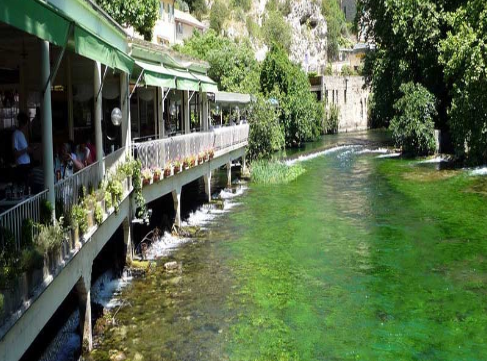
This unique village is named after the powerful spring that emerges at its foot, the source of the River Sorgue.
Attractions: The main draw is walking to the source itself, a stunningly deep green pool at the base of a towering cliff. Visit the ruins of a medieval castle overlooking the village and explore ancient paper mills along the river.
Gordes and The Luberon
The Luberon region is famous for its picturesque hilltop villages. Gordes is one of the most spectacular, appearing to be carved directly from the rock.
Attractions: Wander the steep, cobbled streets of Gordes for breathtaking views of the Calavon valley. Nearby, the Sénanque Abbey, surrounded by lavender fields (in bloom from late June to early August), is an iconic photo spot. Other notable villages include Roussillon, known for its striking red ochre cliffs.
Accommodation Tip: Stay in a charming chambre d’hôte (bed and breakfast) in one of the villages for an authentic Provençal experience.
Aix-en-Provence, France
Known as the “City of a Thousand Fountains,” Aix is an elegant university town with a rich artistic heritage linked to Paul Cézanne.
Attractions: Stroll down the beautiful Cours Mirabeau, a wide avenue lined with plane trees and fountains. Visit Cézanne’s studio and follow the trail to his favorite motifs, like Mont Sainte-Victoire.
Avignon and Valensole Plateau
Avignon is a city of popes and palaces, while the Valensole Plateau offers one of Provence’s most iconic sights.
Avignon Attractions: The immense Palais des Papes (Popes’ Palace) dominates the city. Walk along the remaining section of the Pont d’Avignon (Pont Saint-Bénézet) and explore the lively squares within the city’s medieval ramparts.
Valensole Plateau: A detour from Avignon (best by car) during summer reveals endless rows of lavender and sunflower fields. The area is a photographer’s paradise, especially at sunrise or sunset.
Food & Drink: Try the local specialty, Papaline d’Avignon, a chocolate ball filled with lavender-infused liqueur.
The Verdon Gorge and Lac de Sainte-Croix
One of Europe’s most spectacular canyons, the Verdon Gorge offers dramatic landscapes and outdoor activities.
Attractions: Drive along the Corniche Sublime for jaw-dropping viewpoints. Rent a kayak or pedal boat from the village of Sainte-Croix-du-Verdon to explore the turquoise waters of Lac de Sainte-Croix and paddle into the mouth of the gorge itself.
Transportation: This area is remote and public transport is limited. A car is essential.
Valence, France
A convenient stopover on the route north from Provence, Valence is often called “the gateway to the South of France” and has a growing reputation for its cuisine.
Attractions: Explore the old town around the Cathedral of Saint-Apollinaire and enjoy panoramic views from the Parc Jouvet. It’s an excellent place to sample northern Provençal cuisine before heading towards the Alps.
Stage 3: The Alpine Wonders – From France to Switzerland
Annecy, France
Nicknamed the “Venice of the Alps,” Annecy is a stunningly beautiful town on the shores of Lake Annecy.
Attractions: Wander through the charming canals of the Vieille Ville (Old Town), visit the iconic Palais de l’Isle, and cycle or walk along the lake’s pristine shores. The water is remarkably clear and perfect for swimming in summer.
Food & Drink: Enjoy local cheeses like Reblochon and Tartiflette, a hearty potato, bacon, and cheese gratin.
Geneva, Switzerland
A short journey from Annecy, Geneva is a global hub for diplomacy and finance, set on the shores of Lake Geneva.
Attractions: See the Jet d’Eau, one of the world’s tallest water fountains, stroll through the Old Town with St. Peter’s Cathedral, and see the Flower Clock in the Jardin Anglais. The headquarters of the Red Cross and United Nations offer insightful tours.
Transportation: Geneva Airport (GVA) is a major international hub. The city has an efficient network of trams and buses.
The Heart of Switzerland: Olten, Lucerne, and The Jungfrau Region
The Swiss Travel System, including trains, boats, and cable cars, becomes your best friend here. Consider purchasing a Swiss Travel Pass for unlimited travel and discounts on mountain excursions.
Olten
A central railway hub often used as a transit point rather than a destination, but it offers a pleasant old town and riverside walks.
Lucerne
A picture-perfect city on Lake Lucerne surrounded by mountains.
Attractions: Walk the iconic Chapel Bridge (Kapellbrücke), explore the well-preserved Musegg Wall, and visit the poignant Lion Monument. A boat trip on Lake Lucerne is highly recommended.
Accommodation: Offers a wide range from luxury hotels on the lakefront to cozy guesthouses in the old town.
The Golden Pass Route: Lungern and Lake Brienz
The train journey from Lucerne into the Bernese Oberland is spectacular.
Lungern: A tiny, idyllic village with an emerald-green lake, perfect for a photo stop.
Lake Brienz (Brienzersee): Known for its stunning turquoise color. Take a cruise from Interlaken or visit the open-air Ballenberg Museum to see traditional Swiss houses and farms.
The Jungfrau Region: A Top of Europe Experience
This area offers some of Switzerland’s most dramatic alpine scenery.
The Jungfraujoch: The journey on the Jungfrau Railway to the “Top of Europe” is an engineering marvel. At 3,454 meters, visitors can experience a high-altitude saddle between peaks, walk through an ice palace, and enjoy panoramic views of the Aletsch Glacier (a UNESCO site).
Base Towns: Stay in car-free Wengen or Mürren for breathtaking mountain views or in Grindelwald for more activity options. Interlaken serves as the main transport hub.
Zurich, Switzerland
The journey’s final Swiss stop is Zurich, a global city with a beautifully preserved old town.
Attractions: Explore the Bahnhofstrasse for shopping, relax by Lake Zurich, and wander through the narrow streets of Niederdorf. Climb to Lindenhof for a quiet park with great city views.
Food & Drink: Try Zürcher Geschnetzeltes (veal in a creamy mushroom sauce) with Rösti. Don’t miss tasting Swiss chocolate from renowned confectioners like Sprüngli.
The Return: Zurich to Paris
The journey concludes with a comfortable high-speed train ride from Zurich Hauptbahnhof directly to Paris Gare de Lyon. The trip takes approximately 4 hours, offering a relaxing finale before departure from Paris.
General Travel Tips for the Entire Journey
Best Time to Travel: Late spring (May-June) and early autumn (September) offer pleasant weather and fewer crowds. July-August is peak season, especially in Provence for lavender and Switzerland for hiking, but it can be hot and crowded.
Transportation Strategy: For France, booking TGV tickets in advance online can yield significant savings. In Switzerland, evaluate if a Swiss Travel Pass or Half-Fare Card is cost-effective for your itinerary. A rental car is highly recommended for exploring Provence and can be picked up in Lyon or Avignon and dropped off in Geneva or Annecy.
Cuisine Journey: This trip is a culinary pilgrimage. Be open to trying regional specialties in each area, from Burgundian wines to Provençal ratatouille and Swiss cheese fondue.
Cultural Etiquette: Learn a few basic phrases in French (“Bonjour,” “Merci”). In Switzerland, be punctual for trains and reservations. Tipping is not as obligatory as in some countries; rounding up the bill or leaving small change is customary.
Packing Essentials: Pack layers! The climate can range from warm Mediterranean in Provence to cool alpine in Switzerland. Comfortable walking shoes are non-negotiable. Don’t forget a universal power adapter.
This grand tour provides an unforgettable tapestry of European experiences, connecting world-class cities with rustic villages and sublime natural wonders, creating memories that will last a lifetime.