A Comprehensive Travel Guide: Vienna and the Danube Wachau Valley
This guide details a classic Austrian itinerary, taking travelers from the imperial splendor of Vienna to the breathtaking natural and cultural landscape of the Wachau Valley, a UNESCO World Heritage site, with its crown jewel, Melk Abbey. This journey offers a perfect blend of urban sophistication and rustic charm, set against the backdrop of the majestic Danube River.
Part 1: Vienna – The Imperial Capital
Vienna, Austria’s capital, is a city steeped in history, music, and art. Once the center of the powerful Habsburg Empire, its streets are lined with magnificent palaces, world-class museums, and grand coffee houses that have been the heart of Viennese social and intellectual life for centuries.
Key Attractions in Vienna
Schönbrunn Palace: The former summer residence of the Habsburg monarchs, this 1,441-room Rococo palace is a must-see. Visitors can explore the lavish Imperial Apartments, get lost in the vast gardens, and visit the world’s oldest zoo, Tiergarten Schönbrunn.
St. Stephen’s Cathedral (Stephansdom): The Gothic masterpiece and symbol of Vienna. Climb the 343 steps of the South Tower for a stunning panoramic view of the city.
Hofburg Palace: The former principal imperial palace of the Habsburg dynasty. Today, it houses the offices of the Austrian president, the Sisi Museum (dedicated to Empress Elisabeth), the Imperial Apartments, and the Spanish Riding School.
Belvedere Palace: A magnificent Baroque palace complex comprising the Upper and Lower Belvedere. It is home to an incredible art collection, including Gustav Klimt’s masterpiece, “The Kiss.”
Vienna State Opera (Wiener Staatsoper): One of the leading opera houses in the world. Even if you don’t attend a performance, a guided tour offers a glimpse into its opulent interior.
Kunsthistorisches Museum: The Museum of Fine Arts boasts an unparalleled collection of Old Masters, including works by Bruegel, Rembrandt, and Vermeer.
Viennese Food & Drink
Viennese cuisine is hearty and comforting. No visit is complete without trying these classics:
Wiener Schnitzel: A thin, breaded, and pan-fried veal cutlet, traditionally served with potato salad or parsley potatoes.
Sachertorte: The world-famous chocolate cake with a layer of apricot jam, invented at the Hotel Sacher.
Apfelstrudel: A flaky pastry filled with warm, spiced apples, often served with vanilla sauce.
Tafelspitz: Boiled beef in broth, a classic Viennese dish famously favored by Emperor Franz Joseph.
Coffee House Culture: Experience a “Melange” (espresso with steamed milk) at a traditional coffee house like Café Central or Café Sacher. It’s a ritual to linger for hours with a coffee and a newspaper.
Heuriger: Visit a traditional wine tavern in the outskirts (like Grinzing or Nussdorf) to sample young wine (“Heuriger”) and cold buffet fare in a rustic setting.
Transportation in Vienna
Vienna has an excellent and efficient public transportation network (Wiener Linien) consisting of U-Bahn (subway), trams, and buses. The system is easy to navigate. For tourists, the
Vienna City Card offers unlimited travel and discounts at many attractions. The city center (Innere Stadt) is also very walkable.
Accommodation Tips for Vienna
Vienna offers a wide range of accommodations. For first-time visitors, staying in or near the
Innere Stadt (District I) provides easy access to major sights. Districts like Leopoldstadt (II) and Mariahilf (VI) offer more local flavor and often better value while still being well-connected by public transport.
Part 2: The Journey to the Wachau Valley
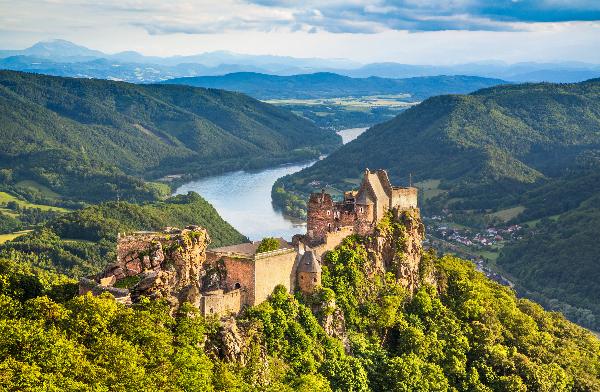
The Wachau Valley is a 40-kilometer stretch of the Danube River between the towns of Melk and Krems. It is renowned for its picturesque landscapes, medieval castles, terraced vineyards, and charming villages. The best ways to experience it are by boat, bike, or car.
Transportation Options from Vienna
By Train and Boat (Highly Recommended): Take a westbound train from Wien Hauptbahnhof or Wien Westbahnhof to Melk (approx. 1 hour). After visiting Melk Abbey, board a Danube river cruise ship (operated by companies like DDSG Blue Danube or Brandner) for a scenic journey downriver to Krems or Dürnstein. From Krems, take a train back to Vienna (approx. 1 hour).
By Car: Renting a car offers maximum flexibility. The drive from Vienna to Melk takes about 1.5 hours via the A1 motorway. You can then drive along the river road (B3) through the valley at your own pace.
By Bike: For the active traveler, the Danube Cycle Path (Donauradweg) is one of Europe’s most popular cycling routes. You can rent a bike in Vienna or Melk and cycle through the valley.
Organized Tours: Numerous day tours from Vienna cover the Wachau Valley, including transportation, a river cruise, and guided visits, which is a hassle-free option.
Part 3: Melk Abbey (Stift Melk)
The journey often begins in the western part of the valley at the magnificent Melk Abbey (Stift Melk). This Benedictine abbey is a Baroque masterpiece perched on a rocky outcrop overlooking the Danube and the town of Melk.
Exploring Melk Abbey
The Abbey Church: The interior is a stunning display of Baroque art, with frescoes by Johann Michael Rottmayr, intricate gold leaf work, and magnificent marble.
The Marble Hall: Originally a dining room for the imperial family, this grand hall features an illusionistic ceiling fresco and rich architectural details.
The Library: A highlight for many visitors, it houses an invaluable collection of medieval manuscripts and is adorned with another breathtaking fresco by Paul Troger.
The Abbey Park: A beautifully landscaped park with a Baroque garden pavilion, offering a peaceful retreat with lovely views.
Practical Tip: Allocate at least 2-3 hours for your visit. Guided tours are available, or you can explore with an audio guide. Check the official website for opening hours and potential closures for religious events.
Part 4: The Wachau Valley Experience
Sailing or driving from Melk eastward reveals the heart of the Wachau Valley. The river winds through vine-covered hills dotted with ruins and castles.
Key Stops in the Wachau Valley
Dürnstein: Arguably the valley’s most photogenic town, known for its blue-and-white Baroque tower of the Augustinian monastery. It is also famous as the place where Richard the Lionheart was imprisoned. Hike up to the ruins of Dürnstein Castle for an unparalleled view of the Danube bend.
Weißenkirchen: A charming village that is the center of the Wachau wine trade. Visit the “Weinhauerhaus,” a museum dedicated to winemaking, and stroll through its narrow lanes.
Spitz: Another important wine-growing town situated at the foot of the Tausendeimerberg (“Thousand-Bucket Hill”), named for its prolific vineyards.
Aggstein Castle Ruins: For those with more time or a car, a visit to these imposing ruins high above the Danube offers a glimpse into the region’s medieval history and spectacular views.
Wachau Food & Drink
The Wachau is a culinary paradise, famous for its wines and local produce.
Wine Tasting: The region is renowned for its Riesling and Grüner Veltliner wines. Visit local vintners (“Heurigen” or “Buschenschank”) in towns like Dürnstein, Weissenkirchen, or Joching for tastings.
Marillen (Apricots): The Wachau apricot has a protected designation of origin. Try it in various forms: jam (Marillenmarmelade), dumplings (Marillenknödel), or as a brandy (Marillenschnaps).
Heuriger Culture: Similar to Vienna, these rustic wine taverns serve their own wine and simple, cold food like bread, spreads, and cold cuts.
Danube Fish: Look for local fish like Zander (pike-perch) on restaurant menus in towns along the river.
Accommodation in the Wachau Valley
For an immersive experience, consider staying overnight in one of the valley’s charming towns. Dürnstein has several upscale hotels and guesthouses with stunning river views. Krems offers more options and is a convenient transport hub. Family-run guesthouses (“Gasthof”) provide authentic hospitality and are often located in the heart of vineyards.
Part 5: The Return to Vienna
The journey typically concludes in Krems, a historic town at the eastern end of the Wachau Valley. Before catching your train back to Vienna, take some time to explore Krems’s charming old town (Altstadt). From Krems, frequent trains run directly to Wien Hauptbahnhof or Wien Franz-Josefs-Bahnhof, completing your circular tour.
Cultural Insights & Practical Tips
Language: German is the official language. However, English is widely spoken in tourist areas, hotels, and restaurants. Learning a few basic German phrases like “Guten Tag” (Good day) and “Danke” (Thank you) is appreciated.
Tipping: Service charge is usually included in bills. It is customary to round up the bill or leave a 5-10% tip for good service in restaurants and cafes.
Siesta Time (Mittagsruhe): Be aware that many smaller shops, especially in villages outside Vienna, may close for a few hours in the afternoon (typically between 12:00 and 14:00 or 15:00).
Currency: Austria uses the Euro (€). Credit cards are widely accepted in cities but it’s wise to carry some cash for smaller establishments in villages and Heurigen.
Best Time to Visit: Late spring (May-June) and early autumn (September-October) offer pleasant weather and fewer crowds. The vineyards are particularly beautiful during the autumn harvest season. The Christmas markets in Vienna and the Wachau towns in December are magical.
Shopping: In Vienna, look for traditional souvenirs like Mozartkugeln (chocolate confection), Augarten porcelain, or items from Swarovski. In the Wachau, bring back local apricot products and wine.
A trip from Vienna through the Wachau Valley to Melk Abbey encapsulates the diverse beauty of Austria—from imperial grandeur to rustic river-valley charm. It’s a journey that satisfies a love for history, nature, art, and fine living.