Austrian Journey: Vienna to Hallstatt and Back
This travel guide details a classic Austrian itinerary, focusing on the imperial grandeur of the nation’s capital and the breathtaking natural beauty of its most famous lake district. The journey from Vienna to Hallstatt is a study in contrasts, moving from the epicenter of Habsburg power and high culture to a serene, UNESCO-listed village seemingly suspended between mountain and water. The following information provides a comprehensive, objective overview to help you plan and experience this remarkable trip.
Part 1: Vienna – The Imperial Capital
Vienna is a city that lives and breathes history. Once the heart of the Holy Roman Empire and later the Austro-Hungarian Empire, its streets are lined with architectural marvels, its coffee houses echo with the ghosts of intellectuals and artists, and its air carries the strains of classical music. A visit here is an immersion in a refined, cultured urban experience.
Key Attractions in Vienna
Schönbrunn Palace: The former summer residence of the Habsburg monarchs, this 1,441-room Rococo palace is Vienna’s most popular tourist attraction. The Imperial Tour takes you through 22 state rooms, including the Millions Room and the Hall of Mirrors where the six-year-old Mozart performed for Empress Maria Theresa. The palace gardens are vast and free to enter, featuring the Gloriette monument, the Palm House, and a maze.
St. Stephen’s Cathedral (Stephansdom): The magnificent Gothic cathedral is the symbolic heart of Vienna. You can admire the intricate tile roof, descend into the catacombs holding the remains of over 11,000 people, or climb the 343 steps of the South Tower for a unparalleled panoramic view of the city.
Belvedere Palace: Actually two Baroque palaces (Upper and Lower Belvedere) separated by a stunning garden. The Upper Belvedere houses an incredible collection of Austrian art, including Gustav Klimt’s “The Kiss,” making it a must-visit for art lovers.
Hofburg Palace: The winter residence of the Habsburgs, this vast complex now houses the offices of the Austrian president, several museums, and the famous Spanish Riding School. The Sisi Museum offers fascinating insight into the life of Empress Elisabeth, while the Imperial Apartments showcase the lavish lifestyle of the monarchy.
Vienna State Opera (Wiener Staatsoper): One of the world’s leading opera houses. Even if you don’t attend a performance, taking a guided tour is highly recommended to appreciate its opulent interior.
Kunsthistorisches Museum: The Museum of Art History boasts an immense collection formed by the Habsburgs, with masterpieces by Bruegel, Rembrandt, Raphael, and Vermeer. The building itself, with its grand staircase and dome, is a work of art.
Viennese Cuisine
Viennese food is hearty and comforting, with influences from across the former empire.
Wiener Schnitzel: A thin, breaded, and pan-fried veal cutlet. It should be large, crispy, and served with a potato salad or parsley potatoes. Look for “Wiener Schnitzel vom Kalb” to ensure it’s veal.
Sachertorte: The world-famous chocolate cake with a layer of apricot jam, created at the Hotel Sacher. It’s dense, not overly sweet, and traditionally served with unsweetened whipped cream (Schlagobers).
Apfelstrudel: A classic pastry of thin dough wrapped around a spiced apple and raisin filling. Best enjoyed warm in a traditional coffee house.
Tafelspitz: Boiled beef in broth, considered a national dish by Emperor Franz Joseph I. It is typically served with horseradish sauce, apple-horseradish sauce, and chive sauce.
Coffee House Culture
The Viennese
Kaffeehaus is a UNESCO-listed intangible cultural heritage. It’s not just about coffee; it’s an institution for relaxation, conversation, and reading. When you enter, you claim a table for as long as you wish. A glass of water will always accompany your coffee. Must-try coffee specialties include Melange (similar to a cappuccino), Einspänner (black coffee with whipped cream in a glass), and Fiaker (a strong coffee with rum and whipped cream).
Transportation in Vienna
Vienna has an excellent public transport network (Wiener Linien) consisting of U-Bahn (subway), trams, and buses. It is efficient, clean, and punctual.
Tickets: Purchase tickets from machines at U-Bahn stations or tobacconists (Tabak/Trafik). Validate your ticket before your first journey by stamping it in the blue machine on trams/buses or at station entrances.
The Vienna Card: Offers discounts at many museums, attractions, and restaurants, but calculate if it’s worth it for your itinerary. A 24-, 48-, or 72-hour travel card for unlimited public transport is often a better value for pure transportation.
Walking: The city center (Innere Stadt) is compact and highly walkable. Many of the main attractions are within a 20-30 minute walk of each other.
The Journey: Vienna to Hallstatt
The trip from Vienna to Hallstatt is a scenic transition from urban sprawl to alpine wonder. The most straightforward and picturesque route involves a combination of train and boat.
Step-by-Step Transportation Guide
Train from Vienna to Attnang-Puchheim: Take a direct Railjet train from Vienna’s main station (Wien Hauptbahnhof). The journey takes approximately 2.5 hours and travels through the rolling hills of Lower Austria.
Train from Attnang-Puchheim to Hallstatt Station (Hallstatt Bahnhof): Change at Attnang-Puchheim to a regional train heading to Bad Ischl and onwards to Hallstatt. This leg is about 1 hour and follows the scenic Traun River, with increasingly dramatic mountain views.
Boat from Hallstatt Station to Hallstatt Village: The train station is directly across Lake Hallstatt from the village. A small ferry (Fähre) coordinates its schedule with train arrivals. The 10-minute boat ride provides the iconic first view of Hallstatt nestled against the mountains. Check the ferry timetable in advance.
Practical Tip: Book train tickets in advance through the ÖBB (Austrian Federal Railways) website or app for the best “Sparschiene” (saver) fares. The entire journey takes roughly 3.5 to 4 hours.
Part 2: Hallstatt – A Fairytale on the Lake
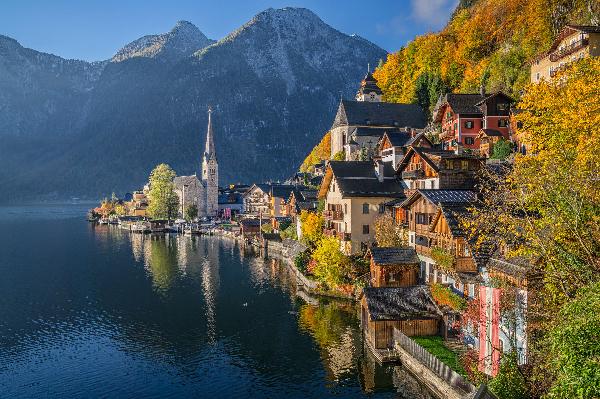
Hallstatt is a village of sublime beauty. Its location on the western shore of Lake Hallstatt (Hallstätter See), dwarfed by the towering Dachstein mountains, is so unique that its image has been replicated in China. While it can be crowded during peak hours, its charm is undeniable.
Key Attractions in and around Hallstatt
The Market Square (Marktplatz): The central square of the village, lined with pastel-colored 16th-century houses. It’s home to hotels, restaurants, and small shops. This is the social heart of Hallstatt.
World Heritage Museum (Welterbemuseum): Located in the center of the village, this modern museum provides excellent context. It details the 7,000-year history of human settlement in Hallstatt, focusing on the prehistoric salt mining that made the area prosperous.
Salzwelten (Salt Mines): Accessible via the Salzberg funicular railway, this is one of the oldest salt mines in the world. The tour includes sliding down two miner’s slides, crossing an underground salt lake on a raft, and learning about the “Man in Salt,” a preserved prehistoric miner. The views from the top of the funicular (Rudolf’s Tower) are spectacular.
The Skywalk: A viewing platform perched 350 meters above Lake Hallstatt, next to the salt mine entrance. It offers a dizzying and unforgettable bird’s-eye view of the village and lake.
Bone House (Beinhaus): Located in the chapel of St. Michael next to the Catholic parish church, this small charnel house contains over 600 painted skulls. Due to limited cemetery space, bones were exhumed after 10-20 years to make room for new burials. The skulls are decorated with painted garlands and inscriptions of the deceased’s name and date.
Lakeside Walk: Simply walking along the narrow path that runs through the village is a primary activity. The views change with the light and weather, from mirror-like reflections at dawn to misty, dramatic scenes.
Hallstatt Cuisine
The culinary scene in Hallstatt revolves around freshwater fish from the lake and traditional Austrian alpine fare.
Freshwater Fish: Look for Reinanke (a type of whitefish) or Forelle (trout), often served pan-fried (Müllerin) or steamed.
Austrian Classics: You’ll find excellent versions of Kasnocken (cheesy pasta dumplings), Kaiserschmarrn (shredded pancake with raisins), and various hearty soups.
Cake and Coffee: Many guesthouses have their own lakeside terraces, perfect for enjoying a slice of cake and a coffee while soaking in the view.
Cultural Aspects & Local Insights
The history of Hallstatt is defined by salt (“hall” is a Celtic word for salt). The Hallstatt period (800-450 BC) of European early Iron Age history is named after this very location due to the rich archaeological finds from its ancient salt mines. The village’s economy was built on this “white gold.” Today, tourism is the main industry.
Crowd Management Tip: Day-trippers arrive by bus and boat between 10:00 AM and 2:00 PM. To experience Hallstatt at its most peaceful, stay overnight. The magic of the village reveals itself in the early morning and late evening when the crowds have dispersed.
The Return: Hallstatt to Vienna
The return journey follows the same route in reverse: ferry to Hallstatt station, regional train to Attnang-Puchheim, and Railjet back to Vienna Hauptbahnhof. It’s advisable to book your return train tickets in advance as well.
A Scenic Alternative: If you have more time, consider breaking up your return journey with a stop in the charming spa town of Bad Ischl. It was the summer retreat of Emperor Franz Joseph and offers a more local Austrian town experience with lovely cafes and imperial history.
Practical Travel Tips for the Entire Trip
Best Time to Visit: Late spring (May-June) and early autumn (September-October) offer pleasant weather and fewer crowds than the peak summer months. Winter is cold but magical, with Christmas markets in Vienna and potential snow in Hallstatt creating a picture-perfect scene.
Accommodation: Book well in advance, especially for Hallstatt where options are limited. In Vienna, staying within or just outside the Ringstrasse beltway provides easy access to major sights.
Currency: Austria uses the Euro (€). Credit cards are widely accepted in Vienna but less so in smaller establishments in Hallstatt; always carry some cash.
Language: German is the official language. English is widely spoken in tourist areas in both Vienna and Hallstatt, but learning a few basic German phrases (Guten Tag, Danke) is appreciated.
Shopping & Souvenirs: In Vienna, consider Mozartkugeln chocolates, Manner wafers, or products from Augarten porcelain. In Hallstatt, local salt products from the Salzwelten shop make for unique and authentic souvenirs.
Sustainability: Both destinations are sensitive to overtourism. Be a respectful traveler: stay on paths, dispose of waste properly, support local businesses, and be patient with crowds.
A journey from Vienna to Hallstatt encapsulates two distinct yet quintessential Austrian experiences: imperial art and culture followed by pristine natural beauty. With careful planning and an appreciation for both worlds, this itinerary offers an unforgettable glimpse into the heart of Austria.