A Comprehensive Travel Guide: Munich to Salzburg and Back
This itinerary connects two of Southern Germany and Austria’s most captivating cultural hubs. Starting and ending in the vibrant, modern capital of Bavaria, it journeys into the heart of Baroque splendor and the birthplace of Mozart. The route is short in distance but immense in its offerings, from world-class art and roaring beer halls to serene alpine landscapes and classical music history.
Trip Overview
The Munich-Salzburg-Munich loop is a classic Central European journey, perfect for a 4 to 7-day trip. The distance between the two cities is approximately 150 kilometers (90 miles), making travel between them quick and efficient. Salzburg, while in Austria, shares a deep cultural and historical bond with Bavaria, creating a seamless travel experience. This guide provides a detailed day-by-day plan, but it is easily adaptable to individual interests and time constraints.
Recommended Duration: 5-7 days
Best Time to Visit: Late spring (May-June) and early autumn (September-October) for pleasant weather and fewer crowds. December is magical for the Christmas markets.
Primary Transport: Train is the most efficient and scenic way to travel between cities.
Currency: Euro (€). Germany and Austria both use the Euro.
Part 1: Munich (Days 1-3)
Munich (München) is a city of contrasts, where traditional lederhosen and dirndls coexist with high-tech industry and luxury shopping. It’s a city that knows how to enjoy life, whether in a sprawling beer garden or a quiet museum.
Must-See Attractions in Munich
Marienplatz and the New Town Hall (Neues Rathaus): The central square and heart of the city. Visitors gather to watch the famous Glockenspiel performance, which reenacts stories from Munich’s history at 11 am, 12 pm, and 5 pm daily.
English Garden (Englischer Garten): One of the world’s largest urban parks. Here, one can see surfers riding the standing wave in the Eisbach river, relax in a traditional beer garden like the Chinese Tower (Chinesischer Turm), or simply stroll through its vast, green expanses.
Hofbräuhaus: The world’s most famous beer hall. This historic institution offers a quintessential Bavarian experience with long wooden tables, oompah music, massive beer steins, and hearty food.
Nymphenburg Palace: The magnificent summer residence of the Wittelsbach rulers. The palace itself is stunning, but the expansive park with its hidden pavilions like the Amalienburg is equally impressive.
Deutsches Museum: One of the world’s oldest and largest museums of science and technology. It requires several hours to fully appreciate its extensive collections.
Viktualienmarkt: A daily food market near Marienplatz offering fresh produce, cheeses, meats, spices, and ready-to-eat local delicacies. It’s a perfect spot for lunch.
Munich Food & Drink
Bavarian cuisine is hearty and flavorful. Key dishes to try include:
Weißwurst: A traditional white veal sausage, typically eaten before noon. Served with sweet mustard, a pretzel, and a wheat beer (Weißbier).
Schweinshaxe: A crispy, roasted pork knuckle, often served with dumplings and sauerkraut.
Obatzda: A flavorful cheese spread made from camembert, butter, and paprika, served with a pretzel.
Beer: Munich is the birthplace of the Reinheitsgebot (Beer Purity Law). Must-try styles include Helles (a pale lager), Dunkles (a dark lager), and the strong Märzen or Festbier during Oktoberfest.
Getting Around Munich
Munich has an excellent public transportation system (MVV), consisting of U-Bahn (subway), S-Bahn (suburban train), trams, and buses. A single day card or multi-day pass is the most cost-effective option for tourists. The city center is also very walkable.
Accommodation Tips for Munich
Staying near the Altstadt (Old Town) provides easy access to major sights but can be more expensive. The neighborhoods of Schwabing, Maxvorstadt (the university and museum district), and around the Hauptbahnhof (main train station) offer a wide range of hotels and are well-connected by public transport.
Part 2: Journey from Munich to Salzburg
The train ride from Munich Hauptbahnhof to Salzburg Hauptbahnhof is one of Europe’s most scenic and convenient short journeys.
Duration: Approximately 1.5 to 2 hours on regional (BRB) or high-speed (Railjet) trains.
Tickets: It is advisable to book tickets in advance through the Deutsche Bahn (DB) or Österreichische Bundesbahnen (ÖBB) websites for the best fares. The “Bayern-Ticket” is an excellent value for regional travel, covering up to 5 people for a day of unlimited travel on regional trains within Bavaria and to Salzburg after 9 am on weekdays and all day on weekends.
The Scenery: The route passes through rolling Bavarian countryside, with views of lakes and the distant Alps growing ever closer as you approach Salzburg.
Part 3: Salzburg (Days 3-5)
Salzburg, the “City of Mozart” and “The Sound of Music,” is a Baroque jewel set against a dramatic alpine backdrop. Its UNESCO-listed Altstadt (Old Town) is a compact maze of elegant squares, churches, and narrow lanes dominated by the mighty Hohensalzburg Fortress.
Must-See Attractions in Salzburg
Hohensalzburg Fortress (Festung Hohensalzburg): One of the largest and best-preserved medieval castles in Europe. The funicular ride up offers stunning views, and the fortress itself contains princely chambers, a marionette museum, and courtyards with panoramic vistas of the city and Alps.
Salzburg Altstadt (Old Town): Get lost wandering the Getreidegasse, a famous shopping street known for its ornate wrought-iron guild signs, and explore the surrounding squares like Domplatz and Residenzplatz.
Mozart’s Birthplace (Mozarts Geburtshaus) & Residence (Mozart-Wohnhaus): Two museums dedicated to the life and work of Wolfgang Amadeus Mozart. His birthplace on Getreidegasse is the more popular of the two.
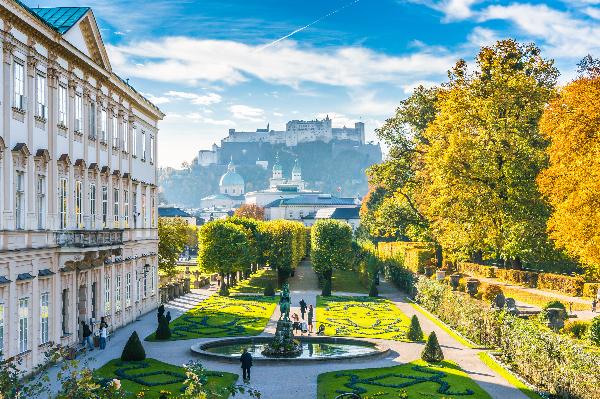
Mirabell Palace and Gardens: These beautiful Baroque gardens, built by Prince-Archbishop Wolf Dietrich for his beloved Salome Alt, are a UNESCO World Heritage Site. The Pegasus Fountain and Dwarf Garden are famous filming locations from “The Sound of Music.”
Salzburg Cathedral (Salzburger Dom): A magnificent 17th-century Baroque cathedral in the heart of the city. Its imposing facade and grand interior are masterpieces of the era.
Hellbrunn Palace & Trick Fountains: Located just south of the city, this early Baroque villa is famous for its Wasserspiele (trick fountains), a series of playful and surprising water features designed to entertain guests.
“The Sound of Music” Tour
For fans of the film, several tour companies offer dedicated bus tours that visit key locations such as the Leopoldskron Palace (the von Trapp house facade), the Hellbrunn gazebo, and the Nonnberg Abbey, as well as venturing into the stunning Lake District used for the opening scenes.
Salzburg Food & Drink
Salzburg’s cuisine blends Austrian classics with Alpine influences.
Mozartkugel (Mozart Ball): The iconic Salzburg confection made of marzipan, nougat, and dark chocolate. The original can be found at Café Konditorei Fürst.
Salzburger Nockerl: A legendary sweet soufflé dessert, meant to resemble the three hills surrounding Salzburg. It’s fluffy, airy, and typically shared by two or more people.
Bosna: A popular street food snack—a grilled sausage with curry powder, onions, and herbs in a bun.
Austrian Coffee Culture: Do not miss visiting a traditional Kaffeehaus like Café Tomaselli or Café Bazar to experience the Viennese-style coffee culture with a slice of cake.
Beer: Stiegl is Salzburg’s famous local brewery, and their beer is served throughout the city. A visit to the Stiegl-Brauwelt museum and brewery is a treat for beer enthusiasts.
Getting Around Salzburg
The Salzburg Altstadt is best explored on foot. For attractions further out, like Hellbrunn Palace, an efficient network of buses is available. The “Salzburg Card” offers excellent value, providing free entry to all major attractions and unlimited use of public transportation for 24, 48, or 72 hours.
Accommodation Tips for Salzburg
Staying in or on the edges of the Altstadt offers a magical experience but comes with a higher price tag. More budget-friendly options can be found across the river in the Neustadt (New Town), which is still within easy walking distance of all major sights.
Part 4: Day Trip Options from Salzburg
A significant advantage of using Salzburg as a base is its proximity to Austria’s stunning Salzkammergut Lake District.
Hallstatt: The famous picturesque village on the shore of Lake Hallstatt. It can be reached by a combination of train and boat or bus. It is extremely popular, so visiting early in the morning or late in the afternoon is advised to avoid the largest crowds.
St. Gilgen and St. Wolfgang: Two other beautiful towns on Lake Wolfgangsee. St. Gilgen is easily accessible by bus and offers stunning views and a more relaxed atmosphere than Hallstatt.
Berchtesgaden (Germany): A short bus ride back across the border into Germany leads to Berchtesgaden National Park, known for the pristine Königssee lake and the Eagle’s Nest (Kehlsteinhaus), Hitler’s former mountain retreat.
Part 5: Return Journey to Munich
The return trip to Munich follows the same efficient train route. If your flight departs from Munich Airport (MUC), direct S-Bahn trains (S1 or S8) run frequently from Munich Hauptbahnhof to the airport terminals.
Cultural Insights & Practical Tips
Language: German is the official language in both countries. In Munich, one will encounter the distinct Bavarian dialect. English is widely spoken in tourist areas, but learning a few basic German phrases like “Guten Tag” (Good day), “Danke” (Thank you), and “Prost” (Cheers) is appreciated.
Tipping: Service is usually included in the bill. It is customary to round up the total or leave a tip of 5-10% for good service in restaurants by stating the total amount you wish to pay when handing over your cash or card.
Shopping Hours: Stores in both Germany and Austria typically close by 8 pm on weekdays and early on Saturdays (often 4 or 6 pm). Almost all shops are closed on Sundays, except for those in major train stations or airports.
Cash vs. Card: While credit and debit cards are widely accepted, Germany and Austria still have a strong cash culture. It is always wise to carry some Euros, especially for smaller purchases, markets, and beer gardens.
Punctuality: Punctuality is highly valued. Be on time for tours, train departures, and restaurant reservations.
A Sample 5-Day Itinerary
Day 1: Munich Arrival & City Introduction Arrive in Munich, check into accommodation. Explore Marienplatz, see the Glockenspiel, visit Viktualienmarkt, and experience an evening at the Hofbräuhaus or a traditional beer garden.
Day 2: Munich’s Palaces & Culture Morning at Nymphenburg Palace and its park. Afternoon exploring museums like the Deutsches Museum or the Alte Pinakothek art gallery. Evening stroll through the English Garden.
Day 3: Travel to Salzburg & Explore the Old Town Take a morning train to Salzburg. Check in and spend the day exploring Hohensalzburg Fortress, Getreidegasse, Mozart’s Birthplace, and Salzburg Cathedral.
Day 4: Salzburg’s Gardens & Sounds Morning at Mirabell Gardens followed by a “Sound of Music” tour or a visit to Hellbrunn Palace. Afternoon enjoying coffee and cake at a traditional Kaffeehaus. Perhaps attend a classical concert in the evening.
Day 5: Day Trip & Return Option A: Take a day trip to Hallstatt or St. Gilgen. Return to Salzburg for an evening train back to Munich.
Option B: Enjoy a more relaxed morning in Salzburg before taking an afternoon train back to Munich for your flight or overnight stay.
This journey between Munich and Salzburg offers a perfect blend of urban energy, historical grandeur, musical heritage, and breathtaking natural beauty—a truly unforgettable Central European experience.