Munich, Salzburg & St. Wolfgang: An Alpine Circuit Travel Guide
This guide details a classic one-week itinerary through the heart of Bavaria and Austria’s Salzkammergut lake district. The route takes you from the vibrant metropolis of Munich, through the baroque splendor of Salzburg, and into the breathtaking alpine scenery of St. Wolfgang, before returning to Munich. It’s a journey that perfectly blends culture, history, and natural beauty.
Overview and Itinerary
This circular route is designed to be efficient and scenic, primarily utilizing Germany’s excellent Autobahn network and Austria’s well-maintained highways for the longer stretches, with regional trains and boats offering more local experiences.
Suggested 7-Day Itinerary
Day 1-3: Arrive and explore Munich.
Day 4: Travel from Munich to Salzburg (approx. 1.5-2 hours by train/car).
Day 5: Day trip from Salzburg to St. Wolfgang (approx. 1 hour by bus/boat).
Day 6: Explore more of Salzburg or return to Munich with stops along the way.
Day 7: Depart from Munich.
Part 1: Munich (München)
Munich, the capital of Bavaria, is a city that effortlessly combines traditional German culture with modern innovation. Known for its annual Oktoberfest, beautiful architecture, and world-class museums, it’s the perfect starting point for your journey.
Getting There & Away
By Air: Munich Airport (MUC) is a major international hub with direct connections worldwide. The S-Bahn S1 and S8 lines connect the airport to the city center (Hauptbahnhof) in about 45 minutes.
By Train: München Hauptbahnhof is one of Germany’s busiest stations, with high-speed ICE trains connecting to cities across Germany and Europe.
To Salzburg: Regular direct trains run from München Hauptbahnhof to Salzburg Hauptbahnhof, taking approximately 1.5 to 2 hours. By car, take the A8 Autobahn directly to Salzburg (about 1.5 hours without traffic).
Accommodation
Popular areas to stay include:
Altstadt (Old Town): Central location, close to Marienplatz and major sights. Higher price range.
Ludwigsvorstadt-Isarvorstadt: Near the Hauptbahnhof, offering a wide range of hotels and hostels for all budgets.
Schwabing: A trendy, quieter district north of the city center, known for its cafes and proximity to the English Garden.
Sights & Activities
Marienplatz and the Altstadt
The heart of Munich since 1158. Don’t miss the
Glockenspiel in the Neues Rathaus (New Town Hall), which chimes and reenacts two stories from the 16th century daily at 11 am and 12 pm (also 5 pm from March to October).
Hofbräuhaus
The world’s most famous beer hall, founded in 1589. Experience the bustling atmosphere, traditional Bavarian music, and massive one-liter steins of beer.
English Garden (Englischer Garten)
One of the world’s largest urban parks, larger than Central Park in New York. You can relax, cycle, or watch surfers ride the standing wave at the Eisbach river.
Museums and Palaces
Nymphenburg Palace: A magnificent Baroque summer residence with stunning gardens.
Deutsches Museum: One of the world’s largest and oldest museums of science and technology.
Alte Pinakothek: Houses a world-class collection of European masterpieces from the Middle Ages to the end of the Rococo era.
BMW Welt and Museum: A must for car enthusiasts, showcasing the history and future of the BMW brand.
Dachau Concentration Camp Memorial Site
A sobering but important day trip located just outside Munich. It was the first Nazi concentration camp and serves as a powerful memorial and educational center.
Food & Drink
Weißwurst: A traditional white veal sausage, typically eaten before noon.
Schweinshaxe: A roasted pork knuckle with crispy skin.
Pretzels (Brezn): Large, soft pretzels, often served with Obatzda (a spiced cheese-butter spread).
Beer: Try a Helles (light lager), Weissbier (wheat beer), or a Dunkles (dark lager) in a traditional beer garden.
Part 2: Salzburg
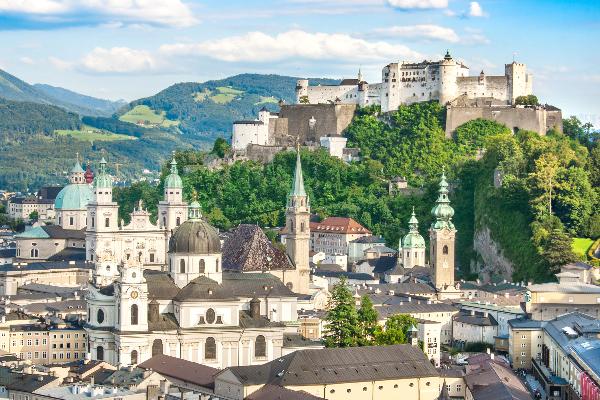
Crossing the border into Austria, you arrive in Salzburg, a UNESCO World Heritage Site. Nestled on the banks of the Salzach River and overlooked by a formidable fortress, it’s famously the birthplace of Wolfgang Amadeus Mozart and the setting for “The Sound of Music.”
Getting There & Away
From Munich: The train is highly recommended. It’s frequent, fast, and scenic. The main station is Salzburg Hauptbahnhof, located a short bus ride or a 20-minute walk from the Old Town.
To St. Wolfgang: Take bus 150 from Salzburg Hauptbahnhof to St. Gilgen (approx. 50 minutes). From St. Gilgen, you can take a scenic boat across Lake Wolfgangsee to St. Wolfgang. Alternatively, bus 150 continues around the lake.
Accommodation
Altstadt (Old Town): The most picturesque area, with historic hotels and guesthouses. It’s pedestrianized and close to all major sights.
Across the Salzach River (Neustadt): Offers great views of the Old Town and fortress, often at slightly lower prices.
Near the Train Station: A practical option with good public transport links to the center.
Sights & Activities
Hohensalzburg Fortress
One of the largest preserved medieval castles in Europe. You can walk up or take the funicular for panoramic views of the city and Alps. The state rooms and marionette museum are highlights.
Mozart’s Birthplace (Mozarts Geburtshaus)
Located on Getreidegasse, this bright yellow building is where the composer was born in 1756. It now houses a museum displaying his childhood violin and other artifacts.
Mirabell Palace and Gardens
A beautiful Baroque palace built by Prince-Archbishop Wolf Dietrich for his beloved Salome Alt. The gardens, with their dwarf statues and fountains, are famous from “The Sound of Music.”
Getreidegasse
The city’s most famous shopping street, characterized by its ornate wrought-iron shop signs and narrow passageways leading to hidden courtyards.
“The Sound of Music” Tour
Various operators run bus tours to film locations around the city, including the Mirabell Gardens (Do-Re-Mi steps), Leopoldskron Palace, and the gazebo at Hellbrunn Palace.
Hellbrunn Palace & Trick Fountains
A Renaissance villa known for its whimsical trick fountains, designed to surprise and soak unsuspecting guests. A fun activity for all ages.
Food & Drink
Mozartkugel: A famous chocolate confection made of marzipan, nougat, and dark chocolate. The original is from the Konditorei Fürst.
Salzburger Nockerl:A sweet soufflé dessert meant to resemble the city’s surrounding mountains.
Bosna:A spicy sausage in a roll, a popular street food.
Austrian Coffee:Enjoy a Melange (similar to a cappuccino) in a traditional Kaffeehaus.
Part 3: St. Wolfgang
A picture-perfect village on the shores of Lake Wolfgangsee in Austria’s Salzkammergut region. It’s a haven of tranquility, famous for its white church, charming houses, and the historic Schafbergbahn cog railway.
Getting There & Away
The Scenic Route from Salzburg:
Bus: Take bus 150 from Salzburg Hauptbahnhof to St. Gilgen.
Boat: From St. Gilgen, board one of the classic ferries operated by Wolfgangsee Schifffahrt for a stunning 30-minute cruise to St. Wolfgang.
The Direct Route: Bus 150 also goes directly from Salzburg to St. Wolfgang (without the boat transfer), taking about 1 hour and 15 minutes.
Accommodation
St. Wolfgang is small, so booking in advance is essential. Options range from luxurious historic hotels like the iconic Weißes Rössl (White Horse Inn) to family-run guesthouses (Gasthöfe) and private holiday apartments.
Sights & Activities
The Schafbergbahn Cog Railway
A highlight of any visit. This historic steam and cog railway has been climbing the 1,783-meter (5,850 ft) Schafberg mountain since 1893. The 35-minute journey offers breathtaking views of Lake Wolfgangsee and the surrounding Alps. At the summit, you can enjoy panoramic views stretching as far as Germany on a clear day.
Pilgrimage Church of St. Wolfgang
The village’s centerpiece, a late-Gothic church with a famous winged altar carved by Michael Pacher in the 15th century.
Lakeside Activities
Stroll along the lake promenade, go for a swim at one of the designated bathing areas, or rent a paddleboat or electric boat to explore the calm waters.
Hiking
The area is crisscrossed with well-marked hiking trails for all fitness levels, from gentle lakeside walks to more challenging mountain hikes.
Food & Drink
The lakeside restaurants offer fresh fish from the lake, particularly trout and char. As in all of Austria, you’ll find excellent Austrian classics like Wiener Schnitzel and Kaiserschmarrn (shredded pancake). Enjoy a coffee and cake at a lakeside cafe.
Practical Travel Information
Transportation Summary
Between Cities: Train is highly recommended for Munich-Salzburg. For Salzburg-St. Wolfgang, bus and boat are best.
Tickets: For regional travel in Bavaria, consider a Bayern-Ticket (Bavaria Ticket) for unlimited travel on regional trains and buses for one day at a low group rate. For Austria, similar offers like the Einfach-Raus-Ticket exist.
Driving: You will need a Vignette (toll sticker) to use Austrian motorways. These can be purchased at border gas stations.
Money
Germany: Euro (€)
Austria: Euro (€)
- Credit cards are widely accepted in cities but it’s always wise to carry some cash, especially in smaller villages like St. Wolfgang and for smaller establishments.
Language
Germany (Munich): German. English is widely spoken in tourist areas.
Austria (Salzburg & St. Wolfgang): German (with an Austrian dialect). English is also common in tourism.
- Learning a few basic phrases like “Guten Tag” (Hello), “Danke” (Thank you), and “Bitte” (Please/You’re welcome) is appreciated.
Best Time to Visit
Late Spring (May-June) & Early Autumn (September-October): Ideal weather, fewer crowds, beautiful landscapes.
Summer (July-August): Warmest weather, perfect for lakeside activities; also the busiest and most expensive season.
Winter (December): Magical Christmas markets in Munich and Salzburg. St. Wolfgang is quiet but charming under snow; check if the Schafbergbahn is running.
Souvenir Ideas
From Munich: Beer stein, Bavarian mustard (Händlmaier’s), or traditional clothing (Dirndl/Lederhosen).
From Salzburg: Mozartkugeln chocolates, Christmas ornaments (if visiting in December), or music-related items.
From St. Wolfgang: Local crafts, wood carvings, or a bottle of locally distilled schnapps.