A Comprehensive Travel Guide: Vienna and Bratislava Twin-City Adventure
This guide details a seamless and enriching journey through two European capitals, Vienna and Bratislava, highlighting their unique charms and the incredible ease with which they can be combined into a single trip. The proximity of these cities—less than 80 kilometers apart—offers a rare opportunity to experience the grand imperial heritage of Austria and the emerging, dynamic spirit of Slovakia within a short timeframe.
Introduction: Two Capitals, One Journey
The Vienna-Bratislava-Vienna itinerary is perfect for travelers seeking cultural diversity. Vienna, the opulent heart of the former Austro-Hungarian Empire, dazzles with its Baroque architecture, world-class museums, and coffee house culture. In stark contrast, Bratislava presents a more intimate and recent history, with a charming, compact old town, a hilltop castle, and a lively, modern vibe. Traveling between them is a highlight in itself, with scenic boat rides and quick train journeys along the Danube.
Chapter 1: Vienna – The Imperial Capital
Vienna is a city that lives and breathes history, art, and music. From the palaces of the Habsburgs to the sound of classical masterpieces, it offers an unparalleled cultural immersion.
Top Attractions in Vienna
Schönbrunn Palace: The former summer residence of the Habsburg monarchs. Visitors can explore the lavish state rooms, the vast gardens, the Gloriette monument, and the world’s oldest zoo, Tiergarten Schönbrunn.
St. Stephen’s Cathedral (Stephansdom): The Gothic centerpiece of Vienna. Climbing the 343 steps of the South Tower rewards visitors with a breathtaking view over the city’s rooftops.
Belvedere Palace: A magnificent Baroque complex comprising the Upper and Lower Belvedere. It houses an impressive art collection, including Gustav Klimt’s iconic painting, “The Kiss.”
Hofburg Palace: The former principal imperial palace of the Habsburg dynasty. Today, it encompasses the Sisi Museum, the Imperial Apartments, the Spanish Riding School, and the Austrian National Library.
Vienna State Opera (Wiener Staatsoper): One of the leading opera houses in the world. Attending a performance is a quintessential Viennese experience, but guided tours are also available during the day.
Kunsthistorisches Museum: The Museum of Art History boasts an immense collection formed by the Habsburgs, featuring works by Old Masters such as Rembrandt, Vermeer, and Bruegel.
Viennese Cuisine: What and Where to Eat
Viennese cuisine is hearty and comforting. Must-try dishes include
Wiener Schnitzel (a thin, breaded, and fried veal cutlet), Tafelspitz (boiled beef in broth), and Sachertorte (a dense chocolate cake with apricot jam). For a sweet treat, visit a Würstelstand (sausage stand) for a Käsekrainer (cheese-filled sausage).
Café Central: A historic coffee house where figures like Trotsky and Freud once lingered. Perfect for coffee and pastry.
Figlmüller: Famous for its enormous, perfectly prepared Wiener Schnitzel.
Naschmarkt: A vibrant outdoor market with numerous stalls selling food from around the world, ideal for a casual lunch.
Getting Around Vienna
Vienna has an excellent public transportation system (Wiener Linien) consisting of U-Bahn (subway), trams, and buses. A single ticket is valid for one journey with transfers. For tourists, the
Vienna City Card offers unlimited travel and discounts at many attractions. The city center (Innere Stadt) is also very walkable.
Accommodation Tips for Vienna
Staying in or around the 1st district (Innere Stadt) provides easy access to major sights but can be expensive. The districts just outside the ring road (e.g., Mariahilf, Neubau, Josefstadt) offer more affordable options with excellent public transport links. For a classic experience, consider a stay at a historic hotel like the Hotel Sacher.
Chapter 2: Bratislava – The Charming Capital on the Danube
Bratislava offers a more relaxed pace than Vienna. Its small old town is perfect for wandering, discovering quirky sculptures, and enjoying views from its iconic castle.
Top Attractions in Bratislava
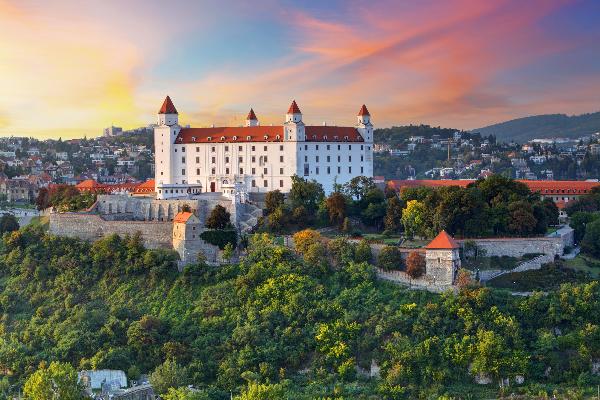
Bratislava Castle: Dominating the city skyline, the reconstructed castle offers panoramic views of the city, Austria, and Hungary. The castle grounds and historical museum inside are well worth exploring.
Old Town (Staré Mesto): A picturesque area of cobblestone streets, pastel-colored buildings, and lively squares like Hlavné Námestie (Main Square) and Hviezdoslavovo Námestie.
St. Martin’s Cathedral: A Gothic cathedral that served as the coronation church for Hungarian kings and queens for nearly 300 years.
UFO Observation Deck: Located on the SNP Bridge, this platform offers a stunning 360-degree view of the city. The restaurant below is a unique dining experience.
Michael’s Gate (Michalská brána): The only preserved gate of the city’s medieval fortifications. Climb the tower for a view of the old town and visit the Museum of Arms inside.
The Blue Church (Kostol svätej Alžbety): A stunning example of Hungarian Art Nouveau architecture, painted in pale blue and white.
Slovak Cuisine: What and Where to Eat
Slovak food is hearty and robust. Key dishes include
Bryndzové Halušky (potato dumplings with sheep cheese and bacon), Kapustnica (a sour cabbage soup with sausage), and Vyprážaný syr (fried cheese). To drink, try Kofola, a local herbal cola, or Slovak beer and wine.
Flagship Restaurant: A popular spot for traditional Slovak dishes in a modern setting.
Bratislavský Meštiansky Pivovar: A brewpub in the old town serving traditional food and its own craft beer.
Urban House: A trendy spot for coffee, breakfast, or lunch, popular with locals and tourists alike.
Getting Around Bratislava
The historic center is compact and easily explored on foot. For attractions further out, such as the Slavín monument or Devín Castle, the city’s efficient network of trams and buses is convenient. Tickets can be purchased from kiosks or vending machines.
Accommodation Tips for Bratislava
The best area to stay is the Old Town (Staré Mesto) to be within walking distance of all major sights. For quieter and often cheaper options, look just outside the old town center. Bratislava generally offers better value for money than Vienna.
Chapter 3: The Journey Between Vienna and Bratislava
The connection between these two capitals is remarkably straightforward, with several options to suit different preferences and budgets.
By Train
The train is often the fastest and most convenient option. Direct trains run frequently from Wien Hauptbahnhof (Vienna’s main station) to Bratislava Hlavná Stanica (the main station, about a 15-20 minute walk from the old town) or to Bratislava-Petržalka station (closer to the old town). The journey takes approximately 60 minutes.
By Boat
For a scenic and relaxing journey, take a boat or catamaran along the Danube River. Companies like Twin City Liner offer services that dock in the center of both cities (in Vienna near Schwedenplatz and in Bratislava near the Old Town). The trip takes about 75-90 minutes and provides beautiful riverside views. It is highly recommended in good weather.
By Bus
The bus is typically the most economical option. Several companies, including FlixBus and RegioJet, operate regular services from Vienna Erdberg bus station (VIB) or the airport directly to Bratislava’s main bus station (Mlynské Nivy) or the city center. The travel time is around one hour.
Chapter 4: Practical Information and Cultural Insights
Best Time to Visit
The ideal times for this trip are during the shoulder seasons of
spring (April-May) and autumn (September-October), when the weather is pleasant and crowds are smaller. December is magical for the Christmas markets in both cities, though it can be very cold and crowded. Summer can be hot and busy.
<3>Shopping and Souvenirs
Vienna: Look for traditional Austrian items like Mozartkugeln (Mozart balls), Augarten porcelain, or products from the Demel confectionery. Mariahilfer Strasse is the main shopping street.
Bratislava: Typical souvenirs include handmade wooden items, cornhusk dolls, Slovak ceramics, and bottles of Borovička (a juniper brandy) or Tatratea. The old town streets are filled with unique shops.
A Sample 4-Day Itinerary
Day 1: Imperial Vienna. Explore the Ringstrasse by tram, visit St. Stephen’s Cathedral, and spend the afternoon at Hofburg Palace. In the evening, enjoy a classical concert.
Day 2: Palaces and Art. Morning at Schönbrunn Palace. Afternoon at either Belvedere Palace or the Kunsthistorisches Museum. Evening coffee at a traditional Viennese café.
Day 3: Discover Bratislava. Take an early train or boat to Bratislava. Walk up to Bratislava Castle for views, then explore the Old Town, finding the quirky statues like Čumil (the Watcher). Enjoy a traditional Slovak dinner.
Day 4: Bratislava Depths and Heights. Visit Devín Castle ruins (by bus) or St. Martin’s Cathedral. Have lunch before returning to Vienna by your preferred method for your departure.
Conclusion
The Vienna-Bratislava-Vienna circuit is a testament to Europe’s diverse yet interconnected heritage. It allows travelers to witness the grandeur of a historic empire and the resilient charm of a nation reborn, all within a short distance. This journey is not just about checking two capitals off a list; it’s about experiencing the subtle and striking contrasts that make European travel so endlessly fascinating.