A Travel Guide to the Salzburg and Hallstatt Loop
Embarking on a journey from Salzburg to the UNESCO World Heritage village of Hallstatt and back is one of Austria’s most rewarding travel experiences. This route takes you from a city of sublime Baroque architecture and musical history, through the breathtaking landscapes of the Salzkammergut lake district, to a picture-perfect village seemingly suspended between mountain and water. This guide provides a comprehensive, objective overview to help you plan this iconic Austrian adventure.
Part 1: Salzburg – The Baroque City of Sound
Salzburg, the birthplace of Wolfgang Amadeus Mozart, is a city where history, music, and Alpine scenery converge. Its impeccably preserved Altstadt (Old Town), nestled along the banks of the Salzach River, is a UNESCO World Heritage site brimming with architectural marvels.
Key Attractions in Salzburg
Hohensalzburg Fortress (Festung Hohensalzburg): Dominating the city skyline, this is one of the largest and best-preserved medieval castles in Europe. You can reach it via a steep climb or the modern Festungsbahn funicular. The views from the ramparts over the city and the Alps are unparalleled. Inside, you’ll find state rooms, a marionette museum, and the eerie Romanesque Burgmusuem.
Salzburg Altstadt (Old Town): Get lost in the labyrinth of narrow, winding streets. Key squares include the Residenzplatz, with its grand fountain, and the Domplatz, home to the magnificent Salzburg Cathedral. Getreidegasse is the famous shopping street, known for its ornate wrought-iron guild signs.
Mozart’s Birthplace (Mozarts Geburtshaus): Located on Getreidegasse, this bright yellow building is where the composer was born in 1756. It has been converted into a museum displaying family portraits, original instruments (including his childhood violin), and historical documents.
Mirabell Palace and Gardens (Schloss Mirabell): On the opposite side of the river from the Old Town, these lavish gardens, laid out in geometric patterns with mythological statues and fountains, are a delight. The Dwarf Garden and the steps featured in The Sound of Music are particularly famous.
Hellbrunn Palace (Schloss Hellbrunn): A short bus ride from the center, this early Baroque villa is renowned for its Wasserspiele (Trick Fountains). The archbishops built these playful fountains to entertain and surprise their guests—be prepared to get slightly wet! The grounds also include the Sound of Music pavilion and a large zoo.
Salzburg’s Culinary Scene
Salzburg offers a blend of hearty Austrian classics and refined pastries.
Traditional Restaurants: Seek out a Gasthaus for authentic local fare. Must-try dishes include Wiener Schnitzel (veal breaded and fried), Kasnocken (cheesy dumplings), and Salzburger Nockerl, a sweet, soufflé-like dessert meant to resemble the surrounding mountains.
Café Culture: Salzburg’s coffee houses are institutions. Spend an afternoon at classics like Café Tomaselli or Café Bazar, enjoying a Melange (coffee with milk) and a slice of Mozartkugel (a marzipan, nougat, and chocolate confection).
Stiegl Brewery: Beer enthusiasts can tour Austria’s largest private brewery to learn about the brewing process and sample their renowned beers in the Brauwelt.
Markets: The Grünmarkt on Universitätsplatz is a vibrant green market perfect for grabbing a snack, fresh produce, or local specialties.
Transportation in Salzburg
The city center is very walkable. For longer distances, Salzburg has an efficient bus network. Consider purchasing the
Salzburg Card, which provides free entry to all major attractions and unlimited use of public transportation for 24, 48, or 72 hours.
Part 2: The Journey from Salzburg to Hallstatt
The trip to Hallstatt is a scenic adventure in itself, traversing the heart of the Salzkammergut. The journey typically takes between 2.5 to 3.5 hours one-way.
Transportation Options
By Train and Boat (The Classic Route):
- Take a regional train (ÖBB or Westbahn) from Salzburg Hauptbahnhof to Attnang-Puchheim.
- Change to a local train heading to Bad Ischl Obertraun, disembarking at Hallstatt station.
- The station is on the opposite side of the lake from the village. A small ferry (
Fähre) meets almost every arriving train and provides a stunning 10-minute crossing to Hallstatt Markt (the main village). The ferry schedule is synchronized with the train timetable.
Travel Tip: Sit on the right-hand side of the train from Salzburg to Attnang-Puchheim for the best views. The entire journey is covered by standard train tickets.
By Bus:
- Take Bus 150 from Salzburg Hauptbahnhof to Bad Ischl (approx. 1.5 hours).
- In Bad Ischl, change to Bus 542/543 heading to Hallstatt Gosaumühle.
- At Gosaumühle, change again to Bus 543 which will take you directly into Hallstatt.
Travel Tip: The bus route offers spectacular views of several lakes, including the Fuschlsee and Wolfgangsee. Check timetables carefully as services can be infrequent, especially on weekends and in the off-season.
By Car:
Driving offers maximum flexibility. The route via the A1 motorway is straightforward. However, be aware that Hallstatt has extremely limited parking. The main P1 and P2 parking lots are at the entrance to the village and fill up quickly, especially by mid-morning. Parking fees are high. It is often better to park in nearby Obertraun and take the ferry or bus across.
Part 3: Hallstatt – The Pearl of the Salzkammergut
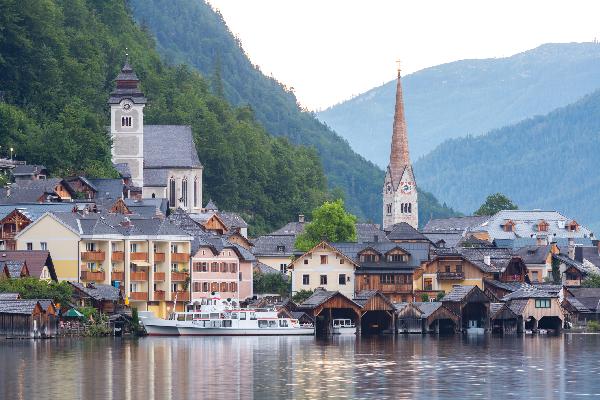
Hallstatt’s beauty is undeniable. Clinging to the shores of the Hallstätter See, with the Dachstein mountains rising precipitously behind it, the village is a masterpiece of nature and human settlement. Its history is deeply tied to salt mining, dating back over 7,000 years.
Key Attractions in Hallstatt
Hallstatt Markt (Market Square): The charming central square is lined with 16th-century houses, small shops, and guesthouses. The Evangelical Parish Church and the Catholic Church stand as sentinels on either side of the village.
Salzwelten (Salt Mine): Accessible via the Salzbergbahn funicular, this is one of the oldest salt mines in the world. The tour includes sliding down two miner’s slides, crossing an underground salt lake, and learning about the “Man in Salt,” a preserved body of a prehistoric miner. The views from the top of the funicular over the lake are worth the trip alone.
Skywalk “Welterbeblick”: Located at the top station of the salt mine funicular, this viewing platform juts out 350 meters above the rooftops of Hallstatt, offering a dizzying and spectacular panoramic view.
Bone House (Beinhaus): Located in the chapel of St. Michael next to the Catholic Church, this small charnel house contains over 600 painted skulls. Due to limited burial space, bones were exhumed after 10-20 years to make room for new burials. The skulls were then artistically decorated with inscriptions and symbols and stored here as a memorial.
Lakeside Promenade: A simple walk along the lakefront from one end of the village to the other is one of the most pleasant activities. You’ll pass colorful houses, boathouses, and swans gliding on the emerald-green water.
Dining in Hallstatt
The food scene revolves around fresh lake fish and traditional Austrian cuisine.
Lake Fish: Don’t leave without trying Forelle (trout) or Reinanke (char), often served grilled or pan-fried. Many restaurants have terraces overlooking the lake.
Gasthofs: Family-run inns like Gasthof Zauner have a long history and serve hearty classics like goulash and dumplings.
Cafés: Enjoy a coffee and cake at a lakeside café while watching the boats go by.
Practical Tip: Hallstatt can get incredibly crowded during the day. For a more peaceful meal, consider having a late lunch after 2 PM or dining in the evening if you are staying overnight. Reservations are highly recommended for dinner.
The Return Journey to Salzburg
The return trip follows the same route in reverse. Be sure to check the last ferry departure from Hallstatt Markt to the train station, as it typically stops running in the early evening. If you miss it, a taxi boat or a long walk around the lake via a footpath are your only options.
Crucial Travel Tips and Local Insights
Crowd Management
Avoid Day-Trip Peak Hours: Hallstatt is inundated with tour buses between 10 AM and 4 PM. To experience the village at its most magical, either stay overnight or plan to arrive very early in the morning or later in the afternoon.
Overnight Stay: Staying overnight in Hallstatt allows you to experience the village after the day-trippers have left and before they arrive. It is a completely different, serene atmosphere. Book accommodations months in advance.
Consider Shoulder Season: Visit in late spring (May/June) or early autumn (September/October) to avoid the peak summer crowds. Winter can also be beautiful but check for closures.
Ticketing and Passes
Austrian Federal Railways (ÖBB): Book train tickets in advance online via the ÖBB app or website for potential savings (Sparschiene tickets).
The Salzkammergut Card: If you are spending multiple days in the region, this card can offer discounts on attractions like the Salt Mine, boat trips, and other activities across various lakes.
Cultural Etiquette
“Grüß Gott”: The standard greeting in Austria. A simple smile and nod go a long way.
Quiet Hours: Be mindful of noise, especially if staying overnight in a guesthouse or apartment. Quiet hours (typically from 10 PM to 6 AM) are generally respected.
Sustainability: Hallstatt is a fragile ecosystem. Respect the environment by staying on paths, not feeding wildlife, and disposing of trash properly.
A Sample One-Day Itinerary (Day Trip)
7:00 AM – 8:00 AM: Take an early train from Salzburg to Hallstatt.
10:00 AM: Arrive at Hallstatt station, take the ferry across the lake.
10:15 AM – 12:30 PM: Explore the Marktplatz, see the Bone House, and walk along the lakeside promenade.
12:30 PM – 1:30 PM: Enjoy a relaxed lunch at a lakeside restaurant.
1:30 PM – 4:00 PM: Take the funicular up to the Salt Mine and Skywalk. Complete the salt mine tour.
4:15 PM: Take the ferry back to the station.
4:30 PM: Board the train back to Salzburg.
7:00 PM: Arrive back in Salzburg for a well-deserved dinner.
A journey from Salzburg to Hallstatt is more than just checking two destinations off a list; it is an immersion into Austria’s profound cultural history and its most dramatic natural landscapes. With careful planning and an appreciation for both its grand sights and quiet moments, this loop will leave you with lasting memories.