The Ultimate Travel Guide to Salzburg, Austria
Nestled amidst the stunning Eastern Alps and straddling the Salzach River, Salzburg is a city of breathtaking baroque architecture, melodious history, and captivating cultural heritage. Often dubbed the “Stage of the World,” its fame is twofold: as the birthplace of the legendary composer Wolfgang Amadeus Mozart and as the primary filming location for the beloved movie *The Sound of Music*. Beyond these well-known attractions, Salzburg offers a rich tapestry of history, from its origins as a Roman settlement to its centuries of rule by powerful prince-archbishops. This comprehensive guide provides practical information and local insights to help travelers discover the many facets of this enchanting Austrian city.
An Introduction to Salzburg
Salzburg, whose name means “Salt Fortress,” owes its historical wealth to the lucrative salt trade that flowed along the river. For centuries, it was an independent ecclesiastical state ruled by prince-archbishops, whose grandiose building projects shaped the city’s iconic baroque appearance. The entire Altstadt (Old Town) is a UNESCO World Heritage Site, a labyrinth of narrow cobblestone streets, hidden courtyards, and majestic squares dominated by the formidable Hohensalzburg Fortress. The city is geographically and culturally divided by the Salzach River, with the left bank hosting the compact Old Town and the right bank (Neustadt or New Town) offering a more modern, yet still historic, urban experience.
Top Attractions and Must-See Sights
Hohensalzburg Fortress (Festung Hohensalzburg)
Perched high atop the Festungsberg mountain, this immense fortress is one of the largest and best-preserved medieval castles in Europe. Construction began in 1077 and it was continually expanded over the centuries. A visit here offers a deep dive into medieval life and princely power.
Highlights: The panoramic views of the city and Alps are unparalleled. Inside, visitors can explore the State Rooms with their ornate golden stucco, the medieval Princely Chambers, and the Fortress Museum showcasing its history. The Marionette Museum is a unique addition.
Practical Tip: The steep climb on foot is rewarding, but the Festungsbahn funicular railway provides a convenient alternative. A combined ticket for the funicular and entrance is available. The “Fortress Concerts” held in the evenings are a magical experience.
Salzburg Altstadt (Old Town)
The historic heart of Salzburg is a pedestrian-friendly zone brimming with architectural gems. A simple stroll through its streets is an attraction in itself.
Getreidegasse: This famous shopping street is known for its elegant wrought-iron guild signs hanging above high-end boutiques and traditional shops. Don’t forget to look into the narrow passageways that lead to hidden courtyards.
Mozart’s Birthplace (Mozarts Geburtshaus): Located at Getreidegasse 9, this bright yellow building is where Wolfgang Amadeus Mozart was born in 1756. It now serves as a museum displaying family portraits, original instruments (including his childhood violin), and historical documents.
Mozart’s Residence (Mozart-Wohnhaus): Across the river on Makartplatz, this larger residence is where the Mozart family lived from 1773. It was heavily damaged in WWII but reconstructed and now houses an extensive multimedia exhibition on the composer’s life.
Salzburg Cathedral (Salzburger Dom)
This magnificent 17th-century baroque cathedral is the ecclesiastical center of the city. Its imposing façade and massive dome are iconic features of the skyline. The interior is breathtaking, with elaborate frescoes, a grand organ, and the baptismal font where both Mozart and the composer Michael Haydn were baptized.
Mirabell Palace and Gardens (Schloss Mirabell)
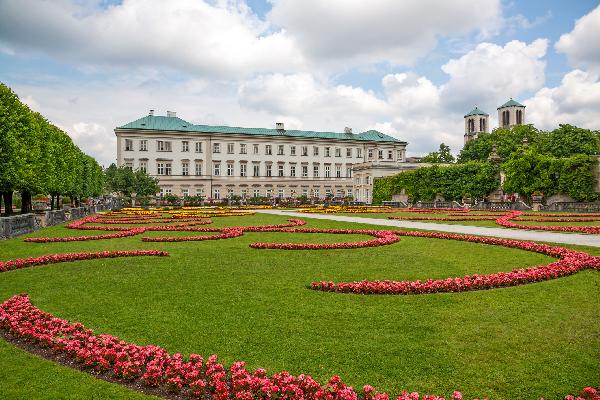
Built in 1606 by Prince-Archbishop Wolf Dietrich for his beloved Salome Alt, this palace and its gardens are a masterpiece of baroque landscape design. The gardens are free to enter and are a highlight for *Sound of Music* fans.
Highlights: The Pegasus Fountain, Dwarf Garden, and the grand steps leading up to the Rose Hill were all featured in the “Do-Re-Mi” sequence. The Marble Hall inside the palace is considered one of the “most beautiful wedding halls in the world” and hosts regular concerts.
Hellbrunn Palace & Trick Fountains (Schloss Hellbrunn)
Located just south of the city center, this early Baroque villa was built as a summer day residence for the prince-archbishops. It is most famous for its Wasserspiele (Trick Fountains).
The Trick Fountains: A guided tour takes visitors through a series of grottos, water-powered figures, and hidden fountains designed to surprise and drench unsuspecting guests—a form of 17th-century entertainment. It’s a particularly fun activity for families.
Other Features: The expansive park includes the Sound of Music Pavilion (where “16 Going on 17” was filmed), a zoo (Salzburg Zoo), and peaceful walking paths.
St. Peter’s Abbey (Stift Sankt Peter)
This Benedictine monastery is one of the oldest in the German-speaking world, founded in 696 AD. The abbey church is a rococo gem, and the adjacent cemetery (Petersfriedhof) is one of the most beautiful in the world, with ornate iron grave markers and catacombs carved into the Mönchsberg rock face.
Culinary Delights: Food and Drink
Salzburg’s cuisine is a hearty blend of Austrian classics and Bavarian influences, perfect for refueling after a day of exploration.
Traditional Dishes to Try
Salzburger Nockerl: The city’s most famous dessert. This sweet soufflé is meant to resemble the three surrounding mountains (Mönchsberg, Kapuzinerberg, and Rainberg) and is incredibly fluffy, served hot with a dusting of powdered sugar.
Wiener Schnitzel: A thin, breaded, and pan-fried veal cutlet. It is typically served with a potato salad or parsley potatoes and a slice of lemon.
Kasnocken: A hearty Alpine dish of soft egg dumplings (spätzle) baked with melted cheese and topped with crispy fried onions. It’s the ultimate comfort food.
Brettljause: A traditional Austrian charcuterie board featuring an assortment of cured meats, cheeses, spreads, pickles, and fresh bread, often enjoyed with a glass of beer or wine.
Mozartkugel (Mozart Ball): The iconic silver-and-blue foil-wrapped chocolate candy, invented by Salzburg confectioner Paul Fürst in 1890. It consists of a marzipan center surrounded by nougat and dark chocolate.
Recommended Dining Experiences
Stieglkeller: A large beer garden perched on the Festungsberg with fantastic views of the Old Town. Perfect for enjoying a Stiegl beer and traditional fare in a lively atmosphere.
Augustiner Bräustübl: Located in the Mülln district, this is a unique experience. It’s a massive monastery brewery where you buy a stoneware mug, rinse it yourself, and have it filled with freshly tapped beer from wooden barrels. Patrons bring their own food or buy from the various food stalls inside.
Bärenwirt: A cozy, traditional inn dating back to 1663, serving authentic Salzburg specialties in a rustic setting on the right bank of the river.
Café Tomaselli: Salzburg’s oldest café, established in 1705. This is where to go for a classic Viennese coffee house experience. Enjoy a melange (coffee with milk) and a slice of cake while soaking in the historic ambiance.
Getting Around Salzburg
Arriving in Salzburg
By Air: Salzburg Airport W. A. Mozart (SZG) is located about 20 minutes from the city center. Bus line 2 provides a direct and frequent connection to the main train station (Hauptbahnhof).
By Train: Salzburg Hauptbahnhof is a major rail hub with excellent connections to Vienna (approx. 2.5 hours), Munich (approx. 1.5 hours), and other European cities. The station is on the city’s outskirts but is well-connected by local buses.
By Car: While driving gives flexibility for day trips, having a car in the city center is more of a hindrance than a help due to limited and expensive parking and pedestrian zones.
Public Transportation Within the City
Salzburg has an efficient and comprehensive network of buses operated by SVV. The system is easy to navigate, with all lines converging at the Hauptbahnhof and Mirabellplatz.
Tickets: Tickets can be purchased from machines at major bus stops, tobacconists (Trafik), or directly from the bus driver (exact change is appreciated). Consider a 24-hour, 48-hour, or weekly ticket if you plan on multiple journeys.
The Salzburg Card: This tourist card is highly recommended. It offers free single-time entry to all major attractions, free use of public transportation (including the fortress funicular and Hellbrunn shuttle bus), and various discounts for a set period (24, 48, or 72 hours).
On Foot and By Bike
The Old Town is best explored on foot as it is almost entirely pedestrianized. For longer distances or exploring the river paths, renting a bike is an excellent option. Salzburg has a public bike-sharing system called “Nextbike” with numerous stations throughout the city.
Accommodation Tips: Where to Stay
Altstadt (Old Town)
Pros: Immersive historical atmosphere, walking distance to most major sights, charming boutique hotels.
Cons: The most expensive area, can be noisy in the evenings.
Ideal for: First-time visitors, luxury travelers, and those who want to be in the heart of the action.
Neustadt (Right Bank across the River)
Pros: Generally more affordable than the Old Town, excellent views of the fortress and Old Town skyline, still within easy walking distance.
Cons:Slightly less “fairytale” atmosphere.
Ideal for: Travelers seeking good value with convenient access to sights.
Around the Hauptbahnhof (Train Station)
Pros: Budget-friendly options, excellent public transport links to the entire city and beyond.
Cons:The area is more functional and lacks historic charm.
Ideal for: Budget travelers, backpackers, and those with early departures by train or bus.
Cultural Insights and Local Etiquette
The Sound of Music Legacy
The film’s popularity is immense with international tourists but less so with locals. While Austrians are aware of it, it does not hold the same cultural significance for them. Numerous specialized tours cater to fans, visiting filming locations like Leopoldskron Palace (the back of the von Trapp house), Hellbrunn Palace (the pavilion), and Mondsee Abbey (where the wedding was filmed).
The Music Scene Beyond Mozart
While Mozart is omnipresent, Salzburg’s musical life is vibrant year-round. The world-renowned Salzburg Festival (Salzburger Festspiele) every summer attracts top-tier opera, concert, and theater performances. The Mozart Week in January celebrates the composer’s birthday. Smaller concerts are held daily in historic venues like the Mirabell Palace and the Fortress.
Austrian Greetings and Manners
- A formal greeting is “Guten Tag” (Good day). In more informal settings like shops and restaurants, “Grüß Gott” (God’s greeting) is very common in Southern Germany and Austria.
- It is customary to say “Mahlzeit” (mealtime) as a greeting to other diners when entering a crowded restaurant at lunchtime.
- Tipping is expected. A common practice is to round up the bill or leave 5-10% of the total. Tell the server the total amount you wish to pay (e.g., if the bill is €18, hand them a €20 note and say “Zwanzig, bitte” meaning “Twenty, please”).
Practical Information
Best Time to Visit
Spring (April-June) & Autumn (September-October): Ideal times with mild weather, fewer crowds, and beautiful scenery (blossoms in spring, foliage in autumn).
Summer (July-August): Peak tourist season. The weather is warmest and all attractions are open, but it can be very crowded. This is also when the Salzburg Festival takes place.
Winter (November-March):The city transforms into a magical Christmas market destination in December. January and February are cold and quiet outside of Mozart Week.
Money Matters
Austria uses the Euro (€). Credit cards are widely accepted in hotels and restaurants, but it is always wise to carry some cash, especially for smaller cafes, markets, and bus tickets.
Language
The official language is German. However, due to its status as a major tourist destination, English is widely spoken in hotels, restaurants, and shops related to tourism. Learning a few basic German phrases like “Danke” (Thank you) and “Bitte” (Please/You’re welcome) is always appreciated.
Day Trips from Salzburg
The city’s location makes it a perfect base for exploring the stunning Salzkammergut lake district.
Hallstatt: This UNESCO World Heritage village on Lake Hallstatt is famously picturesque. Accessible by train and boat via Attnang-Puchheim or by direct bus.
The Eagle’s Nest (Kehlsteinhaus): Hitler’s former mountain retreat near Berchtesgaden, Germany. Tours involve a special bus ride up a dramatic mountain road. Note: It’s only open from mid-May to October.
Werfen: Home to two spectacular attractions: Hohenwerfen Fortress (a sister fortress to Hohensalzburg) and Eisriesenwelt, the world’s largest accessible ice cave.
The Salzkammergut Lakes: Explore other beautiful lakes like Wolfgangsee and Mondsee for swimming, hiking, and boating in a pristine Alpine setting.