A Comprehensive Travel Guide: Lisbon, Sintra, Cabo da Roca, Cascais, and Boca do Inferno
This guide details a classic and enchanting circuit starting from Portugal’s vibrant capital, Lisbon, venturing into the fairytale landscapes of Sintra, standing at the edge of continental Europe at Cabo da Roca, and returning along the stunning coastline through Cascais and the dramatic Boca do Inferno. This journey encapsulates the rich history, breathtaking nature, and captivating culture of western Portugal.
Introduction to the Region
The Lisbon Metropolitan Area is a treasure trove of diverse experiences. Lisbon itself is a city of seven hills, echoing with the soulful sounds of Fado and decorated with iconic tiled façades. Just a short train ride away, Sintra feels like a page from a storybook, with its lush, misty forests hiding extravagant palaces and Moorish castles. The journey then leads to the wild Atlantic coast, where the westernmost point of mainland Europe, Cabo da Roca, offers raw, windswept cliffs. Following the coast eastwards, the elegant resort town of Cascais provides a contrast with its sandy beaches and marina, all while being guarded by the natural spectacle of the Boca do Inferno (Hell’s Mouth). This itinerary is perfectly suited for a 4 to 5-day exploration.
Chapter 1: Lisbon – The City of Seven Hills
Lisbon, Portugal’s capital, is a charismatic blend of traditional heritage and modern innovation. Its hilly landscape offers stunning viewpoints (miradouros) at every turn, while its historic neighborhoods, like Alfama and Bairro Alto, pulse with life.
Key Attractions in Lisbon
Belém Tower: A UNESCO World Heritage site, this fortified tower is an iconic example of Manueline architecture and a symbol of Portugal’s Age of Discoveries.
Jerónimos Monastery: Another UNESCO site located in Belém, this magnificent monastery is a masterpiece of the Manueline style, with intricately carved cloisters.
Alfama District: The oldest district in Lisbon, a maze of narrow streets, small squares, and hidden courtyards. It’s the heart of Fado music and home to the Lisbon Cathedral.
Castelo de São Jorge: Perched atop one of Lisbon’s highest hills, this Moorish castle offers panoramic views of the city and the Tagus River.
Praça do Comércio: A grand riverside square flanked by yellow Pombaline-style buildings, once the main entrance to the city.
Ride Tram 28: The famous yellow tram winds its way through the city’s most historic neighborhoods, providing a charming (if crowded) tour.
Food & Drink in Lisbon
Lisbon’s culinary scene is a delight. Don’t miss these local specialties:
Pastéis de Belém: The original and most famous custard tarts, a secret recipe since 1837. Best enjoyed warm with a sprinkle of cinnamon at the Antiga Confeitaria de Belém.
Bacalhau: Dried and salted codfish, prepared in hundreds of ways. Try Bacalhau à Brás (shredded cod with onions, potatoes, and eggs).
Sardinhas Assadas: Grilled sardines, a staple during summer festivals, especially the Festas de Lisboa in June.
Ginjinha: A sweet cherry liqueur, often served in a small chocolate cup. A shot at a tiny ginjinha bar is a must-do experience.
Bifana: A simple but delicious pork sandwich marinated in white wine and garlic, popular at local eateries.
Transportation in Lisbon
Lisbon is well-connected by public transport. The recommended option for tourists is the
Viva Viagem card, which can be loaded with pay-as-you-go credit for metros, buses, and trams. The city also has a network of funiculars and elevators to help navigate its hills. For traveling to Sintra and Cascais, the suburban train system (Comboios de Portugal) is efficient and affordable.
Accommodation Tips for Lisbon
For first-time visitors, central neighborhoods like
Baixa (downtown), Chiado (shopping and culture), and Avenida da Liberdade (luxury hotels) offer convenience. For a more authentic and bohemian vibe, consider Príncipe Real or Alfama, though note that Alfama’s cobbled streets can be challenging with luggage.
Chapter 2: Sintra – The Fairytale Escape
A 40-minute train ride from Lisbon’s Rossio station transports you to the magical world of Sintra. This UNESCO Cultural Landscape is characterized by its dense, green hills dotted with extravagant palaces and estates.
Key Attractions in Sintra
Pena National Palace: The crown jewel of Sintra, this 19th-century Romanticist palace sits atop a hill, boasting vibrant yellow and red colors and a mix of architectural styles. The surrounding park is vast and beautiful for walks.
Moorish Castle: The ruins of a 10th-century castle offering spectacular views over Sintra and the Pena Palace from its ancient walls.
Quinta da Regaleira: A mysterious estate featuring a romantic palace, lush gardens, hidden tunnels, and the iconic Initiation Well, a spiral underground tower linked to Templar rituals.
Monserrate Palace: A stunning palace with a blend of Gothic, Indian, and Moorish influences, set within breathtaking botanical gardens.
National Palace of Sintra: Located in the town center, this palace is distinguished by its two massive conical chimneys and features well-preserved interiors from the Moorish and Medieval periods.
Food & Drink in Sintra
Travesseiros: The local pastry specialty – light, flaky puff pastry filled with almond cream. The most famous are from Piriquita bakery.
Queijadas de Sintra: Small, sweet tarts made with cheese (requeijão), cinnamon, and sugar.
Regional Dishes: Sintra’s proximity to the coast means excellent seafood is available in the town’s many restaurants.
Transportation in Sintra
The historic center is walkable, but the main palaces are spread across the hills. The most efficient way to get around is via the
Scotturb bus circuit (434 for Pena Palace/Moorish Castle and 435 for Regaleira/Monserrate). Buying a hop-on-hop-off bus ticket is highly recommended. Taxis and tuk-tuks are also available but can be more expensive.
Accommodation Tips for Sintra
Staying overnight in Sintra allows for an early start before the day-tripping crowds arrive. There are charming guesthouses (pensões) and historic hotels within the town center. For a unique experience, consider staying in one of the converted manor houses or quintas on the outskirts.
Chapter 3: Cabo da Roca – The Edge of Europe
From Sintra, a bus (Scotturb 403) takes you westward to Cabo da Roca. This dramatic headland is the westernmost point of mainland Europe, a place of symbolic and natural significance where the land ends and the vast Atlantic Ocean begins.
The Experience at Cabo da Roca
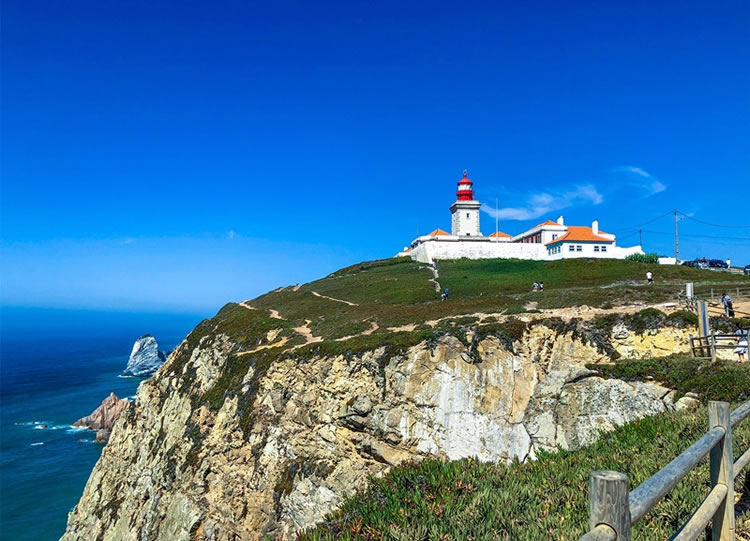
The landscape is raw and powerful. Visitors are met with towering cliffs plunging into the ocean, strong winds, and the relentless sound of crashing waves. A stone cross monument bears a plaque with the famous inscription by Portuguese poet Luís de Camões: “Aqui…onde a terra se acaba e o mar começa…” (“Here…where the land ends and the sea begins…”). There is a lighthouse, a tourist office where you can get a certificate commemorating your visit (for a small fee), and walking trails along the cliff tops. It’s essential to wear warm and windproof clothing, as the weather can be harsh and changeable.
Chapter 4: Cascais & Boca do Inferno – The Coastal Charm
The same Scotturb 403 bus continues from Cabo da Roca along a stunning coastal road to the elegant town of Cascais. Once a fishing village, it transformed into a glamorous resort for royalty and celebrities in the 20th century.
Key Attractions in Cascais
Cascais Historic Center: A delightful area to wander, with pedestrianized streets, shops, cafes, and the Citadel of Cascais.
Cascais Marina: A modern marina filled with yachts, surrounded by restaurants and bars.
Boca do Inferno (Hell’s Mouth): Located just a short walk or bus ride from the center, this cliff formation features a chasm where seawater violently crashes through, creating a spectacular and thunderous display, especially during high tide or rough seas.
Guincho Beach: A vast, windswept beach west of Cascais popular with surfers and kitesurfers.
Casa das Histórias Paula Rego: A museum dedicated to the work of renowned Portuguese-British artist Paula Rego.
Food & Drink in Cascais
Cascais is known for its excellent seafood restaurants. Dine on fresh grilled fish, seafood rice (arroz de marisco), or percebes (gooseneck barnacles). The town also has a vibrant ice cream and pastry scene.
Return to Lisbon from Cascais
The return to Lisbon is simple and scenic. The Cascais train line runs frequently along the coast, offering beautiful views of the sea and passing through upscale neighborhoods like Estoril. The journey takes about 40 minutes and terminates at Lisbon’s Cais do Sodré station, which is connected to the metro system.
Practical Itinerary Suggestions
Option 1 (Day Trip from Lisbon): This is ambitious but possible. Take an early train to Sintra, use the bus circuit to see Pena Palace and Quinta da Regaleira. In the afternoon, take bus 403 to Cabo da Roca, then continue to Cascais to see Boca do Inferno before catching the train back to Lisbon.
Option 2 (2-Day Relaxed Trip):
Day 1: Train to Sintra. Spend the day exploring its palaces. Overnight in Sintra.
Day 2: Morning bus to Cabo da Roca. Spend time there before continuing to Cascais for lunch and exploration. Return to Lisbon by train in the evening.
Cultural Insights & Travel Tips
Language: Portuguese is the official language. English is widely spoken in tourist areas, but learning a few basic phrases like “Olá” (Hello), “Obrigado/a” (Thank you), and “Por favor” (Please) is appreciated.
Tiles (Azulejos): Pay attention to the beautiful ceramic tiles adorning buildings across Portugal. They are not just decorative; they often tell historical or religious stories.
Fado Music: To experience authentic Fado, visit a “casa de fado” in Alfama or Mouraria in Lisbon. It’s a deeply emotional and traditional music genre.
Tipping: Tipping is not obligatory but is customary. In restaurants, rounding up the bill or leaving 5-10% for good service is standard.
Cork Products: Portugal is a leading producer of cork. You will find a wide array of cork products, from handbags to wallets, which make for unique souvenirs.
Comfortable Shoes: This itinerary involves a significant amount of walking, often on cobblestone streets and steep hills. Sturdy, comfortable footwear is non-negotiable.
Book Palaces in Advance: For popular sites like Pena Palace in Sintra, it is highly advisable to purchase tickets online in advance to avoid long queues.