A Comprehensive Travel Guide: Dublin, the Cliffs of Moher, the Wild Atlantic Way, and Galway
This guide details a classic Irish loop journey, starting and ending in the vibrant capital of Dublin, venturing down the spectacular Wild Atlantic Way to the iconic Cliffs of Moher, and immersing in the bohemian culture of Galway before returning. It is designed for travelers seeking a blend of urban energy, raw natural beauty, and authentic cultural experiences.
Introduction to the Irish Journey
This itinerary encapsulates the essence of a trip to Ireland’s west coast. It combines the historical depth and modern buzz of Dublin with the untamed Atlantic coastline, one of the world’s most dramatic coastal drives. The journey offers a taste of Ireland’s rich history, its literary and musical traditions, its world-renowned pub culture, and its breathtaking landscapes that range from rugged cliffs to serene lakes and rolling green hills. The route is typically undertaken over 5 to 7 days, allowing for a comfortable pace to absorb the sights and sounds.
Chapter 1: Dublin – The Vibrant Capital
Dublin, or
Baile Átha Cliath in Irish, is a city of contrasts where centuries-old history sits alongside a dynamic, modern European culture. As the starting point for most international travelers, it serves as a perfect introduction to Irish life.
Key Attractions in Dublin
Trinity College and the Book of Kells: Ireland’s oldest university is home to the magnificent Old Library and the Book of Kells, a stunningly illuminated manuscript dating back to the 9th century. The Long Room of the library is an awe-inspiring sight for any bibliophile.
Guinness Storehouse: A pilgrimage site for beer lovers. This seven-story experience dedicated to Ireland’s most famous stout culminates in the Gravity Bar with a complimentary pint and a 360-degree panoramic view of Dublin.
Dublin Castle: For over 700 years, this was the seat of British power in Ireland. The State Apartments and the medieval Undercroft offer a fascinating glimpse into the nation’s complex history.
Kilmainham Gaol: This former prison is a deeply moving monument to Ireland’s struggle for independence. Many leaders of the 1916 Easter Rising were imprisoned and executed here. Advance booking is essential.
Temple Bar: Famous for its cobbled streets and vibrant nightlife, this cultural quarter is packed with pubs, restaurants, and galleries. While touristy, it offers an undeniable energy and is a great place to hear traditional Irish music.
St. Stephen’s Green & Grafton Street: Escape the city bustle in this beautiful Victorian park. Adjacent to it is Grafton Street, Dublin’s premier shopping street, known for its buskers and high-end stores.
Dublin Food & Drink
Dublin’s food scene has evolved dramatically. Beyond the classic pub grub, you’ll find innovative cuisine.
Traditional Pub Food: Sample classics like Irish Stew, Shepherd’s Pie, or Fish and Chips in a historic pub like The Brazen Head (Dublin’s oldest) or The Stag’s Head.
Modern Irish Cuisine: Restaurants like Chapter One or The Winding Stair offer contemporary twists on local ingredients.
Must-Try Drinks: A pint of Guinness is a given. Also, try Irish whiskey; the Irish Whiskey Museum or a tour at the Jameson Distillery Bow St. are excellent introductions.
Transportation in Dublin
Dublin is a very walkable city for its core attractions. For longer distances, the
LUAS (tram system) and DART (commuter train) are efficient. The Leap Card is a reusable smart card that offers discounted fares on all public transport. Taxis and ride-sharing apps are also readily available.
Accommodation Tips for Dublin
Stay in central neighborhoods like City Centre South, Temple Bar (for nightlife), or the more tranquil St. Stephen’s Green area. It is advisable to book well in advance, especially during peak season (June-August). Options range from luxury hotels like The Shelbourne to charming guesthouses and hostels.
Chapter 2: The Journey West & The Cliffs of Moher
The journey from Dublin to the Cliffs of Moher marks a transition from urban landscape to the wild, open countryside of County Clare. The drive takes approximately 3.5 hours via the M4/M6 motorways.
The Cliffs of Moher
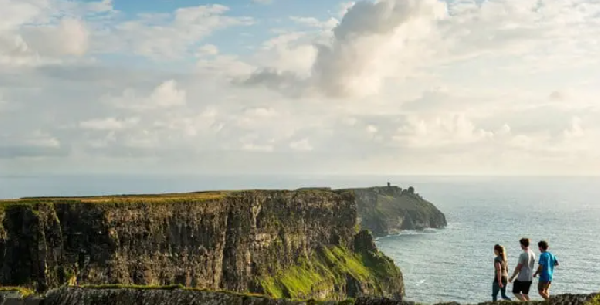
The Cliffs of Moher are Ireland’s most visited natural attraction, and for good reason. Stretching for 14 kilometers (about 8 miles) and reaching a maximum height of 214 meters (702 feet) just north of O’Brien’s Tower, they offer a breathtaking, raw view of the power of the Atlantic Ocean.
Visitor Experience: The state-of-the-art Cliffs of Moher Visitor Centre, built into the hillside, provides excellent exhibits on geology, wildlife, and history. From here, paved paths lead north and south along the cliff edge.
O’Brien’s Tower: Built in 1835, this viewing tower marks the highest point of the cliffs and offers an even more spectacular vantage point for a small fee.
Wildlife: The cliffs are a protected haven for seabirds, including puffins (from April to July), razorbills, and guillemots.
Safety: Stay on the designated paths and be mindful of strong winds. The cliff edges are unstable and can be extremely dangerous.
Food & Accommodation Near the Cliffs
The nearby villages of Doolin and Liscannor are excellent bases.
Food: Doolin is famous for its traditional music pubs like Gus O’Connor’s or McDermott’s, which also serve hearty food. For seafood, try Vaughan’s Anchor Inn in Liscannor.
Accommodation: Options include charming B&Bs, farm stays, and hotels like the Hotel Doolin or the Cliffs of Moher Hotel. Booking ahead is crucial.
Chapter 3: The Wild Atlantic Way & Burren Region
The route from the Cliffs of Moher north towards Galway is part of the Wild Atlantic Way, a 2,500 km driving route along Ireland’s west coast. This section passes through two unique landscapes: The Burren and the coastal vistas of County Clare.
The Burren National Park
Just north of the cliffs lies The Burren, a vast limestone karst landscape that appears barren from a distance but is teeming with unique flora and archaeological sites. The word “Burren” derives from the Irish
Boireann, meaning “a rocky place.”
Poulnabrone Dolmen: This iconic portal tomb is one of Ireland’s most photographed archaeological sites, dating back to the Neolithic period.
Exploring: Drive the R480 road for stunning views. For a closer look, take a guided walk to learn about the region’s unique Arctic-Alpine plants and ancient history.
The Wild Atlantic Way Drive
The coastal drive from the Burren towards Galway Bay offers spectacular views. A slight detour to the fishing village of
Ballyvaughan is recommended. Stop at Father Ted’s House (for fans of the comedy series) or simply pull over at designated viewing points to soak in the scenery of Galway Bay and the Aran Islands in the distance.
Chapter 4: Galway – The Cultural Heart
Galway, known as the “City of the Tribes,” is a vibrant, bohemian city bursting with artistic energy. Its compact, walkable center is filled with colorful shops, bustling pubs, and a youthful atmosphere thanks to its university.
Key Attractions in Galway
Eyre Square: The city’s central public square, a popular meeting spot surrounded by shops and hotels.
The Latin Quarter: The historic heart of Galway, a maze of narrow, cobbled streets lined with independent boutiques, craft shops, cafes, and traditional pubs. Quay Street is its bustling spine.
Spanish Arch & Galway City Museum: The Spanish Arch is a remnant of the city’s medieval walls. Adjacent is the excellent Galway City Museum, offering free exhibits on local history and archaeology.
St. Nicholas’ Collegiate Church: Dating back to 1320, this is the largest medieval parish church in Ireland still in continuous use.
Salthill Promenade: A short walk from the city center, this seaside suburb offers a classic promenade walk, an amusement park, and the chance to “kick the wall” at the end for good luck.
Galway Food & Drink
Galway is a foodie’s paradise, particularly known for its seafood.
Seafood: Don’t miss oysters from Galway Bay. Visit Moran’s Oyster Cottage (a short drive away) or enjoy them in town at restaurants like O’Grady’s on the Pier or Oscars Seafood Bistro.
The Galway Market: Held in Church Lane on weekends, this market is a feast for the senses with local produce, artisan foods, and crafts.
Pubs & Music: Galway’s pub scene is legendary. Tigh Neachtain and The Crane Bar are renowned for their traditional Irish music sessions (trad sessions). The King’s Head and Taaffes are also iconic institutions.
Transportation in Galway
The city center is best explored on foot. For trips to Salthill or further out, local buses are available. Galway is also a major transport hub for buses exploring Connemara or heading to the Aran Islands from Rossaveal port.
Accommodation Tips for Galway
Staying within or on the edge of the Latin Quarter puts you right in the action. Be aware that it can be lively at night. For a quieter stay, consider Salthill. As with Dublin, book well ahead as Galway is perennially popular.
Chapter 5: The Return to Dublin & Final Tips
The drive from Galway back to Dublin is straightforward via the M6 motorway and takes approximately 2.5 hours without stops. This allows for a leisurely morning in Galway before departing.
Optional Stops on the Return Journey
Clonmacnoise: For history enthusiasts, a detour to this early Christian site founded in the 6th century is highly recommended. Situated on the River Shannon, its collection of churches, high crosses, and round towers is profoundly atmospheric.
Athlone: A good halfway stop for lunch. Visit Sean’s Bar, reputedly Ireland’s oldest pub, or see Athlone Castle.
Cultural Insights & Practical Advice
The Irish Language: While English is spoken everywhere, you will see Irish (Gaeilge) on all road signs and public notices. Hearing it spoken in Gaeltacht (Irish-speaking) areas is a special cultural experience.
Tipping: In restaurants, a tip of 10-15% is customary for good service if a service charge isn’t included. In pubs, tipping is not standard practice for drinks alone.
The Weather: Be prepared for “four seasons in one day.” Layered clothing and a waterproof jacket are essential regardless of the forecast.
Cead Míle Fáilte: This phrase means “a hundred thousand welcomes” and encapsulates Irish hospitality. Don’t be surprised by friendly conversations with locals; engaging with people is a key part of the Irish experience.
Driving: If renting a car for this journey, remember you will be driving on the left-hand side of the road. Rent an automatic transmission if you are not comfortable with a manual/stick shift. Roads can be narrow outside of cities; patience is key.
Conclusion
The journey from Dublin to the Cliffs of Moher and Galway is a quintessential Irish experience. It seamlessly weaves together urban exploration, profound historical reflection, awe-inspiring natural wonders, and vibrant living culture. From the first pint in a Dublin pub to the last note of a trad session in Galway, this route offers memories that will last a lifetime, showcasing the very best of Ireland’s legendary charm and dramatic beauty.