A Journey from Paris to Mont-Saint-Michel and Back: A Travel Guide
This guide details a classic French itinerary, combining the vibrant, artistic energy of Paris with the timeless, mystical allure of Mont-Saint-Michel. This journey contrasts the man-made grandeur of a capital city with the raw, natural power of a tidal island abbey, offering a profound glimpse into the soul of France.
Part 1: Paris – The City of Light
Paris is more than a city; it is an experience. It unfolds in layers, from its grand boulevards and iconic monuments to its intimate cobblestone lanes and bustling corner cafés. A visit here is a sensory feast of art, architecture, gastronomy, and the simple joy of watching the world go by.
Key Attractions in Paris
The Eiffel Tower (La Tour Eiffel): No symbol is more synonymous with Paris. While the view from the top is legendary, consider a different perspective. Bring a picnic to the Champ de Mars park at its base, or cross the Seine to the Trocadéro Gardens for the most spectacular photographic vantage point, especially at night when the tower sparkles for five minutes every hour on the hour.
The Louvre Museum (Musée du Louvre): A palace turned museum, the Louvre is vast and can be overwhelming. It’s essential to plan your visit. Prioritize masterpieces like the Mona Lisa, the Venus de Milo, and the Winged Victory of Samothrace. Purchasing tickets online in advance is non-negotiable to avoid colossal queues. The glass pyramid entrance, designed by I.M. Pei, is an architectural marvel in itself.
Notre-Dame Cathedral: Following the devastating fire of 2019, the cathedral is undergoing extensive restoration and is closed to the public. However, its facade remains a breathtaking sight, and you can still appreciate its Gothic splendor from the parvis (square) in front and the surrounding bridges. The restoration work is a historic event in its own right.
Montmartre & the Sacré-Cœur Basilica: Perched on the highest point in Paris, the gleaming white Sacré-Cœur offers a panoramic view of the city. The climb up the steps is part of the experience. Wander through the Place du Tertre, where artists paint and sell their work, and get lost in the charming, hilly streets that still retain a village-like atmosphere reminiscent of the Belle Époque.
The Musée d’Orsay: Housed in a magnificent former railway station, this museum holds the world’s premier collection of Impressionist and Post-Impressionist art. Works by Monet, Manet, Degas, Renoir, and Van Gogh are displayed under its iconic giant clock face. It provides a perfect artistic counterpoint to the classical works of the Louvre.
Parisian Food & Drink
Parisian cuisine is an integral part of the culture. It ranges from simple, perfect pastries to multi-course gourmet meals.
Café Culture: Do not rush your coffee. Sitting at a terrace table, watching Parisian life unfold, is a quintessential activity. Order a café crème (espresso with steamed milk) in the morning or a noisette (espresso with a dash of milk) any time.
Patisseries & Boulangeries: Start your day with a buttery, flaky croissant or a pain au chocolat from a local bakery. For lunch, a classic jambon-beurre (ham and butter on a baguette) is simple yet sublime.
Classic Bistros: Seek out a traditional bistro for dishes like steak frites (steak and fries), confit de canard (duck confit), or coq au vin (chicken braised in wine).
Cheese & Wine: Visit a fromagerie (cheese shop) and a cave à vin (wine shop) to assemble your own picnic. A crisp Sancerre, a creamy Camembert, and a fresh baguette make for a perfect meal by the Seine.
Transportation in Paris
Paris is served by an extensive and efficient Metro system. The RER (Réseau Express Régional) trains are commuter lines that connect the city center to the suburbs and are also used for getting to airports and Versailles.
The Metro: The most convenient way to get around. Purchase a “carnet” (pack of 10 tickets) for a discount, or consider a Navigo Découverte pass for longer stays.
Walking: Paris is a wonderfully walkable city. Many of its greatest discoveries are made by wandering through different neighborhoods like Le Marais, Saint-Germain-des-Prés, and the Latin Quarter.
Vélib’ Bikes: The city’s bike-sharing program is an excellent way to cover more ground while enjoying the open air.
Taxis & Ride-Sharing: Readily available but can be expensive, especially during peak hours.
The Journey from Paris to Mont-Saint-Michel
The trip from the urban landscape of Paris to the remote bay of Mont-Saint-Michel is a journey through changing scenery, from city to countryside to coastline.
By Train
The most common and efficient method is to take a high-speed TGV train from Paris’s Gare Montparnasse to either Rennes or Dol-de-Bretagne. The journey takes approximately 2 hours. From these stations, you will transfer to a dedicated shuttle bus (operated by Keolis) that will take you directly to the visitor center at the foot of Mont-Saint-Michel (about a 25-minute ride from Rennes). The entire journey is seamless, with the bus schedules designed to align with train arrivals.
By Car
Driving offers more flexibility and takes about 4 hours from Paris. You will park at the large designated parking lot on the mainland (fees apply). From there, a free shuttle bus (called a
Passeur) or a walk across the modern pedestrian bridge will take you to the mount itself. The sight of Mont-Saint-Michel emerging from the horizon as you drive closer is unforgettable.
Organized Tours
For those who prefer a hassle-free experience, numerous companies offer day trips or overnight tours from Paris. This eliminates the need to plan transport and accommodations, but offers less freedom to explore at your own pace.
Travel Tip: Book your TGV tickets well in advance for the best fares. They are significantly cheaper when purchased early.
Part 2: Mont-Saint-Michel – The Marvel of the West
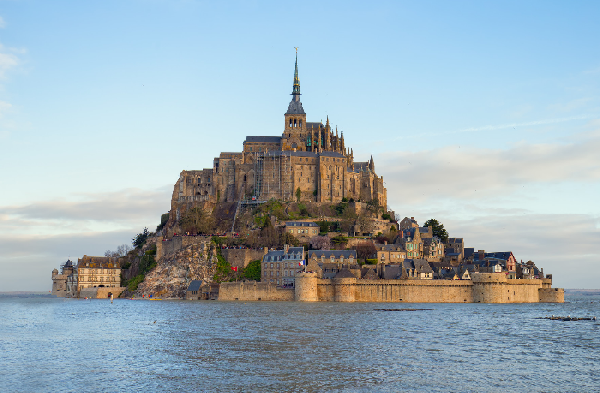
Rising from the vast sandbanks of its bay, Mont-Saint-Michel is a breathtaking vision. This UNESCO World Heritage site is a fortified island commune crowned by a magnificent abbey, a testament to both medieval architecture and unwavering faith.
The Approach and Arrival
The first sight of Mont-Saint-Michel is magical. Whether you see it shrouded in sea mist or silhouetted against a setting sun, it appears like a mirage. As you approach via the causeway or shuttle bus, its scale and isolation become awe-inspiring. Prepare for a walk; vehicles are not allowed on the mount itself.
Exploring the Abbey (L’Abbaye du Mont-Saint-Michel)
The abbey is the heart and soul of Mont-Saint-Michel. Its construction, spanning from the 10th to the 15th centuries, is a marvel of engineering.
The Cloister: A serene and beautiful space perched high on the mount, offering stunning views of the bay. It was a place of meditation for the monks.
The Refectory: Where the monks ate in silence. Notice the narrow windows designed to bring in maximum light.
The Merveille (The Marvel): A three-story Gothic masterpiece built into the north side of the rock. It houses the cloister, refectory, and guest hall, showcasing incredible architectural skill.
The Church: At the very summit, this Romanesque and Gothic church features a soaring nave and a stark, powerful simplicity.
Practical Tip: Buy your abbey tickets online in advance to skip the long ticket line. Be prepared for a significant climb up the Grand Degré, a steep stone staircase. Wear comfortable, sturdy shoes.
The Village and Ramparts
The single main street, Grande Rue, winds its way up to the abbey. It is lined with museums, shops, and small hotels. While it can be crowded during the day, it retains a medieval charm.
The Ramparts Walk: For a less crowded and more dramatic experience, walk along the ramparts. This path offers unparalleled views of the bay, the surrounding mudflats, and the tidal forces that define this place.
Tidal Phenomenon: The bay experiences some of Europe’s most powerful tides. The sea can recede up to 15 kilometers and then rush back in at incredible speed—”à la vitesse d’un cheval au galop” (as fast as a galloping horse), as Victor Hugo said. Check the tide timetable for your visit; seeing the mount transformed from an island to a peninsula is a spectacular sight.
Food on Mont-Saint-Michel
The local cuisine is heavily influenced by its maritime location and its history as a pilgrimage site.
The Omelette of La Mère Poulard: The most famous dish on the mount. At the historic restaurant La Mère Poulard, chefs whip eggs in copper bowls and cook them over an open wood fire, creating an incredibly light and fluffy omelette. It’s a tourist institution and an experience in itself.
Salt-Marsh Lamb (Agneau de Pré-Salé): Sheep graze on the salt marshes surrounding the mount, giving their meat a distinct, sought-after flavor.
Seafood: Mussels, oysters, and scallops are local specialties, often prepared simply to highlight their freshness.
Cider: Normandy is apple country. Pair your meal with a glass of local dry cider instead of wine.
Insider Tip: For a more authentic and less expensive meal, consider dining in one of the small restaurants just off the main street or in the nearby mainland town of Pontorson.
Cultural Significance
Mont-Saint-Michel has been a strategic fortification, a place of pilgrimage, and a prison. Its abbey was a major center of learning and manuscript production in the Middle Ages. For over a thousand years, it has stood as a symbol of French national identity and spiritual perseverance, often called “The Heavenly Jerusalem.”
The Return Journey to Paris
The return trip follows the same route in reverse: shuttle bus from Mont-Saint-Michel to Rennes or Dol-de-Bretagne station, then the TGV back to Paris’s Gare Montparnasse. This is a good time to reflect on the stark contrast between the serene, timeless majesty of Mont-Saint-Michel and the dynamic, ever-evolving energy of Paris.
Practical Travel Tips & Final Insights
Best Time to Visit: Spring (April-June) and Autumn (September-October) offer pleasant weather and fewer crowds. Summer is peak season and can be overwhelmingly busy. Winter is cold and windy but offers a more intimate and atmospheric experience.
Accommodation:
Paris: Stay in central arrondissements like the 1st, 4th (Le Marais), 5th (Latin Quarter), or 6th (Saint-Germain) for walkability.
Mont-Saint-Michel: Staying overnight on the mount is a magical experience. After the day-trippers leave, you have the village almost to yourself. Alternatively, stay on the mainland for more options and lower prices.
Language: While English is widely spoken in tourist areas, learning a few basic French phrases (Bonjour, Merci, S’il vous plaît) is greatly appreciated and will enrich your interactions.
Tide Safety: Never attempt to walk in the bay without an accredited guide. The tides are dangerously fast, and the quicksand (sables mouvants) is a real hazard.
Souvenirs: Skip the mass-produced trinkets. In Paris, look for artisanal products from Le Marais or fine foods from Fauchon or Hédiard. On Mont-Saint-Michel, consider local cider, caramel made with Norman butter and cream, or cookies from La Mère Poulard.
A journey from Paris to Mont-Saint-Michel is more than just visiting two famous sites; it is an exploration of two different facets of France’s soul—one human-made and brilliant, the other forged by nature and faith. It is a trip that will leave you with memories of both urban splendor and ethereal beauty.