A Comprehensive Travel Guide to Luxor, Egypt: The World’s Greatest Open-Air Museum
Often called the world’s greatest open-air museum, Luxor is a city that breathes history. Built upon the ancient site of Thebes, the glorious capital of Egypt during the New Kingdom, it is a place where the grandeur of the pharaohs is palpable. The sheer density of monumental ruins, tombs, and temples on both the East and West Banks of the Nile is staggering. This guide will walk you through the essential experiences, from the silent majesty of the Valleys of the Kings and Queens to the awe-inspiring colonnades of Karnak.
The West Bank: Realm of the Dead
The West Bank of the Nile was dedicated to the afterlife, a vast necropolis where pharaohs, queens, and nobles were buried in elaborate tombs cut into the desert mountains. A visit here is a journey into the profound Egyptian obsession with eternity.
Valley of the Kings
Hidden amidst barren, sun-scorched hills lies the Valley of the Kings, the final resting place for powerful New Kingdom pharaohs like Tutankhamun, Seti I, and Ramses II. The location was chosen for its seclusion and its natural pyramid-shaped peak, Al-Qurn. The entrance fee typically includes access to three tombs, while tickets for special tombs like Tutankhamun or Seti I must be purchased separately.
Tombs to Prioritize:
KV9 (Tomb of Ramses V & VI): Famous for its breathtaking astronomical ceiling depicting the goddess Nut swallowing the sun each evening and giving birth to it each morning. The colors are exceptionally well-preserved.
KV11 (Tomb of Ramses III): One of the largest tombs in the valley, featuring detailed and vibrant reliefs of religious scenes and daily life.
KV17 (Tomb of Seti I): Often requiring a separate, expensive ticket, it is the longest, deepest, and most completely decorated tomb in the valley. The artistry is sublime.
KV62 (Tomb of Tutankhamun): Small and modest in decoration compared to others, its fame comes from the fact that it was found nearly intact. His mummy is on display inside. The separate ticket is worth it for history enthusiasts.
Travel Tip: Visit early in the morning to avoid the heat and crowds. Tombs can be hot and stuffy, so carry water. Photography inside most tombs is strictly prohibited (they are serious about this). A flashlight can be useful for seeing details in darker corners.
Mortuary Temple of Hatshepsut (Deir el-Bahari)
Rising in a series of majestic colonnaded terraces against a backdrop of sheer limestone cliffs, the temple of Hatshepsut is an architectural marvel. It was built for the most successful female pharaoh, Hatshepsut, who ruled Egypt as a king. The temple aligns perfectly with the temple of Karnak across the river. Its modern name, Deir el-Bahari, means “Northern Monastery,” from a later Coptic church established there.
The reliefs on the walls tell the story of Hatshepsut’s divine birth and her famous trading expedition to the land of Punt. The site feels both serene and powerful. Be sure to explore the upper terrace and its chapels dedicated to the gods Amun-Ra and Anubis.
Local Insight: Notice the attempted erasure of Hatshepsut’s name and image by her successor, Thutmose III. This act of *damnatio memoriae* (condemnation of memory), intended to erase her from history, ultimately failed, and her story is one of the most compelling in ancient Egypt.
Colossi of Memnon
Your first glimpse of the West Bank will likely be these two massive stone statues of Pharaoh Amenhotep III, standing guard in the middle of cultivated fields. They are all that remain of his vast mortuary temple, which was destroyed by floods and later pharaohs who reused its stones.
The statues are 18 meters tall and are surprisingly imposing despite their weathered state. The northern statue was famous in Greco-Roman times for emitting a musical sound at dawn, believed to be the cry of the mythological Memnon greeting his mother Eos. The sound was likely caused by rising temperatures and humidity interacting with cracks in the stone, and it stopped after Roman repairs.
Travel Tip: This is usually a quick 10-15 minute photo stop on the way to or from the other West Bank sites. There’s no need for a lengthy visit, but it’s a powerful reminder of the scale of what has been lost.
The East Bank: Realm of the Living
The East Bank, where the modern city of Luxor thrives, was dedicated to the world of the living. Here you will find the two most spectacular temple complexes in Egypt.
Karnak Temple Complex
Karnak is not merely a temple; it is a sprawling complex of sanctuaries, pylons, obelisks, and chapels built over 2,000 years by generation after generation of pharaohs. It is the largest religious building ever constructed. The main precinct is dedicated to the god Amun-Ra, but there are also areas for his wife Mut and their son Khonsu.
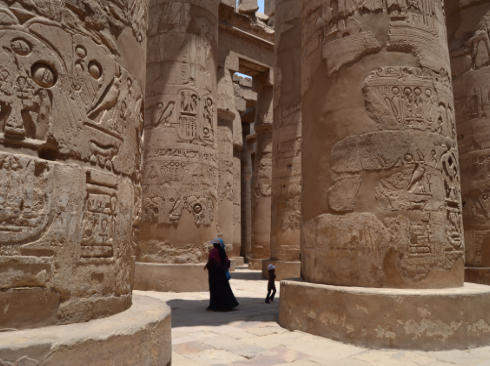
The Hypostyle Hall: This is the undeniable highlight. Walking into this forest of 134 gigantic columns is a humbling experience. The central columns are 21 meters tall and so wide that it would take six people with outstretched arms to circle one. The reliefs on the columns and walls depict pharaohs making offerings to the gods.
The Sacred Lake: A large stone-lined lake used by the priests for ritual purification. It is incredibly atmospheric, especially at dusk.
The Great Obelisk of Hatshepsut: At 29.5 meters, it is the tallest obelisk in Egypt, erected by the queen in dedication to her “father” Amun-Ra.
Travel Tip: Do not rush Karnak. Allocate at least 3-4 hours. The Sound and Light show in the evening is a bit kitschy but offers a magical perspective of the temple lit up at night.
Luxor Temple
Located in the heart of the modern city, Luxor Temple is beautifully accessible and often visited in the evening when it is dramatically illuminated. Unlike Karnak, it was built primarily by two pharaohs: Amenhotep III and Ramses II.
The temple was dedicated to the rejuvenation of kingship; a pharaoh could be coronated here without having to travel to Memphis. It is connected to Karnak by a 3-kilometer-long avenue of sphinxes that has been largely excavated and restored.
One of its most fascinating aspects is its layers of history. You can see:
Pharaonic: The grand entrance pylon with colossal statues of Ramses II and an obelisk (its twin now stands in Paris).
Roman: A shrine dedicated to the Roman emperor cult was built inside.
Islamic: The Abu Haggag Mosque is built directly on top of the temple ruins, sitting precariously atop the columns—a testament to the rising ground level over millennia.
Local Insight: Visiting at sunset is spectacular. As the sky turns orange and then deep blue, the temple’s sandstone glows, and the artificial lighting creates deep shadows, making the reliefs stand out beautifully.
Cruising the Nile: A Timeless Experience
A multi-day Nile cruise between Luxor and Aswan is a quintessential Egyptian experience. It’s not just a mode of transport; it’s a floating hotel that allows you to travel in comfort while watching timeless rural scenes glide by.
What to Expect: Most cruises are 4 or 5 days. You’ll visit sites like Edfu and Kom Ombo temples en route. Life on board is relaxed, with meals included, a sundeck pool, and evening entertainment.
Choosing a Cruise: Options range from budget to ultra-luxury (e.g., Oberoi, Sanctuary). Read recent reviews carefully as standards can vary.
Alternative: For a more intimate experience, consider a traditional dahabiya sailboat, which carries fewer passengers and can access smaller docks.
Savoring Luxor: Food and Drink
Luxorian cuisine is a flavorful mix of Upper Egyptian traditions.
Must-Try Dishes:
Koshari: A hearty mix of rice, lentils, chickpeas, pasta, and fried onions, topped with a spicy tomato sauce. A perfect cheap and filling meal.
Ta’ameya (Egyptian Falafel): Made with fava beans instead of chickpeas, giving it a distinct, delicious flavor.
Fatta: A festive dish of rice, crispy bread, and lamb in a garlic-vinegar sauce, often served on special occasions.
Fresh Juices: Don’t miss the sugarcane juice or a blend of guava and strawberry from local street vendors.
Dining Spots:
Sofra Restaurant & Café: A beautifully restored old house offering an authentic taste of Egyptian classics in a charming setting.
Al-Sahaby Lane: Rooftop restaurant with stunning views of Luxor Temple, perfect for a leisurely dinner.
Local Markets: Explore the souq for fresh dates, spices, and local snacks.
Practical Travel Tips and Cultural Insights
Getting Around Luxor
Taxis & Rideshares: Taxis are plentiful but agree on a price before getting in. Uber operates in Luxor and is highly recommended for fixed fares and ease of use.
Caleches: Horse-drawn carriages are a romantic way to travel short distances along the Corniche. Negotiate the price firmly upfront.
Ferry: The public ferry is the cheapest way to cross the Nile between the East and West Banks (costing just a few Egyptian pounds) and offers lovely views.
Organized Tours: For your first visit to the West Bank, hiring a knowledgeable private guide and driver for the day is an excellent investment to understand the context and history.
Best Time to Visit
The ideal time is during the cooler winter months from
October to April. Daytime temperatures are pleasant for exploring archaeological sites. The summer months (May-September) are extremely hot, often exceeding 40°C (104°F), making midday sightseeing challenging.
Shopping and Souvenirs
The Luxor souq is a vibrant place to shop. Common souvenirs include:
Alabaster: Shops near the Valley of Kings sell beautiful alabaster vases and statues. Be prepared to bargain vigorously.
Papyrus: Buy from reputable galleries to ensure you’re getting authentic papyrus, not banana leaf. They will demonstrate the difference.
Spices & Perfumes: The market is filled with colorful spices and essential oil shops.
Bargaining is expected in the souq. Start at about half the asking price and negotiate with a smile.
A Note on Tipping (Baksheesh)
Tipping, or
baksheesh, is an integral part of Egyptian culture. Small tips are expected for small services—someone pointing you in the right direction, a restroom attendant, someone “guarding” your shoes outside a mosque. Keep small denomination notes (5-20 EGP) handy for this purpose.
A Final Word on Respectful Travel
Dress modestly out of respect for the local culture—this means covering shoulders and knees, especially when away from tourist sites. Be prepared for persistent vendors; a firm but polite “La Shukran” (No, thank you) is your best tool. Remember that you are walking on sacred ground; treat these ancient monuments with the reverence they deserve.
A journey to Luxor is more than a vacation; it’s a pilgrimage into the heart of human civilization. With careful planning and an open mind, your visit will be an unforgettable encounter with history, art, and enduring human achievement.