The Ultimate Travel Guide to Cairo, Egypt
Cairo, the sprawling capital of Egypt, is a city where ancient history and modern life collide on a monumental scale. Situated on the banks of the Nile River, it is the gateway to the Pyramids of Giza and home to a treasure trove of Islamic, Coptic, and Pharaonic heritage. This guide provides a comprehensive overview for exploring Cairo’s key historical sites, navigating its vibrant markets, savoring its cuisine, and understanding its rich cultural tapestry.
Introduction to Cairo
Cairo, known locally as “Al-Qahira” (The Victorious), is one of the largest cities in the Arab world and Africa. Its history spans millennia, from the nearby ancient capital of Memphis to the Roman fortress of Babylon and the Fatimid foundation of the city proper in 969 AD. Today, it is a bustling, chaotic, and endlessly fascinating metropolis. Travelers are drawn to its world-renowned museums, historic mosques, winding alleyways of old bazaars, and the enduring legacy of the Pharaohs just on its outskirts.
The city can be divided into several key areas for visitors:
Downtown Cairo, with its 19th-century architecture; Islamic Cairo, the historic core containing mosques and markets; Coptic Cairo, the oldest part of the city with ancient churches; and Giza, the plateau hosting the iconic pyramids.
Major Attractions: A Historical Journey
The Hanging Church (Al-Muallaqa)
Located in the heart of Coptic Cairo, the Hanging Church is one of the oldest and most famous churches in Egypt. Its name derives from its location above a gatehouse of the Roman fortress of Babylon; its nave is suspended over a passageway. Dating back to the 3rd century AD, it became the official residence of the Coptic Pope in the 7th century.
Architecture & Highlights: The church is accessible via a steep staircase from the street level. Its interior is adorned with beautiful icons, mostly from the 18th century, and a magnificent cedarwood screen inlaid with ivory. The marble pulpit stands on 13 pillars, representing Christ and his disciples.
Visitor Information: Open daily from 9:00 AM to 5:00 PM. Entry is usually included in a combined ticket for the Coptic Cairo sites. Modest dress is recommended.
Cultural Insight: The Hanging Church is a testament to Egypt’s significant Christian heritage and the Coptic Orthodox community, which represents about 10% of the country’s population.
The Citadel of Saladin (Salah El-Din)
Perched on a hill overlooking Cairo, the Citadel was built in the 12th century by the legendary Muslim leader Saladin to protect the city from Crusader armies. It served as the seat of Egypt’s government for nearly 700 years. The complex is vast, but its crown jewel is the Muhammad Ali Mosque.
Muhammad Ali Mosque (Alabaster Mosque): This Ottoman-style mosque, built between 1830 and 1848, dominates the Cairo skyline with its twin minarets and large central dome. The interior is breathtaking, with alabaster paneling and a grand courtyard. It is named after Muhammad Ali Pasha, the founder of modern Egypt.
Other Citadel Highlights: The complex also houses the Mosque of Al-Nasir Muhammad, the Gawhara Terrace (offering panoramic views of Cairo, including the Pyramids on a clear day), and several museums like the National Military Museum.
Visitor Information: Open from 8:00 AM to 5:00 PM. There is an entrance fee. It’s best to visit in the morning to avoid the heat and crowds. Removing shoes is required before entering the mosques.
Khan El-Khalili Bazaar
No trip to Cairo is complete without a visit to Khan El-Khalili, one of the world’s oldest and most famous markets. Established in the 14th century, this labyrinthine bazaar is a sensory overload of sights, sounds, and smells. While it is a major tourist attraction, it remains a functioning market for locals.
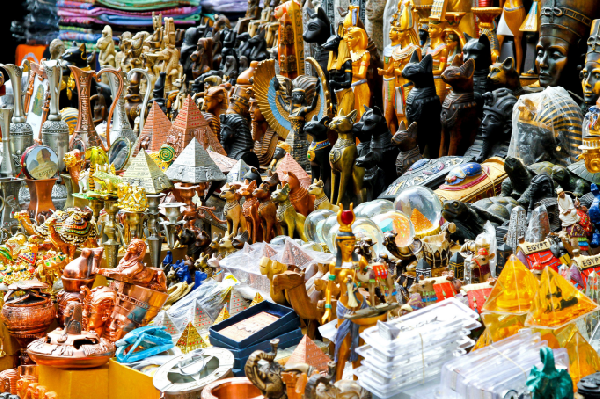
Shopping & Souvenirs: Shops are packed with a vast array of goods, including gold and silver jewelry, perfumes, spices, leather goods, traditional lanterns (fawanis), papyrus paintings, and alabaster statues. Haggling is not just accepted; it’s expected.
Café Culture: Take a break at the historic El Fishawy Café, a legendary coffeehouse that has been operating since 1773. Sipping mint tea or smoking shisha (water pipe) here is a quintessential Cairo experience.
Visitor Information: The market is open daily, but hours can vary; typically from 9:00 AM until late evening (many shops close for a few hours in the afternoon). It’s closed on Sundays. Be prepared for crowds and keep valuables secure.
The Egyptian Museum
Located in Tahrir Square, the Egyptian Museum is a pink-colored, neoclassical building that houses the world’s most extensive collection of Pharaonic antiquities. While many of its most famous artifacts are being moved to the new Grand Egyptian Museum (GEM), it remains an essential stop for any history enthusiast.
Key Exhibits: The museum’s treasures include the solid gold mask of Tutankhamun, his extensive collection of grave goods, royal mummies (in a separate paid room), and statues of ancient kings and gods. The layout is somewhat old-fashioned, with artifacts packed into glass cases, giving it a charmingly authentic feel.
The Grand Egyptian Museum (GEM): As of late 2023, the GEM near the Giza Plateau is partially open. It is set to become the new home for King Tut’s complete collection and will be the largest archaeological museum in the world. Travelers should check the latest status to plan their museum visits.
Visitor Information: The Egyptian Museum in Tahrir is open from 9:00 AM to 5:00 PM. An additional ticket is required for the Royal Mummy Room and the Tutankhamun Galleries. Hiring a knowledgeable guide is highly recommended to fully appreciate the collection.
Culinary Journey: Food and Drink Recommendations
Egyptian cuisine is hearty, flavorful, and deeply rooted in tradition. Cairo offers everything from street food stalls to upscale restaurants.
Koshary: Considered Egypt’s national dish, it’s a carb-lover’s dream—a mix of rice, lentils, chickpeas, pasta, and fried onions, topped with a spicy tomato sauce and garlic vinegar. Try it at Abu Tarek, a famous restaurant dedicated solely to this dish.
Ful Medames & Ta’meya (Falafel): A staple breakfast of mashed fava beans served with olive oil and spices. Egyptian falafel is made from fava beans instead of chickpeas, giving it a distinct green color and flavor.
Grilled Meats: Seek out restaurants for koftakebab
Molokhia: A green soup made from jute leaves, often served with rabbit or chicken and rice.
Sweet Treats: Don’t miss Umm Ali, a traditional bread pudding, or KonafaBasbousa, sweet pastries made with semolina and syrup.
Drinks: Enjoy sweetened black tea, mint tea, or strong Turkish-style coffee. For a traditional drink, try Karkadeh, a hibiscus tea served hot or cold.
Practical Transportation Information
Navigating Cairo can be challenging but is part of the adventure.
Cairo Metro: This is the fastest way to bypass the city’s infamous traffic. It has three lines, with Line 1 being particularly useful for tourists, connecting Helwan to El Marg with stops near Coptic Cairo (Mar Girgis) and Ramses Square. The metro has separate cars for women during peak hours.
Taxis and Ride-Hailing: White taxis are common but ensure they use the meter or agree on a price beforehand. Ride-hailing apps like Uber and Careem are widely used, affordable, and reduce haggling.
Microbuses: These are shared minivans that follow set routes. They are very cheap but can be confusing for non-Arabic speakers and are often overcrowded.
Nile Taxis & Ferries: A scenic way to cross the Nile or travel short distances along the riverfront.
Walking: The best way to explore specific districts like Islamic Cairo or Coptic Cairo is on foot.
Accommodation Tips: Where to Stay
Cairo offers accommodations for every budget, from hostels to luxury hotels.
Zamalek: This affluent island district in the middle of the Nile is a popular choice for travelers. It’s leafy, relatively quiet, and filled with cafes, restaurants, and art galleries. It offers a peaceful retreat from the city’s chaos.
Downtown Cairo: Ideal for budget travelers and those who want to be in the heart of the action. The area features historic hotels like the Nile Ritz-Carlton and numerous hostels and mid-range options.
Giza: Staying here provides easy access to the Pyramids, with several hotels offering spectacular views directly of them. However, it is farther from other central Cairo attractions.
Heliopolis: A more residential and upscale eastern suburb near the airport, with many international hotel chains.
Cultural Insights and Etiquette
Understanding local customs will greatly enhance your experience.
Dress Modestly: While Cairo is more liberal than some Middle Eastern cities, modest dress is appreciated, especially when visiting mosques and churches. For both men and women, clothing that covers shoulders and knees is recommended.
Greetings: A simple greeting goes a long way. Learn to say “As-salamu alaykum” (Peace be upon you) and “Shukran” (Thank you).
Religion: The call to prayer (Adhan) echoes from mosques five times a day. This is a normal part of life. Be respectful during this time. The weekend in Egypt is Friday and Saturday.
Tipping (Baksheesh): Tipping for small services is deeply ingrained in Egyptian culture. Have small change (5-20 EGP notes) ready for restroom attendants, hotel porters, and anyone who provides you with a service.
Bargaining: In markets like Khan El-Khalili, bargaining is standard practice. Start by offering half or less of the initial asking price and negotiate with a smile. Be prepared to walk away if you cannot agree on a price.
Photography: Always ask for permission before taking photos of people, especially women. Photography inside museums often requires an additional ticket, and it is frequently prohibited in areas with mummies.
A Sample One-Day Itinerary
For travelers short on time, this itinerary covers many highlights efficiently.
Morning (8:00 AM – 12:00 PM): Start at the Citadel of Saladin. Explore the Muhammad Ali Mosque and enjoy the panoramic views of Cairo.
Mid-day (12:00 PM – 4:00 PM): Take a taxi to Coptic Cairo. Visit the Hanging Church and other historic sites like the Ben Ezra Synagogue. Then, head to Khan El-Khalili Bazaar for lunch at a traditional restaurant like Naguib Mahfouz Café and begin exploring the market.
Late Afternoon (4:00 PM – 6:00 PM): Travel to Tahrir Square to visit the Egyptian Museum. Focus on the Tutankhamun collection and any other exhibits that interest you most.
Evening (7:00 PM onwards): Enjoy a traditional dinner downtown or in Zamalek. For a final experience, return to Khan El-Khalili in the evening when it’s beautifully lit up and bustling with energy for some shisha at El Fishawy Café.
Conclusion
Cairo is a city that demands to be felt as much as it is seen. It can be overwhelming, but its energy is infectious, and its historical wealth is unparalleled. From the sacred silence of its ancient churches and mosques to the lively cacophony of its markets, Cairo offers a profound journey through layers of human civilization. With careful planning, an open mind, and this guide in hand, any traveler can unlock the timeless wonders of this magnificent city.