A Quintessential English Journey: London to the Cotswolds and Back
This travel guide details a classic English itinerary, taking you from the relentless energy of London to the serene, honey-colored villages of the Cotswolds, with a few historical and literary detours along the way. The route—London, Bibury, Bourton-on-the-Water, the Slaughters, Broadway Tower, and back to London—offers a perfect blend of world-class city culture and idyllic countryside charm.
Part 1: London – The World in a City
Begin your journey in London, a sprawling metropolis where history seeps from every brick and modernity shines from every skyscraper. A minimum of three days is recommended to scratch the surface of this immense city.
Key Attractions in London
The South Bank & Westminster: Start with a walk along the Thames’s South Bank. You’ll encounter the towering London Eye, the brutalist beauty of the Southbank CentreShakespeare’s Globe Theatre. Cross the Millennium Bridge for a stunning view of St. Paul’s Cathedral. Continue to the Houses of Parliament and Big Ben, followed by Westminster Abbey, the site of coronations and royal weddings.
Buckingham Palace & The Royal Parks: Time your visit to see the famous Changing of the Guard ceremony. Afterwards, stroll through St. James’s Park, one of London’s most beautiful green spaces, towards Trafalgar Square and the National Gallery.
The British Museum: Home to a vast collection of global art and artifacts, including the Rosetta Stone and the Parthenon Marbles. Entry is free, but donations are appreciated.
The City of London & Tower Bridge: Explore the historic square mile, the Roman heart of London. See the iconic Tower Bridge and the formidable Tower of London, where the Crown Jewels are kept and Beefeaters regale visitors with tales of its bloody past.
Food & Drink in London
London’s food scene is incredibly diverse. Skip the clichés and explore its culinary depth.
Markets: Visit Borough Market for gourmet food stalls, artisanal cheeses, and fresh oysters. Brick Lane is famous for its Bangladeshi curries, while Camden Market offers a chaotic mix of global street food.
Pubs: Experience a traditional pub lunch. Order a pint of ale and classic dishes like fish and chips, a steak and ale pie, or a ploughman’s lunch.
Afternoon Tea: For a quintessential experience, book an afternoon tea. Options range from the luxurious at The Ritz or Fortnum & Mason to more affordable and quirky versions found across the city.
Transportation & Tips for London
The Tube: London’s Underground is the most efficient way to travel. Purchase an Oyster card or simply use your contactless bank card for the cheapest fares.
Walking: Many central attractions are within walking distance of each other. It’s the best way to stumble upon hidden alleys and charming squares.
Insider Tip: For a free, alternative view of the city skyline, head to the rooftop garden of the Walkie Talkie building (20 Fenchurch Street). Booking is essential but free.
Part 2: Into the Cotswolds – Bibury and Bourton-on-the-Water
Rent a car from London for the ultimate freedom to explore the Cotswolds. The drive west takes about two hours, with the landscape gradually softening into rolling hills and patchwork fields.
Bibury: The Prettiest Village in England?
Your first Cotswold stop is Bibury, a village so picturesque that William Morris once called it “the most beautiful village in England.” The star attraction is
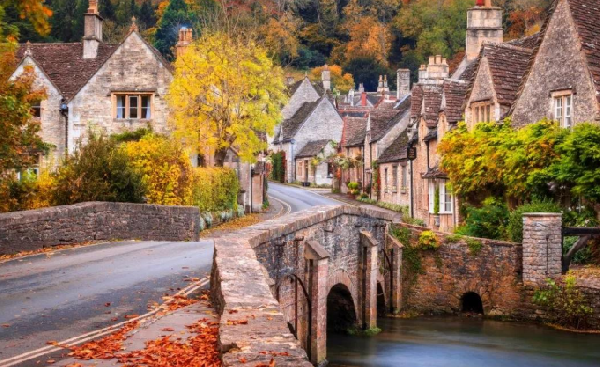
Arlington Row, a line of incredibly charming weavers’ cottages built of local stone in the 17th century. These cottages, set alongside the River Coln, are one of the most photographed scenes in the UK. The river itself is crystal clear and teeming with trout, part of the Bibury Trout Farm. The atmosphere is one of serene, almost unreal, beauty.
What to Do: Walk the length of Arlington Row, cross the bridge for the classic photo, and visit the Saxon-era St. Mary’s Church. The Bibury Trout Farm is a peaceful spot for fishing or simply feeding the fish.
Food: The Swan Hotel in Bibury offers a refined dining experience, while The Catherine Wheel pub provides a more traditional, cozy atmosphere for a meal and a pint.
Bourton-on-the-Water: The Venice of the Cotswolds
A short drive north brings you to Bourton-on-the-Water. The village earns its nickname from the shallow River Windrush that flows through its center, crossed by several low, elegant stone bridges. The overall feel is more bustling and tourist-focused than Bibury, but no less beautiful.
Key Attractions:
The Model Village: A one-ninth scale replica of Bourton-on-the-Water itself, built entirely from local stone. It’s a fascinating and detailed curiosity.
The Cotswold Motoring Museum & Toy Collection: A delightful museum filled with vintage cars, caravans, and motoring memorabilia.
Birdland Park & Gardens: Home to over 500 birds, including penguins, flamingos, and parrots, set in woodland and gardens.
Food & Drink: Enjoy an ice cream by the river or stop at one of the many tearooms for a cream tea. The Old New Inn, adjacent to the Model Village, is a classic spot for a pub lunch.
Part 3: A Stroll Through Serenity – Upper and Lower Slaughter
A mere mile’s walk from Bourton-on-the-Water (or a two-minute drive) lie the twin villages of Upper and Lower Slaughter. Despite the ominous name (“Slaughter” is derived from the Old English “slough,” meaning a muddy place), these villages are the epitome of peaceful Cotswold perfection.
The walk from Bourton is along a flat, paved path, offering lovely views of the countryside. You’ll arrive first at
Lower Slaughter, where the River Eye meanders past a historic water mill (now a museum and shop) and impossibly beautiful cottages. Follow the river path upstream for about 15 minutes to reach Upper Slaughter, which is slightly more elevated and offers wonderful views back down the valley. It’s a “doubly thankful” village, having lost no men in either World War.
The Experience: The true attraction here is the absence of major attractions. It’s about the quiet stroll, the sound of the stream, the admiring of flawless architecture, and the feeling of stepping back in time.
The Lords of the Manor Hotel in Upper Slaughter is a renowned country house hotel perfect for a special afternoon tea or a fine-dining experience.
Travel Tip: Wear comfortable walking shoes. The path between the villages can be muddy after rain. This area is best experienced on foot to fully absorb its tranquil atmosphere.
Part 4: A Literary Hilltop – Broadway Tower
Leaving the Slaughters, drive north for approximately 30 minutes through increasingly dramatic landscapes to reach Broadway Tower. Perched on the second highest point of the Cotswolds, this unique, folly tower is visible for miles around.
The tower was built in 1799 for Lady Coventry, who wanted to see if a beacon could be seen from her house 22 miles away. It has since served as a printing press for William Morris, a retreat for artists like Dante Gabriel Rossetti, and even a nuclear bunker during the Cold War. Today, you can climb to the top for breathtaking 360-degree views spanning 16 counties.
The Surrounds: The tower sits in a country park that is home to a herd of red deer. It’s a fantastic spot for a picnic with a view.
The Village of Broadway: The nearby village of Broadway is a handsome “high street” lined with chestnut trees and elegant honey-colored buildings. It’s worth a stroll to browse its art galleries and antique shops.
Food: The Tower itself has a small café. For a more substantial meal, descend into Broadway village where you’ll find excellent pubs like The Swan and The Crown & Trumpet.
Part 5: The Return to London
The drive back to London from Broadway takes around two and a half hours, depending on traffic. Aim to leave either before 3 PM or after 7 PM to avoid the worst of the rush hour congestion around the M25 orbital motorway. Return your rental car and spend one final evening in London, perhaps reflecting on the stark yet wonderful contrast between England’s vibrant capital and its timeless, pastoral heartland.
Practical Travel Summary
Transportation
Car Rental: Essential for this itinerary. Book in advance for better rates. Remember they drive on the left in the UK. Country lanes can be very narrow—be prepared to reverse into passing places.
Public Transport Alternative: While less flexible, you can reach parts of the Cotswolds by train (to Moreton-in-Marsh or Cheltenham) and then use local buses (Pulhams Coaches service 801 connects many villages). This requires careful timetable planning.
Accommodation
London: Stay in central zones (1-2) for easy access to sights. Neighborhoods like Covent Garden, South Kensington, or Paddington are popular bases.
The Cotswolds: For an authentic experience, stay in a village B&B (Bed & Breakfast) or a coaching inn. Bourton-on-the-Water or Stow-on-the-Wold offer good central locations with amenities.
Cuisine Highlights
Cream Tea: A must-try in the Cotswolds. It consists of scones served with clotted cream, strawberry jam, and a pot of tea. Debate rages over whether the cream or jam goes on first (the Devonshire vs. Cornish method).
Real Ale: Sample locally brewed cask ales in traditional pubs. Ask for recommendations—landlords are usually proud of their selection.
Local Produce: Look for Cotswold cheese, Gloucester Old Spot pork, and lamb from the local hills.
Cultural Etiquette & Insights
- The English are generally reserved but polite. Queuing (lining up) is sacrosanct.
- In pubs, it’s common to order food and drinks at the bar rather than waiting for table service.
- Tipping is customary in restaurants (10-15% if service isn’t included) but not expected in pubs for just a drink.
- The weather is famously changeable. Pack layers and a waterproof jacket, regardless of the forecast.
- Remember that you are often walking through people’s villages and past their homes. Be respectful, keep noise down, and always close gates behind you in the countryside.
This journey from London’s urban grandeur to the timeless beauty of the Cotswolds encapsulates two very different, yet equally compelling, sides of England. It’s a trip that offers both world-class culture and profound rural peace, leaving you with memories of bustling city streets and serene village lanes that will last a lifetime.