Munich to Zugspitze and Eibsee: A Comprehensive Alpine Travel Guide
This guide details a classic Bavarian day trip, taking you from the vibrant capital of Munich to the roof of Germany, the Zugspitze, with a visit to the stunningly beautiful Eibsee lake. This journey encapsulates the very essence of Southern Germany, combining urban culture with breathtaking natural alpine scenery.
Part 1: Munich – The Bavarian Capital as Your Base
Munich (München) is far more than just a starting point; it’s a destination rich in history, culture, and world-famous beer halls. Spending a day or two here before and after your mountain excursion is highly recommended to soak in the Bavarian atmosphere.
Key Attractions in Munich
Marienplatz: The central square and the heart of the city since 1158. The main attraction here is the Neues Rathaus (New Town Hall) and its Glockenspiel, which performs a charming mechanical show daily at 11 am and 12 pm (and 5 pm from March to October). Arrive a few minutes early to secure a good viewing spot.
Frauenkirche (Cathedral of Our Blessed Lady): The iconic twin-domed church is a symbol of Munich. Its south tower offers a fantastic panoramic view of the city and, on a clear day, a glimpse of the distant Alps.
English Garden (Englischer Garten): One of the world’s largest urban parks. You can witness surfers riding the standing wave at the Eisbach river, enjoy a beer at the Chinese Tower beer garden, or simply relax on the vast lawns.
Hofbräuhaus: The world’s most famous beer hall. Even if you’re not dining, it’s an experience to walk through its historic, bustling rooms, listen to the oompah band, and see waiters carrying multiple massive beer steins.
Viktualienmarkt: A daily food market near Marienplatz offering fresh produce, cheeses, meats, spices, and ready-to-eat local delicacies. It’s a perfect spot for lunch.
Food and Drink in Munich
Bavarian cuisine is hearty and flavorful. Essential dishes to try include:
Weißwurst: A traditional white veal sausage, typically eaten before noon. The proper way is to “zuzeln”—suck the meat out of the skin.
Schweinshaxe: A colossal, crispy roasted pork knuckle, often served with dumplings and sauerkraut.
Obatzda: A delicious, spicy cheese spread made from camembert, butter, and paprika, served with pretzels (Brezn).
Apfelstrudel: A classic apple strudel, best served warm with vanilla sauce.
Beer: Munich is the birthplace of the Reinheitsgebot (Beer Purity Law). Try a helles (pale lager), dunkles (dark lager), or a wheat beer (Weißbier).
Practical Tips for Munich
Transportation: The MVV public transport system (U-Bahn, S-Bahn, trams, buses) is excellent. Purchase a day pass (Tageskarte) for unlimited travel within the selected zones. The city center is largely walkable.
Accommodation: Stay centrally near Hauptbahnhof (main station), Marienplatz, or Schwabing for easy access to sights and transport.
Part 2: The Journey from Munich to Garmisch-Partenkirchen
The adventure to the Alps begins at Munich’s Hauptbahnhof (main train station).
Transportation Details
Train: Take the Bayerische Regiobahn (BRB) from platforms 30-36. The direct train to Garmisch-Partenkirchen is typically the RB6. The journey takes approximately 80-90 minutes.
Tickets: For flexibility and value, the Bayern-Ticket is highly recommended. It covers unlimited travel on regional trains (including the RB6) and all local public transport in Munich and Garmisch for one day. It’s valid from 9 am on weekdays and from midnight on weekends until 3 am the following day. It is significantly cheaper for groups of up to 5 people.
The Ride: The train ride itself is scenic. As you leave Munich’s suburbs, the landscape transforms into rolling farmland and then gives way to the dramatic foothills of the Bavarian Alps. Keep your camera ready.
Garmisch-Partenkirchen: The Gateway
This twin town is a world-class ski resort and a charming alpine destination in its own right. If you have time, wander through the old part of Partenkirchen with its painted houses (
Lüftlmalerei) frescoes. From the train station, it’s a short 5-10 minute walk to the base stations for the Zugspitze.
Part 3: Ascending the Zugspitze – Germany’s Highest Peak
At 2,962 meters (9,718 feet), the Zugspitze offers unparalleled 360-degree views over Germany, Austria, Italy, and Switzerland. There are two main routes to the summit, and doing a loop using both is the best experience.
The Two Routes to the Summit
1. The Cogwheel Train and Eibsee Cable Car (Zugspitzbahn)
This is the most scenic route on the ascent. From the Garmisch train station, board the historic cogwheel train (
Zahnradbahn). The journey is an attraction in itself, climbing steadily through forests and tunnels. About 20 minutes into the ride, you’ll get your first breathtaking view of the Eibsee from above—a turquoise jewel nestled at the foot of the mountain.
The train makes a stop at the Eibsee station. Here, you have two choices:
Option A (Recommended): Get off the train and take the Eibsee Cable Car (Eibseeseilbahn). This is a modern, glass-paneled cable car that makes a spectacular, steep ascent directly over the Eibsee. The views of the lake’s vibrant colors and islands from above are absolutely unforgettable.
Option B: Stay on the cogwheel train, which continues its climb through a long tunnel inside the mountain, emerging at the Zugspitzplatt Glacier Station, just below the summit.
2. The Glacier Cable Car (Gletscherbahn)
If you took the cogwheel train all the way up, you will arrive at the Zugspitzplatt. From here, a smaller cable car, the Gletscherbahn, takes you on the final short ascent to the summit. This area features a ski glacier, a snow park (even in summer), and restaurants.
The Summit Experience
The summit complex is spread across two peaks connected by a short tunnel.
Golden Cross: At the very top of the rock pinnacle stands the golden summit cross, the ultimate goal for all visitors.
Panoramic Terraces: Walk around the terraces on both the German and Austrian sides. On a clear day, you can see up to 400 peaks across four countries.
Münchner Haus: An alpine hut and restaurant on the German summit, offering warm meals and drinks with a view.
Tiroler Zugspitzhaus: The Austrian-side summit restaurant.
The Descent: Completing the Loop
For your descent, take the route you didn’t use for your ascent.
- If you ascended via the Eibsee Cable Car, descend via the Gletscherbahn to Zugspitzplatt and then take the cogwheel train back down to Garmisch.
- If you ascended via the cogwheel train, descend via the spectacular Eibsee Cable Car. You will arrive at the shore of the Eibsee, where you can begin your lakeside exploration.
This loop ensures you experience both incredible modes of transport and all facets of the mountain.
Part 4: Eibsee – The Alpine Jewel
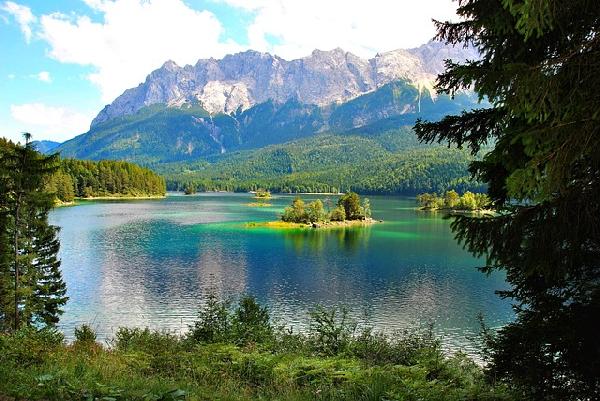
Situated at the foot of the Zugspitze at an altitude of about 1,000 meters, the Eibsee is often described as one of Germany’s most beautiful lakes. Its stunning emerald-green and turquoise colors are caused by light refraction on suspended rock flour (fine glacial sediment).
Experiencing the Lake
The Circular Hiking Trail: A well-maintained, relatively flat path circles the entire lake. The full loop is approximately 7.5 km (4.7 miles) and takes about 2-2.5 hours at a leisurely pace. The trail offers constantly changing, picture-perfect views of the lake and the Zugspitze looming above.
Boat Rental: Renting a rowboat or pedal boat is a quintessential Eibsee activity. Paddling out onto the crystal-clear water allows you to appreciate the colors and see the small, tree-covered islands up close. The view of the Zugspitze from the water is magnificent.
The Islands:The lake features several small islands, such as Sassen Island and Braxen Island, which are connected to the shore by narrow gravel banks and can be reached on foot.
Photography:The best light for photography is in the morning or late afternoon. The midday sun can cause harsh reflections. The view from the western shore back towards the Zugspitze is particularly iconic.
Eibsee Hotel and Restaurant
The historic Eibsee Hotel, located right on the shore, has a restaurant with a large sun terrace. It’s a perfect spot for a meal or a coffee and piece of cake while enjoying one of the best views in Bavaria. While on the pricier side, the location justifies the cost.
Part 5: The Return to Munich
After your time at Eibsee, you have two options to return to Garmisch-Partenkirchen:
Cogwheel Train: Hop back on the cogwheel train at the Eibsee station for a direct ride back to the main station in Garmisch.
Public Bus: There is also a frequent bus service (Line 1) that runs between Eibsee and Garmisch-Partenkirchen train station.
From Garmisch-Partenkirchen station, simply board any RB6 train heading back towards Munich Hauptbahnhof. The return journey allows you to relax and reflect on a day filled with alpine wonders.
Essential Practical Tips and Local Insights
Best Time to Visit: Late spring (May-June) to early autumn (September-October) offers the most stable weather for clear views. Summer (July-August) is peak season and can be crowded. Winter offers a magical snowy landscape but check for cable car maintenance closures.
The Weather is Key: Alpine weather is notoriously fickle. Always check the live webcam on the Zugspitze official website before you go. A cloudy or foggy day at the summit means you will see nothing but white mist, rendering the expensive trip pointless.
Tickets: Purchase a combined “Zugspitze Ticket” which includes the cogwheel train, cable cars, and access to all facilities at the top. It is valid for the entire loop. Booking online in advance during peak season can save time.
What to Wear and Bring: Even on a warm summer day in Garmisch, it can be freezing and windy at the summit.
Layered Clothing:A t-shirt, fleece, and a waterproof/windproof jacket are essential.
Sturdy Shoes:Sneakers are fine for Eibsee, but proper hiking shoes are better for comfort on rocky paths.
Sunglasses & Sunscreen:The sun is intense at high altitude, and snow reflection can cause sunburn.
Water & Snacks:While there are restaurants, having your own water is crucial.
Camera:This goes without saying.
Altitude Awareness:The rapid ascent can affect some people. Take it easy, stay hydrated, and be mindful of any signs of altitude sickness.
Crowd Management:Aim to start your journey from Garmisch as early as possible (by 8:30 am) to avoid the biggest crowds at the cable car stations.
A Cultural Note:The Bavarian Alps have a distinct culture. You’ll notice traditional clothing like Lederhosen and Dirndls worn not just for tourists but for genuine cultural events. A simple “Grüß Gott” (the traditional Bavarian greeting) is always appreciated.
A day trip from Munich to the Zugspitze and Eibsee is more than just checking off Germany’s highest peak. It is an immersive experience that combines engineering marvels with raw natural beauty, leaving you with lasting memories of Bavaria’s majestic alpine landscape.