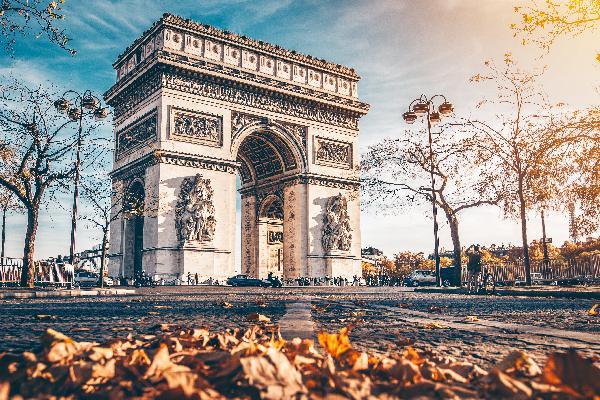
Comprehensive Travel Guide: Central & Western Europe Grand Tour
Introduction
This guide details a classic grand tour of Central and Western Europe, covering a remarkable circuit from Germany, through the Benelux nations, France, Switzerland, and Italy. The journey begins and ends in Frankfurt, Germany, and encompasses world-class cities, picturesque towns, stunning coastlines, and majestic alpine scenery. This is an ambitious itinerary designed to offer a deep and diverse experience of European culture, history, and natural beauty.
Itinerary Overview
The route is as follows:
Frankfurt → Cologne → Amsterdam → Zaanse Schans (Windmill Village) → The Hague → Rotterdam → Antwerp → Bruges → Brussels → Paris → Dijon → Lucerne → Milan → Venice → Rome → Florence → Pisa → Sanremo → Monaco → Eze → Cannes → Lyon → Paris → Luxembourg City → Trier → Heidelberg → Frankfurt.
This guide breaks down the journey into logical geographical segments for easier planning.
Part 1: Germany & The Benelux Loop
Frankfurt, Germany
Frankfurt am Main is a global financial hub and your gateway to this journey. It uniquely blends a futuristic skyline with a reconstructed historical center.
Main Attractions: Römerberg (the old square), St. Bartholomew’s Cathedral, the Main Tower for panoramic city views, and the Museumsufer (Museum Embankment).
Practical Info: Frankfurt Airport (FRA) is one of Europe’s busiest. The Hauptbahnhof (main train station) is a major rail hub. The city is well-connected by U-Bahn and S-Bahn.
Travel Tip: While often a transit city, dedicating half a day to explore the Altstadt (Old Town) and enjoy a traditional Apfelwein (apple wine) in a Sachsenhausen pub is highly recommended.
Cologne, Germany
A short train ride from Frankfurt, Cologne is famed for its colossal Gothic cathedral and vibrant cultural scene.
Main Attractions: Cologne Cathedral (a UNESCO World Heritage site), climb the South Tower for breathtaking views, Hohenzollern Bridge with its “love locks,” and the Romano-Germanic Museum.
Practical Info: The train station is directly opposite the cathedral. The city center is very walkable.
Travel Tip: Try a Kölsch, the local beer, in one of the traditional breweries in the Altstadt.
Amsterdam, Netherlands
A train journey north brings you to Amsterdam, a city of picturesque canals, world-class art, and a unique, tolerant atmosphere.
Main Attractions: The Canal Ring (UNESCO), Rijksmuseum, Van Gogh Museum, Anne Frank House, Jordaan district, and a canal cruise.
Practical Info: Amsterdam Centraal Station is the main hub. The city is best explored on foot, by bike, or using the efficient tram system. Book museum tickets online well in advance.
Travel Tip: Rent a bike to experience the city like a local, but be confident and mindful of tram tracks and other cyclists.
Zaanse Schans (Windmill Village), Netherlands
A short trip from Amsterdam, Zaanse Schans is an open-air museum that showcases traditional Dutch life with working windmills, wooden houses, and craftsmen.
Main Attractions: The various operating windmills (sawmill, paint mill, etc.), the clog workshop, and the cheese farm.
Practical Info: Easily accessible by train from Amsterdam Centraal to Zaandijk Zaanse Schans station (approx. 15-20 minutes), followed by a pleasant 15-minute walk.
Travel Tip: Visit early in the morning or late in the afternoon to avoid the largest crowds.
The Hague & Rotterdam, Netherlands
The Hague is the seat of the Dutch government and royalty, known for its international courts and elegant architecture. Rotterdam is a modern architectural marvel, having been rebuilt after WWII.
The Hague Attractions: Binnenhof (Inner Court), Mauritshuis museum (home to Vermeer’s “Girl with a Pearl Earring”), and the beach at Scheveningen.
Rotterdam Attractions: Cube Houses, Markthal (Market Hall), Erasmus Bridge, and the Euromast tower.
Practical Info: The two cities are a short train ride apart (approx. 25 minutes). Both have excellent public transport.
Antwerp & Bruges, Belgium
Antwerp is a vibrant port city, a global diamond center, and the home of Baroque painter Peter Paul Rubens. Bruges is a perfectly preserved medieval fairy-tale town, a UNESCO World Heritage site.
Antwerp Attractions: Central Station (often called the “Railway Cathedral”), Grote Markt, Cathedral of Our Lady (housing Rubens masterpieces), and the fashion district.
Bruges Attractions: Belfry of Bruges (climb it for stunning views), Market Square, Basilica of the Holy Blood, a boat tour along the canals, and enjoying Belgian chocolates.
Practical Info: Trains connect Rotterdam to Antwerp and Antwerp to Bruges seamlessly. Bruges is very compact and best explored on foot.
Travel Tip: In Bruges, stay overnight to experience the magical atmosphere after the day-trippers have left.
Brussels, Belgium
The capital of Belgium and the de facto capital of the European Union, Brussels is a multicultural city with a grand main square and famous comic strip culture.
Main Attractions: Grand-Place (Grote Markt), Manneken Pis, Atomium, Royal Palace, and the Comic Book Route.
Practical Info: Brussels has multiple main stations (Midi/Zuid, Central, Nord). Brussels Central is the most convenient for the city center. Indulge in fries, waffles, and a vast selection of beers.
Part 2: France & The Alpine Passage
Paris, France
A high-speed train from Brussels brings you to the “City of Light.” Paris needs little introduction, renowned for its art, architecture, cuisine, and romance.
Main Attractions: Eiffel Tower, Louvre Museum, Notre-Dame Cathedral (exterior), Arc de Triomphe, Champs-Élysées, Montmartre and Sacré-Cœur.
Practical Info: The Métro is the best way to get around. Museum passes can save time and money. Be vigilant against pickpockets in tourist areas.
Travel Tip: Book Eiffel Tower tickets online months in advance or be prepared for long queues. Consider visiting other excellent museums like Musée d’Orsay.
Dijon & Lyon, France
Dijon, the capital of Burgundy, is famous for its mustard and as a gateway to one of the world’s great wine regions. It boasts a well-preserved medieval center. Lyon is a gastronomic capital of France with a rich Roman history.
Dijon Attractions: Palace of the Dukes of Burgundy, Owl’s Trail self-guided tour through the old town.
Lyon Attractions: Vieux Lyon (Renaissance quarter), traboules (hidden passageways), Fourvière Basilica, Roman Theatres, and the Presqu’île district.
Practical Info: Both are major stops on the French TGV network. Lyon is a large city with a comprehensive metro system.
Lucerne, Switzerland
A journey from Lyon into Switzerland reveals stunning alpine scenery. Lucerne is a picturesque city on a lake surrounded by mountains.
Main Attractions: Chapel Bridge (Kapellbrücke), Water Tower, Lion Monument, Old Town walls (Museggmauer), and a boat trip on Lake Lucerne.
Practical Info: Switzerland uses the Swiss Franc (CHF). The Swiss Travel Pass can offer excellent value for trains, buses, and boats. Lucerne’s old town is very walkable.
Travel Tip: Use Lucerne as a base for mountain excursions to peaks like Mount Pilatus or Mount Titlis.
Part 3: The Italian Journey & The French Riviera
Milan & Venice, Italy
Milan is Italy’s financial and fashion capital, home to a breathtaking Gothic cathedral. A train ride east leads to the unique floating city of Venice, built on over 100 small islands.
Milan Attractions: Duomo di Milano (cathedral), Galleria Vittorio Emanuele II, Leonardo da Vinci’s “The Last Supper” (book months ahead).
Venice Attractions: St. Mark’s Square, St. Mark’s Basilica, Doge’s Palace, Rialto Bridge, and a gondola or vaporetto (water bus) ride through the canals.
Practical Info: Venice has no cars. Travel is on foot or by boat. The vaporetto network is the public transport system. Purchase a travel pass.
Travel Tip: In Venice, get lost in the back alleys away from St. Mark’s to discover the city’s true charm.
Rome & Florence & Pisa, Italy
Rome, the “Eternal City,” is a sprawling historical treasure trove. Further north lies Florence, the cradle of the Renaissance. A short side trip from Florence leads to Pisa, famous for its Leaning Tower.
Rome Attractions: Colosseum, Roman Forum, Pantheon, Trevi Fountain, Vatican City (St. Peter’s Basilica, Vatican Museums & Sistine Chapel).
Florence Attractions: Uffizi Gallery, Accademia Gallery (home to Michelangelo’s David), Florence Cathedral (Duomo), Ponte Vecchio.
Pisa Attractions: The Field of Miracles with the Leaning Tower, Cathedral, and Baptistery.
Practical Info: High-speed trains connect these cities. Book all major attractions (Colosseum, Vatican Museums, Uffizi) online well in advance to skip massive lines.
The French Riviera: Sanremo to Cannes
Travelling west from Italy brings you to the glamorous French Riviera (Côte d’Azur). This segment includes several iconic stops.
Sanremo, Italy:A stylish Italian resort town known for its casino and floral industry.
The French Riviera Continued…
The French Riviera: Sanremo to Cannes Continued…
The French Riviera: Sanremo to Cannes Continued…
The French Riviera: Sanremo to Cannes Continued…
The French Riviera: Sanremo to Cannes Continued…
The French Riviera: Sanremo to Cannes Continued…
The French Riviera: Sanremo to Cannes Continued…
The French Riviera: Sanremo to Cannes Continued…
The French Riviera: Sanremo to Cannes Continued…
The French Riviera: Sanremo to Cannes Continued…
The French Riviera: Sanremo to Cannes Continued…
The French Riviera: Sanremo to Cannes Continued…