Comprehensive Travel Guide: Istanbul & Cappadocia, Turkey
Introduction
This guide provides a detailed itinerary and practical information for a classic Turkish journey, looping from the historic and vibrant metropolis of Istanbul to the surreal, otherworldly landscapes of Cappadocia and back. This route offers a perfect blend of rich history, bustling city life, and breathtaking natural wonders.
The typical duration for this trip is 7 to 10 days, allowing for a thorough exploration of both destinations without feeling rushed. The primary mode of transport between the two regions is a short, one-hour domestic flight.
Itinerary Overview
Days 1-4: Explore Istanbul (European & Asian Sides)
Day 5: Morning flight from Istanbul (IST or SAW) to Kayseri (ASR) or Nevşehir (NAV). Transfer to your Cappadocia hotel (Göreme, Ürgüp, etc.).
Days 5-8: Explore Cappadocia’s valleys, underground cities, and cultural sites.
Day 9: Morning flight from Cappadocia back to Istanbul. Final evening in Istanbul.
Day 10: Departure from Istanbul.
Part 1: Istanbul – Where Continents Collide
Straddling the Bosphorus Strait, Istanbul is a city that effortlessly blends its grand past as the capital of the Byzantine and Ottoman Empires with a dynamic, modern present.
Getting Around in Istanbul
Istanbulkart: This rechargeable card is essential. It offers discounted fares on all public transport: metro, trams, buses, and ferries. You can buy it at major stations and kiosks.
Tram: The T1 Bağcılar–Kabataş tram line is the most useful for tourists, connecting Sultanahmet, Eminönü, Karaköy, and Kabataş.
Metro: Efficient for covering longer distances, like from the airport to the city center or crossing between the European and Asian sides.
Ferries: A must-do experience. Ferries cross the Bosphorus and go to the Princes’ Islands. The views of the city skyline are unparalleled.
Taxis & Rideshare: Readily available but ensure the meter is running. Rideshare apps like BiTaksi are also widely used.
Sultanahmet: The Historic Heart
This is the core of old Istanbul, home to its most iconic monuments.
Hagia Sophia (Ayasofya): A monumental masterpiece of Byzantine architecture, later a mosque, and now a mosque again. Its massive dome, intricate Christian mosaics, and Islamic calligraphy are awe-inspiring.
The Blue Mosque (Sultanahmet Camii): Famous for its stunning blue Iznik tiles adorning the interior. Remember to dress modestly and remove your shoes before entry. It is closed to non-worshippers during prayer times.
Topkapi Palace: The vast palace of the Ottoman Sultans for nearly 400 years. Allow at least half a day to explore its harem, treasury (home to famous jewels like the Spoonmaker’s Diamond), and courtyards with breathtaking views of the Bosphorus.
Basilica Cistern (Yerebatan Sarnıcı): An underground wonder; a vast subterranean chamber supported by 336 columns, built in the 6th century. The atmosphere is mystical and cool.
Hippodrome: The ancient chariot-racing track. Today, you can see the Egyptian Obelisk, the Serpent Column, and the German Fountain marking its spine.
Beyoğlu & Karaköy: The Modern Pulse
Cross the Galata Bridge from Eminönü to reach the vibrant, contemporary side of European Istanbul.
İstiklal Avenue: A bustling, pedestrianized street lined with shops, cafes, cinemas, and consulates. The historic red tram runs its length.
Galata Tower: Offers a 360-degree panoramic view of the Golden Horn and the old city. The climb or elevator ride is well worth it for the photo opportunity.
Taksim Square: A major modern square and transportation hub at the end of İstiklal Avenue.
Karaköy: A trendy neighborhood with chic art galleries, stylish cafes, and vibrant street art, located at the base of the Galata Tower.
The Grand & Spice Bazaars
Grand Bazaar (Kapalıçarşı): One of the world’s oldest and largest covered markets. Get lost in its 61 streets housing thousands of shops selling jewelry, carpets, leather, ceramics, and spices. Haggling is expected.
Spice Bazaar (Mısır Çarşısı): A sensory delight located in Eminönü. The air is thick with the aroma of spices, dried fruits, nuts, lokum (Turkish delight), and Turkish coffee.
The Bosphorus & Asian Side
Bosphorus Cruise: Take a public ferry or a private tour to sail between the two continents. You’ll pass ornate palaces (like Dolmabahçe and Beylerbeyi), wooden mansions (yalıs), and fortresses.
Üsküdar & Kadıköy: Explore the more local and residential Asian side. Visit Kadıköy Market for a fantastic foodie experience and enjoy the seaside promenade.
Maiden’s Tower (Kız Kulesi): A small tower on a tiny islet at the southern entrance of the Bosphorus. You can take a boat to visit it for a meal or tea.
Food & Drink in Istanbul
Breakfast (Kahvaltı): A grand affair with cheeses, olives, tomatoes, cucumbers, honey, kaymak (clotted cream), jam, and menemen (scrambled eggs with tomatoes and peppers).
Street Food: Don’t miss simit (sesame-crusted bread ring), balık ekmek (fish sandwich in Eminönü), roasted chestnuts, and mussels stuffed with spiced rice.
Kebabs & Meze: Try various kebabs like Adana or şiş. Meze are small appetizer dishes, often including hummus, haydari (thick yogurt with herbs), and dolma (stuffed vine leaves).
Sweets: Baklava, künefe (cheesy pastry dessert), and Turkish delight (lokum).
Drinks: Turkish tea (çay) is served everywhere in tulip-shaped glasses. Turkish coffee is strong and thick. Ayran is a refreshing salted yogurt drink.
Practical Istanbul Information
Airports: Istanbul Airport (IST) on the European side is the main international hub. Sabiha Gökçen (SAW) on the Asian side is used by many budget airlines.
Best Time to Visit: Spring (April-May) and Autumn (September-October) offer mild weather and fewer crowds. Summers are hot and crowded; winters can be cold and rainy/snowy.
Accommodation: Sultanahmet for history; Beyoğlu/Taksim for nightlife and modern amenities; Karaköy for a trendy vibe; Kadıköy for a local Asian side experience.
Getting from Istanbul to Cappadocia
The only practical way to travel between these two destinations for a short trip is by air.
Airlines: Turkish Airlines, Pegasus Airlines, AnadoluJet.
Cappadocia Airports:
Kayseri Airport (ASR): Larger airport, about a 1-hour drive to Göreme.
Nevşehir Kapadokya Airport (NAV): Closer to Göreme, about a 30-40 minute drive.
Transfers: Book a shuttle service (Havas Bus or private companies) in advance. Your hotel can often arrange this. Taxis are available but more expensive.
Alternative: An overnight bus takes around 10-12 hours. It is much cheaper but less comfortable and time-consuming.
Part 2: Cappadocia – A Surreal Landscape
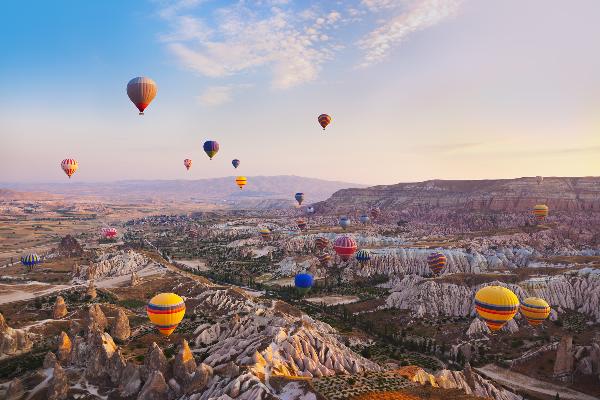
Cappadocia is a historical region in Central Anatolia, famous for its unique “fairy chimney” rock formations, ancient cave dwellings, and incredible hot air balloon rides at dawn.
Getting Around in Cappadocia
Tours: The most common way to see the sights. “Red Tour” covers North Cappadocia (Göreme Open-Air Museum, etc.). “Green Tour” covers South Cappadocia (Ihlara Valley, Derinkuyu Underground City).
Car Rental: Offers maximum flexibility to explore at your own pace. Roads are generally good.
Scooter/ATV Tours:A fun way to explore specific valleys like Rose Valley or Love Valley for a few hours.
Taxis & Local Buses:Taxis are available for point-to-point trips. Local minibuses (dolmuş) connect towns like Göreme, Ürgüp, and Avanos but are not ideal for valley exploration.
Göreme Open-Air Museum & Town
Göreme Open-Air Museum:A UNESCO World Heritage site and a monastic complex composed of rock-cut churches, chapels, and monasteries. The Dark Church (Karanlık Kilise) has the best-preserved frescoes and requires a separate ticket.
Town of Göreme:The main tourist hub, filled with cave hotels, restaurants, and tour agencies. It’s the most convenient base for first-time visitors.